What ANZAC Day Means To Me

ANZAC Day is not about the parades, the suits; nor is it about the medals.  It is about the men and women with whom we served.

They have stood beside us through the best and worst days of our lives; both in and out of uniform. 
These are the people that know us better than our own family. 

 It is the one day of the year where we commemorate the past; remember the friends who never came home and reconnect with those we share an unbreakable bond.

The day will come when we are long gone and our service to Australia is marked by the laying of wreath against a simple embossed plaque baring the name of a foreign country. 

This is the ANZAC Spirit; as one generation fades into history, another takes its place.

Redemption (…Or What Happens After A Relapse)

It’s difficult overcoming obstacles in life and a lot more difficult overcoming obstacles that you set up in your mind.  Depression is a mental illness that can, and often will, manifest into the physical form.  I have experienced anxiety attacks, rapid weight loss, nausea, migraines and of course self harming behaviour.  A lot of people describe living with depression as living with the Black Dog.  A silent companion that is always following you, lurking in the shadows, waiting to bark and bite.

For me a depressive episode is like being alone in the ocean.  One minute it’s sunny and calm and the next, it’s stormy with waves crashing down upon me.  It’s a struggle between trying to stay afloat in between holding my breath and being dunked under; and just accepting my fate and sinking down to the bottom.  But what happens when I sink to the bottom is hard for most people to understand.  Imagine the contrast between the rough seas and the struggle above you, and now the calmness and introspective nature of looking upwards to all of that.  But of course this moment is fleeting, while you may no longer be exposed to the what is adversely affecting you; you will eventually drown from being underneath it.  The battle to swim back to the top and fight against the waves is what ultimately calms the ocean once again.

For me the end of last year was spent fighting the waves in between sinking to the bottom.  For the first time in a number of years I spent a lot of time on that bottom looking up at the crashing waves.  This was my Relapse.

An important part of Recovery is what happens next; and that is what I call the Redemption Moment.  It is the moment you realise your Relapse has finally let go of you.  My Redemption Moment occurred when my daughter Celeste smiled at me when I went to get her out of bed one morning.  In that one moment I knew everything I have experienced, everything I have done meant nothing to this little girl who wanted only for her Father to cuddle her and protect her.

For so long I have felt my life and who I am has been defined by the years I spent wearing the uniform of an Australian Soldier.  Now, as I move forward with my life post Army, I’m becoming more aware that what I have done in the last few years, is how my friends and family see and think of me.  It’s a difficult transition for me to come to terms with.  The events and experiences, the choices and decisions, the good and the bad; and of course the darkest day of my life can be attributed to my military service.  But slowly, as the years pass, I’m able to stop looking in the mirror and seeing a Chad wearing an Army uniform that no longer exists.

Late last year, I was extremely fortunate to have been surprised with portrait of myself by renowned Australian artist Caroline McGregor; gifted to me by my very good friends Jason, Sarah and wife Carly.  Caroline is well-known for her portraits depicting Australian Soldiers and capturing the person behind the uniform.  My portrait was a different direction for Caroline, who usually depicts the subject on operations.  A number of photos were submitted to her of me including some from Iraq and Afghanistan, with background information about me over the past few years.  The one photo that struck a cord with Caroline was of me in my Soldier On Cycling kit during last years Remembrance Ride.  The photo was taken by SO Cycling photographer Matt Connors on the first day of the ride; when I was acting like a fool with the other riders, some of whom I would later travel to France and ride in the Trois Etapes with.

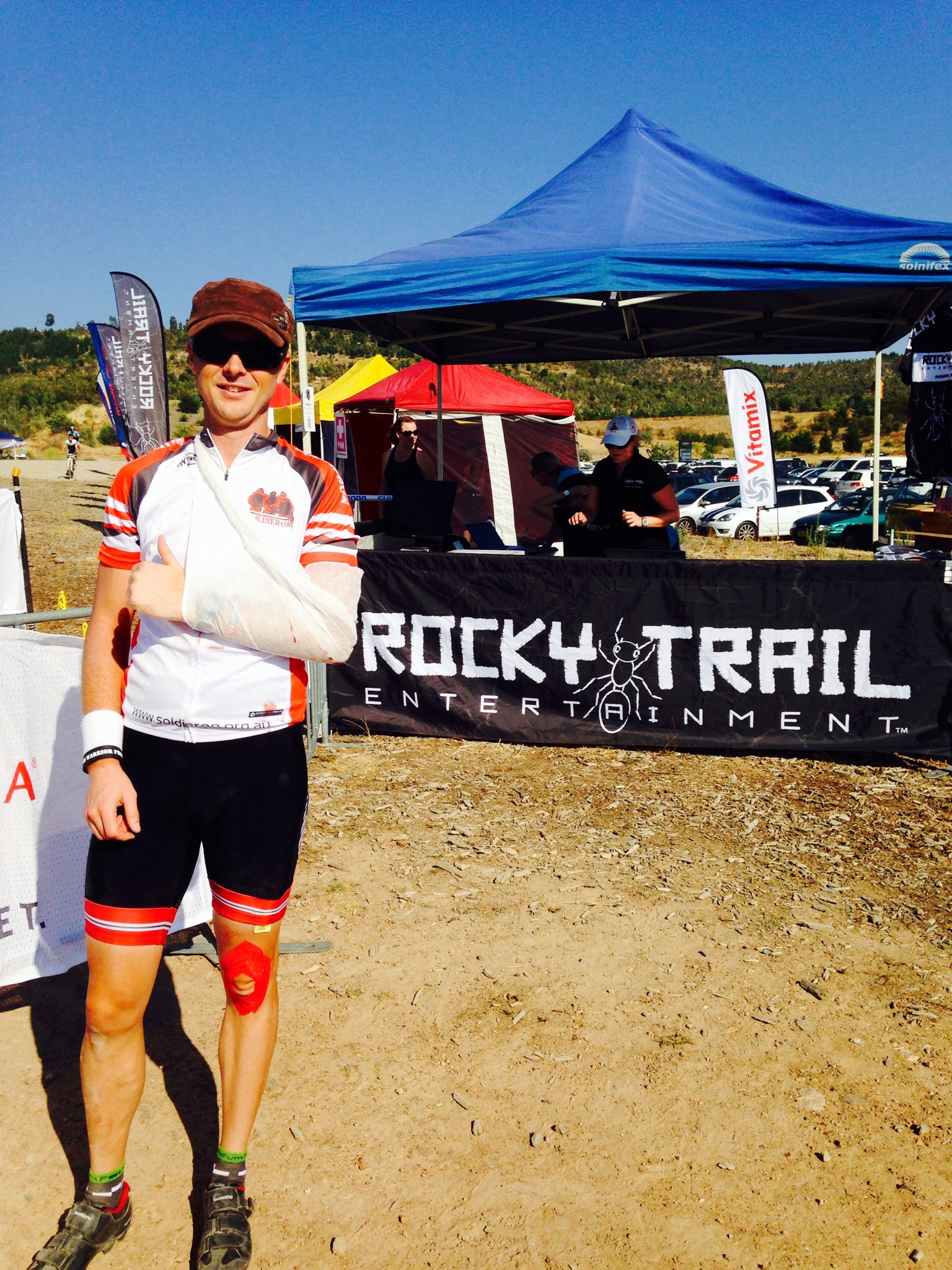
Caroline chose a photo of me, doing what has been integral to my recovery with PTSD and depression; riding a bike, representing Soldier On, building my confidence and connecting with others that have been affected by their service.

MCP 015
.:Matt’s original photo:. https://www.facebook.com/matthewconnorsphotography
IMG_1069
.:Caroline’s Portrait:. https://www.facebook.com/CarolineMcGregorArt http://www.carolinemcgregorart.com/


2014 In Review – Cycling

2014 was the year that I learnt that no matter how much time and effort you put into training and racing; life always has other plans.

The year started off with a single goal in mind.  I was going to race in the Easter National Mountain Bike 24 Hour Solo Championships.  I trained hard for this event and all looked good until the event was cancelled.  I kept up my training, albeit, with less intensity; and continued to ride more each week than in 2013.

2014 was the year I travelled to France with Soldier On to race in the Trois Etapes Pro-Am and was the year my beautiful daughter Celeste was born.

My riding year was littered with a number of injuries, incredible highs, depressing lows and amazing opportunities.

BIKES 234

As with last year, here is 2014 by the numbers.


2014 – BY THE NUMBERS

.:1:.
One major crash during the year
During my first race of the year, the AMB 100, I crashed out thanks to a little shit who decided that cutting the course and getting in the way of other riders was a good idea.
image

.:3:.
Number of notable injuries in 2014
Injuries: Snake bite, stitches to my left elbow and strained glute!
My Pics 045imageGlute Needling

.:6:.
The number of major events that I raced in during 2014
Every race was a challenge but I’ll never forget the 2014 Trois Etapes in France with Team Solider On!

.:Team Soldier On and our Pro-Rider Jo Hogan:. https://www.facebook.com/matthewconnorsphotography
.:Team Soldier On and our Pro-Rider Jo Hogan:.
https://www.facebook.com/matthewconnorsphotography

.:98:.
The amount of vertical kilometres I climbed in 2014

.:132:.
In kilometres, my longest single ride of 2014

.:287:.
How many times I rode my bike(s) in 2014

.:349:.
The amount of hours I spent riding in 2014

.:8,395:.
In kilometres, the total distance I rode in 2014

Wishing everyone a safe 2015!
.:Chad:.

MCP 080 BIKES 204


Representation, Relapse, Recovery #takeanextraminute

Where do I start?  This has been the common theme over the past sixteen days.  The draft of this post has been sitting in my draft folder for a little over two weeks now.

The intent was clear, I was going to dedicate a post to the Take #AnExtraMinute campaign that I helped Soldier On launch on the lawns of Parliament House on Monday 10 November 2014.  I decided to hold off and wait until the pre recorded interview I did with Sunrise went to air on Remembrance Day, 11 November 2014.

.:Below is the link to the Sunrise: Honour Those Who Are Often Forgotten segment:.
https://au.tv.yahoo.com/sunrise/video/watch/25480373/honour-those-who-are-often-forgotten/

The Facebook post below summed up my feelings and experiences in the hours after the Sunrise segment went to air.

https://twitter.com/ChadPD/status/531960116640112642

In the days following the launch and interview airing, I found myself regressing more and more each day.  As is the norm after I speak publicly and share my story, I became depressive and withdrew from my support network; my family and friends.

This time was quite difficult for me.  The Sunrise segment was the first time my story would go out to a very large audience.  For those that think it’s not a big deal; imagine the one thing that you are most ashamed of, the one thing you would take back if you could, and now imagine that being shared with over a million other people.

Once the realisation of how many people saw my interview hit me, it became a battle to keep my head above water.  As I type this, I’m still reeling from the knowledge that so many people now know the most intimate detail of who I am, the single most confronting aspect of my life to date.

While that decision I made four years ago may not define who I am today, it set the foundation that I have rebuilt my life upon.  And that foundation is has not quite set.

Why The RSL Must Look To The Future

In the past few days there has been a lot of coverage in the news and on social media about the RSL NSW office dictating what will and won’t be allowed during the Sydney ANZAC Day march. To say this has caused a wave of emotion to boil-over various Defence affiliated social media groups is an understatement. The sentiment most being expressed is one of Veterans being fed up with the attitude of the RSL and their efforts to control the very thing that is central to our identity; the ANZAC legend.

I have been critical of the RSL previously and have even participated in some of the online debates about what my opinion is of the current issue surrounding Veterans and marching with their unit banners. As with most discussions regarding the RSL and Veterans opinions and experiences; sadly the negative seems to far out-way the positive. In the midst of a robust discussion about the relevancy of the RSL in these modern times; I posted a rough opinion piece that I have fine tuned and censored for this blog post.

Many of the negative experiences Veterans are facing today aren’t from the club side of the RSL. We are literally being told to “go away” by sub-branches. I don’t give a rats arse about the bar, bistro and pokies side of the RSL; my concern is with the Veterans support side turning away my generation because of perceived differences.

In the past 18 months we have seen more than twenty suicides of Veterans under 40 years of age! While every suicide is both concerning and a tragedy; I’ve now buried more friends to suicide than have been lost in war. We are on the edge of an epidemic spilling over and the sad fact is that Veteran suicide is the new Elephant In The Room for Australia and Australia’s Veteran community. The simple reason for this is because the support isn’t there when it is needed and that support certainly isn’t coming from the RSL anytime soon!

We all wore a uniform and we all served Australia, but to a very small minority in positions of authority in the RSL National, RSL State and RSL sub-branches, this means nothing. In the months after I left the Army I tried to reach out to the RSL, the same sub-branch my Grandfather was President of for 40+ years and was told by the new President “fuck off, we don’t want young blokes with tatts”.

The RSL needs to realise there are other Veterans support groups, social groups and avenues of support available to the Veteran community aside from them. The Vietnam War era soldiers didn’t have the support of the RSL when they needed it but eventually the tide turned and now a lot of Vietnam Veterans are running the sub-branches. The Vietnam Veterans went through decades of lobbying and some still won’t walk inside an RSL. Unfortunately they didn’t have the groups and support networks we have available to us today.

Put simply we have other support and social mechanisms in play that won’t ostracise us and turn us away. Until the RSL at the State and National level fully understands that they are no longer relevant in their current form and start listening to what ALL Veterans want (WWII, Korea, Vietnam, Cambodia, Rwanda, Somalia, East Timor, Solomon Islands, Foreign Aid/Relief, Border Security and Middle East) they are going to see a continuation in the already rapid decline in numbers and attendance.

There are many sub-branches that are doing exceptional things in the Veteran community but their good deeds are being overshadowed by a leadership that won’t look towards the future.

An Evening At The Australian War Memorial – Updated

ABC’s Big Ideas has released the Boys Don’t Cry program online for viewing.
The televised version is shorter by about 20 minutes and doesn’t include my speech at the end of the forum.  The online long version does.  I invite you to watch is however please be aware that some of the program is fairly confronting including what I have to say at the end.

Long version of the Boys Don’t Cry segment

Big Ideas Boys Don’t Cry segment

On Wednesday evening, 20 November 2013, I attended a panel discussion at the Australian War Memorial on Post Traumatic Stress Disorder.  The event was hosted by journalist/writer Paul Barclay on behalf of ABC TV and Radio National.

On the panel were former Chief of Army LTGEN Peter Leahy; author and Beyond Blue ambassador Allan Sparkes; Beyond Blue board member Professor Brett McDermott; and the wife of a former British Royal Marine, Emily.

I was asked about attending the panel a few days earlier by my friend Jason.  Originally I didn’t want to attend as I honestly thought it may be a trigger for an anxiety episode; so I declined.  It wasn’t until the night before that I decided to go along and hopefully have a chance to speak to whoever was on the panel.  I had no idea who was participating in the discussion other than LTGEN Peter Leahy and hadn’t really thought about what was going to be discussed.

In the afternoon prior to the start of the forum, I rode from work up to the Australian War Memorial.  As is the norm, I was wearing my Soldier On jersey and happened upon new Soldier On team member Tony; who many moons ago was my Troop Commander when I served in Iraq.  Jason arrived next and soon we were joined by Anna, Meredith and Dion from Soldier On.  After I got changed into something more appropriate than skin tight lycra, we went into the BAE Systems Theatre.

After the introductions Paul started the discussion with some questions about PTSD in the military for LTGEN Leahy.  The conversation and questions started to flow freely within the panel with some very emotional stories being shared by Emily and Allan.  Prof McDermott gave some very interesting insights on PTSD for not only military personnel; but also for emergency service persons and of course their families.

I wasn’t the only veteran in the crowd; but I was the youngest.  There were a few Vietnam Veterans present, family members of veterans with PTSD and a few senior Defence officers that were skulking around the back pews in civilian attire.

As the discussion progressed LTGEN Leahy was asked some questions about support services available to veterans.  I have a lot of respect for this man; he was an exceptional Chief of Army and has done a lot to help veterans with his current position as Chairman for Soldier On.  But there is a distinct level of detachment from what a high ranking officer is told and what happens on the ground.

Some of his responses started to irk not only me, but a lot of the crowd listening to him.  There were more than a few audible scoffs at some comments about the Department of Veterans affairs doing their best to help all veterans.  One comment in particular drew a very audible “get fucked” from me.  The former Chief of Army said that when a Soldier asks for help, he or she will always receive it.  Paul mentioned the story of MAJGEN John Cantwell and LTGEN Leahy was in agreement.  Whilst MAJGEN Cantwell has done a lot to help break the stigma of PTSD in the ADF; it is also true that a very senior Officer is never going to be turned away when they ask for assistance.

Allan Sparkes shared his story of PTSD and depression from when he was a Police officer; and the ostracising that he experienced as a result.  His story was a very raw, no punches pulled recount of his darkest days and his termination from his employment without his knowledge.  His story was very reminiscent of many veterans from the Vietnam War up until today’s conflicts.

Emily’s story was one of amazing courage from both her and her husband Adrian.  She spoke of her time in the United Kingdom when Adrian returned from deployment in Afghanistan a changed man.  He had experienced traumatic events and as a result developed PTSD.  His struggles with mental health affected his wife and two daughters as they watched as their husband and father dealt with his issues now that he was back at home.  His eventual discharge from the Royal Marines was a result of a physical injury and just like the majority of occupationally injured Australian servicepersons; Adrian was soon pushed out the door with very little support and preparedness for his transition to civilian life.

As the forum was drawing to a close Paul invited Dr Brendan Nelson, director of the Australian War Memorial to speak and field some questions from the panel.  He spoke about the AWM’s role with supporting veterans of recent conflicts by having interactive exhibits and involving them with other projects the AWM is conducting.  As a former Minister for Defence he expressed his desire to see more support forthcoming as the Afghanistan War draws to a close.

As 7pm was quickly approaching a few of us in the audience were wondering if we would get a chance to ask questions of the panel.  Adrian was next to take the stage and he recounted some of his experiences post deployment and how support for veterans is extremely slow from the government in Britain.  He spoke of having his claim for assistance being rejected on the first submission; a trend very similar to that in Australia carried out by DVA.

Adrian expressed his concern for veterans being forgotten after the withdrawal from the Middle East and a strong desire for them to be able to access the support they deserve and not repeat the mistakes of the past.  He likened the struggles of today’s returned servicepersons to that of the Vietnam War era in the way that the fight for support continues even after the war on foreign soil has ended.

Adrian’s address to the panel and audience had clearly reached out to everyone with many of the Vietnam Veterans visibly moved by his honesty.  As he sat down Paul checked his watch and asked us sitting in the audience if anyone had anything questions or comments.  I had been sitting and fidgeting for the past 10 minutes waiting for this moment.  Several different introductions and talking points had gone through my head and all disappeared in the instant I raised my hand and Paul motioned for me to stand up.

I was shaking before I even started speaking; this was always going to be an emotionally charged interaction from me and I started by introducing myself.

“Hi I’m Chad, I separated from the Army early last year and have deployed to both Iraq and Afghanistan.  I have been diagnosed with PTSD, depression and anxiety and I want to know why not enough is being done to help Australian veterans.”

I addressed LTGEN Leahy first and exclaimed to him that history was indeed repeating itself.

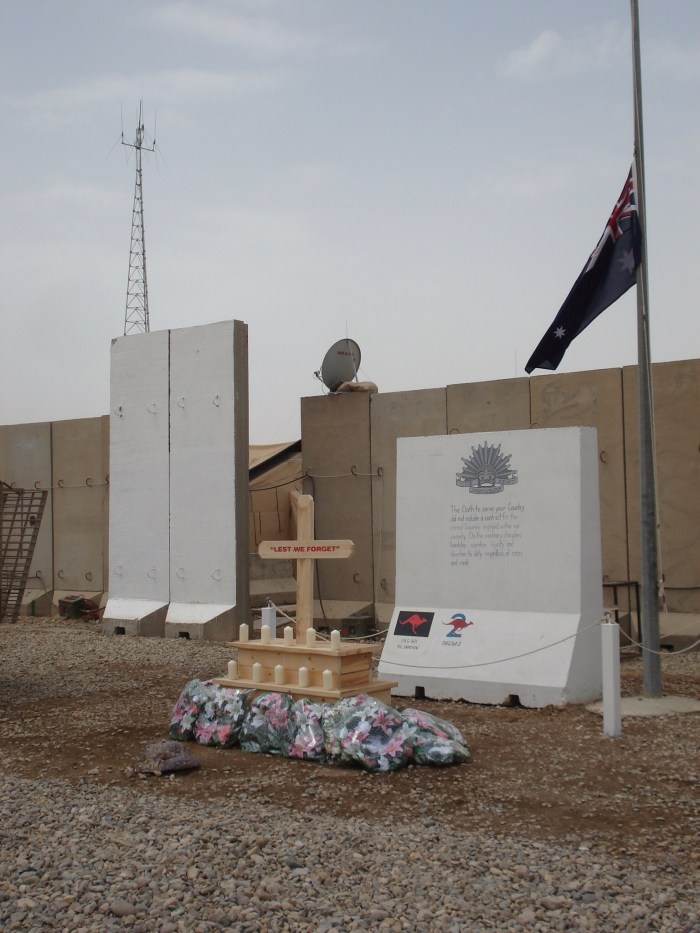
“I am a third generation Soldier, my Grandfather served in World War 2, my Father served in Vietnam and I have served in the Middle East.  I watch as my Father and his mates still struggle with PTSD with many Vietnam Veterans taking their own lives since the war ended.  I watch as my generation struggles with the same issues and now my mates, people I served with, are killing themselves because of PTSD and depression; and nothing is being done to stop this.  There are more people in the ground because of PTSD and depression than there are that are on the wall outside who were killed on operations.”

I spoke of my efforts to get help when the weight was becoming too much for me to bear and that the first two times I asked for assistance I was rebuffed by my unit RSM’s; a statement that clearly shocked LTGEN Leahy.  I was asked questions from both Allan Sparkes and Prof McDermott about my interactions with DVA and I recounted how I was told that my claim was going to be slow as my PTSD and depression ‘wasn’t that bad’.  I explained to them that is was at this point that I withdrew my claim and stopped interacting with DVA as I felt I was being accused of chasing money and that by not receiving financial assistance my criticism of their practices would hold more weight in a public forum.

I described my battles with depression and that very few people understood; and the simple act of asking for help effectively stalled my career in the Australian Army for a number of years.  The feeling of being ostracised and singled out was always present and that few people would support me when I asked for further help.  I explained that while MAGJEN Cantwell’s story is not an isolated one, the level of support and assistance he received was.  The average Digger in a unit has to contend with the ever present stigma of mental health issues and ignorance present within their chain of command and the probable persecution for not being able to fulfil their duties without restrictions.

I expressed astonishment that the very organisation founded to protect the rights of and provide assistance to veterans was failing in its primary role.  I emphatically asked how in the forty years since the end of the Vietnam War servicepersons are still not being afforded the support we fought for.  How it was possible that DVA can state they are still learning and getting better with a straight face as veterans from multiple deployments and generations kill themselves while waiting to access support services.

By this stage the room was silent and I had been speaking for around 20 minutes.  The panel while sometimes asking me questions and making statements had clearly been unprepared for such a raw and uncompromising speech from someone.  I had brought up some points with personal accounts of systematic failures from within the Australian Army, Australian Defence Force and the Department of Veterans Affairs.

There were some topics that I shared with a public forum that had only been discussed with medical professionals and not even shared with my wife and family.  As my speech drew to a close I expressed the hope that one day veterans would receive the appropriate support from the Government but that it was very unlikely to occur in my lifetime and that my children probably wouldn’t see it happen either.

As I finished speaking I apologised for hijacking the Q&A session; Paul started wrapping up the forum and I sat down nervously.  Jason patted me on the shoulder and most of the audience was either nodding in agreement or wiping away tears.  I sat shaking and started to feel quiet anxious from speaking to a mostly unknown audience about issues so personal and distressing that I had spent the last few years repressing and ignoring them.

The rest of the evening was spent talking with members of the audience and panel.  I received a great number of business cards and offers of assistance and opportunities to speak to other veterans and people with PTSD and depression.  I found the response surprising and was shocked when LTGEN Leahy approached me as he was leaving.  He handed me his business card and told me to email him.  He offered to take me to see the Minister of Veterans Affairs to discuss the issues I had brought up.

He told me that the Service Chiefs would be made aware of what I had spoken about and that I should continue speaking up.  Both he and Dr Nelson expressed the need for younger veterans to be the public faces and voices of our generation and that I should be one of them.  I was very humbled by this statement and thought a lot about it over the following days.

At the conclusion of a big night, I farewelled Jason and the Soldier On crew, thanked the others and started riding my bike back home.  The next 45 minutes were some of the most contemplative times of my life as I thought about what I had said and the inevitable shock-waves that they would create for my family and I when the ABC airs Boys Don’t Cry on Big Ideas in late 2013/early 2014.
The Silent War

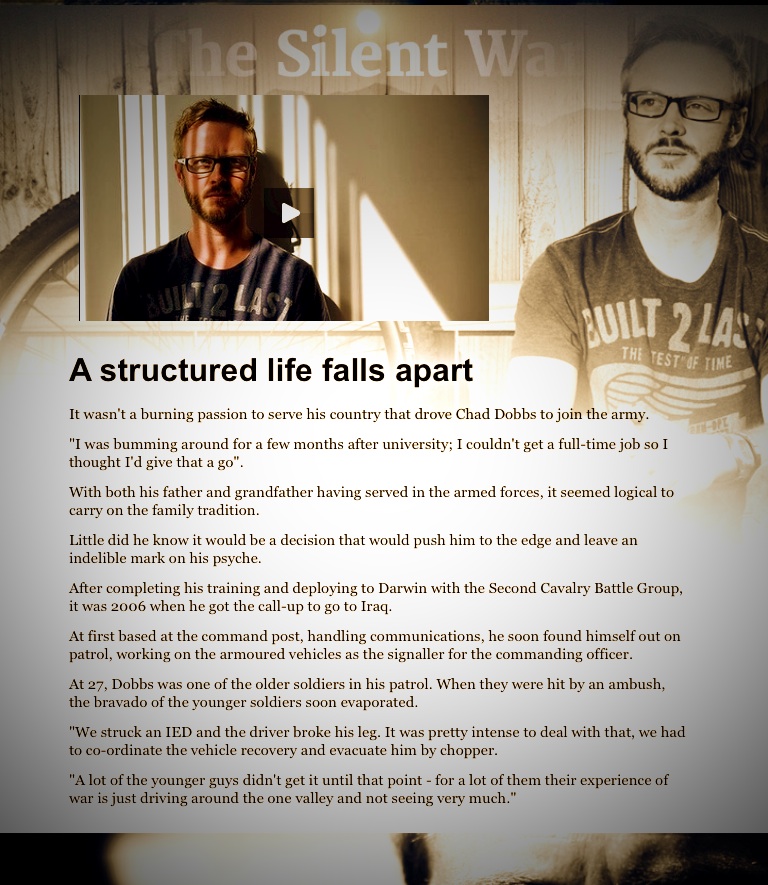
Last year on Sunday 29 September, I sat down with Canberra Times Sunday Editor Scott Hannaford and photographer Melissa Adams to share my story about life with PTSD, depression and life after I hung up my uniform and packed away my boots.

Scott had seen this blog and contacted me via Twitter and asked if I wanted to take part in a story he was putting together on Veteran’s experiences with post traumatic stress disorder and life after deployment.

For a few hours we sat down and talked about my time in Iraq and Afghanistan and my fundraising/awareness raising for Soldier On.  On Sunday 13 October 2013, Scott published a story in the Canberra Times about my fundraising campaign leading up to the 2013 Battle Of The Beasts.

CanberraTimes Article.:Click here to read the original story at the Canberra Times:.

After months of hard work Scott’s story was published in all major Fairfax newspapers and online with a suite of interactive media including our interviews and photos from overseas.

Below is my interview from the Canberra Times website and video interview with Scott and Mel.

.:Click here to view my video interview:.

.:Click here to go the interactive website:.

IW 002 IW 003 IW 004 IW 005 IW 006 IW 007 IW 008 IW 009 IW 010

Rantings Of A Thirty-Something Cyclist

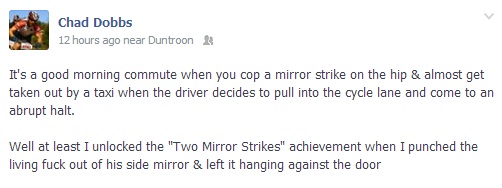
This morning I posted a Facebook status after a somewhat eventful commute to work on the road bike.

FB Rant.:The status in question:.

I post a lot of cycling related things on Facebook; considering I spend an average of 15 hours a week on the bike, it’s not uncommon for seemingly eventful things occur.  Combine the types of riding I do, put bluntly: shit happens!  I ride and race mountain bikes, crashes occur; I ride some fairly rough terrain inhabited by many of Australia’s native animals; I got bitten by a snake.

I also ride a road bike.  This doesn’t mean I ride on the road in front of cars sipping a latte while slowing down traffic.  I weigh 76kg, ride an 11kg aluminium frame bike while wearing lycra, a lightweight but extremely strong helmet and I stick to cycle paths and cycle lanes adjacent to the lanes motor vehicles drive in.  Yet I am often a target for bottles being thrown at my head, being spat on, car doors being opened on me and simply abused for riding a bike.

I’ll stay away from the “you don’t pay rego argument”… No fuck it!  I own a car with a turbo I pay shit-loads in registration and insurance, I pay my taxes, I insure my bikes, I also pay a yearly registration to ride my mountain bike in competitive races… Holy shit – I pay fucking rego for a bike!

I also pay a higher private health fund premium to cover potential injuries whilst riding and most importantly I help reduce carbon emissions and road congestion.  Plus in NO STATE IN AUSTRALIA does motor vehicle registration directly fund road works or road safety programs so doubly go fuck yourself with those arguments.

There are three reasons why I ride a bike:
1)  I enjoy it
2)  I don’t want to be a thirty-something fat slob whose weight roughly equals the height in cm minus age in years equation (HTcm – AGEyrs = FAT+UNHEALTHY)
3)  I live with a depressive disorder and cycling helps curb the dramatic highs and devastating lows that impact my life and lives of the people around me

When I ride a mountain bike, I am extremely focused yet very relaxed.  It’s quite easy to be spinning a pair of aching legs, sweating dripping down my face and I’m still smiling ear to ear.  It’s a Zen-like experience a lot of the time; riding, friends and Flow.

When I’m on a road bike it’s a very different experience.  I like to road ride alone; I don’t enjoy riding with others.  Because of this you won’t find me in a bunch holding up traffic by taking up an entire road lane.  There is also another side to my road riding persona; I am extremely reactive to my environment.  If mountain biking is the good side of my riding, road riding is the dark side.

People with depressive disorders aren’t always sad, sitting in a dark room and crying.  Sometimes we are aggressive, violent and act out without warning.  When a cyclist rides on the road, albeit in a cycling lane, we are extremely vulnerable.  Simply put, I weigh less than 90kg with bike, a car weighs ten times that and is often travelling two to three times faster than my average commuting speed of 32km/hr.  If a motor vehicle hits me at speed I’ll either be seriously injured or killed.

When I ride on the road I am hyper-vigilant, I am constantly looking around and trying to anticipate what vehicles are going to do.  In Canberra the most popular sport for motor vehicles is running red lights.  Seriously it’s appalling how often this happens; and it’s not just cars there are a lot of trucks that do it, particularly early in the morning.  It’s also very common for vehicles to either not see or ignore cyclists.  It’s a daily event having a car pull over into the cycle lane to drop off a passenger or answer a phone; and more often than not they don’t use indicators either.

When I encounter this I get angry.  Sometimes the driver will see me shaking my head at them, a few choice words or a one, maybe two finger salute as I ride past.  Sometimes a driver will completely ignore the road rules and directly endanger my life.  When this occurs I will act aggressively to the driver and vehicle.  I have slammed my fist on windows, I have squirted water through windows and this morning I punched and broke a mirror on a taxi.

A few minutes before this event I had a car cut me off and clip me on the hip with the side mirror.  We were both travelling at a low-speed so it was a light slap and I highly doubt the driver was aware of it happening.

Not five minutes later I rounded the corner into London Circuit from Northbourne Avenue and stayed in the green painted cycle lane.  From behind me a taxi sped past my right side, swerved into the cycle lane and came to a complete stop.  I had to death-grip both brakes and came to a screeching halt inches from smashing into the taxi’s boot.  Already annoyed about being clipped by a mirror, I rolled next to the cab and proceeded to punch the side mirror until it was attached to the car only by the internal electrical wires.

Did I over react? Yes.  Am I sorry? No.  This is a ‘professional’ driver that completely ignored the road rules and put my safety as risk.  I don’t really care about his mirror, I don’t really care that he had a passenger in the back seat, I don’t really care that I dropped both the F and C-bombs at a high a rate and volume.  At the end of the day if I was complacent I would have crashed into the back of his taxi and ended up with serious injuries.

Yes some cyclists ride erratically and disobey the road rules.  This annoys me as well; but in comparison to the amount of motor vehicles that do the same it’s an inconsequential number.  I know this post is a fairly long rant about me justifying my actions; but at the end of the day if a motor vehicle hits a cyclist it’s not just a faceless entity that is left bleeding, broken or dead on the asphalt; it is someone’s Mother, Father, Sister, Brother, Husband, Wife, Son, Daughter or Friend.

A Radical Change In Diet – Or How I Stopped Eating Meat & Became A Vegetarian

Six weeks ago I stopped eating meat.  Much to the chagrin of my Wife, bacon-obsessed cycling group and Mother (who firmly believes that fish and chicken don’t count as ‘real’ meat.).

There are several pros and cons to this change which I didn’t gradually lead into; I basically considered it privately for a few weeks, announced my intention to my Wife and then overnight proclaimed I wouldn’t eat meat anymore.

Why Stop Eating Meat?
The most logical and hardest question to answer.

First off, I’m not one of the ‘meat is murder’ crowd.  I have slaughtered and butchered some of God’s cute little creatures with my own hands, have visited an abattoir and have partaken in countless meat-filled BBQ’s over the years.  My choice to cut out meat is not one based on ethical concerns and I’m certainly not going to be ‘that’ person at a BBQ that asks for the plate to be cleaned before my veggie patties get cooked; oh and I despise tofu!

My decision to stop eating meat comes down to three major reasons:

#1: Mental Health
I live with a depressive and anxiety disorder that makes me prone to rapid mood swings, violent outbursts and irrational behaviour.  Couple this with a form of Post Traumatic Stress Disorder and you get a person that can swing from jovial and on top of the world to a person that is best kept in a dark room away from other people and sharp objects.

A healthy diet plays a large part in maintaining mental wellbeing.  Consuming food is what keeps the body functioning and ultimately keeps you alive.  Prior to changing my diet I would consume a large amount of red meat and chicken.  It wasn’t uncommon for me to eat an entire roast chicken in one sitting and order a steak with a side of steak at Hog’s Breath. 

Diet plays a very large and understated part in balancing mental health.  Certain foods can evoke different mental and physiological reactions.  Chocolate and ice cream are well-known for being the comfort food of choice for emotional men and women.  I am lactose intolerant and love ice cream; ergo the pleasure I derive from consuming it is quickly overtaken as my body promptly reacts to the enzymes it cannot process.

In the way that eating certain types of food makes people happy, the digestive processes after eating red and white meat made me lethargic and as a result unhappy that I didn’t feel like doing anything afterwards.  Something as simple as not feeling like getting off the couch to go for a ride or a walk around the lake would compound itself into feelings of guilt, a distorted self body image and ultimately trigger a mental reaction that would lead to a depressive episode.

Basically, that wonderful meat hangover feeling most people get after eating a meat-heavy meal is absent for me; instead I feel sick, depressed and my body will rapidly purge the offending meal in a most violent way.

#2: Metabolism and Body Weight
I have a fast metabolism and it’s very difficult for me to maintain my body weight when exercising.  Ideally I sit between 75-80kg when riding to a training program.  This may seem like a large fluctuation, but in reality, it is mostly fluid retention and fluid loss during and after rides.

On average I will lose 3-5kg on a 50km mountain bike ride whilst my fluid intake will be upwards of 2-3 litres and calorie intake at close to 2000 calories via energy gels and muesli bars.  My recovery period after a medium to high intensity ride over 50km is close to 48 hours and I will constantly eat and drink to rebuild my energy reserves and gain the weight I lost.

As stated before, I feel sick after eating meat, I also feel full and won’t continue eating which in turn slows my recovery period and has an adverse effect on getting back on the bike and returning to optimal training ability in the shortest time possible.

#3: An (Not-So-Slowly) Aging Body
Everyone gets older and joints and muscles start to ache and some days it’s harder to get out of bed, right?  Wrong!  I’m 32 years old and I have constant pain in my left knee, discomfort in my hands and wrists; and restricted movement in my left shoulder.

I can credit my days in the Australian Army for most of my knee problems and my shoulder to a bike crash which tore my left pectoral muscle last year.  But the fingers, wrists and constant patella issues in my knee; well that is thanks to early onset of osteoarthritis.

There is a link between eating a meat rich diet and an increase in adverse arthritic symptoms.  This is due to the high fat content in non-lean meats and the obsession with meat-heavy meals in Western culture.  Can’t I just switch to lean meat?  I could but it doesn’t negate the two previous reasons I’ve stated and the fact that in just six weeks I’ve noticed improvement with my knee and joint pain and dexterity.

Looking Towards The Future
Will I continue my vegetarian diet indefinitely?

To be honest, probably not.  As I stated at the beginning this isn’t because of an animal ethics issue; this is because I wanted to feel healthy both in body and mind.

So far the basic goal of feeling better is definitely working for me.  I have more energy, I’m eating all the right foods to ensure I get the nutrients my body needs and ultimately I’m enjoying eating more diverse and natural foods.

On a side note if I was trapped on a deserted island and cannibalism was my only avenue of survival I wouldn’t hesitate to eat some human sirloin!

2013 In Review – Cycling

2013 was the year I decided I wanted to become a cyclist.  Sure anyone can ride a bike; but I wanted to fully immerse myself in the technology, the science and the lifestyle.

My year started off with the simple aim of riding more.  Commuting to work most days of the week and slowly building my fitness was the foundation for what would become a central part of my life in 2013.

I was extremely lucky to have the support of my Wife who allowed me time away from home and to buy new bikes; and to be surrounded by the fantastic bunch of people who comprise The Berm.  At least once a week I would join other Bermers on a social ride at one of Canberra’s world-class mountain biking areas.  Riding with others, most of whom are a lot more confident and capable on a bike enabled me to improve gradually throughout the year.

2013 – BY THE NUMBERS

.:1:.
One major crash during the year
During the final round of the 2012/2013 CORC XC Series at Mt Stromlo I had a heavy crash while attempting a jump near the end of the race.  End result: A torn left pectoral muscle that would haunt me throughout the year.
IMG_2841

.:2:.
The number of new bikes I bought during 2013
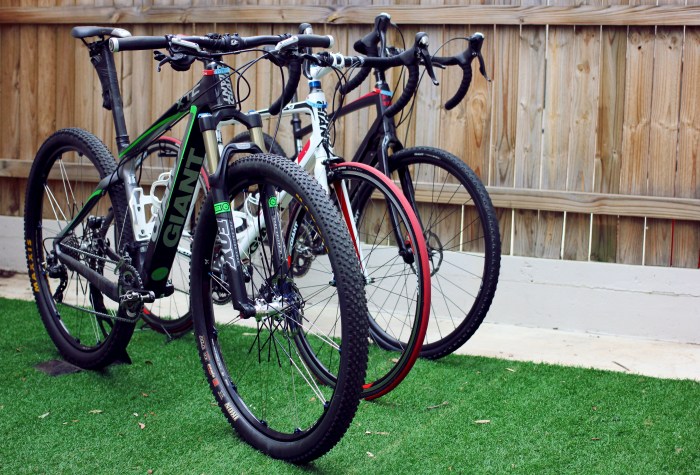
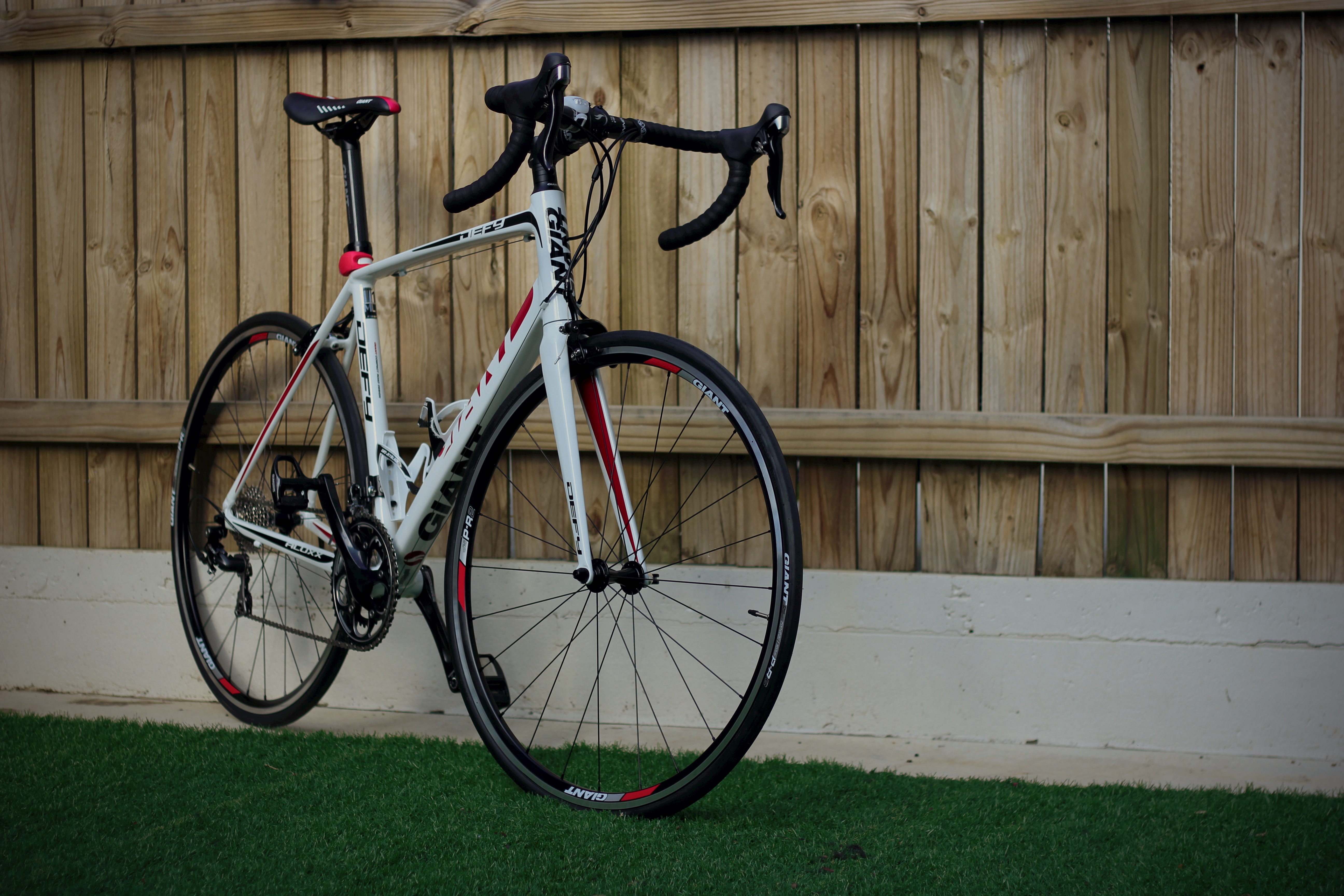
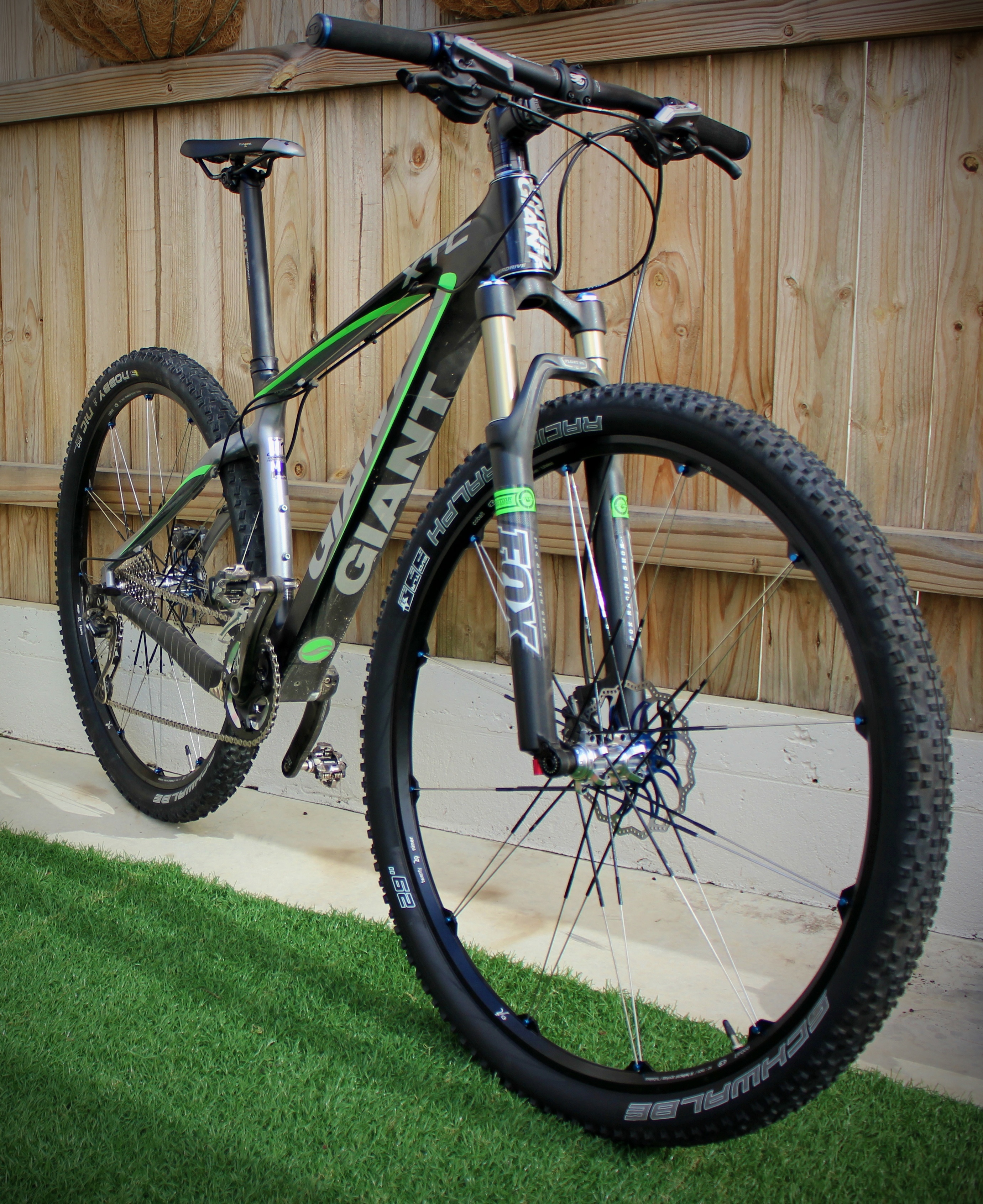
My first purchase of the year was Sara the Giant Defy road bike in January followed by Kate the Giant XTC in June.
BIKES 051Kate 04

.:7:.
The number of major events that I raced in during 2013
Sure there were no podium finishes but that 5th on the Flowing Beast felt pretty sweet!
BOTB 13 057

.:62:.
The amount on vertical kilometres I climbed in 2013

.:108:.
In kilometres, my longest single ride of 2013

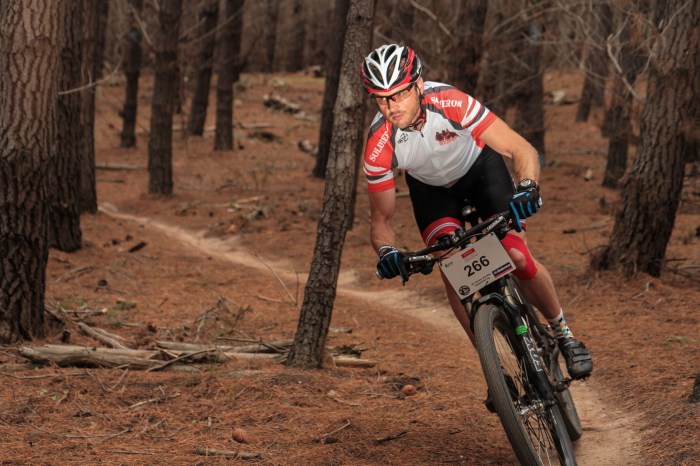
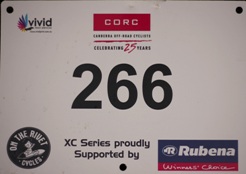
.:266:.
My CORC XC race plate number
Race Plate 06
BIKES 112

.:280:.
How many times I rode my bike(s) in 2013

.:309:.
The amount of hours I spent riding in 2013

.:5’790:.
In dollars, the amount raised for Soldier On in 2013
BOTB 13 117
.:6’773:.
In kilometres, the total distance I rode in 2013

Wishing everyone a safe 2014!
.:Chad:.

Random 031