Like all good things, this Blog series must also come to an end. For those of you diligent enough to read through the preceding five posts, I give to you, the final part in this series.
It’s difficult to sum up an experience like the Trois Etapes into a short form Blog series. There are many factors that come into play when choosing what to include, what photos to use and how to balance the narrative so that it doesn’t sway too far into what I like to call “too-much-Chad” territory. There were certain events, photos and details that I had to exclude. Not due to any lewd behaviour, but because some members of the team are still serving in ADF and most importantly, it is not my place to tell their stories no matter how inspirational and confronting they may be.
As previously mentioned in Part 1, this was a long journey for me; and now that it’s over I find things have definitely changed for me. I’ve always been brutally honest on this Blog and that is something I set out to do from the start. I chose the name “Blogged Down By Life” for a reason. Many days I wake up and feel like I am bogged down by what my life has become.
I live with what is clearly defined and diagnosed as a mental illness; I live with a form of PTSD and I live with a sometimes debilitating depressive disorder. But despite this I do not suffer from anything. I have made choices in recent years that have defined the person I now am; some were good choices, some were not. It is difficult to find a balance between the two when your outlook of life is immediately tainted with a pessimistic view and defeatist attitude. The highs I experience in life are exhilarating and the lows, well, sometimes the black dog gets the best of me.
During the lead up to the Trois Etapes I experienced many highs and lows; and more often than not I let frustration get the better of me. Dealing with a charity like Soldier On is a unique experience. A small number of dedicated staff, a heavy workload and an increasing number of requests for support, mean that details were often late in being disseminated to the team. Things that often frustrated me were frustrating the staff even more as they were the ones spending hours of their own time trying to fix potentially catastrophic issues. Differing opinions, stubborn people on both sides of the fence and a constant stream of minor issues arising, threatened to derail this massive undertaking before we even left Australia.
Do I wish some-things had occurred differently? The simple answer to that is yes. It was an unfortunate fact that due to so many competing events and the juggling of several prominent people’s schedules that the event launch our trip deserved did not happen. The majority of the promotion for this event was on Soldier On’s Facebook page and my team-mates saturating social media with the details.
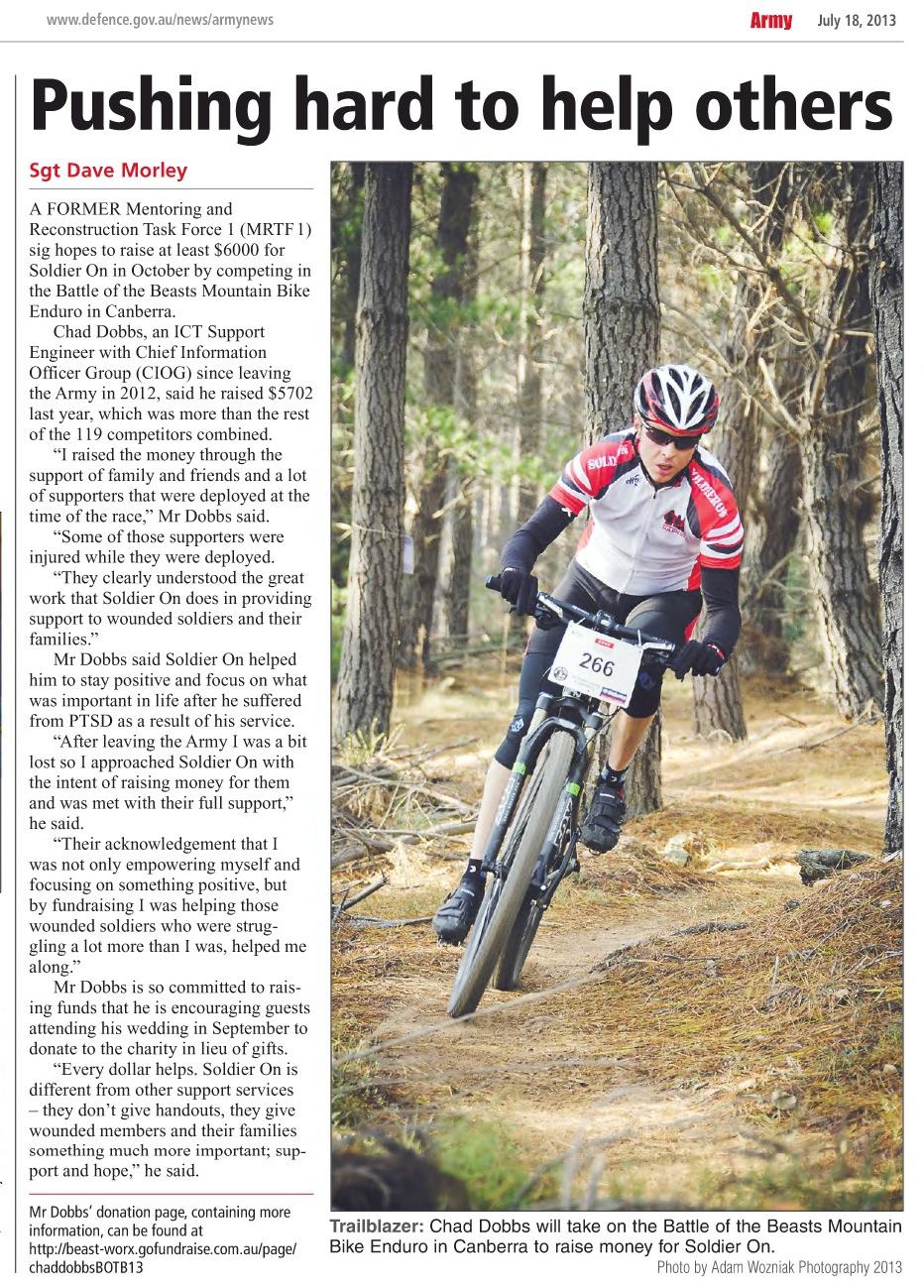
I am a more prominent advocate and supporter of Solider On and this is often a slippery path to navigate. Through my early interaction and fundraising I essentially planted the seed that would grow to become Soldier On Cycling; a community of like-minded people and veterans that were using cycling a means to recovery and also to raise awareness for the charity itself. This is something I am extremely proud of and elated to see what the idea has now grown into; different chapters in several different cities and of course the Soldier On cycling kit. But what this meant for me, on a personal level, was that I had quite suddenly became a face and a voice for Soldier On; not something I was prepared for.
This quite suddenly came to a head earlier this year when an older Blog post about my interaction with the RSL went somewhat viral across ADF and veteran aligned social media groups. I received an enormous amount of responses to that post and subsequently many others I had made. The majority were people agreeing and supporting my stance; however the negative comments ranged from differing opinions to abuse to outright death threats. This was my first taste of what my outspoken views on veterans issues would attract.
As the year progressed and Soldier On Cycling promoted and conducted the Remembrance Ride I chose to heavily promote the event on this Blog, my personal social media accounts and in the local and national media; something I do not regret doing. While the Remembrance Ride achieved a great many things, most notably through a heavy saturation in the media; I had been left wondering if Soldier On’s participation in the Trois Etapes achieved the same level of achievement. Over the last few days interacting with various people through social media, both friends and strangers, the overwhelming opinion is that we either didn’t achieve what we set out to do or we simply went on a holiday to France.
Do I agree with this? No. I do believe there were some missed opportunities leading up to the event that were out of our’s and Soldier On’s control which left more than a few people asking what was going on. One point that I do take issue with though; is that the seven of us went to France on a holiday.
Each rider was chosen to participate for various reasons. Either because of their tireless efforts in raising the profile of Soldier On, or by being affected by their service in the ADF; mentally or physically. Like myself, many of the team has a devoted a great deal of their own time and funds to promote Soldier On and the issues younger veterans face on a daily basis.
Did I see the trip to France as a reward for this? No. I honestly saw it as an opportunity to promote Soldier On and Soldier On Cycling to a potential new global audience; and this is something we, as a team managed to do. But, this is something that was not relayed back to our’s and Soldier On’s supporters and critics back in Australia. There is no finger of blame to point for this, it was something that just did not occur.
The most important achievement by the seven of us travelling to France and racing in a cycling Pro-Am was the personal growth that occurred in each of us. I shared personal accounts of survival, loss, hope and desperation with a group of men that I will never forget. I saw men breakdown physically, mentally and emotionally after successfully riding up a mountain. Why? Because this was about breaking down barriers and rebuilding our lives with hope and self-confidence. At some point during the event we all conquered something that was holding us back in our lives. For several of us this was the most physically and mentally demanding thing we had done since taking off the uniform.
My story was not dissimilar from many of the others and since I have returned I have received emails and messages asking me why fundraising money was spent on sending us to France. It should also be remembered that I am not an employee or ambassador for Soldier On. I don’t know the breakdown of the budget for Soldier On; but I do know that the vast majority of the Trois Etapes trip was funded by private sponsorship from Defence industry partners. It should also be noted that both our photographer Matt and driver Bruce paid their own way for the entire trip! Also, each of us that participated spent a large sum of money leading up to and during the event to fund various travelling expenses.
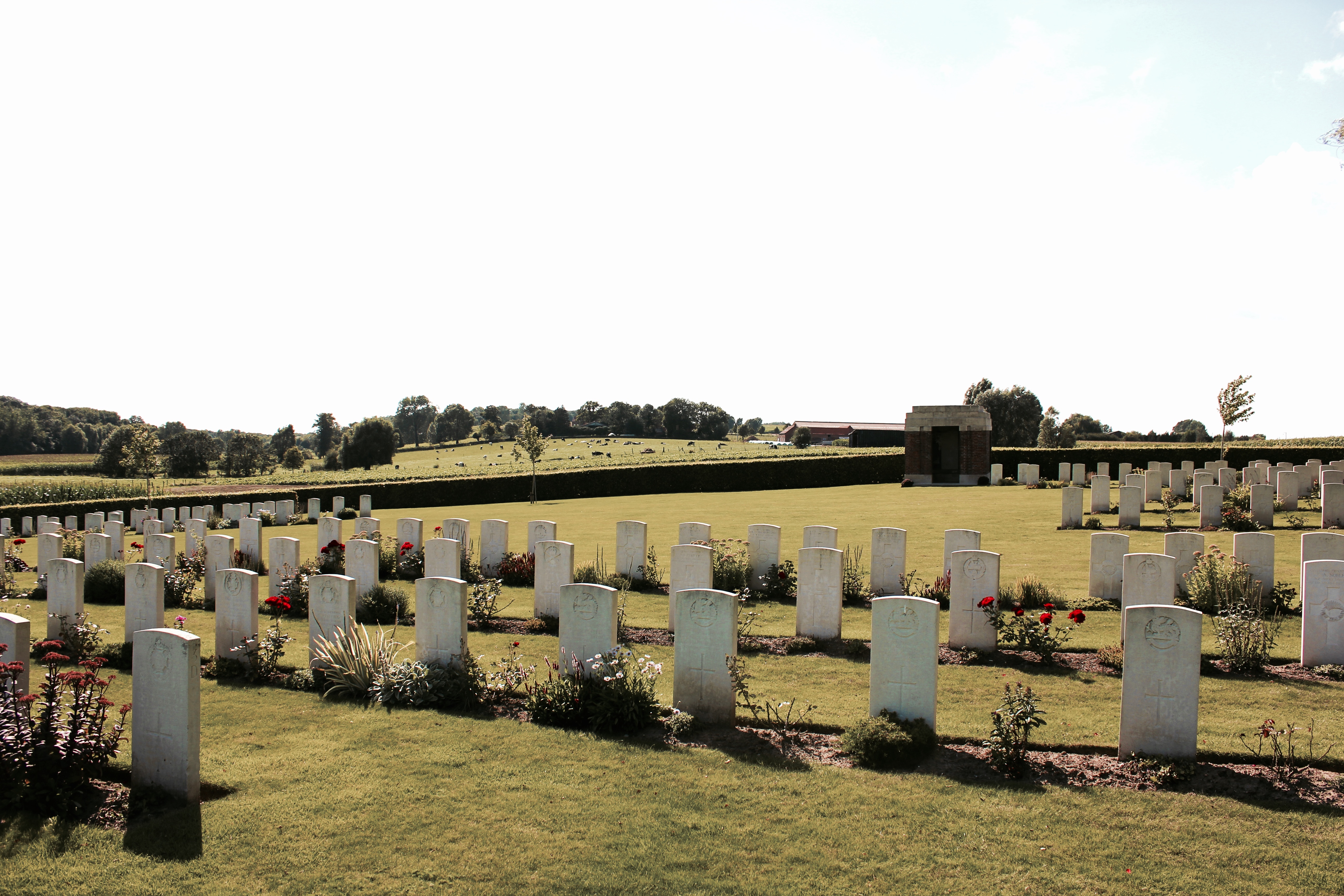
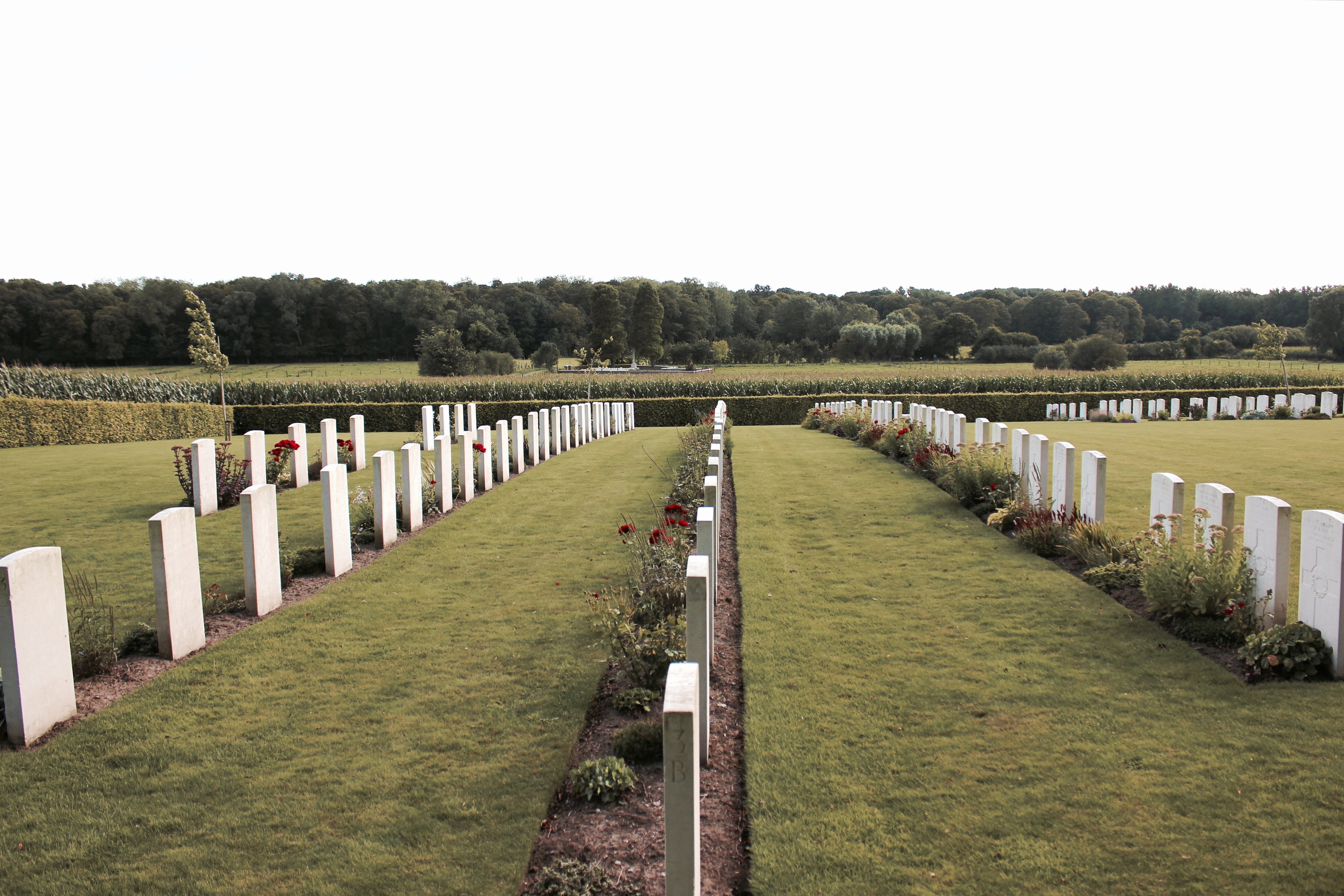
This post was supposed to be a wrap-of our final week in France. Where we as a team made up of young Australian Veterans, toured the Belgium Battlefields of World War One, paid our respects at the graves of long dead Australian servicemen and visited the Menin Gate and saw the tens of thousands of forever young Australian men’s names etched in stone. Instead I wrote a post defending Soldier On, my team-mates and myself. I try to not let the negativity get the best of me, but when I am forced into a corner by dozens of abusive emails and messages I will defend myself and the others.
Chad



Thank you to my Wife, daughter, family and friends. Without your support I wouldn’t be here today, let alone have made over the French Pyrenees.
Thank you to my team-mates: Andy, Justin, Shane, Matt, Dan and Adam. Hopefully you all know how much your support and encouragement meant to me.
Thank you to Scott, Bruce, Matt, Jodie, Kate and Jenine – none of this would have happened without your help and tireless efforts in supporting us.
Thank you to Soldier On for their incredible work and support: Pearl, Clare, Dion, Carlie, John, Danielle, Meredith, Anna and especially Tony – (for being a friend, a mentor and being you).


 Blogged Down By Life