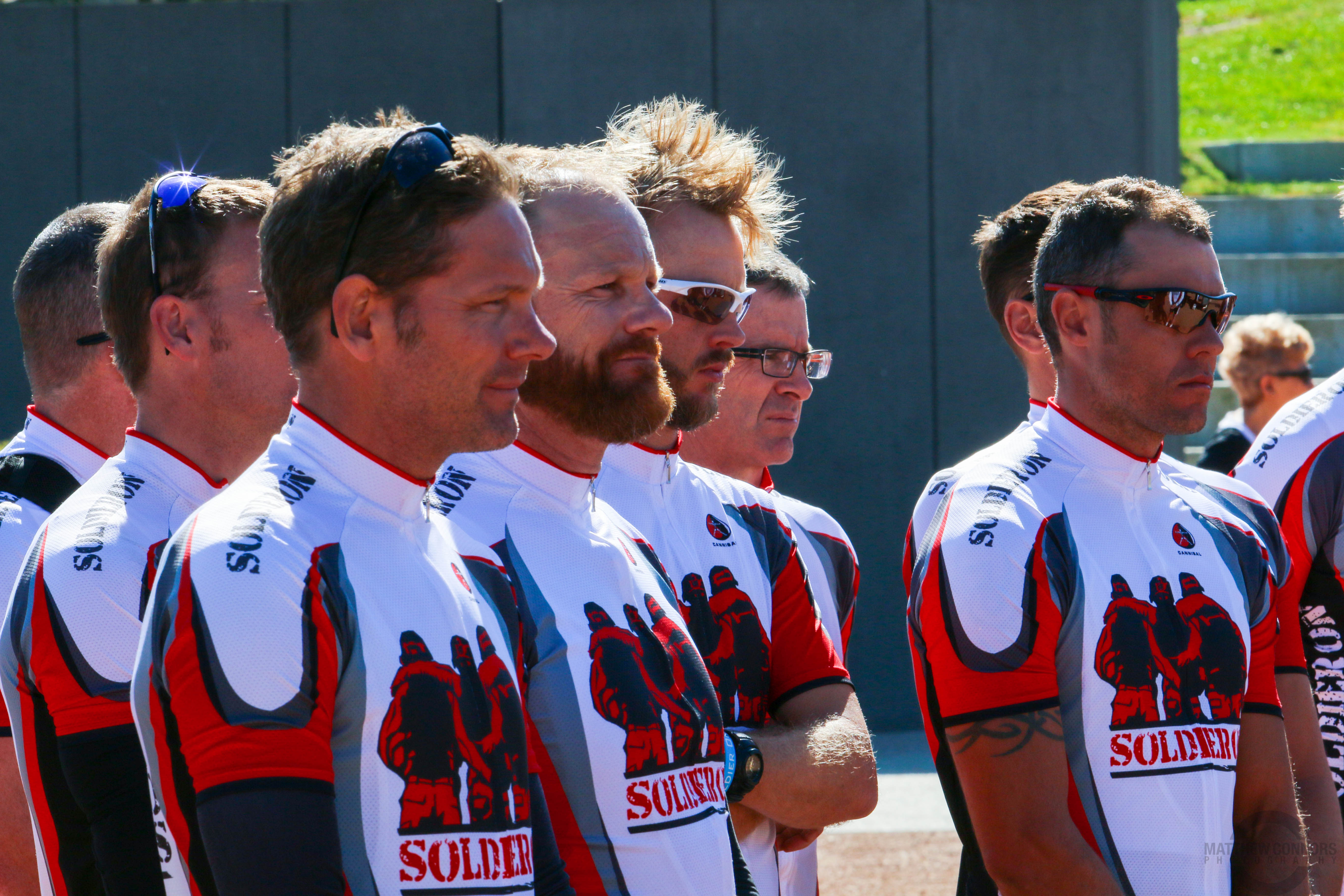
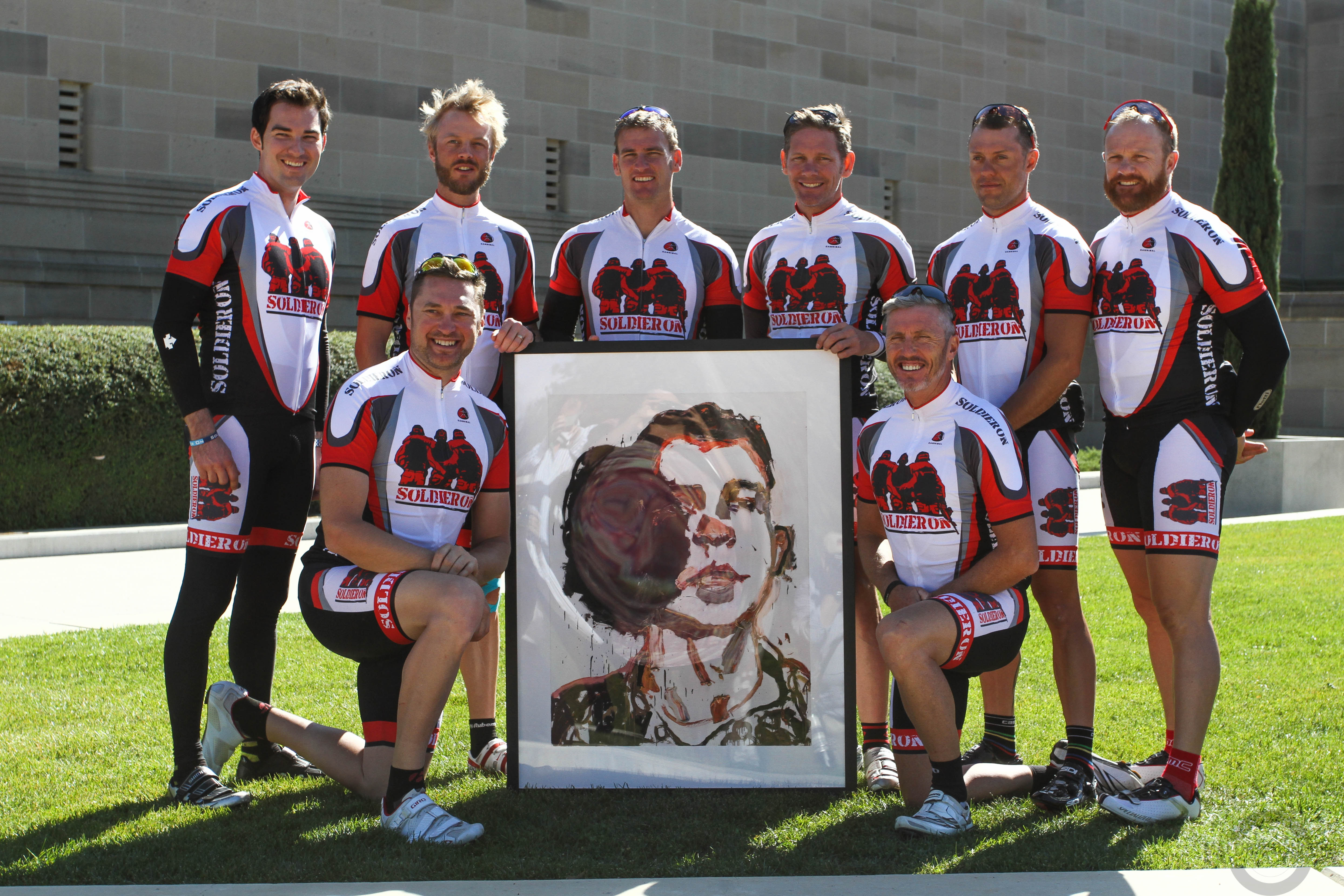
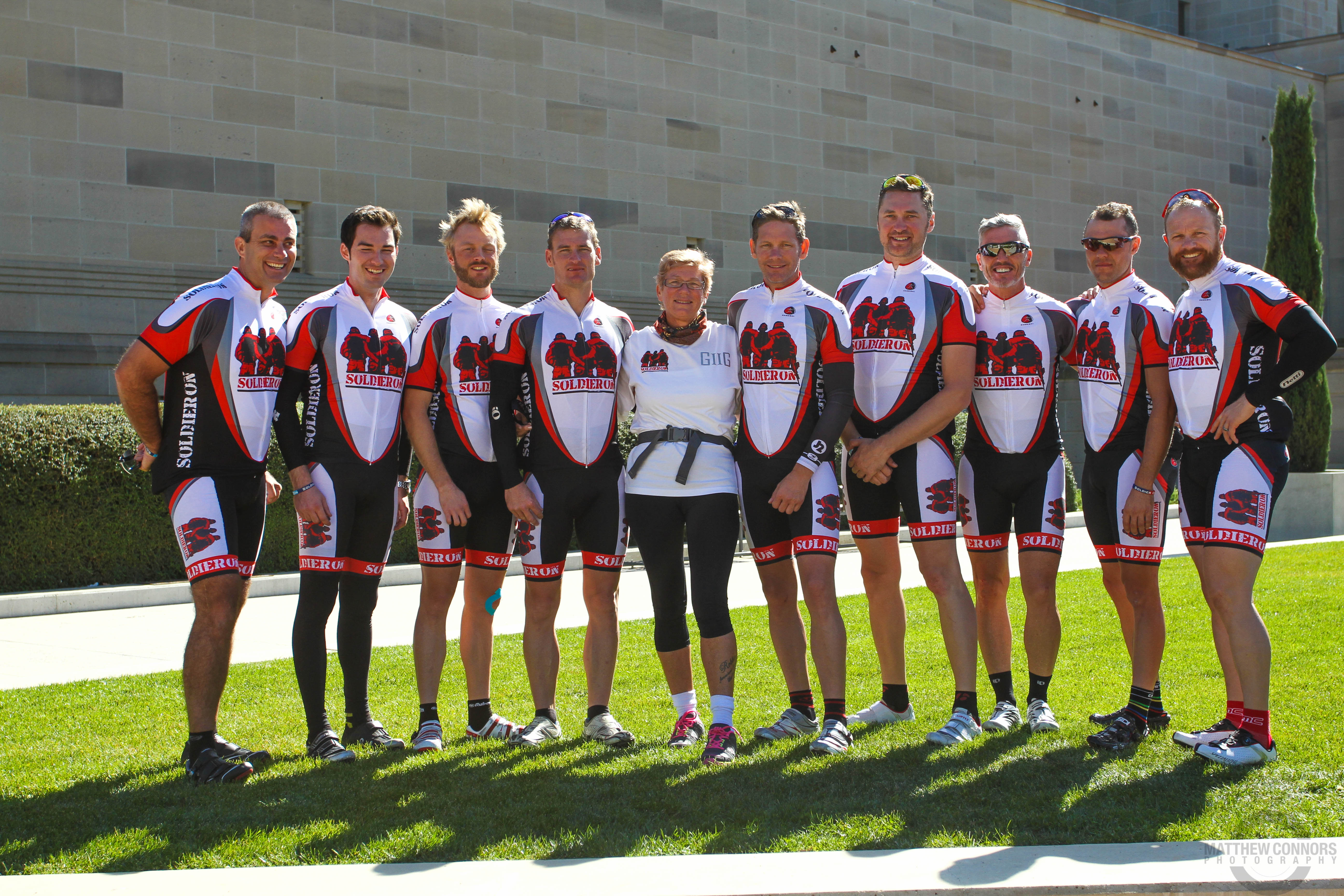
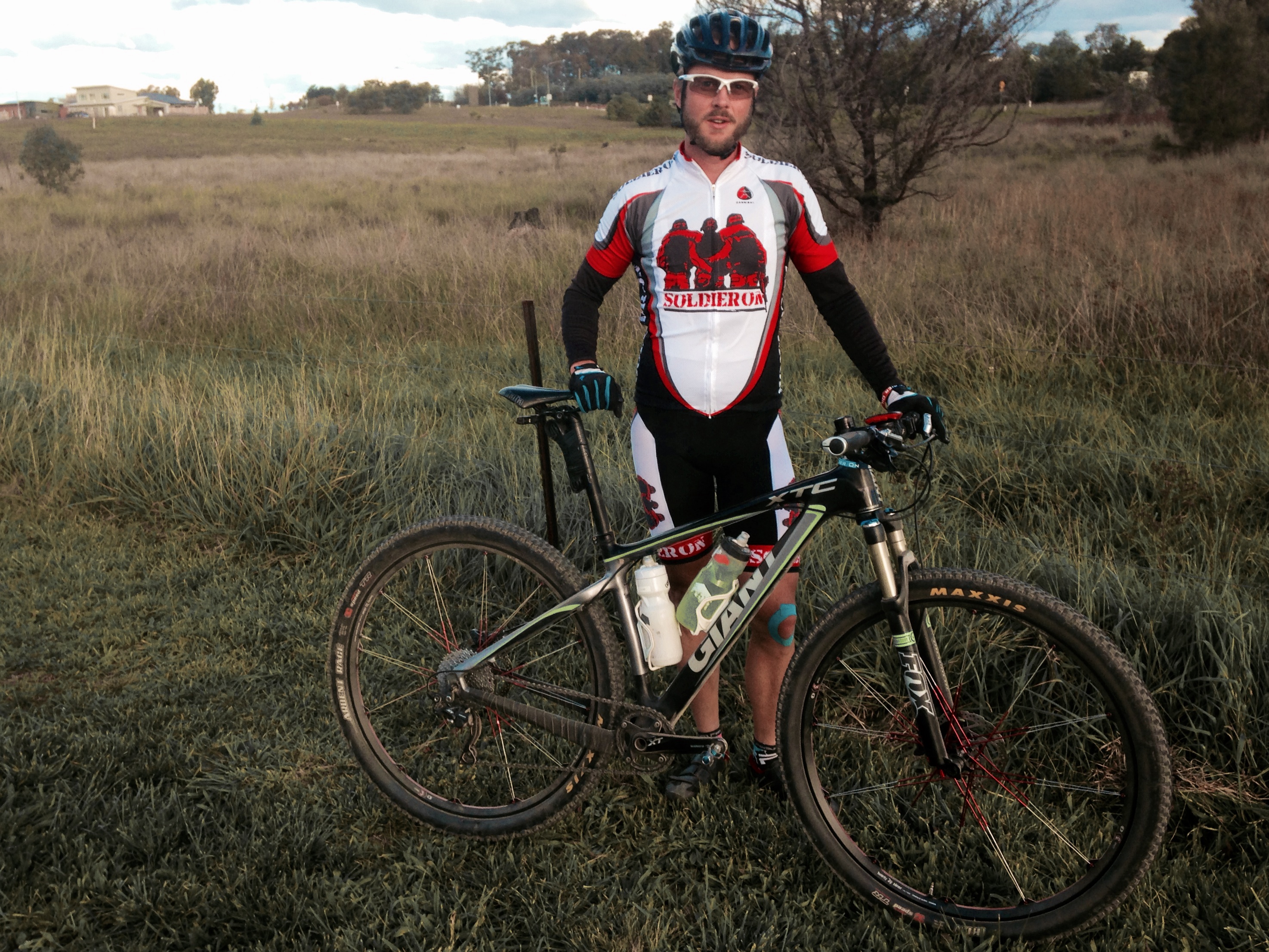
Trois Etapes 2014 – Part 6 – Expectation vs Reality

Like all good things, this Blog series must also come to an end.  For those of you diligent enough to read through the preceding five posts, I give to you, the final part in this series.

It’s difficult to sum up an experience like the Trois Etapes into a short form Blog series.  There are many factors that come into play when choosing what to include, what photos to use and how to balance the narrative so that it doesn’t sway too far into what I like to call “too-much-Chad” territory.  There were certain events, photos and details that I had to exclude.  Not due to any lewd behaviour, but because some members of the team are still serving in ADF and most importantly, it is not my place to tell their stories no matter how inspirational and confronting they may be.
As previously mentioned in Part 1, this was a long journey for me; and now that it’s over I find things have definitely changed for me.  I’ve always been brutally honest on this Blog and that is something I set out to do from the start.  I chose the name “Blogged Down By Life” for a reason.  Many days I wake up and feel like I am bogged down by what my life has become.
I live with what is clearly defined and diagnosed as a mental illness; I live with a form of PTSD and I live with a sometimes debilitating depressive disorder.  But despite this I do not suffer from anything.  I have made choices in recent years that have defined the person I now am; some were good choices, some were not.  It is difficult to find a balance between the two when your outlook of life is immediately tainted with a pessimistic view and defeatist attitude.  The highs I experience in life are exhilarating and the lows, well, sometimes the black dog gets the best of me.
During the lead up to the Trois Etapes I experienced many highs and lows; and more often than not I let frustration get the better of me.  Dealing with a charity like Soldier On is a unique experience.  A small number of dedicated staff, a heavy workload and an increasing number of requests for support, mean that details were often late in being disseminated to the team.  Things that often frustrated me were frustrating the staff even more as they were the ones spending hours of their own time trying to fix potentially catastrophic issues.  Differing opinions, stubborn people on both sides of the fence and a constant stream of minor issues arising, threatened to derail this massive undertaking before we even left Australia.
Do I wish some-things had occurred differently?  The simple answer to that is yes.  It was an unfortunate fact that due to so many competing events and the juggling of several prominent people’s schedules that the event launch our trip deserved did not happen.  The majority of the promotion for this event was on Soldier On’s Facebook page and my team-mates saturating social media with the details.
I am a more prominent advocate and supporter of Solider On and this is often a slippery path to navigate.  Through my early interaction and fundraising I essentially planted the seed that would grow to become Soldier On Cycling; a community of like-minded people and veterans that were using cycling a means to recovery and also to raise awareness for the charity itself.  This is something I am extremely proud of and elated to see what the idea has now grown into; different chapters in several different cities and of course the Soldier On cycling kit.  But what this meant for me, on a personal level, was that I had quite suddenly became a face and a voice for Soldier On; not something I was prepared for.
This quite suddenly came to a head earlier this year when an older Blog post about my interaction with the RSL went somewhat viral across ADF and veteran aligned social media groups.  I received an enormous amount of responses to that post and subsequently many others I had made.  The majority were people agreeing and supporting my stance; however the negative comments ranged from differing opinions to abuse to outright death threats.  This was my first taste of what my outspoken views on veterans issues would attract.
As the year progressed and Soldier On Cycling promoted and conducted the Remembrance Ride I chose to heavily promote the event on this Blog, my personal social media accounts and in the local and national media; something I do not regret doing.  While the Remembrance Ride achieved a great many things, most notably through a heavy saturation in the media; I had been left wondering if Soldier On’s participation in the Trois Etapes achieved the same level of achievement.  Over the last few days interacting with various people through social media, both friends and strangers, the overwhelming opinion is that we either didn’t achieve what we set out to do or we simply went on a holiday to France.
Do I agree with this?  No.  I do believe there were some missed opportunities leading up to the event that were out of our’s and Soldier On’s control which left more than a few people asking what was going on.  One point that I do take issue with though; is that the seven of us went to France on a holiday.
Each rider was chosen to participate for various reasons.  Either because of their tireless efforts in raising the profile of Soldier On, or by being affected by their service in the ADF; mentally or physically.  Like myself, many of the team has a devoted a great deal of their own time and funds to promote Soldier On and the issues younger veterans face on a daily basis.
Did I see the trip to France as a reward for this?  No.  I honestly saw it as an opportunity to promote Soldier On and Soldier On Cycling to a potential new global audience; and this is something we, as a team managed to do.  But, this is something that was not relayed back to our’s and Soldier On’s supporters and critics back in Australia.  There is no finger of blame to point for this, it was something that just did not occur.
The most important achievement by the seven of us travelling to France and racing in a cycling Pro-Am was the personal growth that occurred in each of us.  I shared personal accounts of survival, loss, hope and desperation with a group of men that I will never forget.  I saw men breakdown physically, mentally and emotionally after successfully riding up a mountain.  Why?  Because this was about breaking down barriers and rebuilding our lives with hope and self-confidence.  At some point during the event we all conquered something that was holding us back in our lives.  For several of us this was the most physically and mentally demanding thing we had done since taking off the uniform.
My story was not dissimilar from many of the others and since I have returned I have received emails and messages asking me why fundraising money was spent on sending us to France.  It should also be remembered that I am not an employee or ambassador for Soldier On.  I don’t know the breakdown of the budget for Soldier On; but I do know that the vast majority of the Trois Etapes trip was funded by private sponsorship from Defence industry partners.  It should also be noted that both our photographer Matt and driver Bruce paid their own way for the entire trip!  Also, each of us that participated spent a large sum of money leading up to and during the event to fund various travelling expenses.
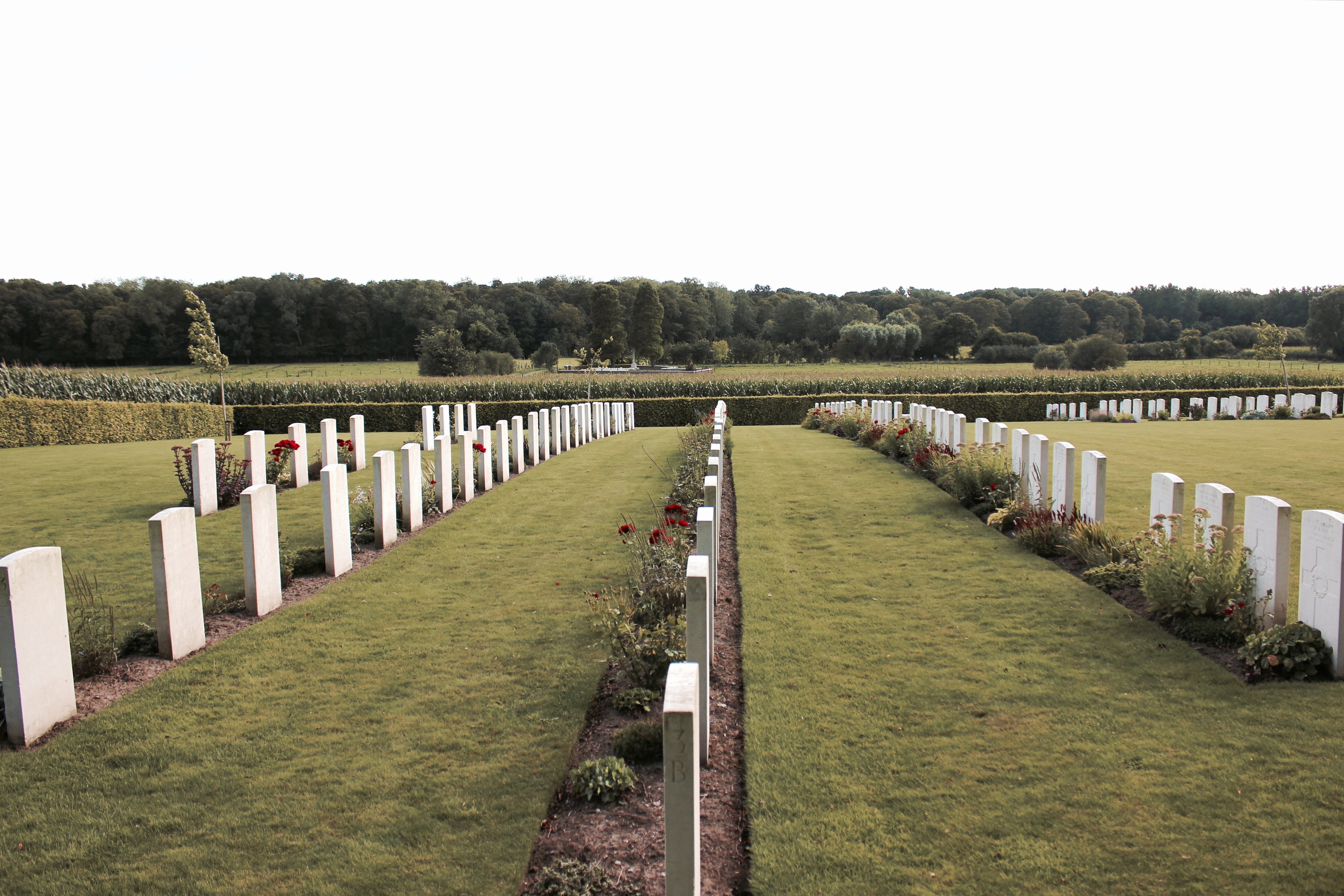
This post was supposed to be a wrap-of our final week in France.  Where we as a team made up of young Australian Veterans, toured the Belgium Battlefields of World War One, paid our respects at the graves of long dead Australian servicemen and visited the Menin Gate and saw the tens of thousands of forever young Australian men’s names etched in stone.  Instead I wrote a post defending Soldier On, my team-mates and myself.  I try to not let the negativity get the best of me, but when I am forced into a corner by dozens of abusive emails and messages I will defend myself and the others.
Chad
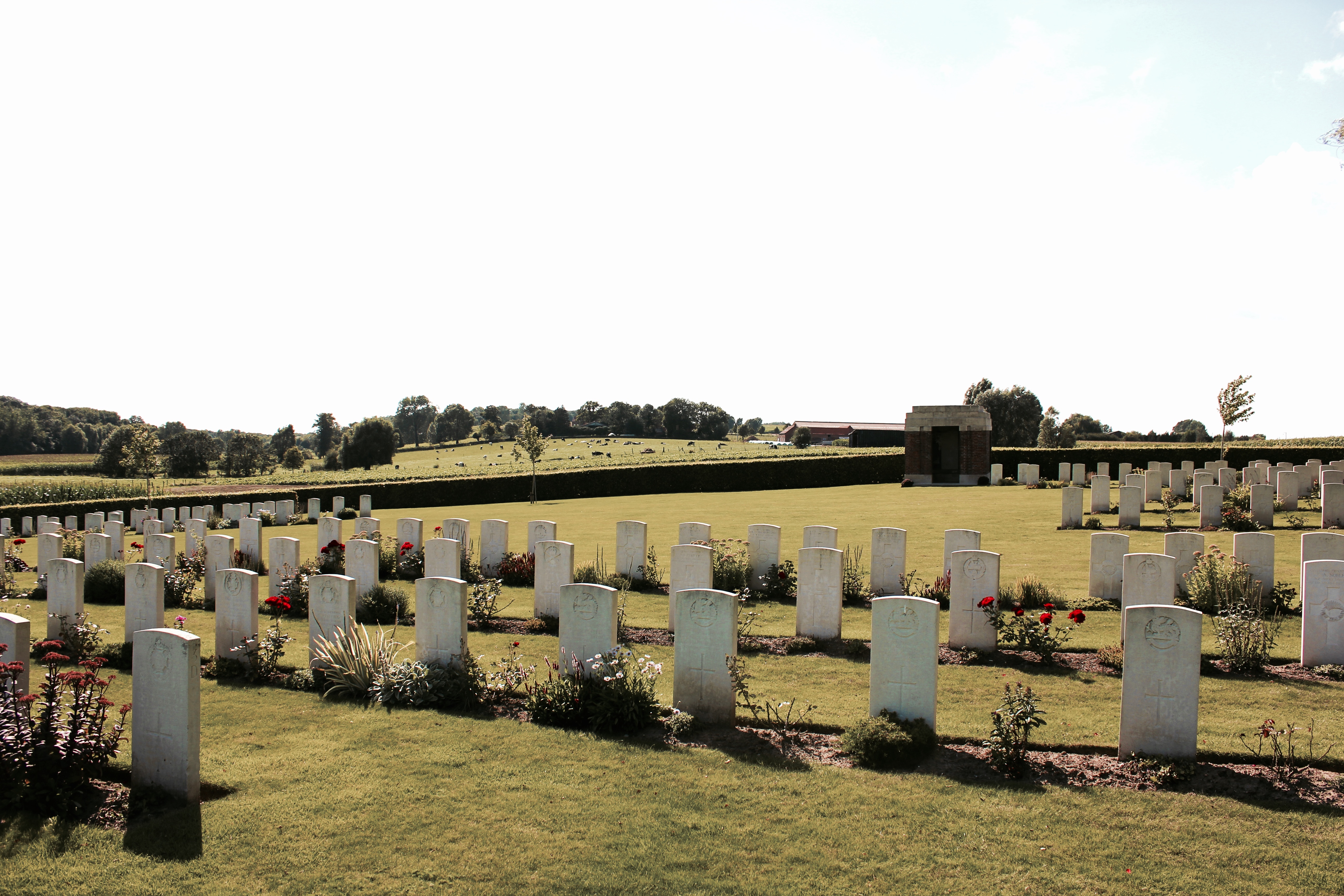
BELGIUM 014
.:WWI Cemetery:.
BELGIUM 015
.:WWI Cemetery:.
BELGIUM 021
.:WWI Cemetery:.
BELGIUM 024
.:WWI 100th Anniversary:.
BELGIUM 025
.:Team Soldier On and coach Scott Sunderland & co:.

Thank you to my Wife, daughter, family and friends.  Without your support I wouldn’t be here today, let alone have made over the French Pyrenees.
Thank you to my team-mates: Andy, Justin, Shane, Matt, Dan and Adam.  Hopefully you all know how much your support and encouragement meant to me.
Thank you to Scott, Bruce, Matt, Jodie, Kate and Jenine – none of this would have happened without your help and tireless efforts in supporting us.
Thank you to Soldier On for their incredible work and support: Pearl, Clare, Dion, Carlie, John, Danielle, Meredith, Anna and especially Tony – (for being a friend, a mentor and being you).
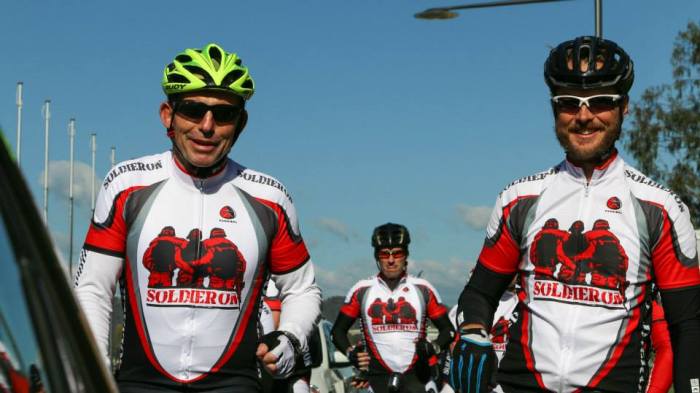
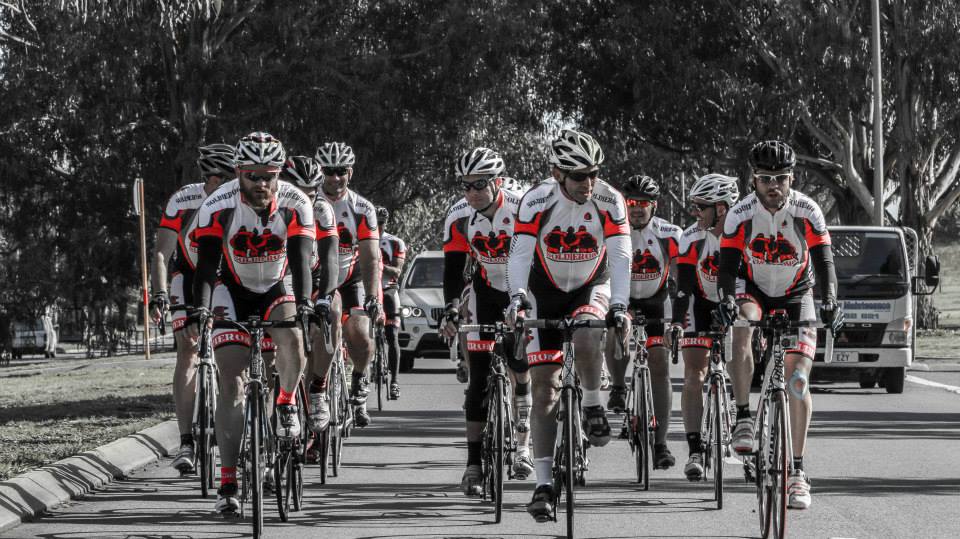
Remembrance Ride 2014 – Part 4

DAY 3 – Thursday 24 April 2014 (Collector To Canberra – The Run Home)

After the media commitments with the Prime Minister were complete, we saddled up and began the ride towards Canberra and our final destination on this huge adventure; the Australian War Memorial.

I sat at the back of the pack with Robbie and watched as the PM was swamped by the sponsor’s representatives.  Slowly but surely, the Veterans had their chance to speak to him.  Our roll into Canberra was slow and steady as Mr Abbott controlled the speed up front with Scott.

As we descended along the Federal Highway towards Northbourne Avenue, we were joined by Mrs Janny Poate (mother of Private Robert Poate – KIA in Afghanistan 29 August 2012) who was riding her mountain bike.  She was ushered and helped to the front of the pack to speak with the PM.  One of the most memorable moments of the ride was seeing Jeffro pushing Mrs Poate past us and alongside Mr Abbott.

As we neared the last few kilometres of the ride, Robbie and I moved to the front and flanked the Prime Minister.  We were to escort him in the AWM and it was during this time I was able to speak with Mr Abbott.  I didn’t hold back.  I spoke not only of my struggles, but also that of my friends and the many others that have not been able to gain access to the appropriate support services.  He was receptive of what I was saying and also very aware of the steps DVA was taking to help veterans access support services once they have discharged from the ADF.

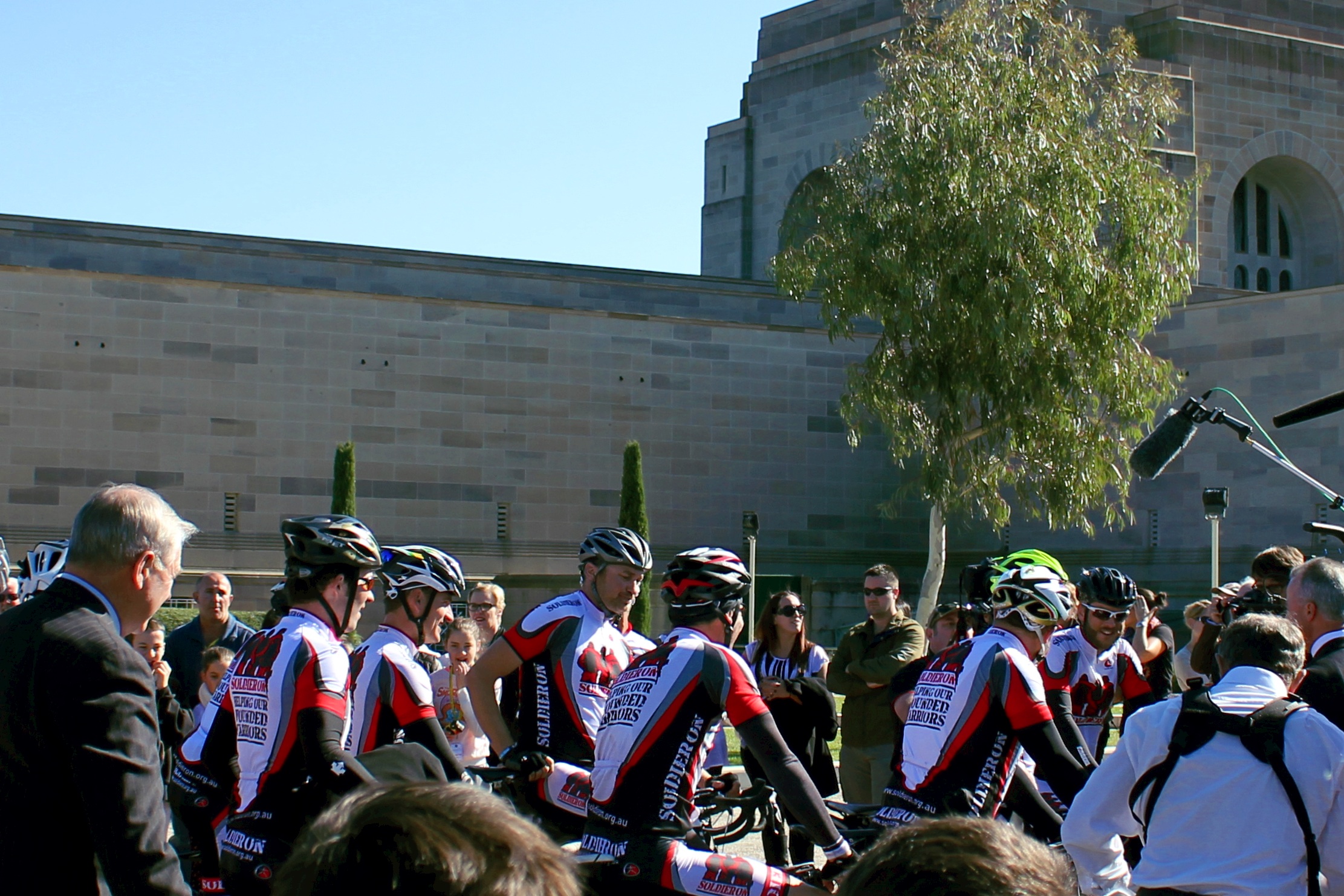
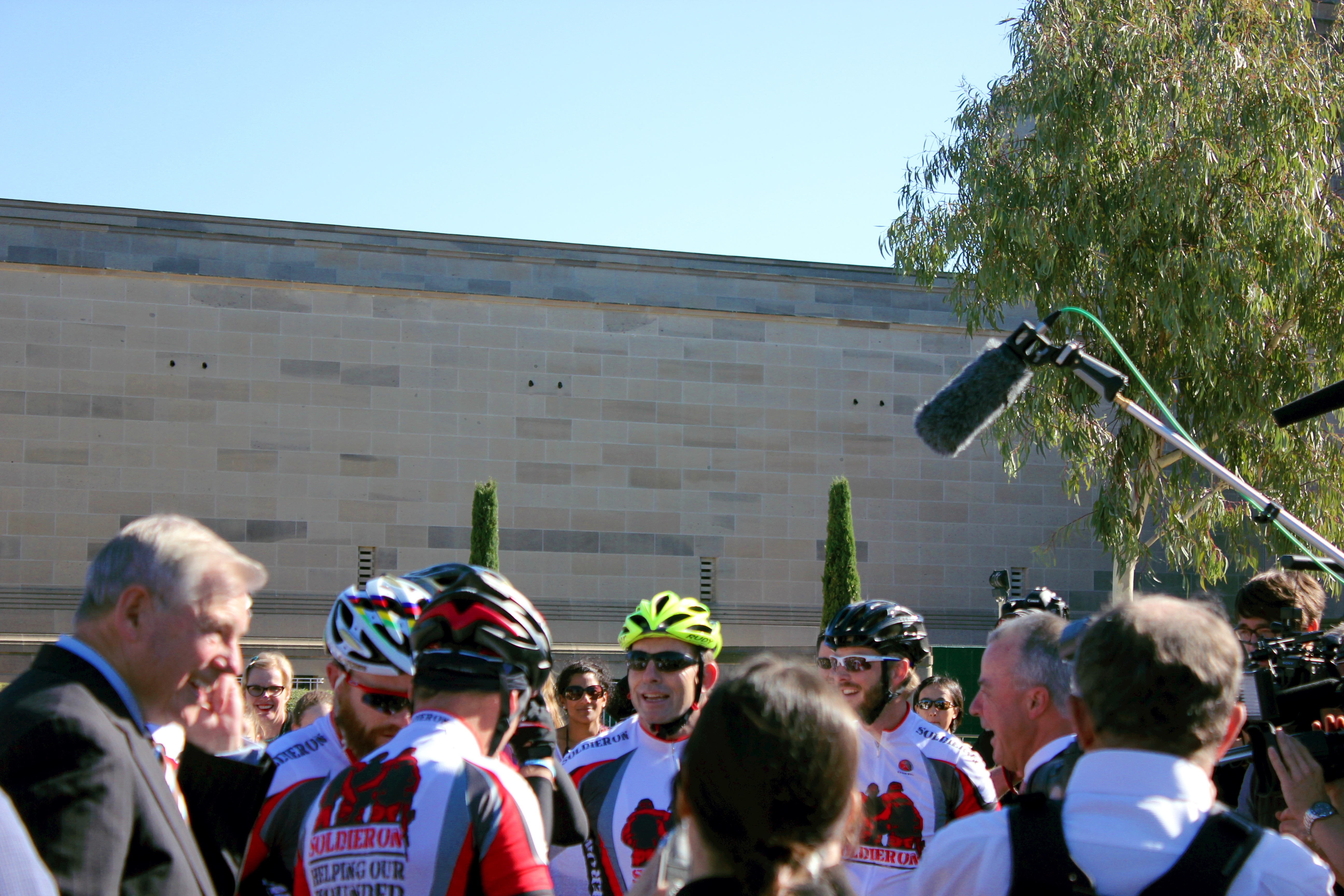
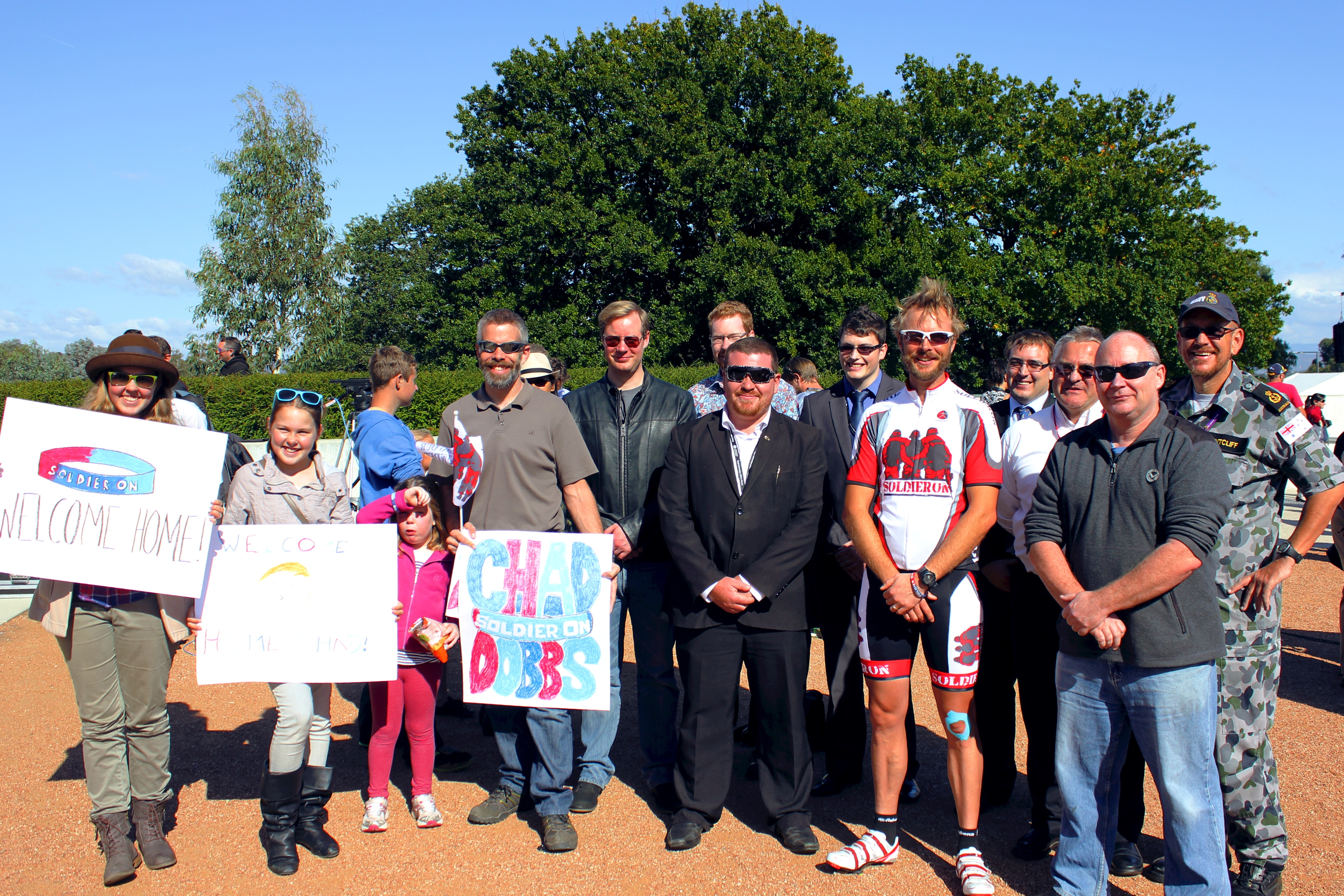
The remainder of the ride was quite relaxed with Mr Abbott speaking quite candidly and without reservation.  Our short leg up to the AWM sparked the PM’s desire to attempt a breakaway sprint which I quickly reigned back in.  We rounded the final round-a-bout and entered the grounds of the Australian War Memorial to the waiting crowd of supporters and media.

MCPFB 004
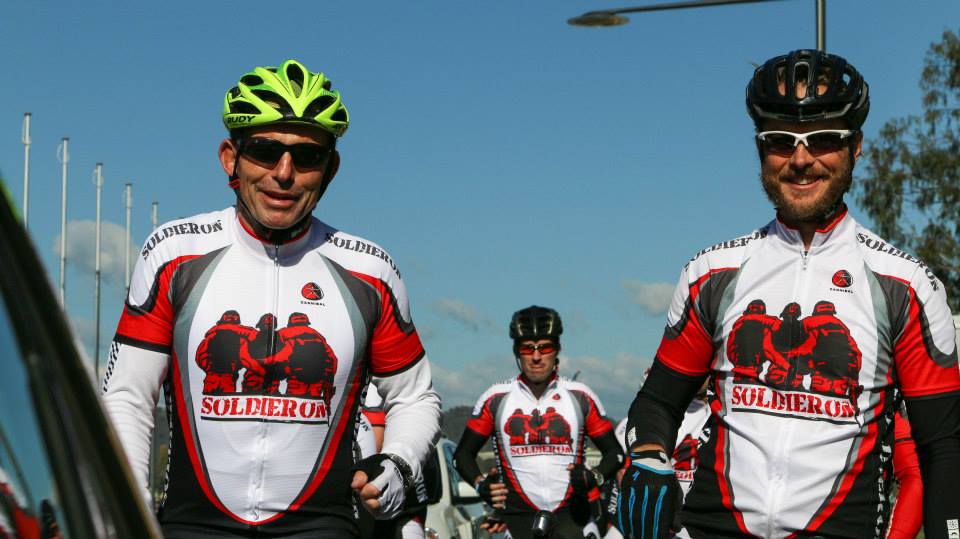
.:Riding with the PM on Limestone Avenue:. http://www.facebook.com/matthewconnorsphotography
MCPFB 003
.:Riding with the PM on ANZAC Parade:. http://www.facebook.com/matthewconnorsphotography
MCPFB 002
.:Riding with the PM on ANZAC Parade:. http://www.facebook.com/matthewconnorsphotography
MCPFB 001
.:Riding with the PM on ANZAC Parade:. http://www.facebook.com/matthewconnorsphotography
MCPFB 006
.:Riding with the PM on ANZAC Parade:. http://www.facebook.com/matthewconnorsphotography
RR2014 040
.:Riding with the PM into the Australian War Memorial:.
RR2014 048
.:Riding with the PM into the Australian War Memorial:.
RR2014 049
.:Riding with the PM into the Australian War Memorial:.
RR2014 050
.:Riding with the PM into the Australian War Memorial:.
RR2014 051
.:Realising the ride is finally over at the Australian War Memorial:.
RR2014 052
.:Meeting the Wife at the Australian War Memorial:.
RR2014 056
.:Just a few of the supporters at the Australian War Memorial:.
RR2014 063
.:Just a few of the supporters at the Australian War Memorial:.
MCP 018
.:Soldier On CEO John Bale addressing the crowd and media:. http://www.facebook.com/matthewconnorsphotography
MCP 019
.:At the end of ride presentation:. http://www.facebook.com/matthewconnorsphotography
MCP 021
.:At the end of ride presentation:. http://www.facebook.com/matthewconnorsphotography
RR2014 061
.:Meeting Brumbies & Wallabies player David Pocock!:.
MCP 023
.:At the end of ride presentation:. http://www.facebook.com/matthewconnorsphotography
MCP 026
.:At the end of ride presentation:. http://www.facebook.com/matthewconnorsphotography

At the end of the post-ride event/function I went home with my Wife and Parents and returned to the AWM a couple of hours later for a guided tour with some of the other other riders.  I was still excited but very fatigued by this stage.  With ANZAC Day the following day I was knew I wasn’t going to get much rest in the next 24 hours.  Before heading home to get ready for the night’s function I had to swing by my work to pick up the on-call phone (yep…winning at staff retention!).

RR2014 065
.:Carly & I at the Governor General’s residence after meeting Prince William:.

A huge thank you to my Wife, Parents, Sister, Brother-In-Law, Nieces and friends for their support leading up to and during the ride.

Thank you to Soldier On: John, Tony, Dion, Shane, Anna, Robbie, Pearl and Danielle.

Thank you to Scott Sunderland and the other members of Team Soldier On.

Thank you to Matthew Connors for the awesome photos.

Thank you to The Citadel Group, Mittagong RSL, Bushranger Hotel, Australian War Memorial, Dr Nelson, the Prime Minister and of course all the people that waved at us while we were riding!


RR2014 067
.:Post ANZAC Day recovery/back on the MTB ride:.


Remembrance Ride 2014 – Part 3

DAY 2 – Wednesday 23 April 2014 (Mittagong To Collector)

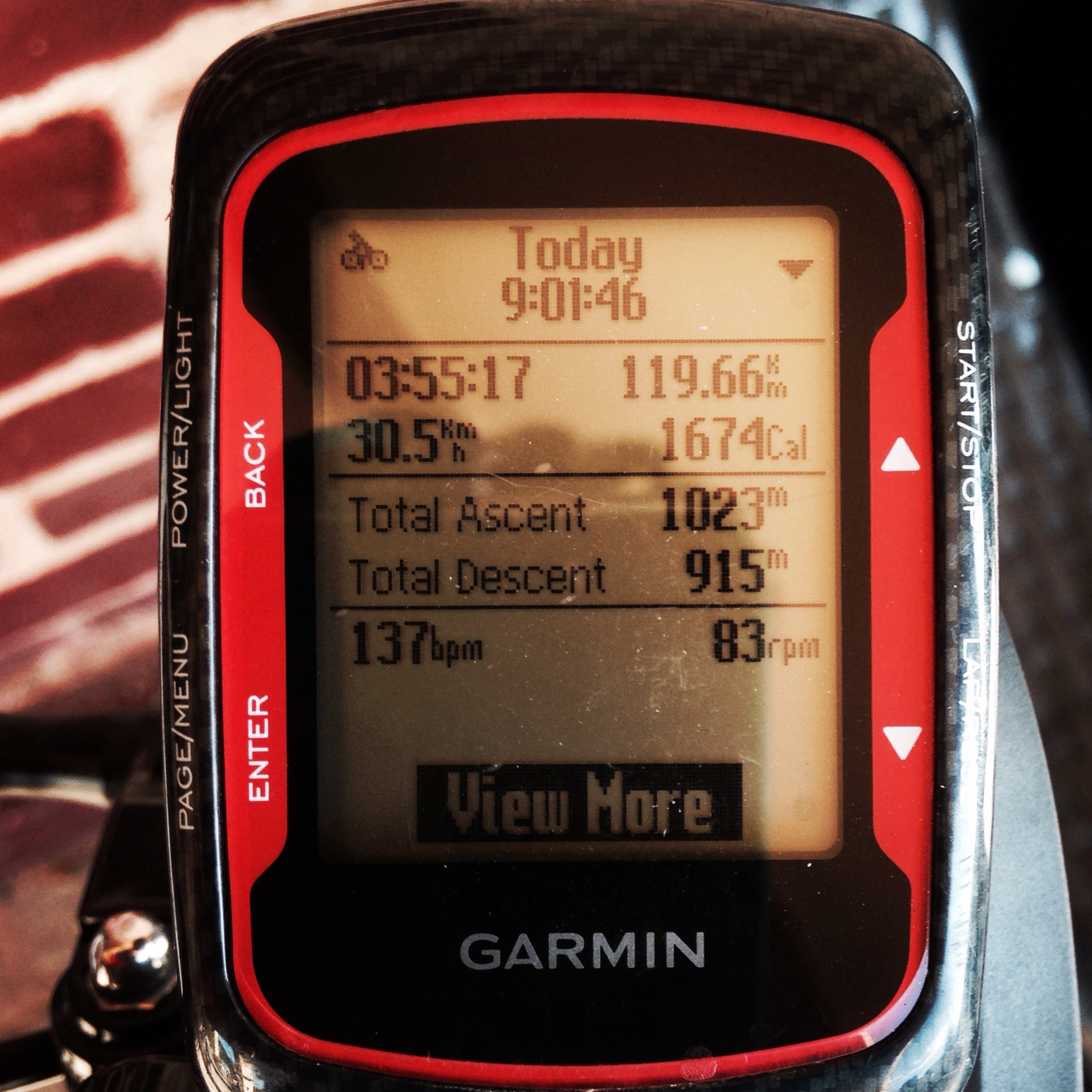
The second day of our ride along the Remembrance Driveway would see us ride 120km along the Hume/Federal Highway into Collector.

We pushed off at 09:00 after breakfast and coffee with the Soldier On Team in front of the Citadel Group riders.  Scott wanted us to start riding together and getting used to being side-by-side and wheel-to-wheel.  It wasn’t long before we were finding our rhythm and we were cruising down the Hume Highway at speed.

Our first stop was at the 32km mark with a couple of the sponsor riders opting to hop into to the support vehicles and rejoin us at the end of the day (to be honest this was the smart thing to do considering the climbing and fast pace that would soon be occurring).

Our second/lunch stop was at the 74km mark with a decision being made by both Scott and Soldier On event organiser TC that the slower riders would ride in the support vehicles until the 105km mark for safety reasons.  We were unable to average a safe speed, particularly on the long climbs, and it was becoming increasingly more dangerous with large trucks not being able to see us as they crested the hills.  This would definitely explain the burnt rubber we were smelling shortly before this stop.  While it wasn’t the most popular decision, it was the right one.

Our next 30km was an ad-hoc training session from the one and only Scott Sunderland.  It was fast bunch riding; something I am not very experienced with.  It certainly got the heart rate up and I was somewhat relieved when we eased up on the pace and the slower riders rejoined us for the roll into Collector.

RR2014 019
.:The end of Day 2 – Mittagong to Collector:. http://app.strava.com/activities/133569372
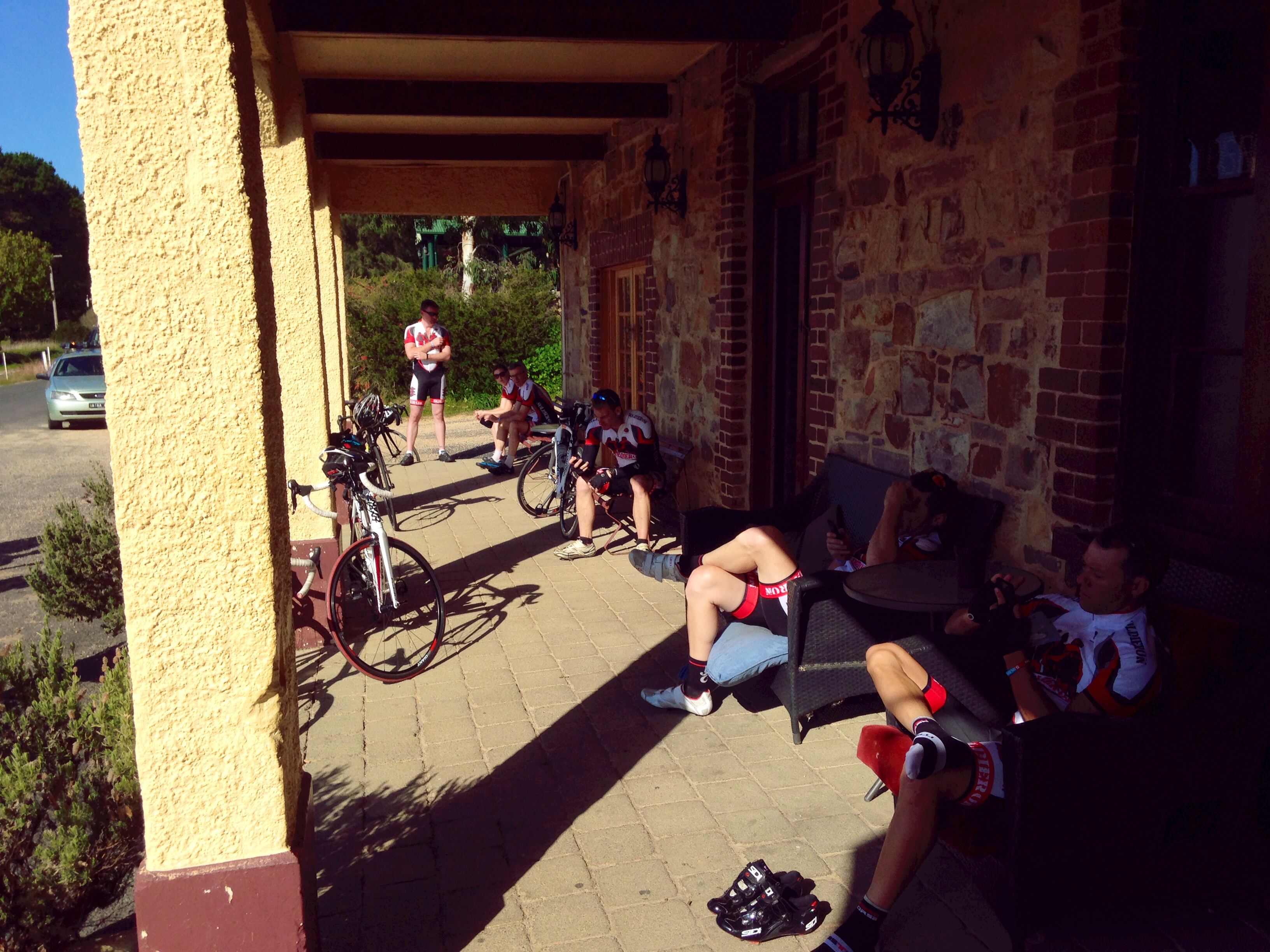
RR2014 021
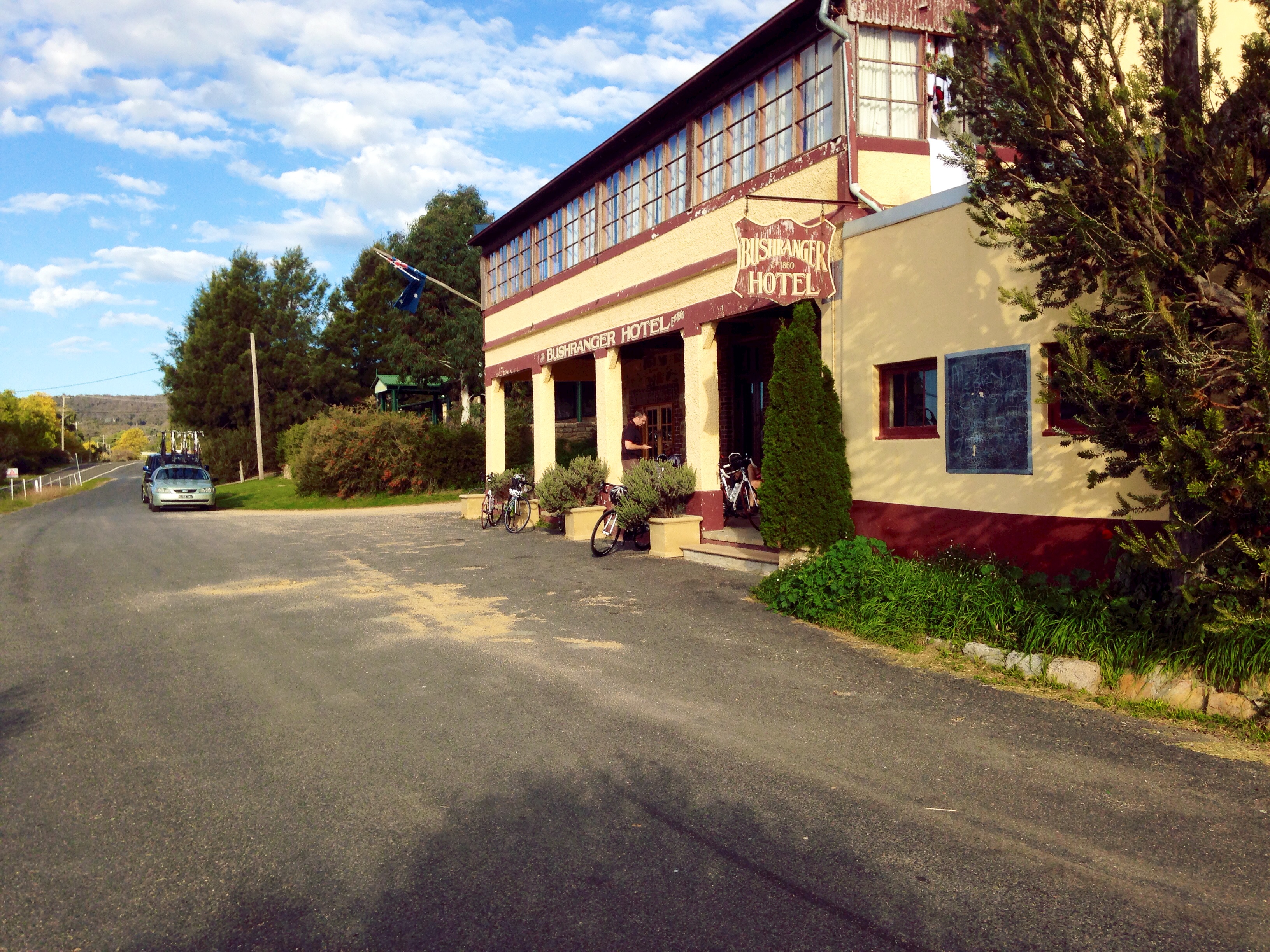
.:We arrived at the Bushranger Hotel In Collector:.
RR2014 023
.:The Bushranger Hotel:.
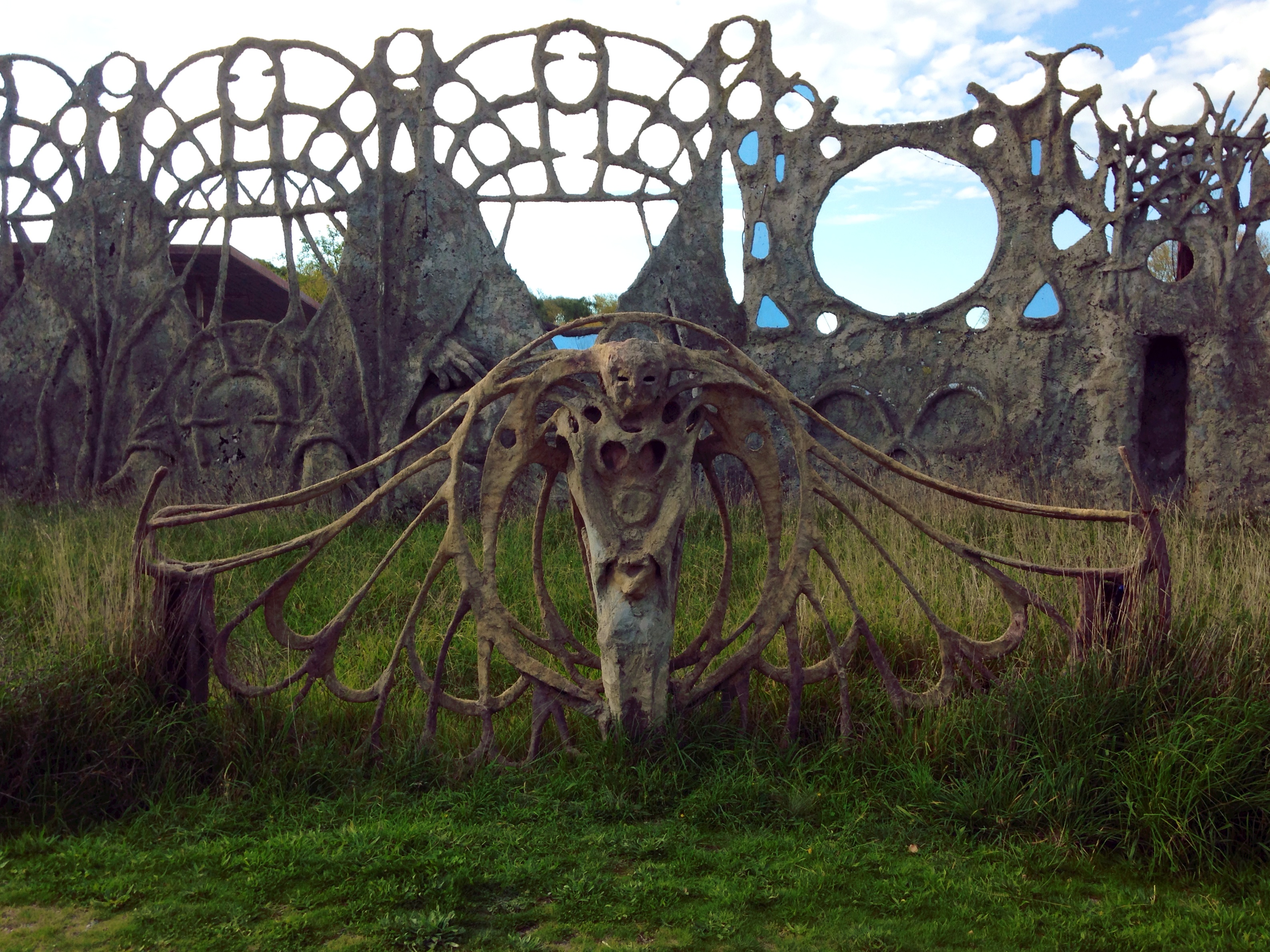
RR2014 024
.:The thing that knocks on your bedroom window at night:.
RR2014 028
.:Sunset at Collector:.


DAY 3 – Thursday 24 April 2014 (Collector To Canberra – The First Bit)

Our final day of riding started early; before dawn.  I was up, packed and ready for the ride to the Lake George lookout where we would meet Prime Minister Tony Abbott for the final leg into the Australian War Memorial.

RR2014 029
.:The other Chad playing barista:.While the others were waiting

While the others were waiting patiently to start the final day’s riding, I was on the phone to Mix 106.3’s Kristen & Rod.

CLICK HERE to listen to my interview on MIX 106.3 Interview With Rod

Our ride to Lake George was extremely quick and I soon regretted my decision to wear my wind-stopper jacket.  Scott was pushing us along the Federal Highway at over 40km/hr for the 30km leg.

We reached the top of the Weereewa Lookout and patiently waited the arrival of the Prime Minister.

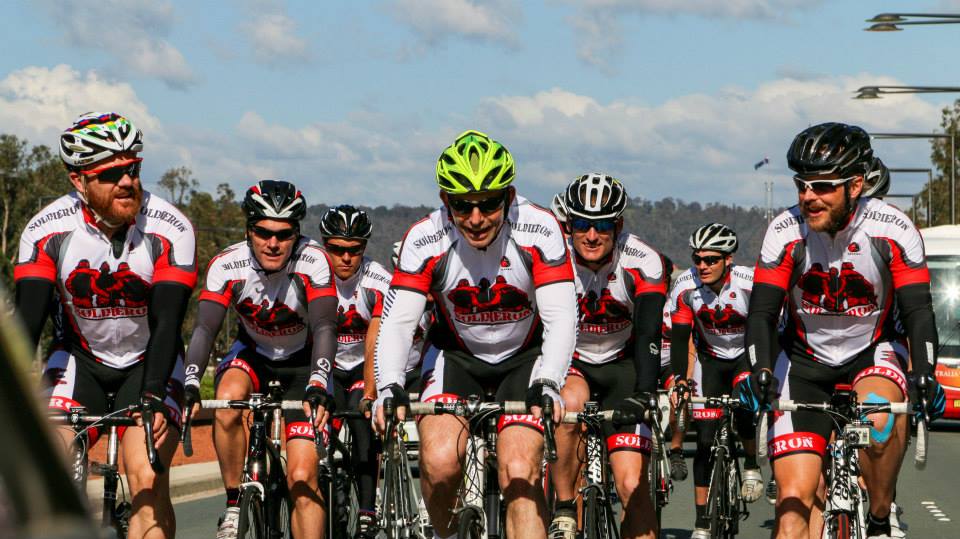
MCP 016
.:Group shot with Prime Minister Tony Abbott:. http://www.facebook.com/matthewconnorsphotography


.:CLICK HERE TO GO TO PART 4:.

Remembrance Ride 2014 – Part 2

DAY 1 – Tuesday 22 April 2014 (Sydney To Mittagong)

There was a lot of nervous energy amongst all the riders, in particular myself and Robbie.  We had spent a lot of the morning in front of the media and both of  us just wanted to get on our bikes.

RR2014 010
.:Almost time to start riding;.

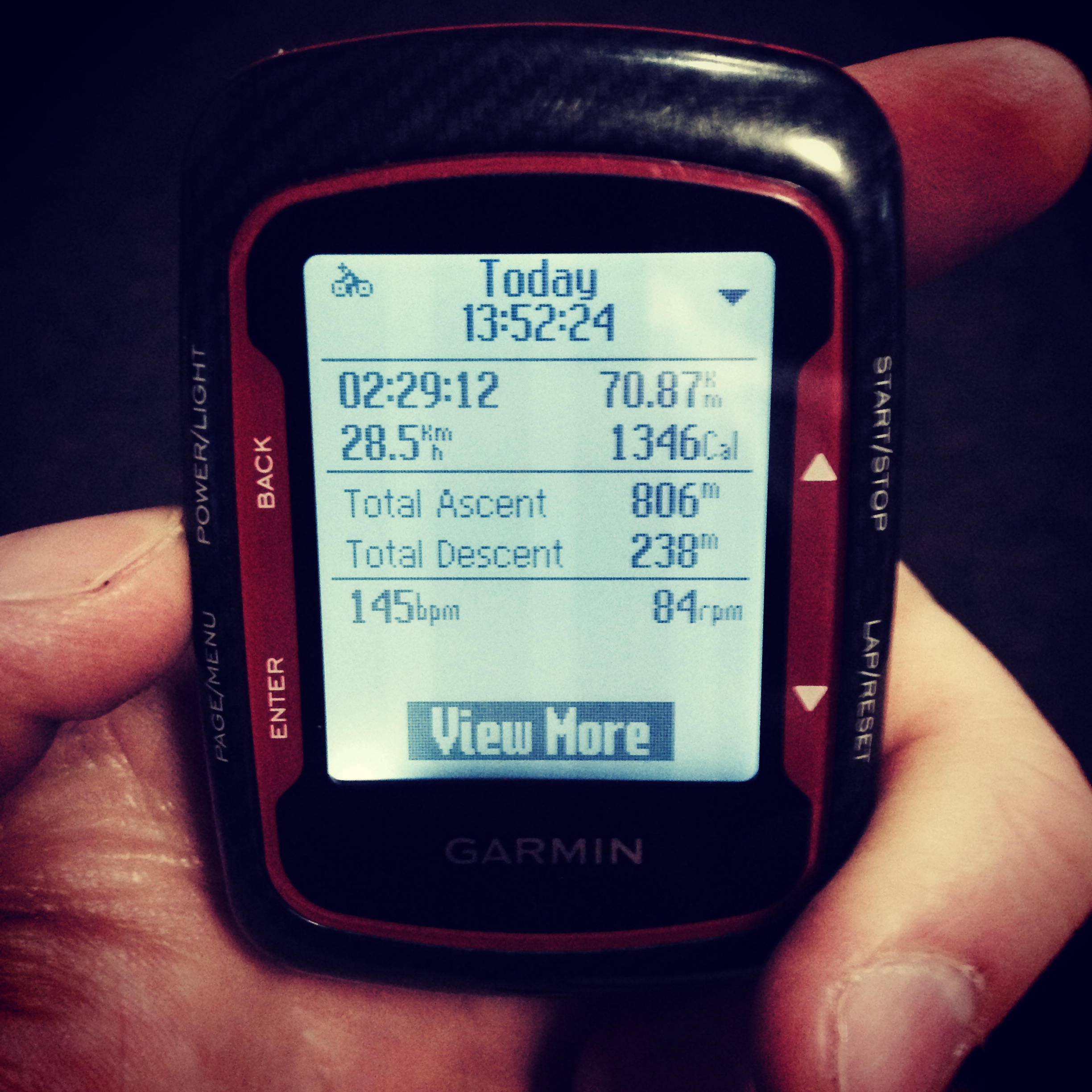
At a little before 14:00 we finally rolled off onto the Hume Highway for the start of our three-day journey to Canberra.  The first day’s ride was scheduled to end at Mittagong, a relatively short 70km away.  The riding was slow and steady at first but we soon picked up the pace under the mentoring of Scott Sunderland.

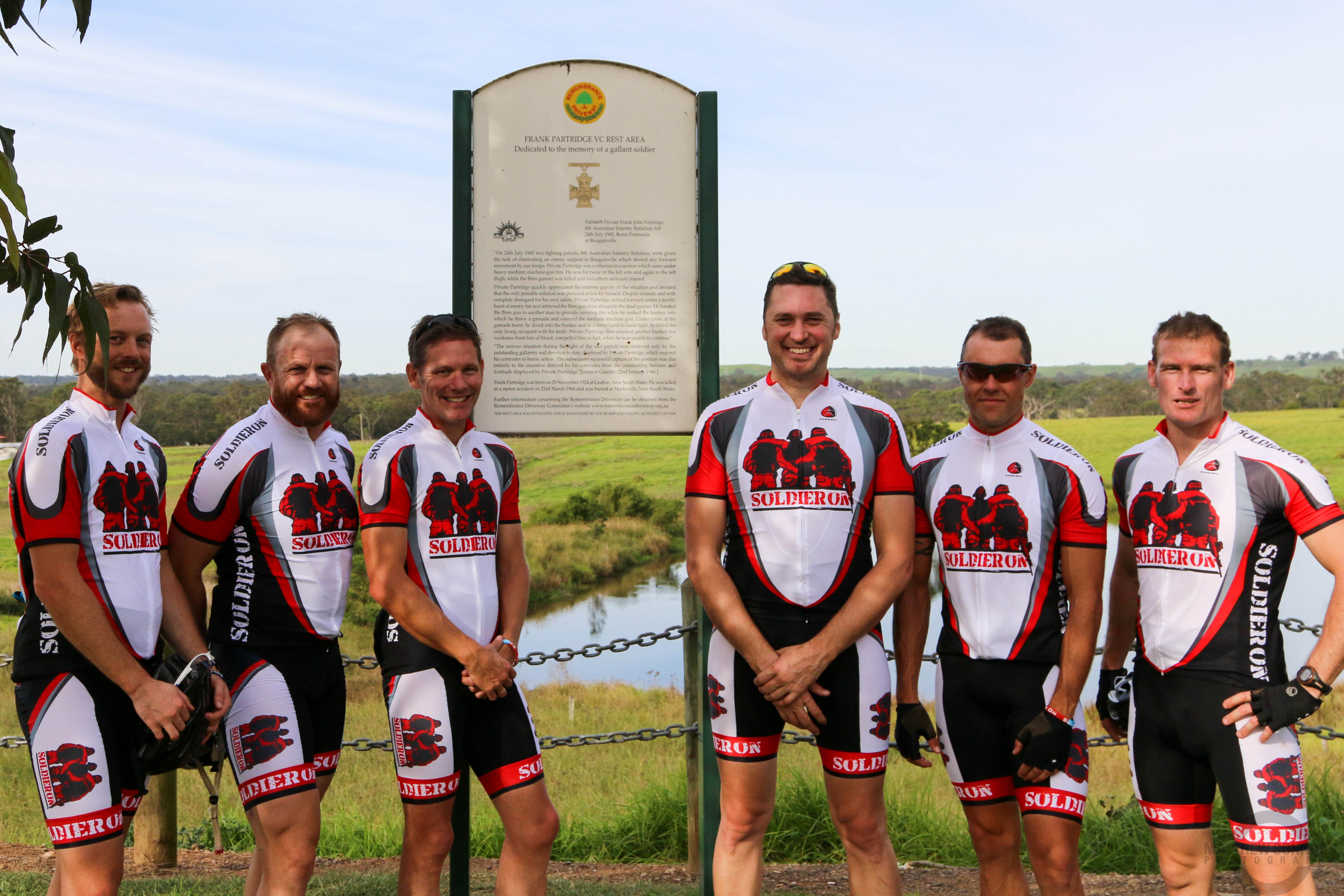
After only an hour or so of riding, including a few small but taxing climbs, we stopped at the Frank Partridge VC Rest Area, for a quick rest stop.  By now some of the sponsor riders were feeling the effects of the climbs and little to no lead up training; but still they persevered.

RR2014 013
.:Quick stop at the Frank Partridge VC Rest Stop:.
MCP 014
.:Photo op at the Frank Partridge VC Rest Area:. http://www.facebook.com/matthewconnorsphotography

There was a little bit of bush mechanic work on a stubborn seat post clamp before the group headed off towards Mittagong once again.

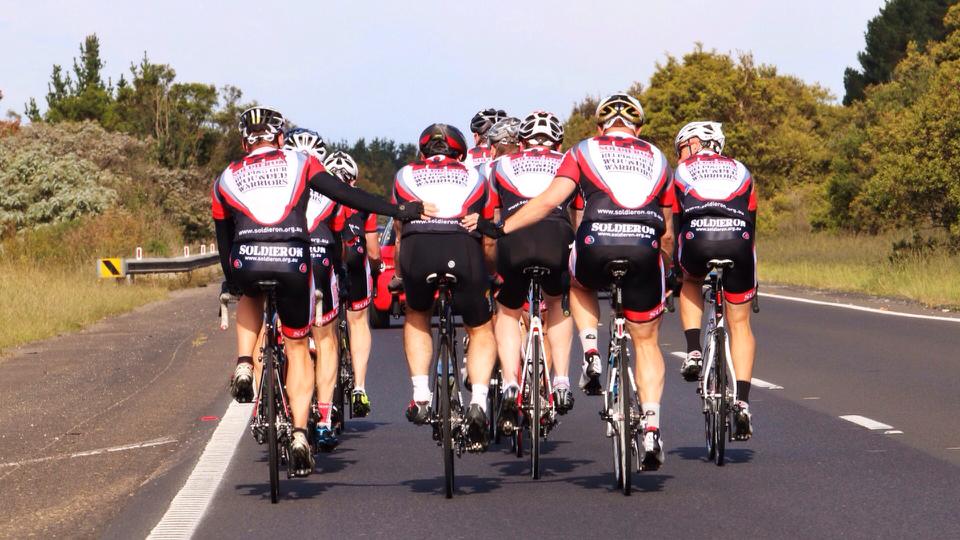
As before the pace began to slow and our group was banding together to keep the others on pace and more importantly on their bikes.

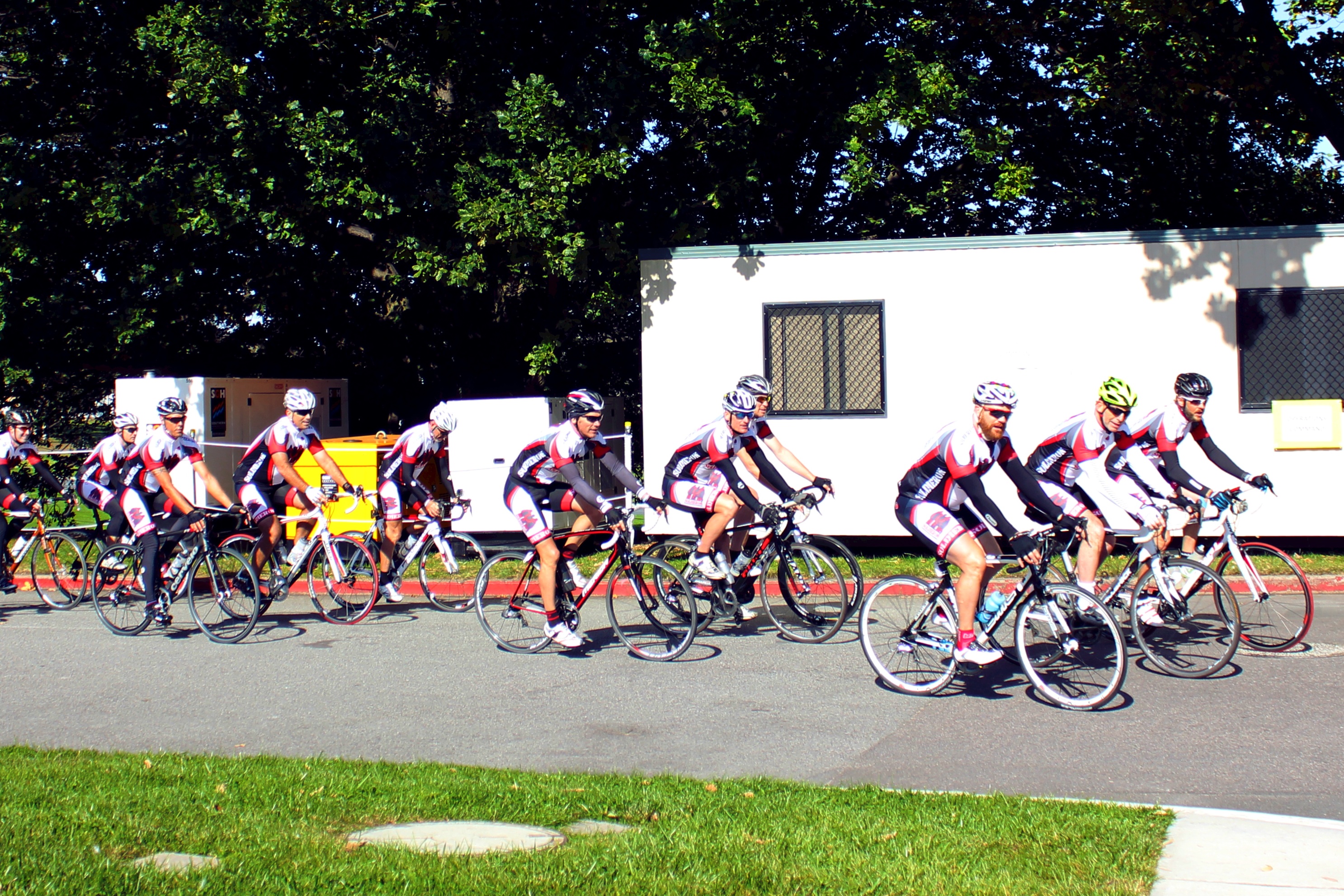
MCPFB 007
.:Matt’s photo that sums up the entire ride:. http://www.facebook.com/matthewconnorsphotography

A quick re-org of the riding order saw a few of the slower riders moved up front to set the group pace and stop the rubber-band effect that was tiring those that were at the back.

MCP 015
.:Hello says Chad to Matt in the support vehicle:. http://www.facebook.com/matthewconnorsphotography

As the afternoon got a little colder and the shadows longer; concentration started to lapse among some riders.  A few instances of half-wheeling began to occur when suddenly two riders hit the road at around 30km/hr.  I was in the right lane and broke formation to avoid the carnage and quickly pulled over to the side of the road.  Amazingly there were no serious injuries to downed rider (carbon bikes don’t like such spills!).

After some first aid work on the downed riders they were ushered into the support vehicles, the bikes strapped to the wagon’s roof and we resumed riding our final leg into Mittagong.  We arrived a little after 17:00 and were greeted at the Mittagong RSL by the sub-branch representatives.

We checked into our rooms (apparently it’s funny to put two Chad’s in one room), showered and made our way over to the bar for some light refreshments and dinner at the bistro.  We were joined by the Australian War Memorial’s Director, Dr Brendan Nelson, for dinner and after a quick recap of the days activities and a run down of timings for the next day, it was time for some bike prep and then bed.

RR2014 016
.:The end of Day 1 – Sydney to Mittagong;. http://app.strava.com/activities/133569377


.:CLICK HERE TO GO TO PART 3:.

Remembrance Ride 2014 – Part 1

THE PREP

The 2014 Soldier On Remembrance Ride was a feat only achievable by a great deal of hard work, volunteers and good luck.  With only a couple of months to get the wheels rolling, Soldier On had their work cut out for them to get things ready in time; and being privy to the process some things came down to the wire.

I was asked to participate in the ride very early on and I jumped at the opportunity.  Three days of riding from Sydney to Canberra with a group of Australian Veterans and some members from our corporate sponsor; The Citadel Group.  Also along for the ride was pro-cyclist turned coach/mentor Scott Sunderland.

Before the drive up to Sydney even happened we were locked into a steady routine of media commitments and admin duties at Soldier On HQ.

RR2014 002
.:Packed and ready to roll:.

The drive up to Sydney was an uneventful affair with a couple of bikes strapped to the back of the Soldier On Audi and four of us squeezed inside with our gear and luggage (the car is really spacious, we just crammed a lot into it).  After unloading the car and checking into our hotel opposite Hyde Park, we quickly went through the next days timetable and retired for the night.

RR2014 003
.:Soldier On Audi:.

DAY 1 – Tuesday 22 April 2014 (The Event Launch)

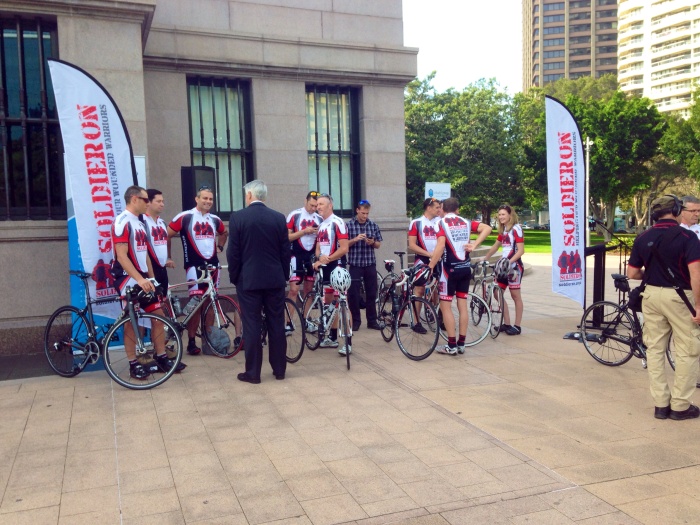
The morning of the ride was a whirlwind of interviews, photos and a lot of standing around waiting.  Soldier On CEO John Bale presented the team to the waiting media and soon we were being told to pose and look at this camera, move, look at that camera and of course speak to the media.  Ordinarily I’m not a huge fan of interacting with the media; but sometimes anxiety and nervousness must be set aside for the greater good.   I conducted three TV interviews at Hyde Park with SBS, ABC Sydney and SBS Cycling.

CLICK HERE to visit the SBS Australia Online Article

CLICK HERE to visit the SBS News Online Article

CLICK HERE to visit the SBS Cycling Central Video

After our event launch it was time to pack the cars and go for the short drive to our start point (due to Sydney’s stupidly unsafe roads we couldn’t ride out of the CBD).

RR2014 009
.:At Hyde Park with LTGEN Ken Gillespie:.
MCP 001
.:A ball of nervous energy before the launch:. http://www.facebook.com/matthewconnorsphotography
MCP 002
.:Robbie & I trying our best not to make Johanna Hatcher laugh:. http://www.facebook.com/matthewconnorsphotography
MCP 003
.:Marvelling at our great beards:. http://www.facebook.com/matthewconnorsphotography
MCP 005
.:Listening to John Bale’s launch speech:. http://www.facebook.com/matthewconnorsphotography
MCP 006
.:John addressing the waiting media:. http://www.facebook.com/matthewconnorsphotography
MCP 008
.:Being interviewed by Rena Sarumpaet from SBS News:. http://www.facebook.com/matthewconnorsphotography
MCP 009
.:Posing with Scott Sunderland post launch:. http://www.facebook.com/matthewconnorsphotography
MCP 012
.:All of the riders and Soldier On CEO John Bale:. http://www.facebook.com/matthewconnorsphotography
MCP 013
.:Adam and I having some time out before heading off to the start point:. http://www.facebook.com/matthewconnorsphotography


.:CLICK HERE TO GO TO PART 2:.


Why The RSL Must Look To The Future

In the past few days there has been a lot of coverage in the news and on social media about the RSL NSW office dictating what will and won’t be allowed during the Sydney ANZAC Day march. To say this has caused a wave of emotion to boil-over various Defence affiliated social media groups is an understatement. The sentiment most being expressed is one of Veterans being fed up with the attitude of the RSL and their efforts to control the very thing that is central to our identity; the ANZAC legend.

I have been critical of the RSL previously and have even participated in some of the online debates about what my opinion is of the current issue surrounding Veterans and marching with their unit banners. As with most discussions regarding the RSL and Veterans opinions and experiences; sadly the negative seems to far out-way the positive. In the midst of a robust discussion about the relevancy of the RSL in these modern times; I posted a rough opinion piece that I have fine tuned and censored for this blog post.

Many of the negative experiences Veterans are facing today aren’t from the club side of the RSL. We are literally being told to “go away” by sub-branches. I don’t give a rats arse about the bar, bistro and pokies side of the RSL; my concern is with the Veterans support side turning away my generation because of perceived differences.

In the past 18 months we have seen more than twenty suicides of Veterans under 40 years of age! While every suicide is both concerning and a tragedy; I’ve now buried more friends to suicide than have been lost in war. We are on the edge of an epidemic spilling over and the sad fact is that Veteran suicide is the new Elephant In The Room for Australia and Australia’s Veteran community. The simple reason for this is because the support isn’t there when it is needed and that support certainly isn’t coming from the RSL anytime soon!

We all wore a uniform and we all served Australia, but to a very small minority in positions of authority in the RSL National, RSL State and RSL sub-branches, this means nothing. In the months after I left the Army I tried to reach out to the RSL, the same sub-branch my Grandfather was President of for 40+ years and was told by the new President “fuck off, we don’t want young blokes with tatts”.

The RSL needs to realise there are other Veterans support groups, social groups and avenues of support available to the Veteran community aside from them. The Vietnam War era soldiers didn’t have the support of the RSL when they needed it but eventually the tide turned and now a lot of Vietnam Veterans are running the sub-branches. The Vietnam Veterans went through decades of lobbying and some still won’t walk inside an RSL. Unfortunately they didn’t have the groups and support networks we have available to us today.

Put simply we have other support and social mechanisms in play that won’t ostracise us and turn us away. Until the RSL at the State and National level fully understands that they are no longer relevant in their current form and start listening to what ALL Veterans want (WWII, Korea, Vietnam, Cambodia, Rwanda, Somalia, East Timor, Solomon Islands, Foreign Aid/Relief, Border Security and Middle East) they are going to see a continuation in the already rapid decline in numbers and attendance.

There are many sub-branches that are doing exceptional things in the Veteran community but their good deeds are being overshadowed by a leadership that won’t look towards the future.

Soldier On Jersey – Version 2.0

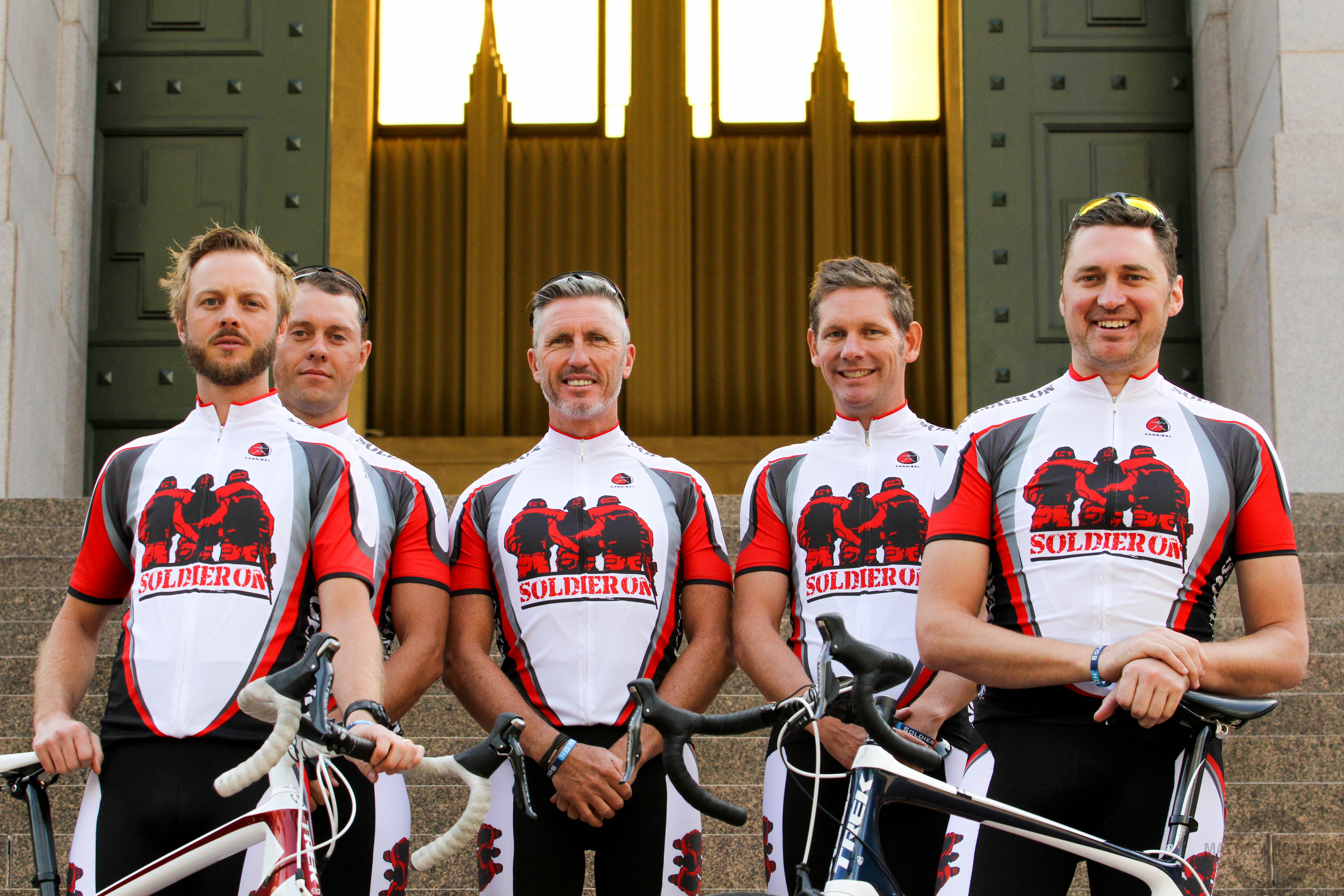
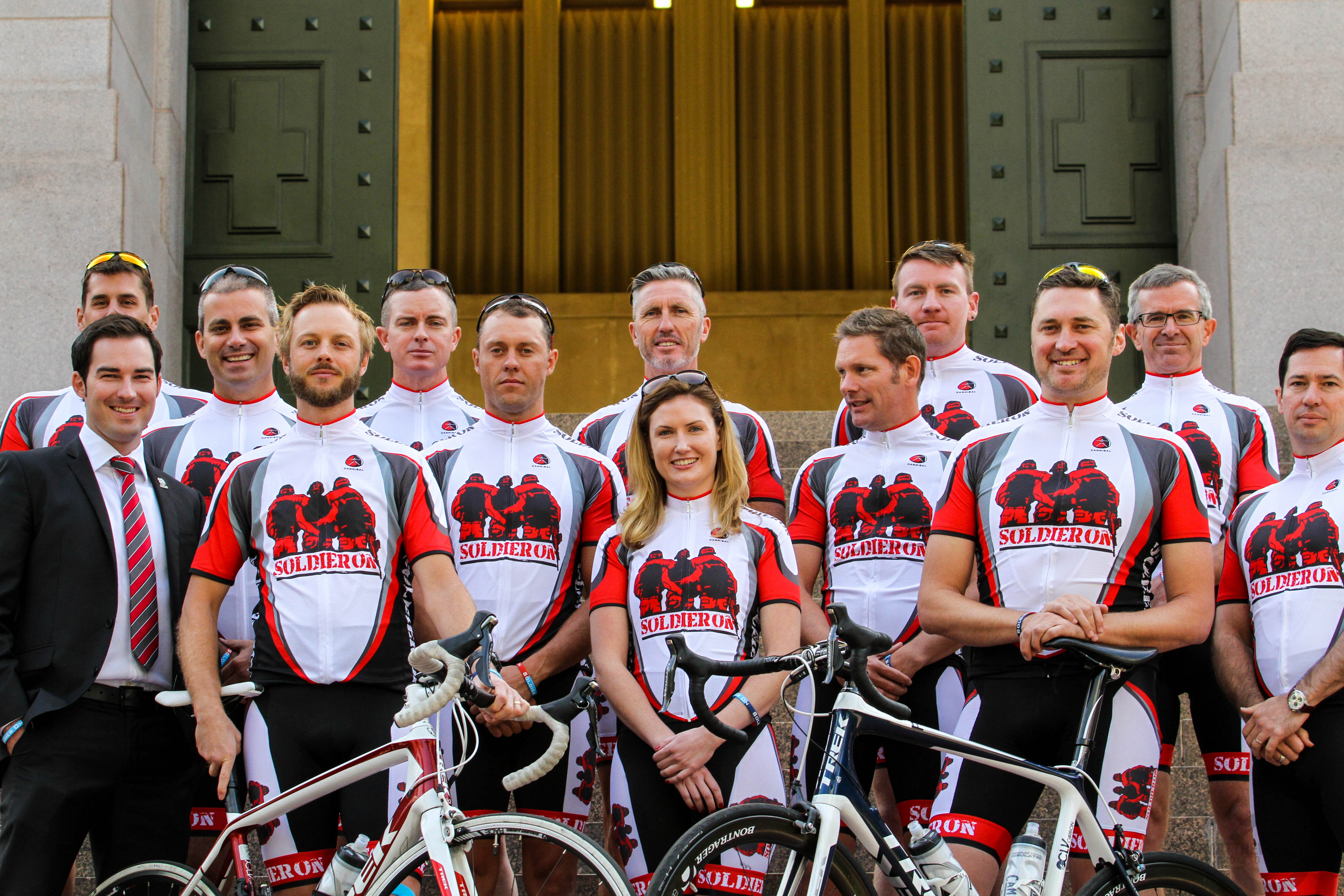
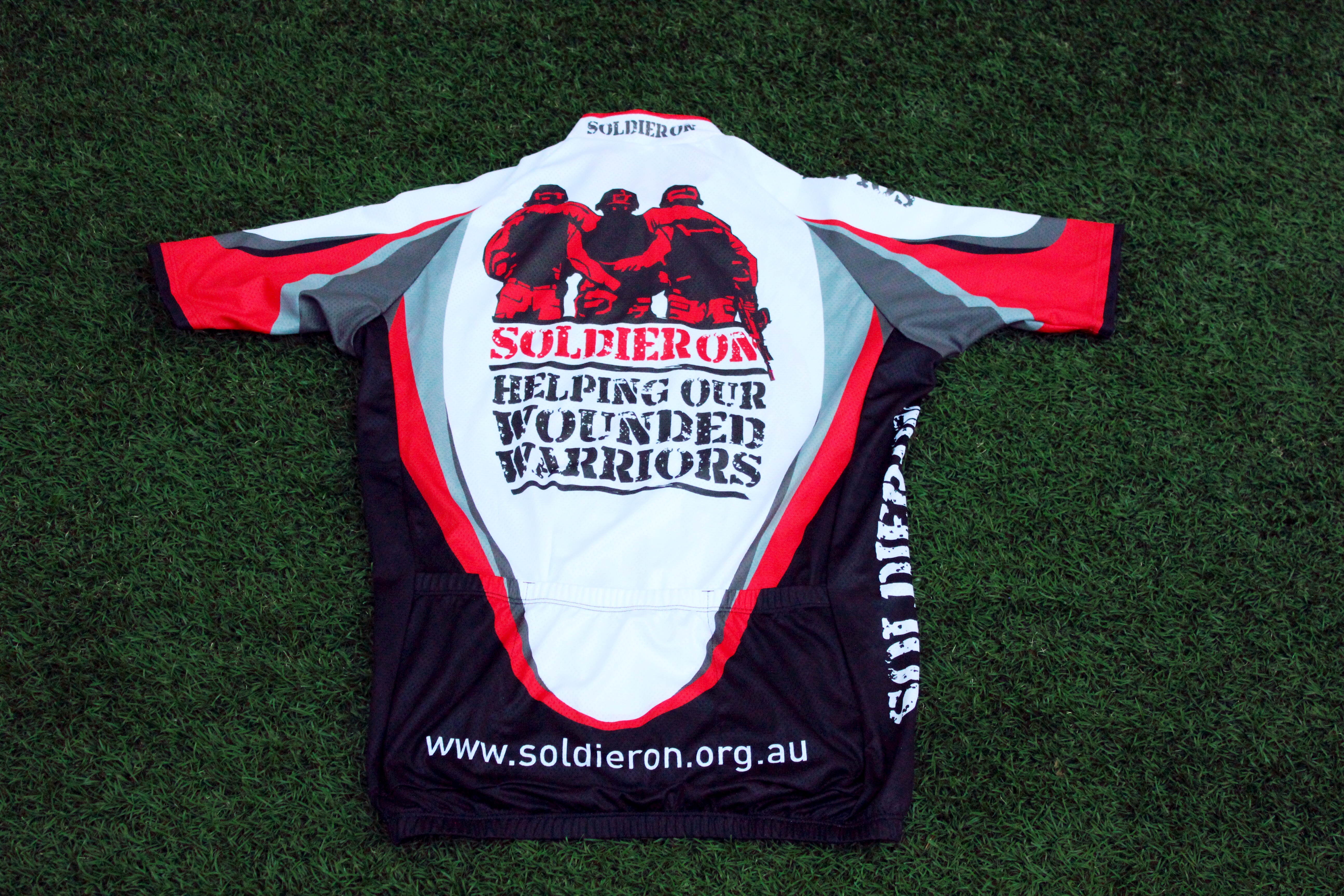
With thanks to Soldier On & The Military Shop the new version of the Soldier On cycling jersey has arrived – with matching bib knicks.

Both Soldier On and myself have been inundated with questions and requests since my original jerseys hit the streets and tracks and now you can support Soldier On by getting out and about in the new kit!

BIKES 167 BIKES 166 BIKES 165 BIKES 164 BIKES 163

The original jersey was made up in early 2013 and only I and US Army wounded Veteran Kit Lowe have warn them.  Now you can be apart of the team!
Available from The Military Shop in Canberra.

An Evening At The Australian War Memorial – Updated

ABC’s Big Ideas has released the Boys Don’t Cry program online for viewing.
The televised version is shorter by about 20 minutes and doesn’t include my speech at the end of the forum.  The online long version does.  I invite you to watch is however please be aware that some of the program is fairly confronting including what I have to say at the end.

Long version of the Boys Don’t Cry segment

Big Ideas Boys Don’t Cry segment

On Wednesday evening, 20 November 2013, I attended a panel discussion at the Australian War Memorial on Post Traumatic Stress Disorder.  The event was hosted by journalist/writer Paul Barclay on behalf of ABC TV and Radio National.

On the panel were former Chief of Army LTGEN Peter Leahy; author and Beyond Blue ambassador Allan Sparkes; Beyond Blue board member Professor Brett McDermott; and the wife of a former British Royal Marine, Emily.

I was asked about attending the panel a few days earlier by my friend Jason.  Originally I didn’t want to attend as I honestly thought it may be a trigger for an anxiety episode; so I declined.  It wasn’t until the night before that I decided to go along and hopefully have a chance to speak to whoever was on the panel.  I had no idea who was participating in the discussion other than LTGEN Peter Leahy and hadn’t really thought about what was going to be discussed.

In the afternoon prior to the start of the forum, I rode from work up to the Australian War Memorial.  As is the norm, I was wearing my Soldier On jersey and happened upon new Soldier On team member Tony; who many moons ago was my Troop Commander when I served in Iraq.  Jason arrived next and soon we were joined by Anna, Meredith and Dion from Soldier On.  After I got changed into something more appropriate than skin tight lycra, we went into the BAE Systems Theatre.

After the introductions Paul started the discussion with some questions about PTSD in the military for LTGEN Leahy.  The conversation and questions started to flow freely within the panel with some very emotional stories being shared by Emily and Allan.  Prof McDermott gave some very interesting insights on PTSD for not only military personnel; but also for emergency service persons and of course their families.

I wasn’t the only veteran in the crowd; but I was the youngest.  There were a few Vietnam Veterans present, family members of veterans with PTSD and a few senior Defence officers that were skulking around the back pews in civilian attire.

As the discussion progressed LTGEN Leahy was asked some questions about support services available to veterans.  I have a lot of respect for this man; he was an exceptional Chief of Army and has done a lot to help veterans with his current position as Chairman for Soldier On.  But there is a distinct level of detachment from what a high ranking officer is told and what happens on the ground.

Some of his responses started to irk not only me, but a lot of the crowd listening to him.  There were more than a few audible scoffs at some comments about the Department of Veterans affairs doing their best to help all veterans.  One comment in particular drew a very audible “get fucked” from me.  The former Chief of Army said that when a Soldier asks for help, he or she will always receive it.  Paul mentioned the story of MAJGEN John Cantwell and LTGEN Leahy was in agreement.  Whilst MAJGEN Cantwell has done a lot to help break the stigma of PTSD in the ADF; it is also true that a very senior Officer is never going to be turned away when they ask for assistance.

Allan Sparkes shared his story of PTSD and depression from when he was a Police officer; and the ostracising that he experienced as a result.  His story was a very raw, no punches pulled recount of his darkest days and his termination from his employment without his knowledge.  His story was very reminiscent of many veterans from the Vietnam War up until today’s conflicts.

Emily’s story was one of amazing courage from both her and her husband Adrian.  She spoke of her time in the United Kingdom when Adrian returned from deployment in Afghanistan a changed man.  He had experienced traumatic events and as a result developed PTSD.  His struggles with mental health affected his wife and two daughters as they watched as their husband and father dealt with his issues now that he was back at home.  His eventual discharge from the Royal Marines was a result of a physical injury and just like the majority of occupationally injured Australian servicepersons; Adrian was soon pushed out the door with very little support and preparedness for his transition to civilian life.

As the forum was drawing to a close Paul invited Dr Brendan Nelson, director of the Australian War Memorial to speak and field some questions from the panel.  He spoke about the AWM’s role with supporting veterans of recent conflicts by having interactive exhibits and involving them with other projects the AWM is conducting.  As a former Minister for Defence he expressed his desire to see more support forthcoming as the Afghanistan War draws to a close.

As 7pm was quickly approaching a few of us in the audience were wondering if we would get a chance to ask questions of the panel.  Adrian was next to take the stage and he recounted some of his experiences post deployment and how support for veterans is extremely slow from the government in Britain.  He spoke of having his claim for assistance being rejected on the first submission; a trend very similar to that in Australia carried out by DVA.

Adrian expressed his concern for veterans being forgotten after the withdrawal from the Middle East and a strong desire for them to be able to access the support they deserve and not repeat the mistakes of the past.  He likened the struggles of today’s returned servicepersons to that of the Vietnam War era in the way that the fight for support continues even after the war on foreign soil has ended.

Adrian’s address to the panel and audience had clearly reached out to everyone with many of the Vietnam Veterans visibly moved by his honesty.  As he sat down Paul checked his watch and asked us sitting in the audience if anyone had anything questions or comments.  I had been sitting and fidgeting for the past 10 minutes waiting for this moment.  Several different introductions and talking points had gone through my head and all disappeared in the instant I raised my hand and Paul motioned for me to stand up.

I was shaking before I even started speaking; this was always going to be an emotionally charged interaction from me and I started by introducing myself.

“Hi I’m Chad, I separated from the Army early last year and have deployed to both Iraq and Afghanistan.  I have been diagnosed with PTSD, depression and anxiety and I want to know why not enough is being done to help Australian veterans.”

I addressed LTGEN Leahy first and exclaimed to him that history was indeed repeating itself.

“I am a third generation Soldier, my Grandfather served in World War 2, my Father served in Vietnam and I have served in the Middle East.  I watch as my Father and his mates still struggle with PTSD with many Vietnam Veterans taking their own lives since the war ended.  I watch as my generation struggles with the same issues and now my mates, people I served with, are killing themselves because of PTSD and depression; and nothing is being done to stop this.  There are more people in the ground because of PTSD and depression than there are that are on the wall outside who were killed on operations.”

I spoke of my efforts to get help when the weight was becoming too much for me to bear and that the first two times I asked for assistance I was rebuffed by my unit RSM’s; a statement that clearly shocked LTGEN Leahy.  I was asked questions from both Allan Sparkes and Prof McDermott about my interactions with DVA and I recounted how I was told that my claim was going to be slow as my PTSD and depression ‘wasn’t that bad’.  I explained to them that is was at this point that I withdrew my claim and stopped interacting with DVA as I felt I was being accused of chasing money and that by not receiving financial assistance my criticism of their practices would hold more weight in a public forum.

I described my battles with depression and that very few people understood; and the simple act of asking for help effectively stalled my career in the Australian Army for a number of years.  The feeling of being ostracised and singled out was always present and that few people would support me when I asked for further help.  I explained that while MAGJEN Cantwell’s story is not an isolated one, the level of support and assistance he received was.  The average Digger in a unit has to contend with the ever present stigma of mental health issues and ignorance present within their chain of command and the probable persecution for not being able to fulfil their duties without restrictions.

I expressed astonishment that the very organisation founded to protect the rights of and provide assistance to veterans was failing in its primary role.  I emphatically asked how in the forty years since the end of the Vietnam War servicepersons are still not being afforded the support we fought for.  How it was possible that DVA can state they are still learning and getting better with a straight face as veterans from multiple deployments and generations kill themselves while waiting to access support services.

By this stage the room was silent and I had been speaking for around 20 minutes.  The panel while sometimes asking me questions and making statements had clearly been unprepared for such a raw and uncompromising speech from someone.  I had brought up some points with personal accounts of systematic failures from within the Australian Army, Australian Defence Force and the Department of Veterans Affairs.

There were some topics that I shared with a public forum that had only been discussed with medical professionals and not even shared with my wife and family.  As my speech drew to a close I expressed the hope that one day veterans would receive the appropriate support from the Government but that it was very unlikely to occur in my lifetime and that my children probably wouldn’t see it happen either.

As I finished speaking I apologised for hijacking the Q&A session; Paul started wrapping up the forum and I sat down nervously.  Jason patted me on the shoulder and most of the audience was either nodding in agreement or wiping away tears.  I sat shaking and started to feel quiet anxious from speaking to a mostly unknown audience about issues so personal and distressing that I had spent the last few years repressing and ignoring them.

The rest of the evening was spent talking with members of the audience and panel.  I received a great number of business cards and offers of assistance and opportunities to speak to other veterans and people with PTSD and depression.  I found the response surprising and was shocked when LTGEN Leahy approached me as he was leaving.  He handed me his business card and told me to email him.  He offered to take me to see the Minister of Veterans Affairs to discuss the issues I had brought up.

He told me that the Service Chiefs would be made aware of what I had spoken about and that I should continue speaking up.  Both he and Dr Nelson expressed the need for younger veterans to be the public faces and voices of our generation and that I should be one of them.  I was very humbled by this statement and thought a lot about it over the following days.

At the conclusion of a big night, I farewelled Jason and the Soldier On crew, thanked the others and started riding my bike back home.  The next 45 minutes were some of the most contemplative times of my life as I thought about what I had said and the inevitable shock-waves that they would create for my family and I when the ABC airs Boys Don’t Cry on Big Ideas in late 2013/early 2014.

…And The Beast Was Done

After 7 long months of fundraising and raising awareness for Soldier On, my fundraising page has closed and it’s time to just enjoy riding and enjoy some time with my Wife, family and friends during the Holiday season.

Just because I don’t have an active fundraising campaign running anymore doesn’t mean I won’t be raising awareness for Soldier On.  I still have a 3 hour cross-country race in 2013 and have already committed to several big races in early 2014 including the 100km Capital Punishment and The Mont 24 Hour.

At the end of the day, after the countless hours riding, training, fundraising, and banging the proverbial drum I am confident that I have helped raise the profile for Soldier On and the battle that young veterans like myself fight on a daily basis.

It is no secret that I ride to deal with PTSD and depression; but by being an ambassador for Soldier On, I have also developed more confidence in myself and found a voice that will speak on behalf of Australia’s young Veterans. Hopefully by putting myself out there I am encouraging other young Veterans to speak up and ask for help

SG020

Although Riding For Soldier On was a mostly solo effort on the bike there were a lot of people who helped me throughout the year

Thank you to the following:
SOLDIER ON for their support throughout this year especially John, Anna, Meredith, Dion and Tony for their amazing support & patience.

Luke & Dan from BEAST-WORX for running such amazing events and allowing me to be a big part of it.

My amazingly supportive mountain biking group THE BERM.  Special thanks to Nathaniel, Jason, Nigel & Chris, Ben, Roger, Steve K, Alyssa, Melissa C, Brett, Matt & Sam, Kris, Tony H, Sonja, Andy & Adam.

My family & friends especially my Wife for putting up with my many hours away from home & allowing me to spend obscene amounts of money on bikes!

And last but not least… The people who supported me & donated money to SOLDIER ON so that wounded veterans can get the support they so desperately need & deserve.

BOTB 13 117

An Evening At The Australian War Memorial

On Wednesday evening, 20 November 2013, I attended a panel discussion at the Australian War Memorial on Post Traumatic Stress Disorder.  The event was hosted by journalist/writer Paul Barclay on behalf of ABC TV and Radio National.

On the panel were former Chief of Army LTGEN Peter Leahy; author and Beyond Blue ambassador Allan Sparkes; Beyond Blue board member Professor Brett McDermott; and the wife of a former British Royal Marine, Emily.

I was asked about attending the panel a few days earlier by my friend Jason.  Originally I didn’t want to attend as I honestly thought it may be a trigger for an anxiety episode; so I declined.  It wasn’t until the night before that I decided to go along and hopefully have a chance to speak to whoever was on the panel.  I had no idea who was participating in the discussion other than LTGEN Peter Leahy and hadn’t really thought about what was going to be discussed.

In the afternoon prior to the start of the forum, I rode from work up to the Australian War Memorial.  As is the norm, I was wearing my Soldier On jersey and happened upon new Soldier On team member Tony; who many moons ago was my Troop Commander when I served in Iraq.  Jason arrived next and soon we were joined by Anna, Meredith and Dion from Soldier On.  After I got changed into something more appropriate than skin tight lycra, we went into the BAE Systems Theatre.

After the introductions Paul started the discussion with some questions about PTSD in the military for LTGEN Leahy.  The conversation and questions started to flow freely within the panel with some very emotional stories being shared by Emily and Allan.  Prof McDermott gave some very interesting insights on PTSD for not only military personnel; but also for emergency service persons and of course their families.

I wasn’t the only veteran in the crowd; but I was the youngest.  There were a few Vietnam Veterans present, family members of veterans with PTSD and a few senior Defence officers that were skulking around the back pews in civilian attire.

As the discussion progressed LTGEN Leahy was asked some questions about support services available to veterans.  I have a lot of respect for this man; he was an exceptional Chief of Army and has done a lot to help veterans with his current position as Chairman for Soldier On.  But there is a distinct level of detachment from what a high ranking officer is told and what happens on the ground.

Some of his responses started to irk not only me, but a lot of the crowd listening to him.  There were more than a few audible scoffs at some comments about the Department of Veterans affairs doing their best to help all veterans.  One comment in particular drew a very audible “get fucked” from me.  The former Chief of Army said that when a Soldier asks for help, he or she will always receive it.  Paul mentioned the story of MAJGEN John Cantwell and LTGEN Leahy was in agreement.  Whilst MAJGEN Cantwell has done a lot to help break the stigma of PTSD in the ADF; it is also true that a very senior Officer is never going to be turned away when they ask for assistance.

Allan Sparkes shared his story of PTSD and depression from when he was a Police officer; and the ostracising that he experienced as a result.  His story was a very raw, no punches pulled recount of his darkest days and his termination from his employment without his knowledge.  His story was very reminiscent of many veterans from the Vietnam War up until today’s conflicts.

Emily’s story was one of amazing courage from both her and her husband Adrian.  She spoke of her time in the United Kingdom when Adrian returned from deployment in Afghanistan a changed man.  He had experienced traumatic events and as a result developed PTSD.  His struggles with mental health affected his wife and two daughters as they watched as their husband and father dealt with his issues now that he was back at home.  His eventual discharge from the Royal Marines was a result of a physical injury and just like the majority of occupationally injured Australian servicepersons; Adrian was soon pushed out the door with very little support and preparedness for his transition to civilian life.

As the forum was drawing to a close Paul invited Dr Brendan Nelson, director of the Australian War Memorial to speak and field some questions from the panel.  He spoke about the AWM’s role with supporting veterans of recent conflicts by having interactive exhibits and involving them with other projects the AWM is conducting.  As a former Minister for Defence he expressed his desire to see more support forthcoming as the Afghanistan War draws to a close.

As 7pm was quickly approaching a few of us in the audience were wondering if we would get a chance to ask questions of the panel.  Adrian was next to take the stage and he recounted some of his experiences post deployment and how support for veterans is extremely slow from the government in Britain.  He spoke of having his claim for assistance being rejected on the first submission; a trend very similar to that in Australia carried out by DVA.

Adrian expressed his concern for veterans being forgotten after the withdrawal from the Middle East and a strong desire for them to be able to access the support they deserve and not repeat the mistakes of the past.  He likened the struggles of today’s returned servicepersons to that of the Vietnam War era in the way that the fight for support continues even after the war on foreign soil has ended.

Adrian’s address to the panel and audience had clearly reached out to everyone with many of the Vietnam Veterans visibly moved by his honesty.  As he sat down Paul checked his watch and asked us sitting in the audience if anyone had anything questions or comments.  I had been sitting and fidgeting for the past 10 minutes waiting for this moment.  Several different introductions and talking points had gone through my head and all disappeared in the instant I raised my hand and Paul motioned for me to stand up.

I was shaking before I even started speaking; this was always going to be an emotionally charged interaction from me and I started by introducing myself.

“Hi I’m Chad, I separated from the Army early last year and have deployed to both Iraq and Afghanistan.  I have been diagnosed with PTSD, depression and anxiety and I want to know why not enough is being done to help Australian veterans.”

I addressed LTGEN Leahy first and exclaimed to him that history was indeed repeating itself.

“I am a third generation Soldier, my Grandfather served in World War 2, my Father served in Vietnam and I have served in the Middle East.  I watch as my Father and his mates still struggle with PTSD with many Vietnam Veterans taking their own lives since the war ended.  I watch as my generation struggles with the same issues and now my mates, people I served with, are killing themselves because of PTSD and depression; and nothing is being done to stop this.  There are more people in the ground because of PTSD and depression than there are that are on the wall outside who were killed on operations.”

I spoke of my efforts to get help when the weight was becoming too much for me to bear and that the first two times I asked for assistance I was rebuffed by my unit RSM’s; a statement that clearly shocked LTGEN Leahy.  I was asked questions from both Allan Sparkes and Prof McDermott about my interactions with DVA and I recounted how I was told that my claim was going to be slow as my PTSD and depression ‘wasn’t that bad’.  I explained to them that is was at this point that I withdrew my claim and stopped interacting with DVA as I felt I was being accused of chasing money and that by not receiving financial assistance my criticism of their practices would hold more weight in a public forum.

I described my battles with depression and that very few people understood; and the simple act of asking for help effectively stalled my career in the Australian Army for a number of years.  The feeling of being ostracised and singled out was always present and that few people would support me when I asked for further help.  I explained that while MAGJEN Cantwell’s story is not an isolated one, the level of support and assistance he received was.  The average Digger in a unit has to contend with the ever present stigma of mental health issues and ignorance present within their chain of command and the probable persecution for not being able to fulfil their duties without restrictions.

I expressed astonishment that the very organisation founded to protect the rights of and provide assistance to veterans was failing in its primary role.  I emphatically asked how in the forty years since the end of the Vietnam War servicepersons are still not being afforded the support we fought for.  How it was possible that DVA can state they are still learning and getting better with a straight face as veterans from multiple deployments and generations kill themselves while waiting to access support services.

By this stage the room was silent and I had been speaking for around 20 minutes.  The panel while sometimes asking me questions and making statements had clearly been unprepared for such a raw and uncompromising speech from someone.  I had brought up some points with personal accounts of systematic failures from within the Australian Army, Australian Defence Force and the Department of Veterans Affairs.

There were some topics that I shared with a public forum that had only been discussed with medical professionals and not even shared with my wife and family.  As my speech drew to a close I expressed the hope that one day veterans would receive the appropriate support from the Government but that it was very unlikely to occur in my lifetime and that my children probably wouldn’t see it happen either.

As I finished speaking I apologised for hijacking the Q&A session; Paul started wrapping up the forum and I sat down nervously.  Jason patted me on the shoulder and most of the audience was either nodding in agreement or wiping away tears.  I sat shaking and started to feel quiet anxious from speaking to a mostly unknown audience about issues so personal and distressing that I had spent the last few years repressing and ignoring them.

The rest of the evening was spent talking with members of the audience and panel.  I received a great number of business cards and offers of assistance and opportunities to speak to other veterans and people with PTSD and depression.  I found the response surprising and was shocked when LTGEN Leahy approached me as he was leaving.  He handed me his business card and told me to email him.  He offered to take me to see the Minister of Veterans Affairs to discuss the issues I had brought up.

He told me that the Service Chiefs would be made aware of what I had spoken about and that I should continue speaking up.  Both he and Dr Nelson expressed the need for younger veterans to be the public faces and voices of our generation and that I should be one of them.  I was very humbled by this statement and thought a lot about it over the following days.

At the conclusion of a big night, I farewelled Jason and the Soldier On crew, thanked the others and started riding my bike back home.  The next 45 minutes were some of the most contemplative times of my life as I thought about what I had said and the inevitable shock-waves that they would create for my family and I when the ABC airs Boys Don’t Cry on Big Ideas in late 2013/early 2014.