The Mont 24 Hour 2014 – The Race That Didn’t Happen

While the decisions of the race organisers won’t satisfy all riders; Self Propelled Enterprises have announced what will happen now following the cancellation of The Mont 24 Hour for 2014.

.:Click here to read the announcement:.

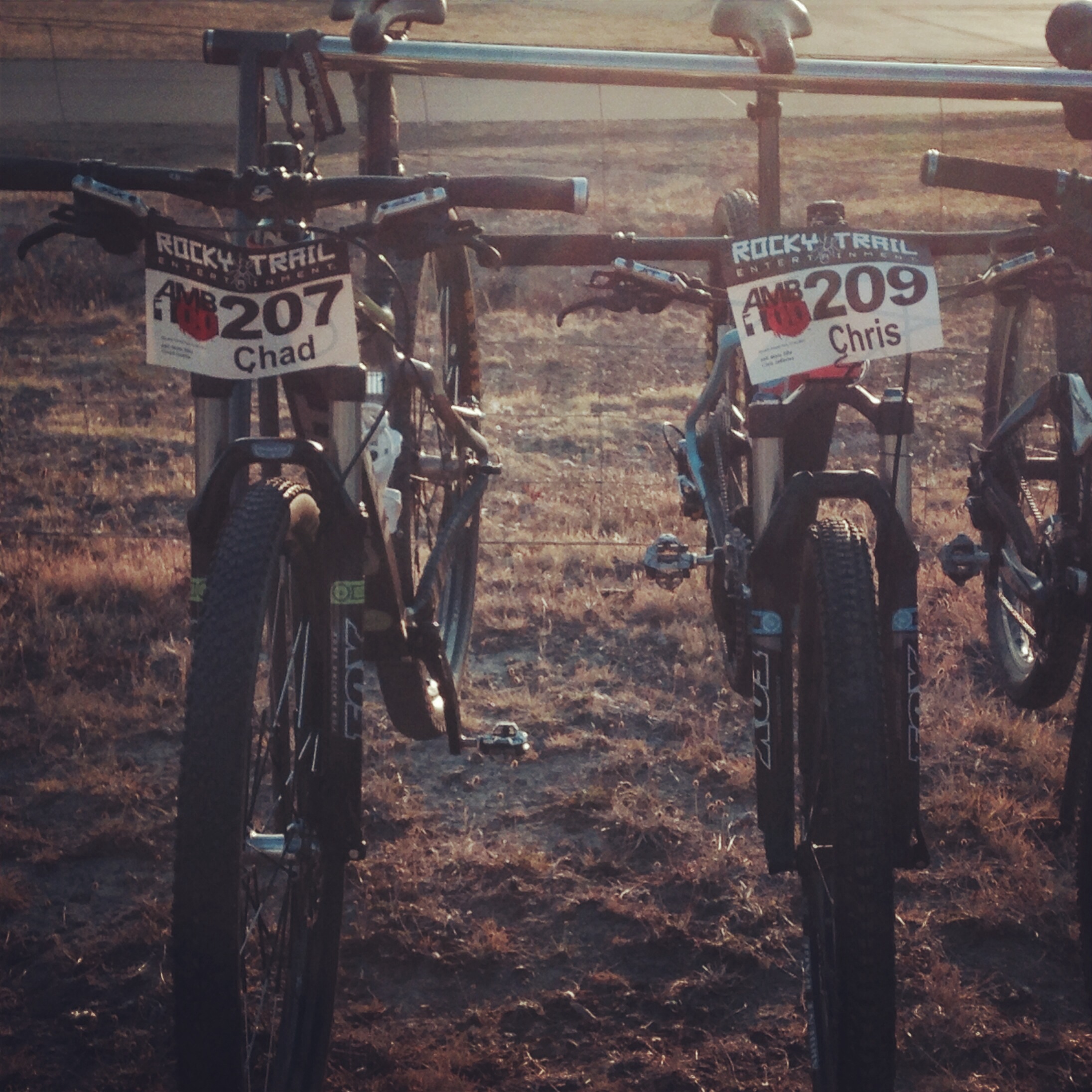
Our team for this event was sponsored by and paid for by SOLDIER ON, in return for their generosity, we engaged in a campaign to raise funds and awareness for this great cause.

It was incredibly disappointing to hear that the race had been cancelled mere hours before our Melbourne racer, Chris, was due to arrive in Canberra.  Numerous supporters donated money to SOLDIER ON through our fundraising page and we all thank you for your kind support.

Unfortunately we never got the chance to put our tyres on the Kowen Forest trails.  For me this was going to be a very special race.  I was going to race under the SOLDIER ON banner with three great mates who I’ve shared a lot with over the years.  To be honest not being able to share a weekend of bikes, sleep deprivation and junk food with these guys is heartbreaking!


To Chris, John and Gian: I’m sorry we didn’t get to ride as a team; but hopefully we’ll get another chance next year.

To SOLDIER ON: Thank you for the opportunity to represent SOLDIER ON once again – Anna thank you for your never-ending (hopefully) patience with me!

To the race organisers: Thank you for your efforts and chin up guys!

To all our supporters: Thank you!


…Chad…


Why The RSL Must Look To The Future

In the past few days there has been a lot of coverage in the news and on social media about the RSL NSW office dictating what will and won’t be allowed during the Sydney ANZAC Day march. To say this has caused a wave of emotion to boil-over various Defence affiliated social media groups is an understatement. The sentiment most being expressed is one of Veterans being fed up with the attitude of the RSL and their efforts to control the very thing that is central to our identity; the ANZAC legend.

I have been critical of the RSL previously and have even participated in some of the online debates about what my opinion is of the current issue surrounding Veterans and marching with their unit banners. As with most discussions regarding the RSL and Veterans opinions and experiences; sadly the negative seems to far out-way the positive. In the midst of a robust discussion about the relevancy of the RSL in these modern times; I posted a rough opinion piece that I have fine tuned and censored for this blog post.

Many of the negative experiences Veterans are facing today aren’t from the club side of the RSL. We are literally being told to “go away” by sub-branches. I don’t give a rats arse about the bar, bistro and pokies side of the RSL; my concern is with the Veterans support side turning away my generation because of perceived differences.

In the past 18 months we have seen more than twenty suicides of Veterans under 40 years of age! While every suicide is both concerning and a tragedy; I’ve now buried more friends to suicide than have been lost in war. We are on the edge of an epidemic spilling over and the sad fact is that Veteran suicide is the new Elephant In The Room for Australia and Australia’s Veteran community. The simple reason for this is because the support isn’t there when it is needed and that support certainly isn’t coming from the RSL anytime soon!

We all wore a uniform and we all served Australia, but to a very small minority in positions of authority in the RSL National, RSL State and RSL sub-branches, this means nothing. In the months after I left the Army I tried to reach out to the RSL, the same sub-branch my Grandfather was President of for 40+ years and was told by the new President “fuck off, we don’t want young blokes with tatts”.

The RSL needs to realise there are other Veterans support groups, social groups and avenues of support available to the Veteran community aside from them. The Vietnam War era soldiers didn’t have the support of the RSL when they needed it but eventually the tide turned and now a lot of Vietnam Veterans are running the sub-branches. The Vietnam Veterans went through decades of lobbying and some still won’t walk inside an RSL. Unfortunately they didn’t have the groups and support networks we have available to us today.

Put simply we have other support and social mechanisms in play that won’t ostracise us and turn us away. Until the RSL at the State and National level fully understands that they are no longer relevant in their current form and start listening to what ALL Veterans want (WWII, Korea, Vietnam, Cambodia, Rwanda, Somalia, East Timor, Solomon Islands, Foreign Aid/Relief, Border Security and Middle East) they are going to see a continuation in the already rapid decline in numbers and attendance.

There are many sub-branches that are doing exceptional things in the Veteran community but their good deeds are being overshadowed by a leadership that won’t look towards the future.

Capital Punishment 2014 Wrap Up

I made the decision to not race to my Garmin GPS at around the 25km mark.  Prior to the 2014 Capital Punishment I had been carefully monitoring my heart rate, average speed and split times during training rides and races.  Every time I got on a bicycle and started riding I would keep my eyes glued to that little LCD display that was telling me all the information I thought I needed to know while riding.  Sure, there is some data that is useful while riding, but the majority of what a GPS/cycling computer can offer is done in post ride analysis.

My preparation for this year’s 100km event was somewhat ideal; some long road rides leading up; but probably not enough mountain bike endurance riding in my legs at the same time.  Between December and February I had been training quite intensively for the Easter 24 Hour Solos.  Alas, the race was cancelled for a variety of reasons and my motivation to train came to an abrupt halt.  My 400km weeks dropped to 200-250km weeks; while not exactly a tiny amount of riding, it was a struggle to get the bike out of the garage some days.

Couple this with one of my more impressive (read painful) crashes at the AMB 100 and I had effectively misplaced my Flow.  I needed something to look forward to and that came in the form of a 100km marathon race taking in the best of Canberra’s single-track and a few killer climbs.  Plus this was my first race in the new Soldier On cycling kit so I was excited about that.  Last year’s Capital Punishment was my first 100km mountain bike race and I loved it.  I rode my own race and only felt fatigued in the last 10km when I had to stop for some explosive vomiting action before the final descent to the finish line.

This year I set a few goals:
1)  Finish the raceIn the past 4 months I had finished only three out of seven races due to crashes or mechanical issues
2)  Race my own raceIt sounds strange, but to race and ignore all the other riders is a sure fire way to understand what your body and bike are capable of on the track
3)  Beat last year’s timeWhat is the point of racing the same event again if you don’t want to improve?

So in the days leading up to the race I formulated my nutrition/hydration plan, prepped Kate the XTC and finally registered for the race the day before.  Alas my excitement was replaced by a sense of WTF?!  This year’s Capital Punishment was a little different to last years and indeed almost all other marathon races.  Usually you choose which starting wave you want to begin in, turn up and start riding.  The Cap organisers implemented a new seeding system that would allow you to nominate which starting wave you wanted to be in; but also required proof of a similar distance and time.

Not an unreasonable request by any means and to be honest a real step forward in trying to combat over seeding.  Last year I started in Wave 5 out of 9.  I finished in just over six hours and caught the tail end of Wave 3.  Not bad for my first ever 100km race, but during that race I had also stopped to help an injured rider for approximately 30 minutes.  In most timed races there is a “Good Samaritan Clause” in which time spent helping an injured rider is taken off your overall time.  No worries I thought, I sent an email off to the organisers and received a reply that this would be sorted in the coming weeks.

Fast forward to 2014’s online registration and I self seeded in Wave 4 based on last year’s time and some of the enduros I had done in between.  Eventually I was seeded in Wave 6, with 300+ other riders… WTF?! Indeed!

So I lined up in the first few rows of the grid within the stupidly large wave and rolled across the start line.  After a few kilometres of fast fire road the Speedy Gonzales’s of the group were huffing and puffing and dropping back; and then we entered the Kowen Forest single-track.  As always the Kowalski Brothers trails were in immaculate condition and daring every rider to push their limits.  Kowen quickly transitioned into Sparrow Hill and I was riding my favourite trails in reverse; an amazing experience.

CP14 006.:Start of the 2014 Capital Punishment 100km:.

Capital Punishment 2014, 50km and 100km MTB.:Kowen Forest:.

Capital Punishment 2014, 50km and 100km MTB.:Sparrow Hill:.

I had been riding for just under an hour by the time we went under the Kings Highway and back into Kowen Forest.  By this stage my wave had well and truly spread out and it was obvious that the majority of us in the front group had been under seeded as we were already passing Wave 5 riders.  As I rounded a corner just before Quadrophenia I misjudged my entry into a short bridge and watched as my XTC tumbled past me as I hit the dirt with my shoulder then my knee and finally my shoulder again.  From crash to back on track I doubt I spent more than 30 seconds off the bike, but it was enough to wake me up and raise the heart rate.

Capital Punishment 2014, 50km and 100km MTB.:Kowen Forest:.

So with a sore shoulder, grazed forearm, grazed knee and a bruised ego; I set about reeling in the 5 or so riders that passed me after I crashed.  It was at this point I could clearly hear my heavy breathing and heart rate blasting in my ears.  My GPS was beeping at me as my heart rate had exceeded my ‘maximum’ of 180bpm and it was not dropping anytime soon.  As I approached the 25km marker sign I looked down at my sweat covered and dust encrusted GPS and pressed the ‘PAGE’ button.  Now all I could see was my elevation statistics, calories burned and the time.  I looked ahead and attacked the group that passed me just as a fire road climb appeared.

The next 20km’s was a blur of single-track, pine trees, fire road and climbs.  It was on the climbs that I found I was passing riders with different coloured race plates to mine; riders that had started one or two waves in front of me, some of who had started 20 minutes before me.  Clearly the seeding system was working fantastically!  My annoyance was soon replaced with surprise as I saw the 40km feed station appear after a hill and I realised I was well and truly ahead of my planned time at this point.  With the Sutton Forest section coming up with a few pinch climbs thrown in I knew I would be best served slowing to a comfortable pace and enjoying the race for the next several kilometres until I reached open fire road again.

And this is exactly what I did until I reached the Majura Military Training Area.  In hindsight I know I took it a little too easy on the Sutton Forest stretch but the fact I was able to walk without pain after the race tells me I made the right decision.  I pushed out a little on the fire roads and soon found myself crossing Majura Road and running a gauntlet of heavy construction vehicles to get over Mt Majura and into the untimed section for a refuel and slight rest.

By this stage last year I had walked two of the steeper pinch climbs in the Training Area and Mt Majura, this year I got out the saddle and pedalled my way up.  As I crossed the timing mat into the untimed section I was feeling pretty good but in dire need of a bottle change.  I rode briskly through the suburbs into Dickson and stopped at the second feed station.  Bermers Di, Ben and Maree were there with words of encouragement and after 15 minutes I turned around to see Bermer Alyssa pulling into the station behind me; wow, she was not mucking about!  I headed off to the start of the Black Mountain section and stopped to take advantage of some of what remained of the 55 minutes of un-timed section to have a bite to eat, nature stop and psych myself up for the next 30km that would be comprised of a lot more climbing.  Luckily I like climbing, I may not be the fastest climber but I have endurance and on long climbs I find I pass a lot of others that try to lead out early.

Black Mountain was fun; tough climbs up and loose sketchy descents down.  There was plenty of braking and skidding but by the time I was weaving through the cork plantation leading into the Arboretum I was still smiling.  Immediately after the cork trees disappeared the climb that almost made me swear last year came into view.  A long, loose and sometimes pinchy fire road that lead to a few shorter climbs.  I decided to attack this climb; I don’t know why, but something in my legs told me to do it.  I picked a gear and got out of the saddle and climbed.  Last year I walked most of this hill and this year I wanted to own it; albeit in my own slow and steady way.

The Arboretum was comprised of hot and dusty sections that lead into the Cotter Road tarmac section that took us into Mt Stromlo.  Last year this small stretch was difficult for me, I was running on near empty and it was a huge struggle to get my dual suspension Anthem, Zooey, to maintain any momentum.  The slow grinding climb this year was made slightly worse with a drive train that sounded like half of my bike was grinding against the bitumen.  As I entered Mt Stromlo’s first section of single track signalling I was nearing the last 12km of the race, my bottom bracket decided to start making life extremely difficult for me by partially seizing up.

Capital Punishment 2014, 50km and 100km MTB.:The National Arboretum:.

The free flowing tracks of Holden’s Creek and Fenceline were quick despite the horrible grinding noise coming from my bike; but it made the next 7km ascending the mountain terrible.  I had a choice of three gears in which my cranks would actually spin and allow me to continue moving forward.  I was out of the saddle most of the climb and by the time I reached the start of the Western Wedgetail and the welcome descent down the mountain my quads were burning.  I started the run home to the finish with a little tail whip (not my style but I figured why not) and hoped I wasn’t about to slow down any riders behind me.

Capital Punishment 2014, 50km and 100km MTB Capital Punishment 2014, 50km and 100km MTB Capital Punishment 2014, 50km and 100km MTB Capital Punishment 2014, 50km and 100km MTB.:Mt Stromlo:.

Skyline lead into Luge then Old Duffy’s Decent and finally the final stretch onto the crit track.  I had been passed by one rider on Luge and decided I wasn’t going to let this Wave 4’er beat me (despite the fact he started the race a good 15min before me) and pedalled as fast as my body would let me.  I bunny hopped the finish line and pulled up with a mean cramp in my left hamstring from the final sprint.  I was met by my wife and the few Bermers that had started and finished before me.  I was spent, but I was extremely happy; even more so when I found out I had finished under 5 hours.

CP14 008 CP14 011.:Finished!:.

A huge thank you to my wife, the volunteers, fellow Bermers and the other riders for an amazing event.

New Soldier On Kit In Action

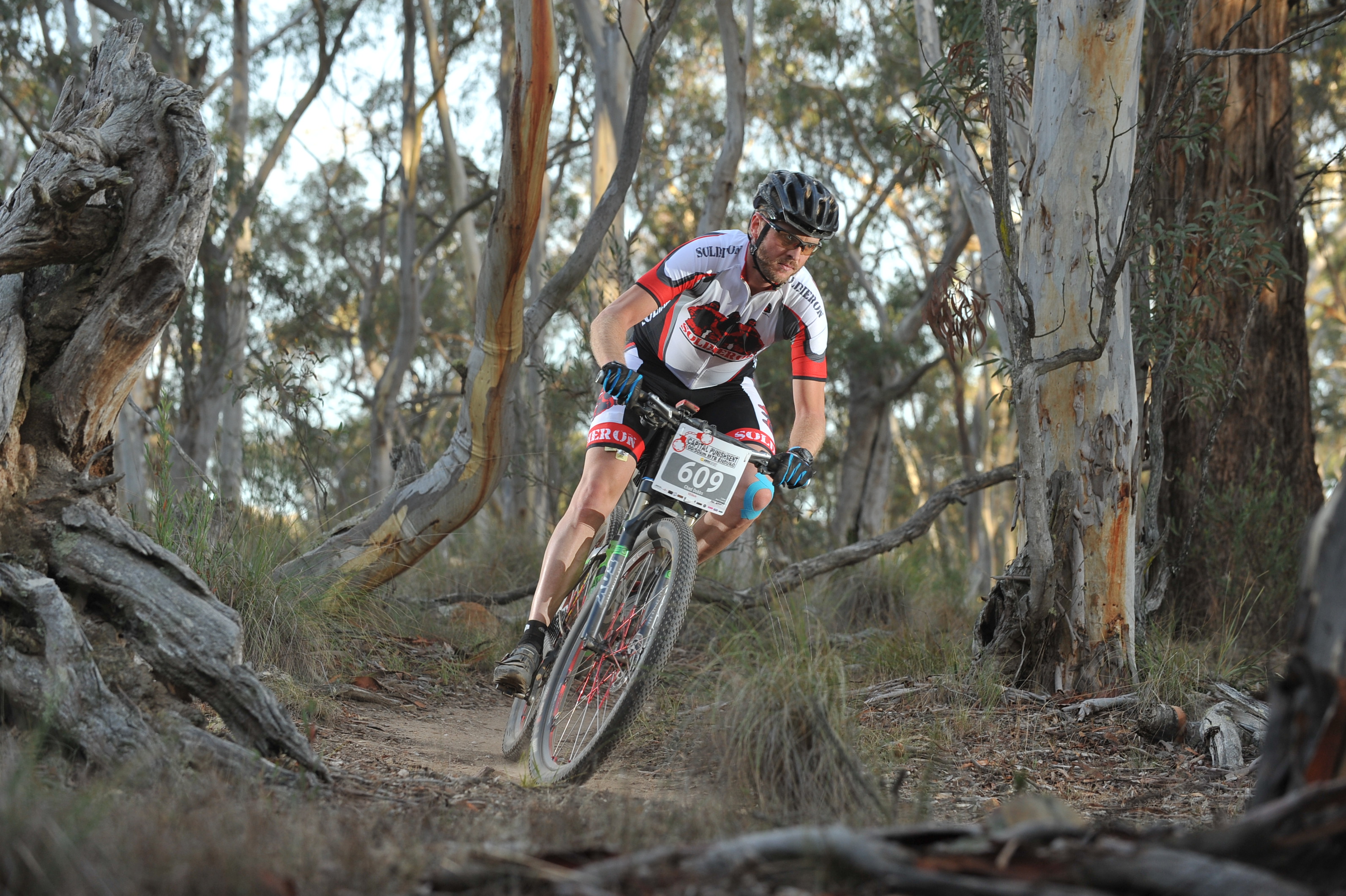
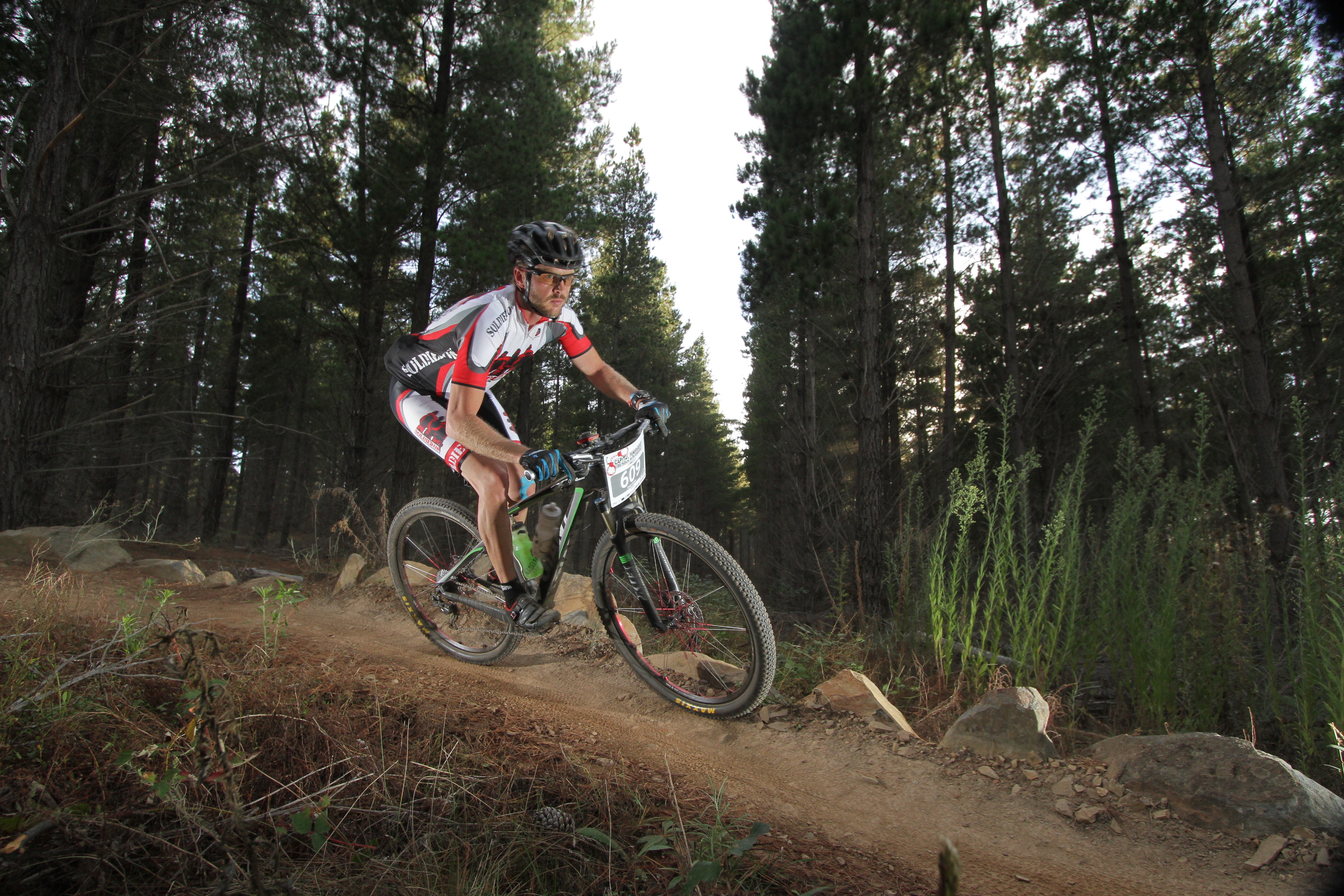
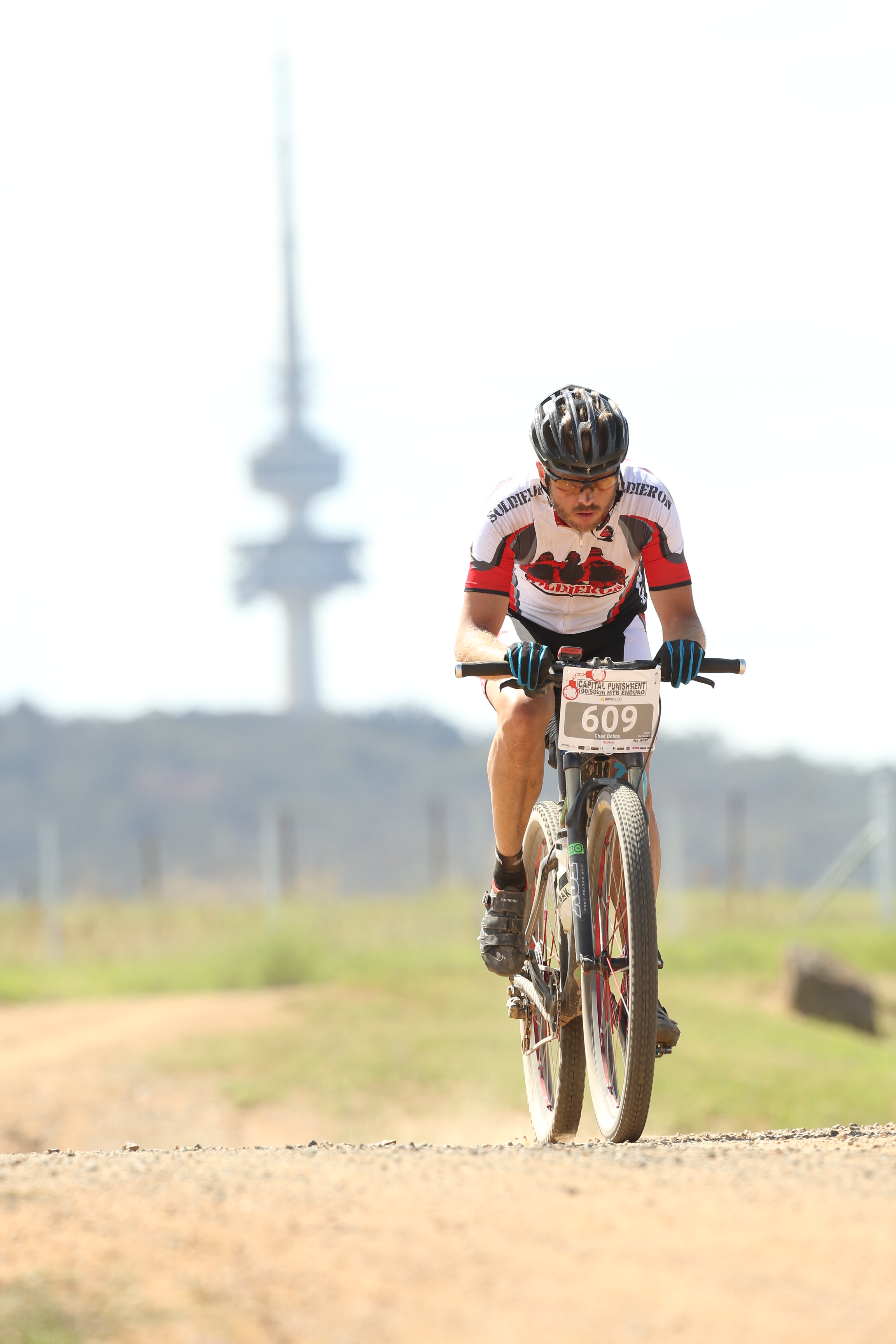
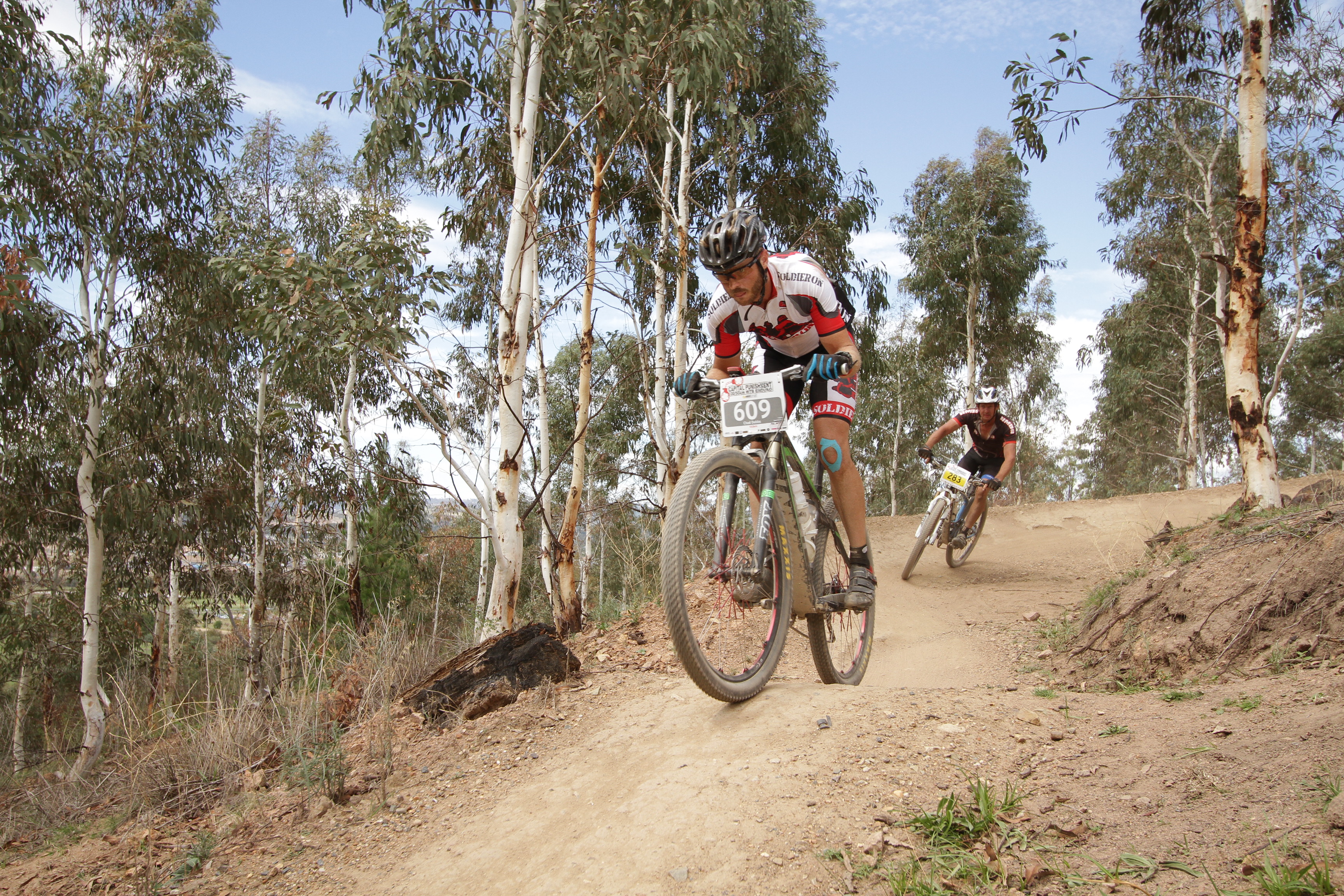
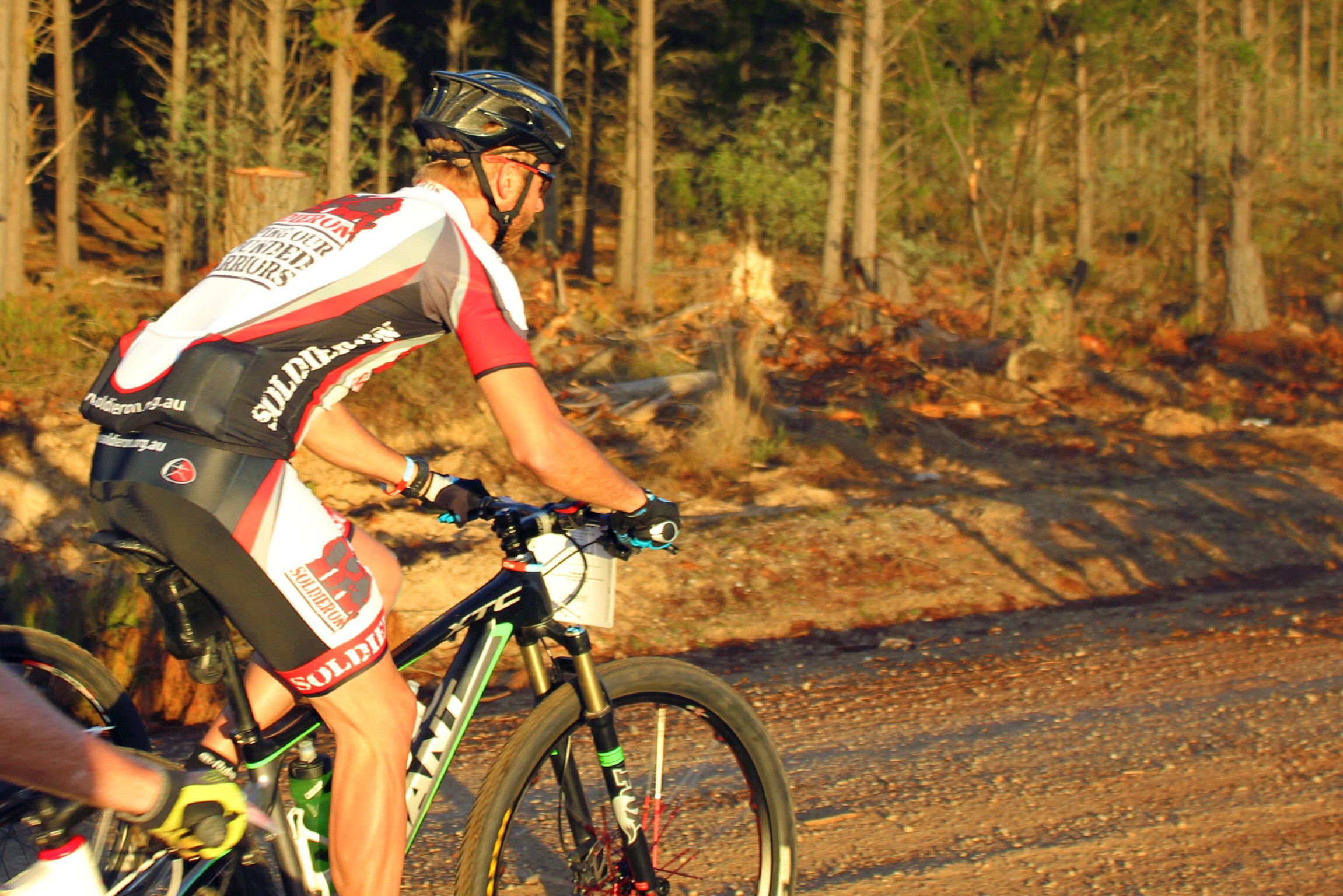
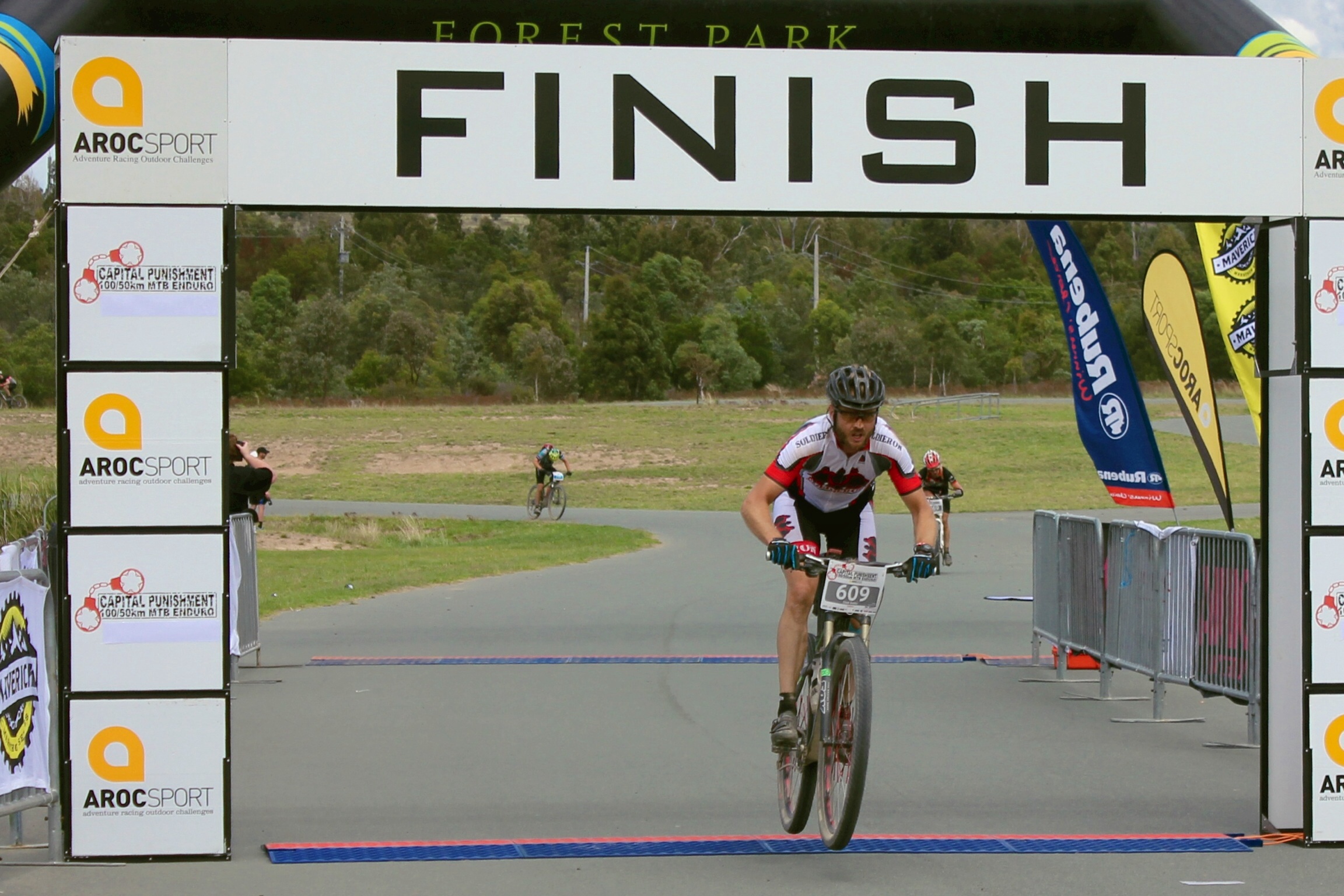
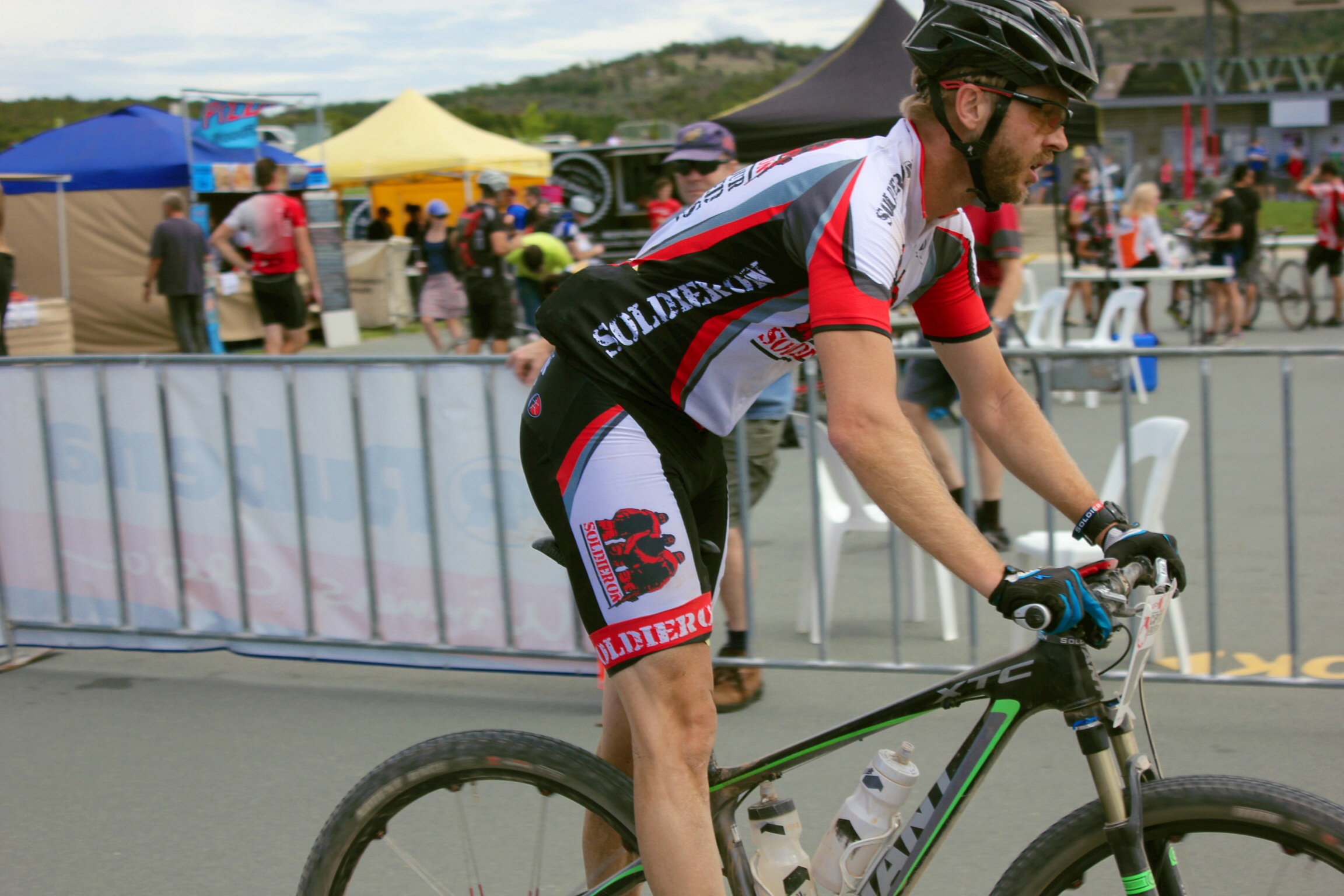
After a couple of weeks riding in the new Soldier On jersey and knicks combo around Canberra it was good to finally get them out to masses during the 2014 Capital Punishment on 15 March.

image.:Starting the race:.

image image.:Crossing the finish line:.

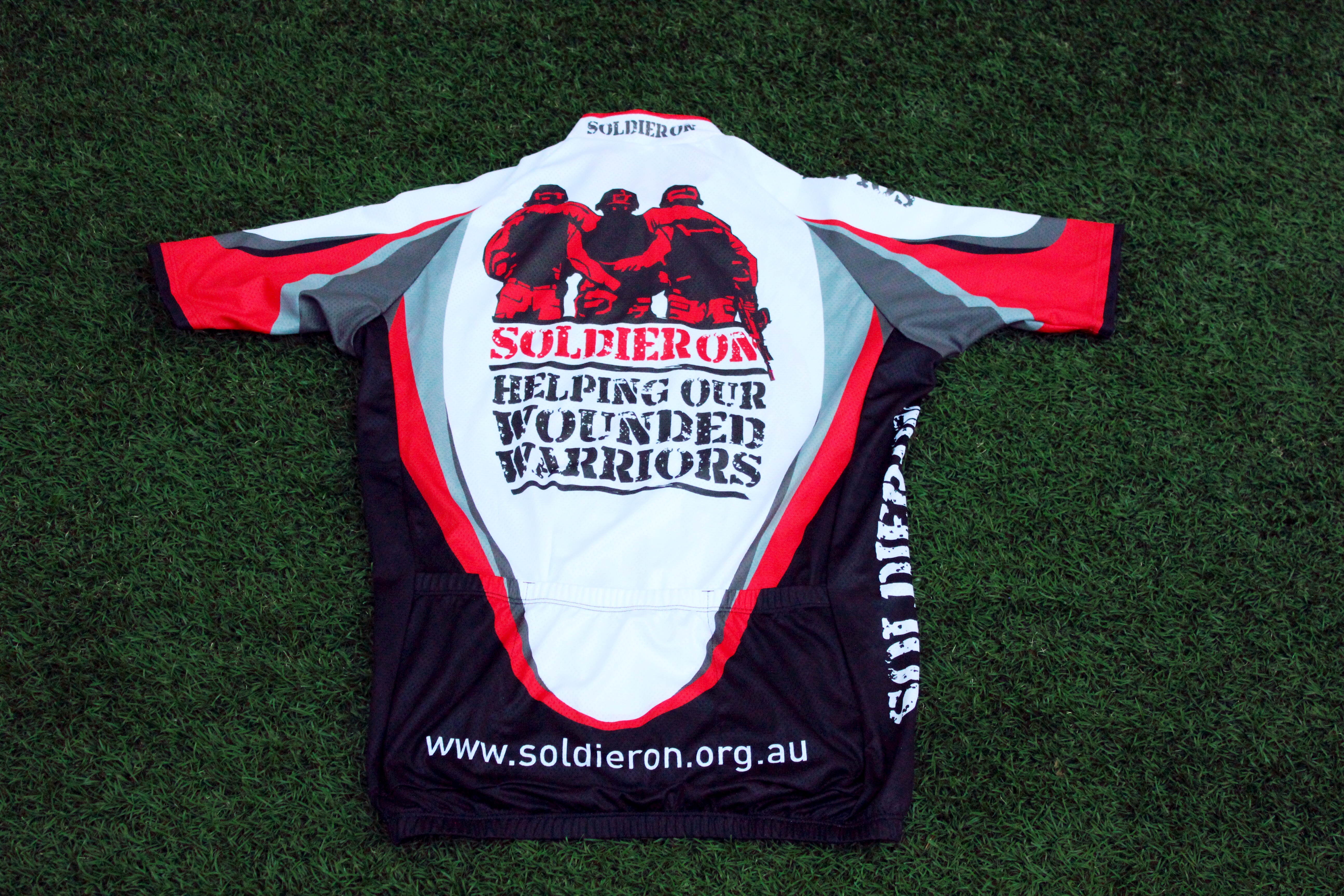
Soldier On Jersey – Version 2.0

With thanks to Soldier On & The Military Shop the new version of the Soldier On cycling jersey has arrived – with matching bib knicks.

Both Soldier On and myself have been inundated with questions and requests since my original jerseys hit the streets and tracks and now you can support Soldier On by getting out and about in the new kit!

BIKES 167 BIKES 166 BIKES 165 BIKES 164 BIKES 163

The original jersey was made up in early 2013 and only I and US Army wounded Veteran Kit Lowe have warn them.  Now you can be apart of the team!
Available from The Military Shop in Canberra.

A Little Housekeeping

Amazingly one of my posts entitled WHY I WALKED FROM THE RSL has gone somewhat viral on Defence affiliated social media pages and attracted a lot of attention (positive & negative) towards my Blog.  

I have added a new menu item to allow visitors to access my posts on VETERANS ISSUES a bit easier.  It is located on the menu bar next to the CYCLING tab.

I started this Blog as an outlet for my thoughts, photos and fundraising activities. The opinions expressed on here mine and I try to keep the rants to a minimum and be respectful as much as the subject matter requires.
I also expect this from the visitors who visit my Blog.  In the past couple of days I have had a lot of positive feedback and more than a few trolls post comments.  To be blunt; if you are abusive past the point of defending your opinion (i.e: threaten to hunt me down and kill me) I will delete your post and block you from commenting again.

Thank you,

Chad

An Evening At The Australian War Memorial – Updated

ABC’s Big Ideas has released the Boys Don’t Cry program online for viewing.
The televised version is shorter by about 20 minutes and doesn’t include my speech at the end of the forum.  The online long version does.  I invite you to watch is however please be aware that some of the program is fairly confronting including what I have to say at the end.

Long version of the Boys Don’t Cry segment

Big Ideas Boys Don’t Cry segment

On Wednesday evening, 20 November 2013, I attended a panel discussion at the Australian War Memorial on Post Traumatic Stress Disorder.  The event was hosted by journalist/writer Paul Barclay on behalf of ABC TV and Radio National.

On the panel were former Chief of Army LTGEN Peter Leahy; author and Beyond Blue ambassador Allan Sparkes; Beyond Blue board member Professor Brett McDermott; and the wife of a former British Royal Marine, Emily.

I was asked about attending the panel a few days earlier by my friend Jason.  Originally I didn’t want to attend as I honestly thought it may be a trigger for an anxiety episode; so I declined.  It wasn’t until the night before that I decided to go along and hopefully have a chance to speak to whoever was on the panel.  I had no idea who was participating in the discussion other than LTGEN Peter Leahy and hadn’t really thought about what was going to be discussed.

In the afternoon prior to the start of the forum, I rode from work up to the Australian War Memorial.  As is the norm, I was wearing my Soldier On jersey and happened upon new Soldier On team member Tony; who many moons ago was my Troop Commander when I served in Iraq.  Jason arrived next and soon we were joined by Anna, Meredith and Dion from Soldier On.  After I got changed into something more appropriate than skin tight lycra, we went into the BAE Systems Theatre.

After the introductions Paul started the discussion with some questions about PTSD in the military for LTGEN Leahy.  The conversation and questions started to flow freely within the panel with some very emotional stories being shared by Emily and Allan.  Prof McDermott gave some very interesting insights on PTSD for not only military personnel; but also for emergency service persons and of course their families.

I wasn’t the only veteran in the crowd; but I was the youngest.  There were a few Vietnam Veterans present, family members of veterans with PTSD and a few senior Defence officers that were skulking around the back pews in civilian attire.

As the discussion progressed LTGEN Leahy was asked some questions about support services available to veterans.  I have a lot of respect for this man; he was an exceptional Chief of Army and has done a lot to help veterans with his current position as Chairman for Soldier On.  But there is a distinct level of detachment from what a high ranking officer is told and what happens on the ground.

Some of his responses started to irk not only me, but a lot of the crowd listening to him.  There were more than a few audible scoffs at some comments about the Department of Veterans affairs doing their best to help all veterans.  One comment in particular drew a very audible “get fucked” from me.  The former Chief of Army said that when a Soldier asks for help, he or she will always receive it.  Paul mentioned the story of MAJGEN John Cantwell and LTGEN Leahy was in agreement.  Whilst MAJGEN Cantwell has done a lot to help break the stigma of PTSD in the ADF; it is also true that a very senior Officer is never going to be turned away when they ask for assistance.

Allan Sparkes shared his story of PTSD and depression from when he was a Police officer; and the ostracising that he experienced as a result.  His story was a very raw, no punches pulled recount of his darkest days and his termination from his employment without his knowledge.  His story was very reminiscent of many veterans from the Vietnam War up until today’s conflicts.

Emily’s story was one of amazing courage from both her and her husband Adrian.  She spoke of her time in the United Kingdom when Adrian returned from deployment in Afghanistan a changed man.  He had experienced traumatic events and as a result developed PTSD.  His struggles with mental health affected his wife and two daughters as they watched as their husband and father dealt with his issues now that he was back at home.  His eventual discharge from the Royal Marines was a result of a physical injury and just like the majority of occupationally injured Australian servicepersons; Adrian was soon pushed out the door with very little support and preparedness for his transition to civilian life.

As the forum was drawing to a close Paul invited Dr Brendan Nelson, director of the Australian War Memorial to speak and field some questions from the panel.  He spoke about the AWM’s role with supporting veterans of recent conflicts by having interactive exhibits and involving them with other projects the AWM is conducting.  As a former Minister for Defence he expressed his desire to see more support forthcoming as the Afghanistan War draws to a close.

As 7pm was quickly approaching a few of us in the audience were wondering if we would get a chance to ask questions of the panel.  Adrian was next to take the stage and he recounted some of his experiences post deployment and how support for veterans is extremely slow from the government in Britain.  He spoke of having his claim for assistance being rejected on the first submission; a trend very similar to that in Australia carried out by DVA.

Adrian expressed his concern for veterans being forgotten after the withdrawal from the Middle East and a strong desire for them to be able to access the support they deserve and not repeat the mistakes of the past.  He likened the struggles of today’s returned servicepersons to that of the Vietnam War era in the way that the fight for support continues even after the war on foreign soil has ended.

Adrian’s address to the panel and audience had clearly reached out to everyone with many of the Vietnam Veterans visibly moved by his honesty.  As he sat down Paul checked his watch and asked us sitting in the audience if anyone had anything questions or comments.  I had been sitting and fidgeting for the past 10 minutes waiting for this moment.  Several different introductions and talking points had gone through my head and all disappeared in the instant I raised my hand and Paul motioned for me to stand up.

I was shaking before I even started speaking; this was always going to be an emotionally charged interaction from me and I started by introducing myself.

“Hi I’m Chad, I separated from the Army early last year and have deployed to both Iraq and Afghanistan.  I have been diagnosed with PTSD, depression and anxiety and I want to know why not enough is being done to help Australian veterans.”

I addressed LTGEN Leahy first and exclaimed to him that history was indeed repeating itself.

“I am a third generation Soldier, my Grandfather served in World War 2, my Father served in Vietnam and I have served in the Middle East.  I watch as my Father and his mates still struggle with PTSD with many Vietnam Veterans taking their own lives since the war ended.  I watch as my generation struggles with the same issues and now my mates, people I served with, are killing themselves because of PTSD and depression; and nothing is being done to stop this.  There are more people in the ground because of PTSD and depression than there are that are on the wall outside who were killed on operations.”

I spoke of my efforts to get help when the weight was becoming too much for me to bear and that the first two times I asked for assistance I was rebuffed by my unit RSM’s; a statement that clearly shocked LTGEN Leahy.  I was asked questions from both Allan Sparkes and Prof McDermott about my interactions with DVA and I recounted how I was told that my claim was going to be slow as my PTSD and depression ‘wasn’t that bad’.  I explained to them that is was at this point that I withdrew my claim and stopped interacting with DVA as I felt I was being accused of chasing money and that by not receiving financial assistance my criticism of their practices would hold more weight in a public forum.

I described my battles with depression and that very few people understood; and the simple act of asking for help effectively stalled my career in the Australian Army for a number of years.  The feeling of being ostracised and singled out was always present and that few people would support me when I asked for further help.  I explained that while MAGJEN Cantwell’s story is not an isolated one, the level of support and assistance he received was.  The average Digger in a unit has to contend with the ever present stigma of mental health issues and ignorance present within their chain of command and the probable persecution for not being able to fulfil their duties without restrictions.

I expressed astonishment that the very organisation founded to protect the rights of and provide assistance to veterans was failing in its primary role.  I emphatically asked how in the forty years since the end of the Vietnam War servicepersons are still not being afforded the support we fought for.  How it was possible that DVA can state they are still learning and getting better with a straight face as veterans from multiple deployments and generations kill themselves while waiting to access support services.

By this stage the room was silent and I had been speaking for around 20 minutes.  The panel while sometimes asking me questions and making statements had clearly been unprepared for such a raw and uncompromising speech from someone.  I had brought up some points with personal accounts of systematic failures from within the Australian Army, Australian Defence Force and the Department of Veterans Affairs.

There were some topics that I shared with a public forum that had only been discussed with medical professionals and not even shared with my wife and family.  As my speech drew to a close I expressed the hope that one day veterans would receive the appropriate support from the Government but that it was very unlikely to occur in my lifetime and that my children probably wouldn’t see it happen either.

As I finished speaking I apologised for hijacking the Q&A session; Paul started wrapping up the forum and I sat down nervously.  Jason patted me on the shoulder and most of the audience was either nodding in agreement or wiping away tears.  I sat shaking and started to feel quiet anxious from speaking to a mostly unknown audience about issues so personal and distressing that I had spent the last few years repressing and ignoring them.

The rest of the evening was spent talking with members of the audience and panel.  I received a great number of business cards and offers of assistance and opportunities to speak to other veterans and people with PTSD and depression.  I found the response surprising and was shocked when LTGEN Leahy approached me as he was leaving.  He handed me his business card and told me to email him.  He offered to take me to see the Minister of Veterans Affairs to discuss the issues I had brought up.

He told me that the Service Chiefs would be made aware of what I had spoken about and that I should continue speaking up.  Both he and Dr Nelson expressed the need for younger veterans to be the public faces and voices of our generation and that I should be one of them.  I was very humbled by this statement and thought a lot about it over the following days.

At the conclusion of a big night, I farewelled Jason and the Soldier On crew, thanked the others and started riding my bike back home.  The next 45 minutes were some of the most contemplative times of my life as I thought about what I had said and the inevitable shock-waves that they would create for my family and I when the ABC airs Boys Don’t Cry on Big Ideas in late 2013/early 2014.
The Silent War

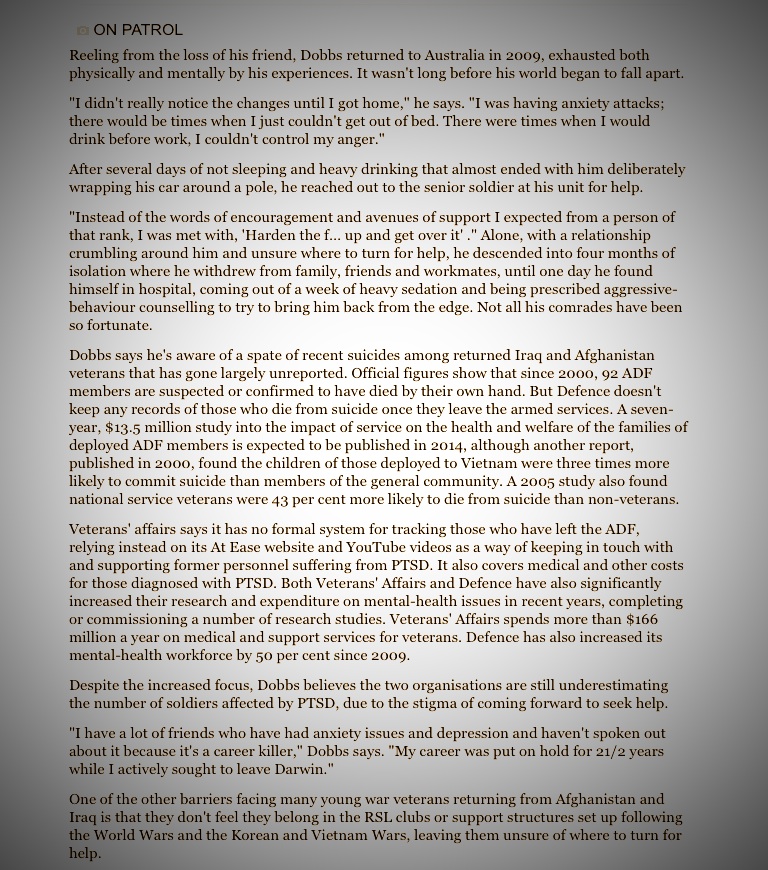
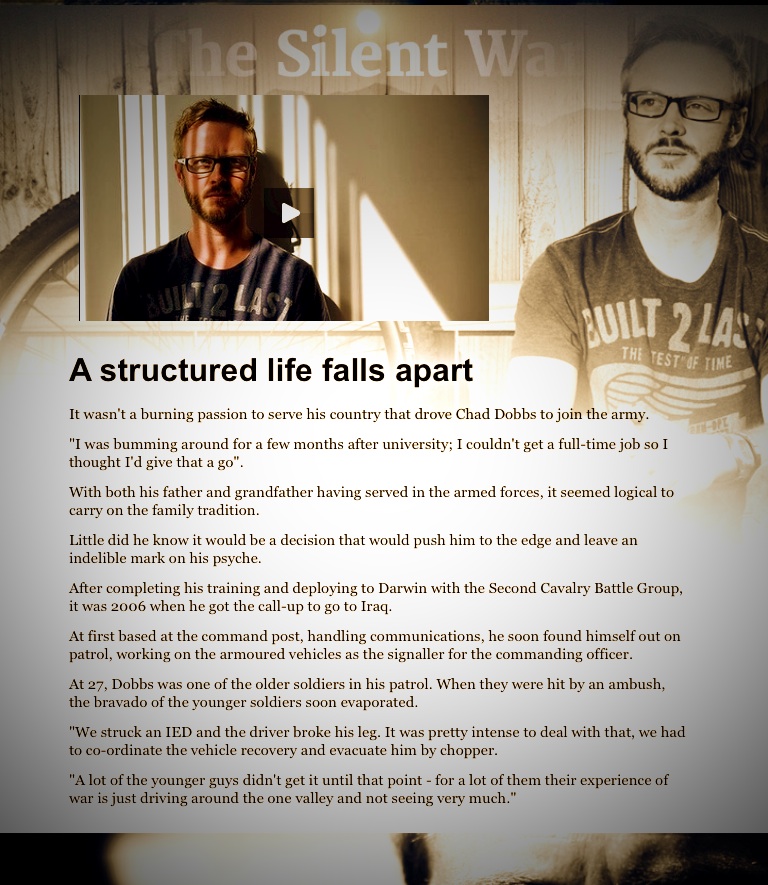
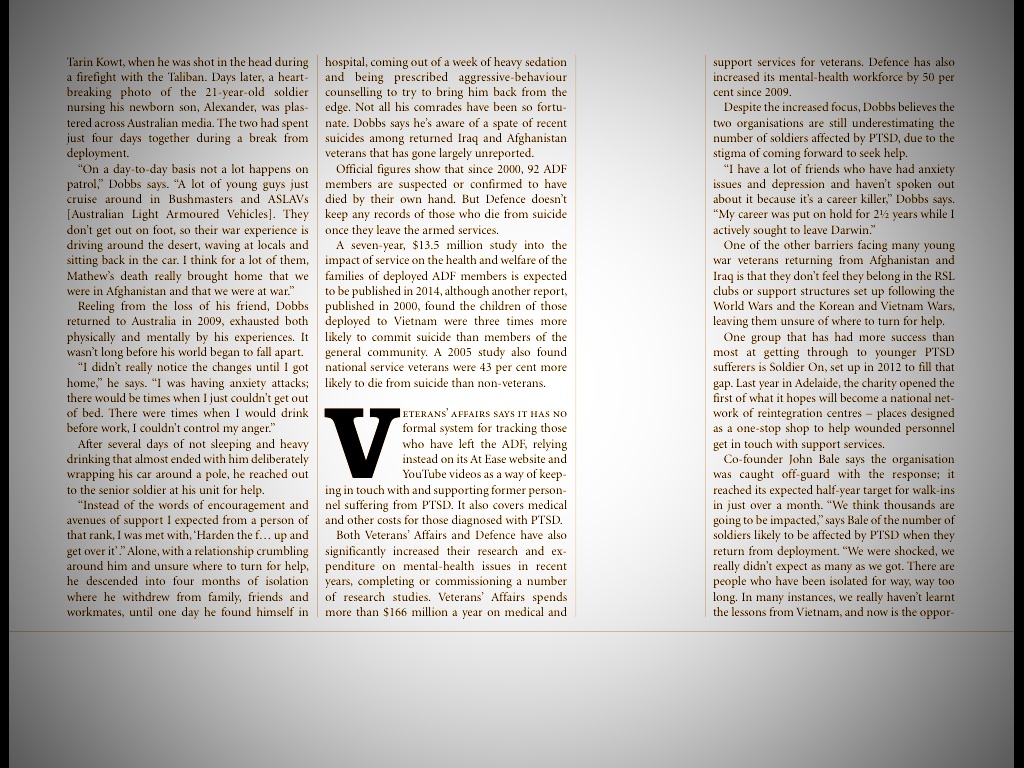
Last year on Sunday 29 September, I sat down with Canberra Times Sunday Editor Scott Hannaford and photographer Melissa Adams to share my story about life with PTSD, depression and life after I hung up my uniform and packed away my boots.

Scott had seen this blog and contacted me via Twitter and asked if I wanted to take part in a story he was putting together on Veteran’s experiences with post traumatic stress disorder and life after deployment.

For a few hours we sat down and talked about my time in Iraq and Afghanistan and my fundraising/awareness raising for Soldier On.  On Sunday 13 October 2013, Scott published a story in the Canberra Times about my fundraising campaign leading up to the 2013 Battle Of The Beasts.

CanberraTimes Article.:Click here to read the original story at the Canberra Times:.

After months of hard work Scott’s story was published in all major Fairfax newspapers and online with a suite of interactive media including our interviews and photos from overseas.

Below is my interview from the Canberra Times website and video interview with Scott and Mel.

.:Click here to view my video interview:.

.:Click here to go the interactive website:.

IW 002 IW 003 IW 004 IW 005 IW 006 IW 007 IW 008 IW 009 IW 010

AMB 100 Marathon 2014 Wrap Up

There comes a time in every cyclist’s life where a crash will abruptly end ones race. The AMB 100 was the race that ended with me separated from Kate, beloved Giant XTC, laying in a heap on the jagged rocks of Mt Stromlo’s Slick Rock trail.

To fully explain what this race meant to me I have to write about some events via a short linear narrative.

In the weeks leading up to this race I was undecided which distance I wanted to ride. On offer were 33km, 66km, 100km and 100miles (160km). I knew I wasn’t going to settle at 33km as that distance and most of the race track was my favourite training loop of Mt Stromlo, put simply; why pay to race a loop I already ride quite comfortably? There was simply no challenge in riding it, combine this with 200+ other riders and I would be slower than when I ride solo at a controlled pace.

Ultimately I chose to race in the 66km category. My decision was based on my training program for the upcoming National MTB Easter 24 Hour Solo. It just wasn’t conducive for my end goal to smash a 100km or 160km ride out in the early stages of a program that was designed to build my endurance for a ride that would see me clock up anywhere between 350-400km in a 24 hour period. Combine this with the difficulty of Mt Stromlo’s trails and the usual February heatwave that hits Canberra; racing the longer distances would require a 3-4 day recovery period that would impede my training.

Luckily for me a few issues arose prior to this race including a bite from a Red Belly Black Snake and a persistent knee injury flare-up that cemented my choice of racing 66km was the best option. So in the days leading up to the race I monitored the weather with keen interest. Temperatures were expected in the high 30’s and a severe fire danger was expected to be announced on the Saturday. (Un)luckily for us riders, Mt Stromlo, doesn’t close when the fire danger reaches severe, it has to tick over to extreme; which is what riding in these projected temperatures was going to be – EXTREME!

I have a lot of faith in the race organisers Martin and Juliane Wistana from Rocky Trail Entertainment. While they are running a business, they have shown before that competitor safety and wellbeing is the most important concern for them on race days. So on Saturday evening an email was sent out telling us the next days race was going ahead as planned; albeit with an earlier start time and slightly shorter distance.

I prepared my bike and packed my car the night before as usual, went to bed early and headed out to Mt Stromlo before the sun had risen. I made it out there just as the first 100 mile riders were transitioning for their second lap of the course. Ed McDonald was the first rider to come down the mountain in the early morning light and regaled his story of cleaning up a kangaroo before heading off to ride up the mountain again. Bermers Jamie Ingram and Adam ‘Rocket’ Rolls soon followed and quickly ditched their lights, loaded up on food and fresh bidons and promptly left to tackle their second laps.

Soon after I registered for my race and changed into my riding kit. I was fairly confident before this race as I intended to just go out and enjoy the first lap and once the field spread out attack my first lap split time on the second. For me there was no other rider I was racing against; my only competitor was first lap Chad who I wanted to beat by at least 10 minutes.

image.:Ready to roll:.

We lined up for the mass start at 08:00 and headed down the tarmac and onto Fenceline for the first bit of singletrack. As expected the 200+ strong field bottlenecked almost instantly and a snails pace followed for the next 2-3km. A lesson learned for the organisers before next years race maybe? I hope so because riders promptly started having very low speed wash-outs and cleaning each other up. I witnessed two such crashes in front of me caused by an impatient younger rider who felt he needed to pass the conga line at the worst possible moment.

As I crested the top of the mountain and headed towards the start of Western Wedgetail I glanced down at my Garmin GPS and saw that my racing time was almost 12 minutes slower than my usual training loop on the same tracks; that is how congested the rider traffic had become. I sped down Wedgetail narrowly missing another rider running up the wrong directing looking for a pair of glasses and onto the Pork Barrel. In the first few metres of one of Mt Stomlo’s more technical trails I was dodging unbalanced riders who were unprepared for the rock gardens and drop offs that they were about to tackle.

Pork Barrel felt good under my tyres, I wasn’t fighting my bike and more often than not, I was taking the more technical A-line to pass the slower riders. For the first time in the race I was starting to feel my Flow. As I turned into Slick Rock a few riders had lost their nerve at the drop offs and sharp rocks that followed and were quickly pulling off to the side of the track to let a few of us pass unobstructed.

As I dropped of the back of my saddle and positioned myself for a rather large rock ledge to ride off I caught movement out of the corner of my right eye. The junior rider who had been so overconfident on the climbs had appeared from off the regular trail and was attempting to cut me off in what was to become and incredibly dangerous moment of stupidity.

He baulked at the drop and washed out onto the flat rocks below. Not wanting to crash into a barely 13 year old kid, I locked up my brakes and attempted to avoid him by hopping my bike to the right and off the track into the bushes. This did not work as I was still behind my saddle and hit a tree at full speed with my hip at the same time my front end lurched over the drop off and sent my bike tumbling forward. The sudden change of direction sent me over my bars and onto the rocks in front of the kid.

My elbow met the rocks with my entire body weight behind it. I rolled a small distance before the track levelled out and I was able to scramble onto my feet and recover my bike from the middle of the track. I crawled over to a piece of real estate that wasn’t an A, B or impromptu C-line and tried to work out if the immense pain shooting up my arm was due to a fracture in one of the bones. The kid got to his feet and continued riding while I gave his Father some advice on course etiquette and made him aware of his legal obligations as the guardian of a junior rider regarding any costs involved in repairing my body and/or bike.

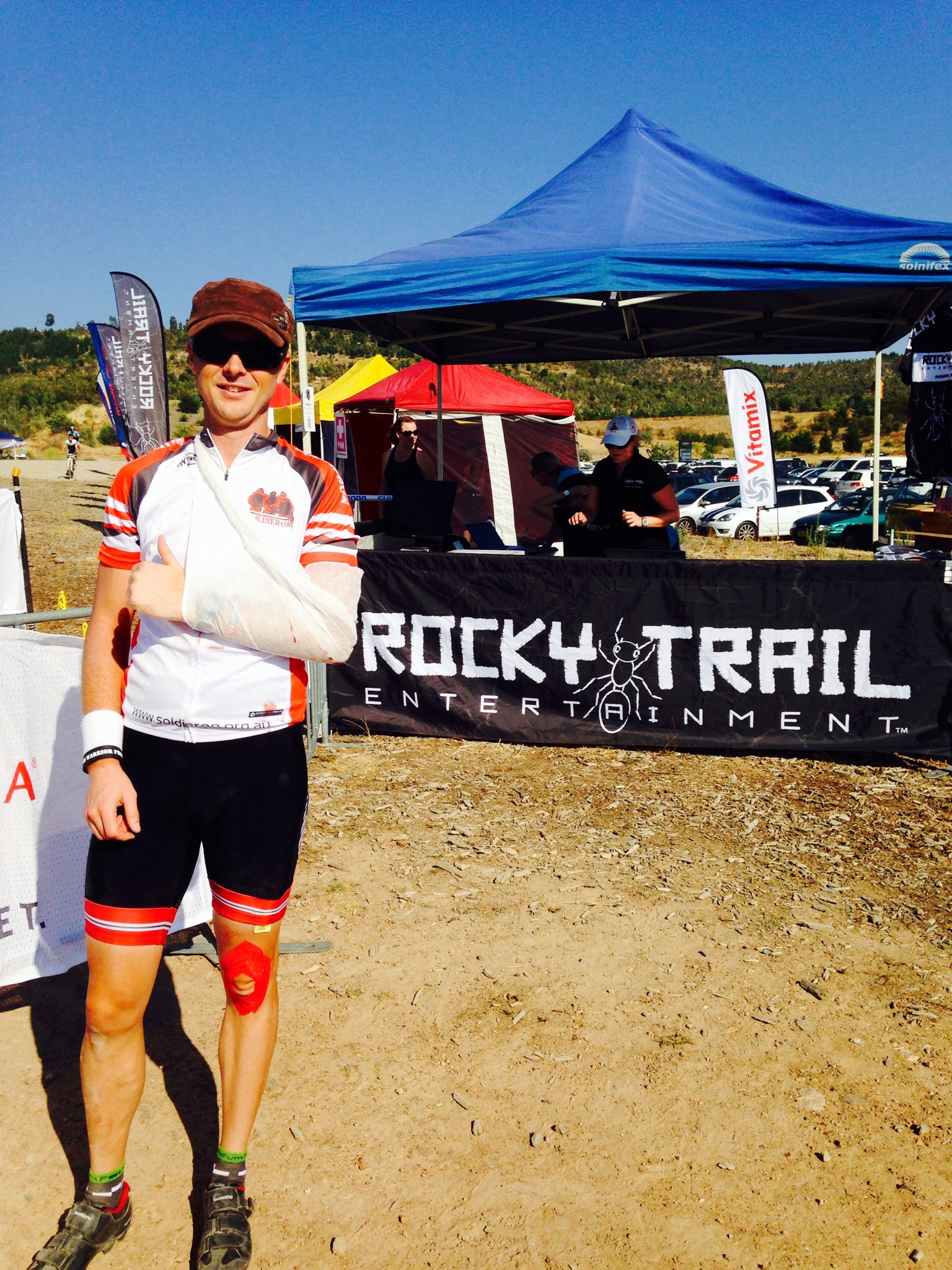
It was at this point with a gaping hole in my elbow, a painful yet somehow numb arm that my race was over. I limped across to race director Martin and Bermer Andy S and made my way to the medic station a few hundred metres away. A quick review, patch up and arm sling later I was driven back to the event centre and called my wife on her birthday to come and take me to the hospital.

image.:Post crash:.

Before she arrived I packed my car with the help of Ben ‘Hollywood’ Hudson, handed over my car keys and soon departed for the Calvary Hospital Emergency Department; the second time in a month. It took a little over two hours to get seen by the medical staff and a fracture was quickly ruled out. With the aid of some local anaesthetic my elbow hole was scrubbed free of debris stitched up and I was sent home. A bruised bone, six stitches, a numb arm and a left hand unable to grasp properly is what I am left with 24 hours later. A reminder that even when my riding feels spot on someone else’s inattention/stupidity can quickly turn a good day into a very bad day.

image.:Waiting to get sewn up:.

To the little fella that caused me to crash I sincerely hope you have learnt a lesson, if not I hope that the only injuries you inflict in the future are to yourself you selfish little turd!

Thank you to the Rocky Trail team, especially Juliane and Martin for a great event and for helping me post-crash. Di and Ben for helping me out and driving my car home. Jason, Bel, Sarah and Kirsty for supporting me after the race and my Wife Carly – I’m sorry for ruining your birthday by riding, crashing and spending a few hours back in the ED!

Rantings Of A Thirty-Something Cyclist

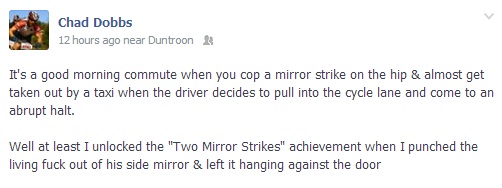
This morning I posted a Facebook status after a somewhat eventful commute to work on the road bike.

FB Rant.:The status in question:.

I post a lot of cycling related things on Facebook; considering I spend an average of 15 hours a week on the bike, it’s not uncommon for seemingly eventful things occur.  Combine the types of riding I do, put bluntly: shit happens!  I ride and race mountain bikes, crashes occur; I ride some fairly rough terrain inhabited by many of Australia’s native animals; I got bitten by a snake.

I also ride a road bike.  This doesn’t mean I ride on the road in front of cars sipping a latte while slowing down traffic.  I weigh 76kg, ride an 11kg aluminium frame bike while wearing lycra, a lightweight but extremely strong helmet and I stick to cycle paths and cycle lanes adjacent to the lanes motor vehicles drive in.  Yet I am often a target for bottles being thrown at my head, being spat on, car doors being opened on me and simply abused for riding a bike.

I’ll stay away from the “you don’t pay rego argument”… No fuck it!  I own a car with a turbo I pay shit-loads in registration and insurance, I pay my taxes, I insure my bikes, I also pay a yearly registration to ride my mountain bike in competitive races… Holy shit – I pay fucking rego for a bike!

I also pay a higher private health fund premium to cover potential injuries whilst riding and most importantly I help reduce carbon emissions and road congestion.  Plus in NO STATE IN AUSTRALIA does motor vehicle registration directly fund road works or road safety programs so doubly go fuck yourself with those arguments.

There are three reasons why I ride a bike:
1)  I enjoy it
2)  I don’t want to be a thirty-something fat slob whose weight roughly equals the height in cm minus age in years equation (HTcm – AGEyrs = FAT+UNHEALTHY)
3)  I live with a depressive disorder and cycling helps curb the dramatic highs and devastating lows that impact my life and lives of the people around me

When I ride a mountain bike, I am extremely focused yet very relaxed.  It’s quite easy to be spinning a pair of aching legs, sweating dripping down my face and I’m still smiling ear to ear.  It’s a Zen-like experience a lot of the time; riding, friends and Flow.

When I’m on a road bike it’s a very different experience.  I like to road ride alone; I don’t enjoy riding with others.  Because of this you won’t find me in a bunch holding up traffic by taking up an entire road lane.  There is also another side to my road riding persona; I am extremely reactive to my environment.  If mountain biking is the good side of my riding, road riding is the dark side.

People with depressive disorders aren’t always sad, sitting in a dark room and crying.  Sometimes we are aggressive, violent and act out without warning.  When a cyclist rides on the road, albeit in a cycling lane, we are extremely vulnerable.  Simply put, I weigh less than 90kg with bike, a car weighs ten times that and is often travelling two to three times faster than my average commuting speed of 32km/hr.  If a motor vehicle hits me at speed I’ll either be seriously injured or killed.

When I ride on the road I am hyper-vigilant, I am constantly looking around and trying to anticipate what vehicles are going to do.  In Canberra the most popular sport for motor vehicles is running red lights.  Seriously it’s appalling how often this happens; and it’s not just cars there are a lot of trucks that do it, particularly early in the morning.  It’s also very common for vehicles to either not see or ignore cyclists.  It’s a daily event having a car pull over into the cycle lane to drop off a passenger or answer a phone; and more often than not they don’t use indicators either.

When I encounter this I get angry.  Sometimes the driver will see me shaking my head at them, a few choice words or a one, maybe two finger salute as I ride past.  Sometimes a driver will completely ignore the road rules and directly endanger my life.  When this occurs I will act aggressively to the driver and vehicle.  I have slammed my fist on windows, I have squirted water through windows and this morning I punched and broke a mirror on a taxi.

A few minutes before this event I had a car cut me off and clip me on the hip with the side mirror.  We were both travelling at a low-speed so it was a light slap and I highly doubt the driver was aware of it happening.

Not five minutes later I rounded the corner into London Circuit from Northbourne Avenue and stayed in the green painted cycle lane.  From behind me a taxi sped past my right side, swerved into the cycle lane and came to a complete stop.  I had to death-grip both brakes and came to a screeching halt inches from smashing into the taxi’s boot.  Already annoyed about being clipped by a mirror, I rolled next to the cab and proceeded to punch the side mirror until it was attached to the car only by the internal electrical wires.

Did I over react? Yes.  Am I sorry? No.  This is a ‘professional’ driver that completely ignored the road rules and put my safety as risk.  I don’t really care about his mirror, I don’t really care that he had a passenger in the back seat, I don’t really care that I dropped both the F and C-bombs at a high a rate and volume.  At the end of the day if I was complacent I would have crashed into the back of his taxi and ended up with serious injuries.

Yes some cyclists ride erratically and disobey the road rules.  This annoys me as well; but in comparison to the amount of motor vehicles that do the same it’s an inconsequential number.  I know this post is a fairly long rant about me justifying my actions; but at the end of the day if a motor vehicle hits a cyclist it’s not just a faceless entity that is left bleeding, broken or dead on the asphalt; it is someone’s Mother, Father, Sister, Brother, Husband, Wife, Son, Daughter or Friend.