Remembrance Ride 2014 – Part 2

DAY 1 – Tuesday 22 April 2014 (Sydney To Mittagong)

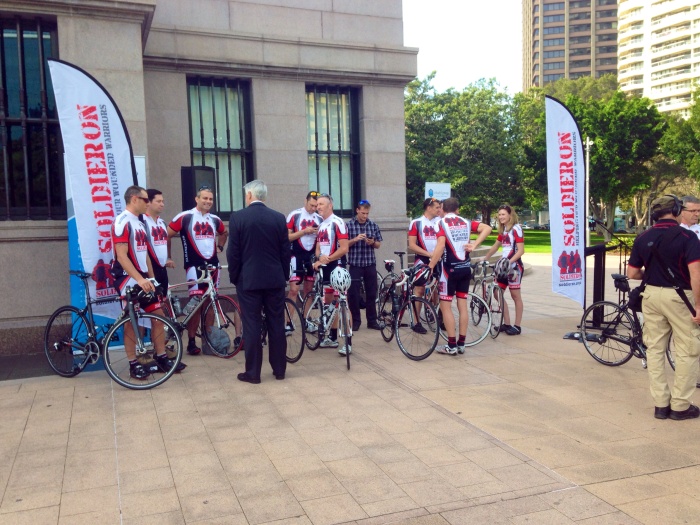
There was a lot of nervous energy amongst all the riders, in particular myself and Robbie.  We had spent a lot of the morning in front of the media and both of  us just wanted to get on our bikes.

RR2014 010
.:Almost time to start riding;.

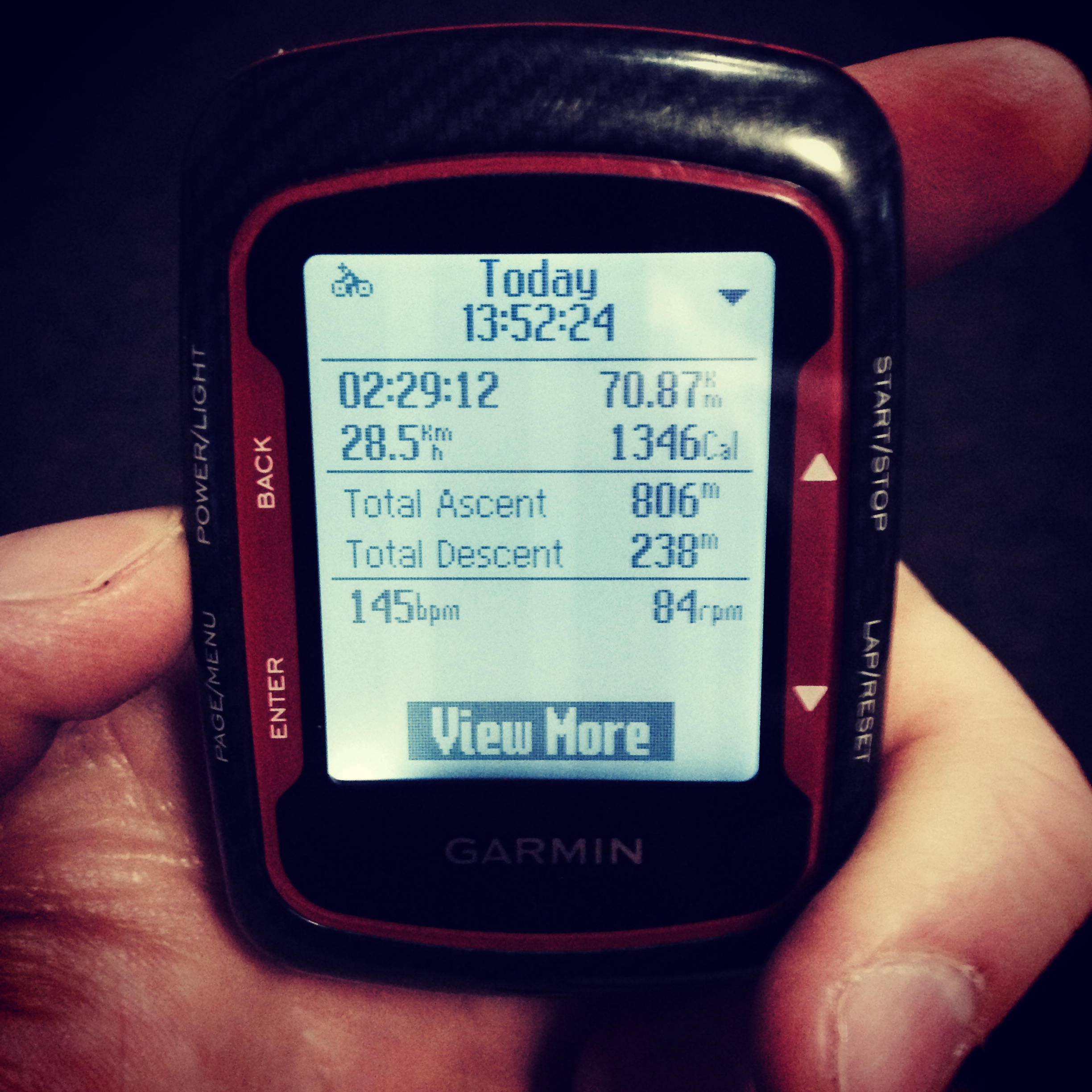
At a little before 14:00 we finally rolled off onto the Hume Highway for the start of our three-day journey to Canberra.  The first day’s ride was scheduled to end at Mittagong, a relatively short 70km away.  The riding was slow and steady at first but we soon picked up the pace under the mentoring of Scott Sunderland.

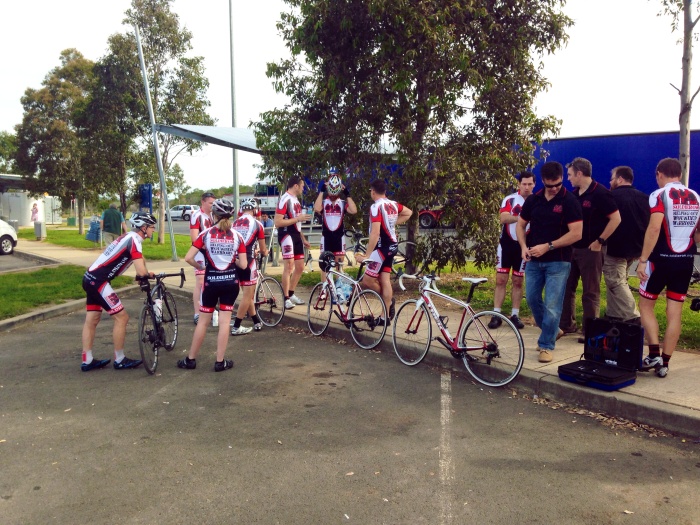
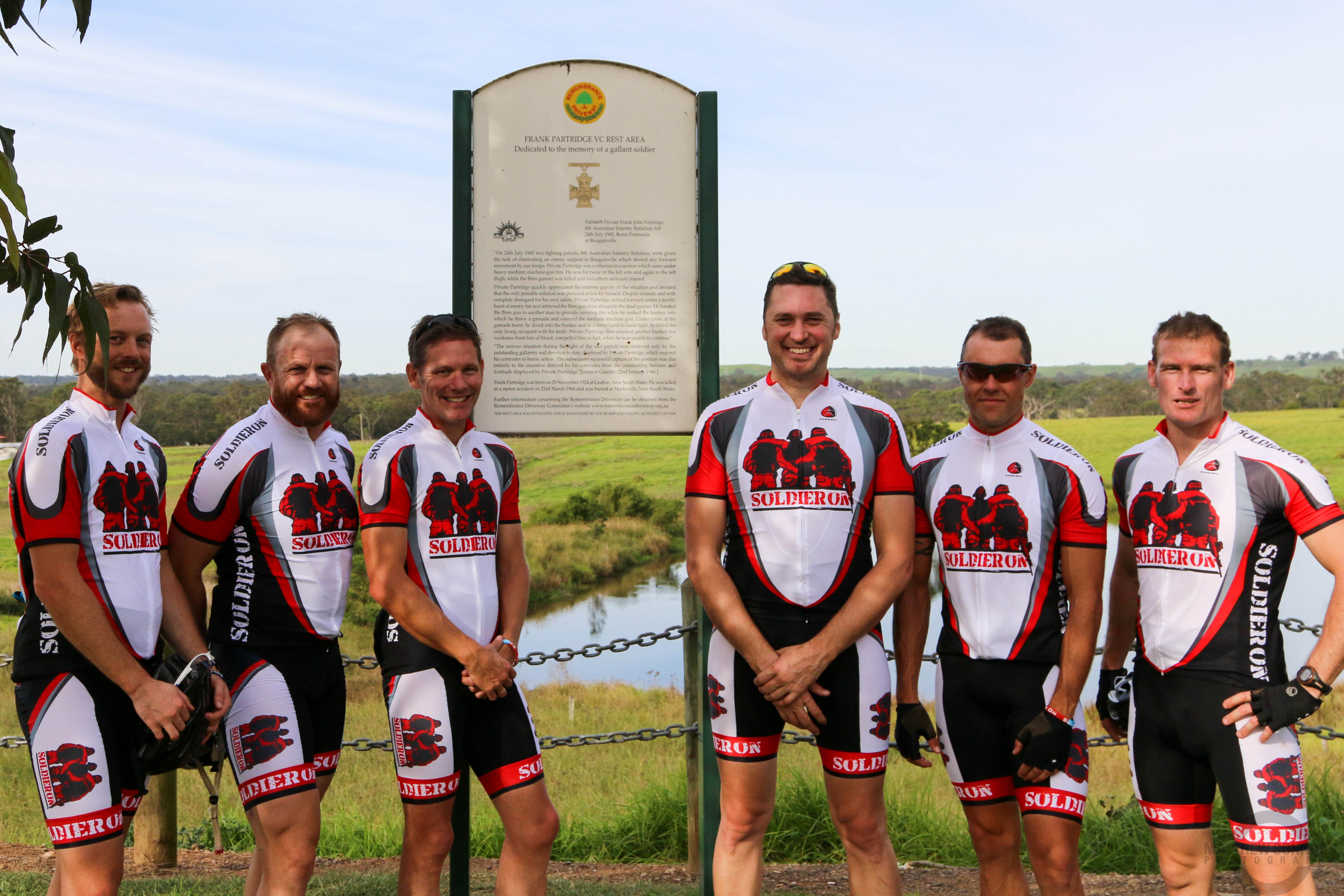
After only an hour or so of riding, including a few small but taxing climbs, we stopped at the Frank Partridge VC Rest Area, for a quick rest stop.  By now some of the sponsor riders were feeling the effects of the climbs and little to no lead up training; but still they persevered.

RR2014 013
.:Quick stop at the Frank Partridge VC Rest Stop:.
MCP 014
.:Photo op at the Frank Partridge VC Rest Area:. http://www.facebook.com/matthewconnorsphotography

There was a little bit of bush mechanic work on a stubborn seat post clamp before the group headed off towards Mittagong once again.

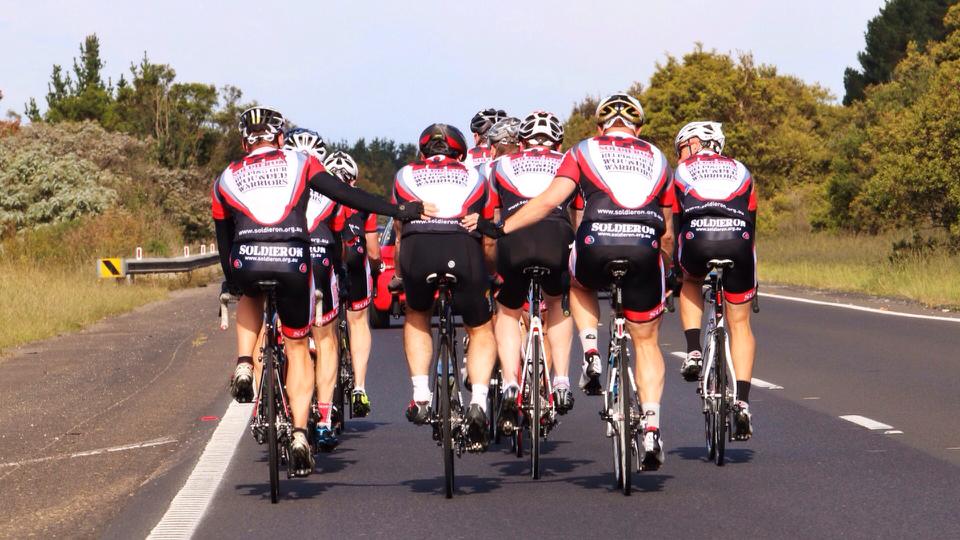
As before the pace began to slow and our group was banding together to keep the others on pace and more importantly on their bikes.

MCPFB 007
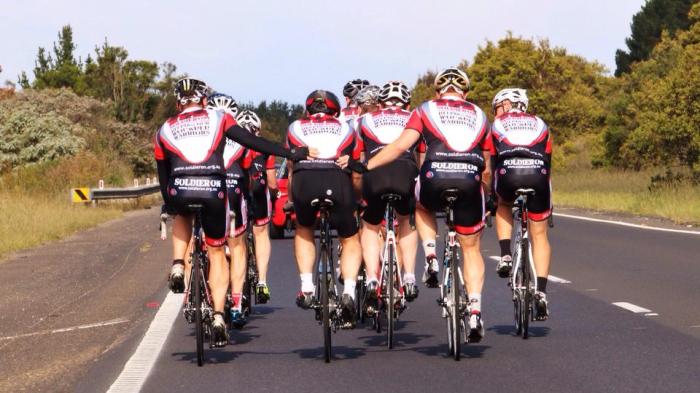
.:Matt’s photo that sums up the entire ride:. http://www.facebook.com/matthewconnorsphotography

A quick re-org of the riding order saw a few of the slower riders moved up front to set the group pace and stop the rubber-band effect that was tiring those that were at the back.

MCP 015
.:Hello says Chad to Matt in the support vehicle:. http://www.facebook.com/matthewconnorsphotography

As the afternoon got a little colder and the shadows longer; concentration started to lapse among some riders.  A few instances of half-wheeling began to occur when suddenly two riders hit the road at around 30km/hr.  I was in the right lane and broke formation to avoid the carnage and quickly pulled over to the side of the road.  Amazingly there were no serious injuries to downed rider (carbon bikes don’t like such spills!).

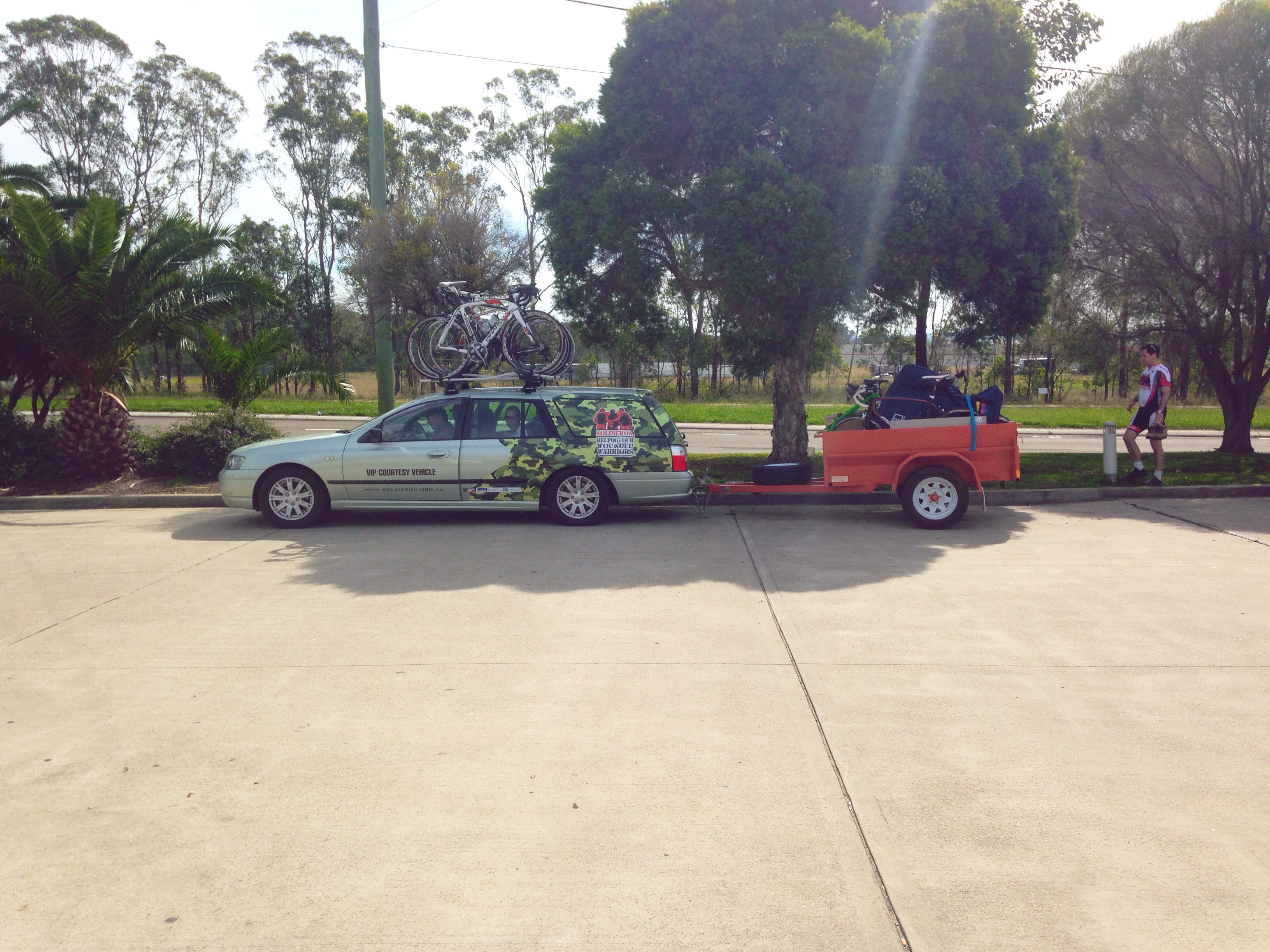
After some first aid work on the downed riders they were ushered into the support vehicles, the bikes strapped to the wagon’s roof and we resumed riding our final leg into Mittagong.  We arrived a little after 17:00 and were greeted at the Mittagong RSL by the sub-branch representatives.

We checked into our rooms (apparently it’s funny to put two Chad’s in one room), showered and made our way over to the bar for some light refreshments and dinner at the bistro.  We were joined by the Australian War Memorial’s Director, Dr Brendan Nelson, for dinner and after a quick recap of the days activities and a run down of timings for the next day, it was time for some bike prep and then bed.

RR2014 016
.:The end of Day 1 – Sydney to Mittagong;. http://app.strava.com/activities/133569377


.:CLICK HERE TO GO TO PART 3:.

Remembrance Ride 2014 – Part 1

THE PREP

The 2014 Soldier On Remembrance Ride was a feat only achievable by a great deal of hard work, volunteers and good luck.  With only a couple of months to get the wheels rolling, Soldier On had their work cut out for them to get things ready in time; and being privy to the process some things came down to the wire.

I was asked to participate in the ride very early on and I jumped at the opportunity.  Three days of riding from Sydney to Canberra with a group of Australian Veterans and some members from our corporate sponsor; The Citadel Group.  Also along for the ride was pro-cyclist turned coach/mentor Scott Sunderland.

Before the drive up to Sydney even happened we were locked into a steady routine of media commitments and admin duties at Soldier On HQ.

RR2014 002
.:Packed and ready to roll:.

The drive up to Sydney was an uneventful affair with a couple of bikes strapped to the back of the Soldier On Audi and four of us squeezed inside with our gear and luggage (the car is really spacious, we just crammed a lot into it).  After unloading the car and checking into our hotel opposite Hyde Park, we quickly went through the next days timetable and retired for the night.

RR2014 003
.:Soldier On Audi:.

DAY 1 – Tuesday 22 April 2014 (The Event Launch)

The morning of the ride was a whirlwind of interviews, photos and a lot of standing around waiting.  Soldier On CEO John Bale presented the team to the waiting media and soon we were being told to pose and look at this camera, move, look at that camera and of course speak to the media.  Ordinarily I’m not a huge fan of interacting with the media; but sometimes anxiety and nervousness must be set aside for the greater good.   I conducted three TV interviews at Hyde Park with SBS, ABC Sydney and SBS Cycling.

CLICK HERE to visit the SBS Australia Online Article

CLICK HERE to visit the SBS News Online Article

CLICK HERE to visit the SBS Cycling Central Video

After our event launch it was time to pack the cars and go for the short drive to our start point (due to Sydney’s stupidly unsafe roads we couldn’t ride out of the CBD).

RR2014 009
.:At Hyde Park with LTGEN Ken Gillespie:.
MCP 001
.:A ball of nervous energy before the launch:. http://www.facebook.com/matthewconnorsphotography
MCP 002
.:Robbie & I trying our best not to make Johanna Hatcher laugh:. http://www.facebook.com/matthewconnorsphotography
MCP 003
.:Marvelling at our great beards:. http://www.facebook.com/matthewconnorsphotography
MCP 005
.:Listening to John Bale’s launch speech:. http://www.facebook.com/matthewconnorsphotography
MCP 006
.:John addressing the waiting media:. http://www.facebook.com/matthewconnorsphotography
MCP 008
.:Being interviewed by Rena Sarumpaet from SBS News:. http://www.facebook.com/matthewconnorsphotography
MCP 009
.:Posing with Scott Sunderland post launch:. http://www.facebook.com/matthewconnorsphotography
MCP 012
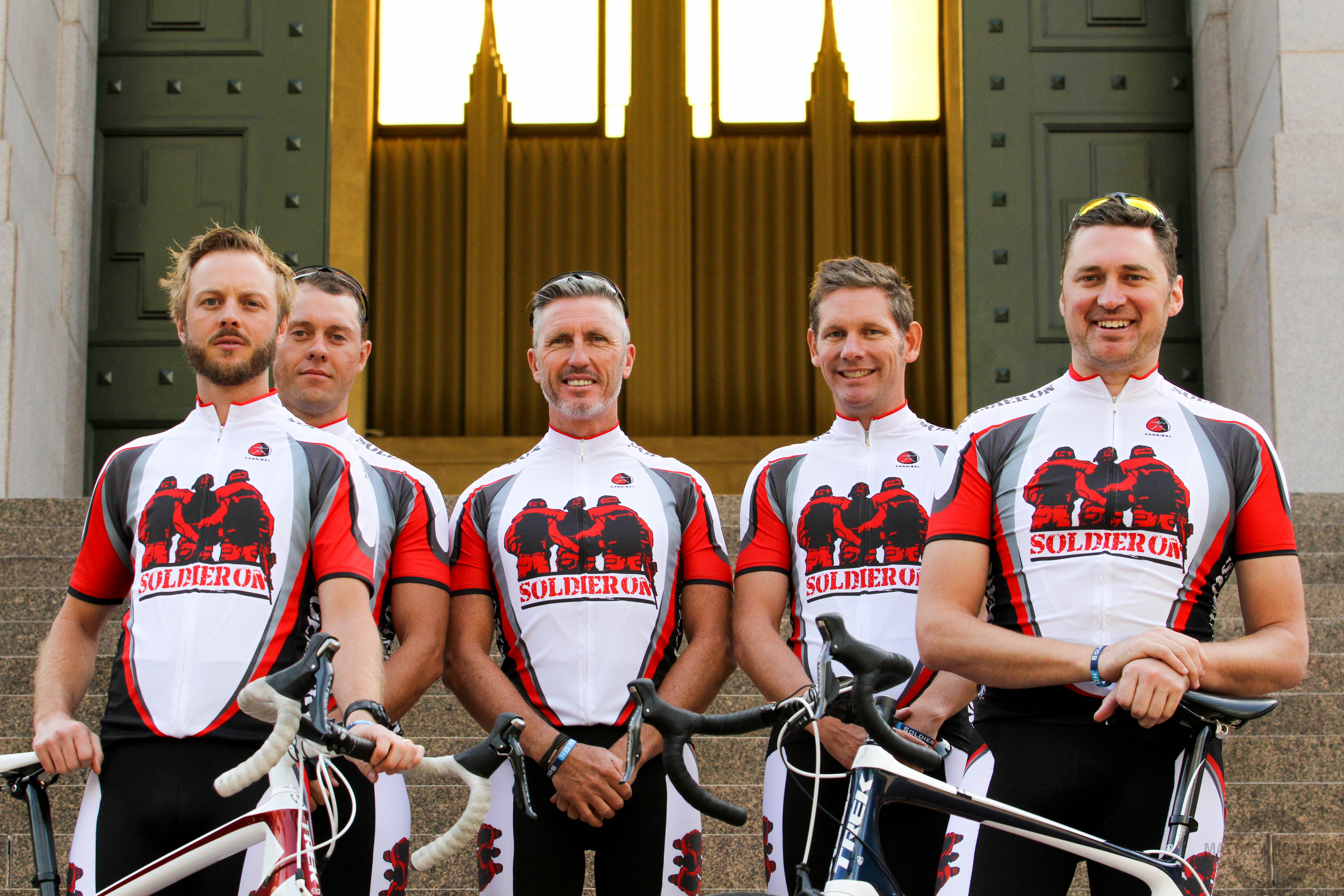
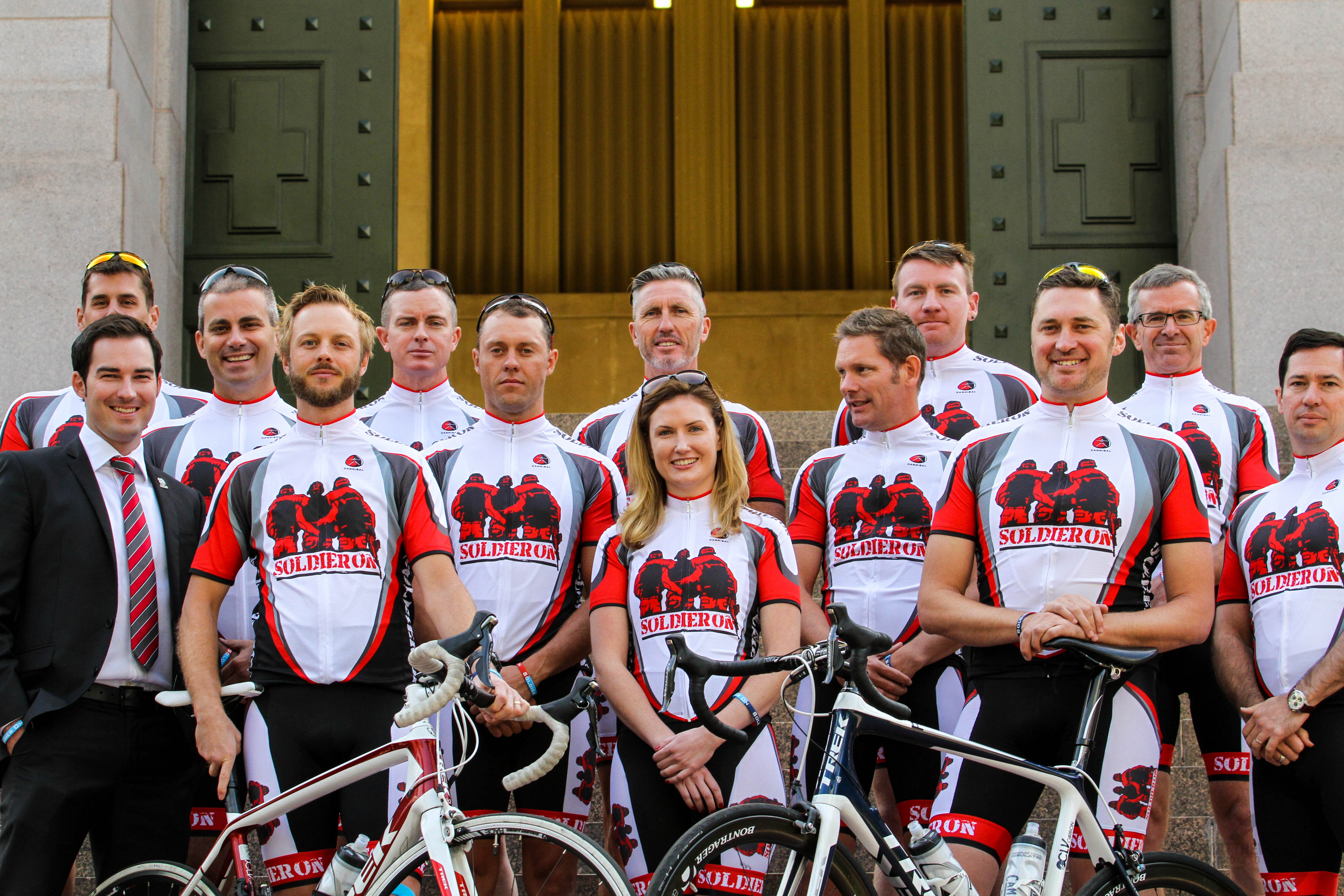
.:All of the riders and Soldier On CEO John Bale:. http://www.facebook.com/matthewconnorsphotography
MCP 013
.:Adam and I having some time out before heading off to the start point:. http://www.facebook.com/matthewconnorsphotography


.:CLICK HERE TO GO TO PART 2:.


A Radical Change In Diet – Or How I Stopped Eating Meat & Became A Vegetarian

Six weeks ago I stopped eating meat.  Much to the chagrin of my Wife, bacon-obsessed cycling group and Mother (who firmly believes that fish and chicken don’t count as ‘real’ meat.).

There are several pros and cons to this change which I didn’t gradually lead into; I basically considered it privately for a few weeks, announced my intention to my Wife and then overnight proclaimed I wouldn’t eat meat anymore.

Why Stop Eating Meat?
The most logical and hardest question to answer.

First off, I’m not one of the ‘meat is murder’ crowd.  I have slaughtered and butchered some of God’s cute little creatures with my own hands, have visited an abattoir and have partaken in countless meat-filled BBQ’s over the years.  My choice to cut out meat is not one based on ethical concerns and I’m certainly not going to be ‘that’ person at a BBQ that asks for the plate to be cleaned before my veggie patties get cooked; oh and I despise tofu!

My decision to stop eating meat comes down to three major reasons:

#1: Mental Health
I live with a depressive and anxiety disorder that makes me prone to rapid mood swings, violent outbursts and irrational behaviour.  Couple this with a form of Post Traumatic Stress Disorder and you get a person that can swing from jovial and on top of the world to a person that is best kept in a dark room away from other people and sharp objects.

A healthy diet plays a large part in maintaining mental wellbeing.  Consuming food is what keeps the body functioning and ultimately keeps you alive.  Prior to changing my diet I would consume a large amount of red meat and chicken.  It wasn’t uncommon for me to eat an entire roast chicken in one sitting and order a steak with a side of steak at Hog’s Breath. 

Diet plays a very large and understated part in balancing mental health.  Certain foods can evoke different mental and physiological reactions.  Chocolate and ice cream are well-known for being the comfort food of choice for emotional men and women.  I am lactose intolerant and love ice cream; ergo the pleasure I derive from consuming it is quickly overtaken as my body promptly reacts to the enzymes it cannot process.

In the way that eating certain types of food makes people happy, the digestive processes after eating red and white meat made me lethargic and as a result unhappy that I didn’t feel like doing anything afterwards.  Something as simple as not feeling like getting off the couch to go for a ride or a walk around the lake would compound itself into feelings of guilt, a distorted self body image and ultimately trigger a mental reaction that would lead to a depressive episode.

Basically, that wonderful meat hangover feeling most people get after eating a meat-heavy meal is absent for me; instead I feel sick, depressed and my body will rapidly purge the offending meal in a most violent way.

#2: Metabolism and Body Weight
I have a fast metabolism and it’s very difficult for me to maintain my body weight when exercising.  Ideally I sit between 75-80kg when riding to a training program.  This may seem like a large fluctuation, but in reality, it is mostly fluid retention and fluid loss during and after rides.

On average I will lose 3-5kg on a 50km mountain bike ride whilst my fluid intake will be upwards of 2-3 litres and calorie intake at close to 2000 calories via energy gels and muesli bars.  My recovery period after a medium to high intensity ride over 50km is close to 48 hours and I will constantly eat and drink to rebuild my energy reserves and gain the weight I lost.

As stated before, I feel sick after eating meat, I also feel full and won’t continue eating which in turn slows my recovery period and has an adverse effect on getting back on the bike and returning to optimal training ability in the shortest time possible.

#3: An (Not-So-Slowly) Aging Body
Everyone gets older and joints and muscles start to ache and some days it’s harder to get out of bed, right?  Wrong!  I’m 32 years old and I have constant pain in my left knee, discomfort in my hands and wrists; and restricted movement in my left shoulder.

I can credit my days in the Australian Army for most of my knee problems and my shoulder to a bike crash which tore my left pectoral muscle last year.  But the fingers, wrists and constant patella issues in my knee; well that is thanks to early onset of osteoarthritis.

There is a link between eating a meat rich diet and an increase in adverse arthritic symptoms.  This is due to the high fat content in non-lean meats and the obsession with meat-heavy meals in Western culture.  Can’t I just switch to lean meat?  I could but it doesn’t negate the two previous reasons I’ve stated and the fact that in just six weeks I’ve noticed improvement with my knee and joint pain and dexterity.

Looking Towards The Future
Will I continue my vegetarian diet indefinitely?

To be honest, probably not.  As I stated at the beginning this isn’t because of an animal ethics issue; this is because I wanted to feel healthy both in body and mind.

So far the basic goal of feeling better is definitely working for me.  I have more energy, I’m eating all the right foods to ensure I get the nutrients my body needs and ultimately I’m enjoying eating more diverse and natural foods.

On a side note if I was trapped on a deserted island and cannibalism was my only avenue of survival I wouldn’t hesitate to eat some human sirloin!
Call Of The Beast 2013 Wrap Up

The Call of the Beast was my final Soldier On fundraising event for the year.  After 7 months of intense fundraising and raising awareness for Soldier On it was a relief to just be able to go into an event without any pressure.

Each time I got on a bike wearing my Soldier On jersey it was an opportunity for me to help raise the profile of Soldier On in the ACT, NSW, QLD and VIC.  As of 1 December 2013 I have ridden 5’169km while wearing my jersey and look forward to many more kilometres training in racing in it and the new design jersey and knicks combo that will be available very soon.

I was “asked” if I wanted to enter the Call of the Beast just prior to my Wedding in September.  Dan and Luke from Beast-Worx were keen to get me out for their new obstacle course race and I was extremely happy to take up their offer.

I will be quite upfront and state that apart from my normal riding routine I did absolutely no training for this event.  It’s no secret that due to long-term injuries I don’t run.  It’s not that I don’t like running it’s just that a combination of torn muscles, torn tendons and ligaments, dislocations, fractures and osteoarthritis means my dream (not entirely accurate) of running a marathon will never be realised.

So I kept riding and figured I would just cuff it on the day.  My preparation was quite similar to that of a mountain bike race.  Clothes for the event, hydration and nutrition organised, GPS and heart-rate monitor ready and clean clothes for after the race.  Once this was all packed in the back of the car I headed out to Caloola Farm to look at the course that had been set up for the 1200-odd participants.

When I arrived at the event centre I registered, donned my participant wrist band and headed off to watch the Last Beast Standing racers attacking the course.  Round 1 of the elite race was drawing to a close and these athletes had 4 more rounds ahead of them.  Watching these men and women smash down food and water before heading back out again was awe inspiring and made me quite content with the knowledge that I was doing the Fun Beast.

I set up my little spot near the Soldier On stand and chatted with Tony, Anna and Dion for most of the morning.  Volunteer Andy K seemed to be very excited about carrying a loudspeaker and I was dreading having to run up to his checkpoint later in my race.

As the start time for the first wave of the Fun Beast was getting closer, I got changed into my running gear: shorts, Skins shirt, Soldier On shirt, 2XU calf compression socks, water-suitable hiking shoes and my Garmin Forerunner.  I looked the part and headed down to the start line.  I watched as Beast-Worx Dan let the first wave go and then headed down to say hello before lining up with the the second wave.

Adam ‘Rocket’ Rolls, my Scott 25 Hour team-mate, was running in a team and as usual he was focused and ready to run.  The wave started and I slowly jogged off towards the first few obstacles.  I wasn’t taking this event seriously but can honestly say, even with my injury-induced limitations I was making pretty good time through the first part of the course.

The obstacles weren’t very difficult and I was able to scale, crawl through, jump over, roll under, climb up, balance on and run over everything without any assistance.  It was however extremely simple to spot the people with military experience.  Firstly there was the obvious technique in getting through the obstacles and secondly we were the few that stayed on top off walls lifting people up, pulled cargo nets tight, gave boosts, steadied people’s balance and more often than not gave advice on how to do things safely.

BOTB 13 114.:Waiting to scale the first wall (Photo by Canberra Times):.

The obstacles were spread out with a fair bit of running in between.  This was always advertised as an adventure race and not designed as a Tough Mudder knock-off like many of the new obstacle races.  Like the Battle of the Beasts this event’s main aim was to raise money for Soldier On; and with only two permanent staff and an army of volunteers it is commendable that a first time event was so amazing, challenging and fun.

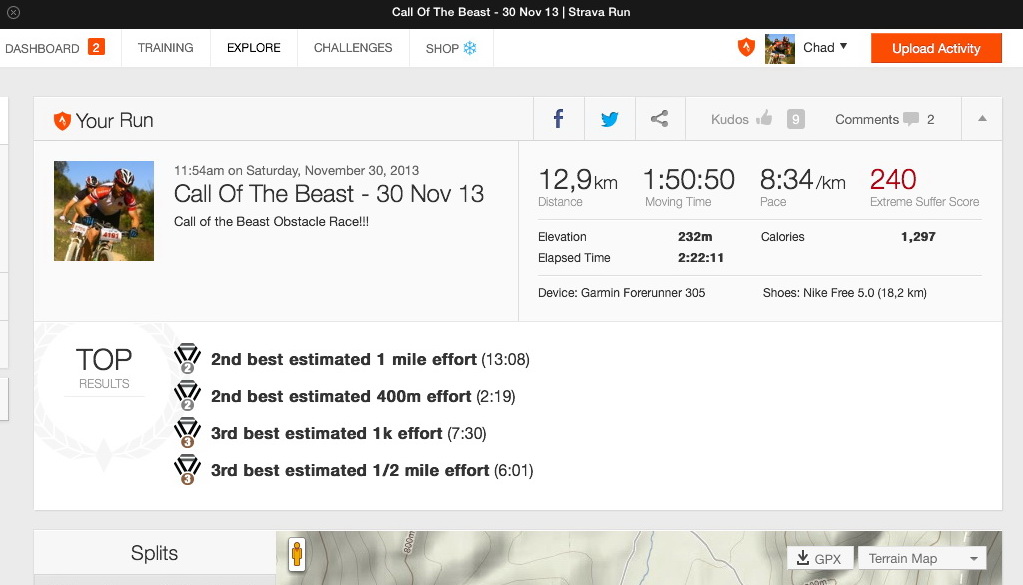
By the time the 11km Fun Beast was over I had run 12.9km in 2hours 22mins.  Not the fastest time but a very fun event that I would definitely do again.

BOTB 13 116
BOTB 13 115.:Strava!:.

BOTB 13 112.:Just a tad dirty:.

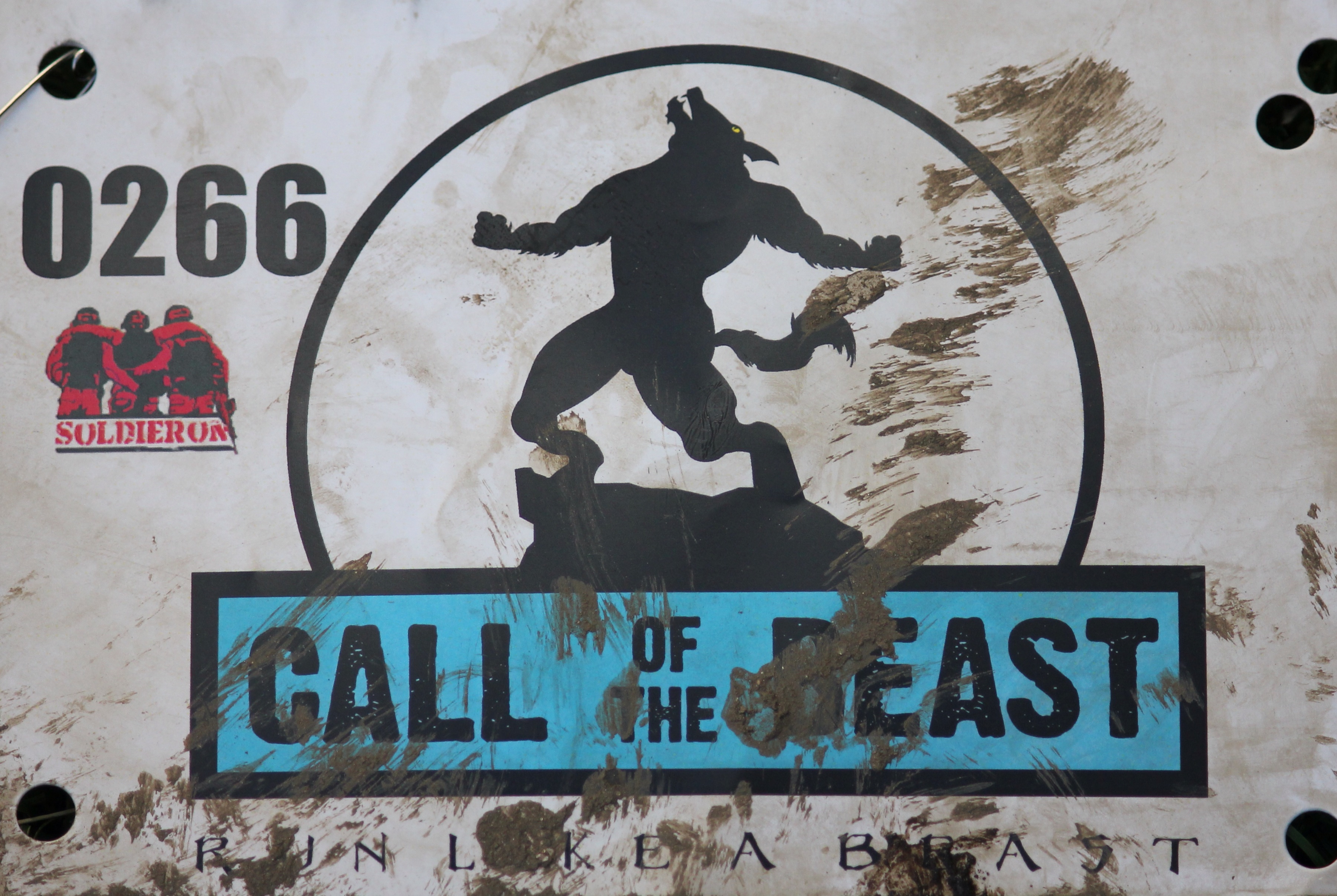
BOTB 13 113.:As usual I kept my race plate (a sly reference to my Army days with the number):.

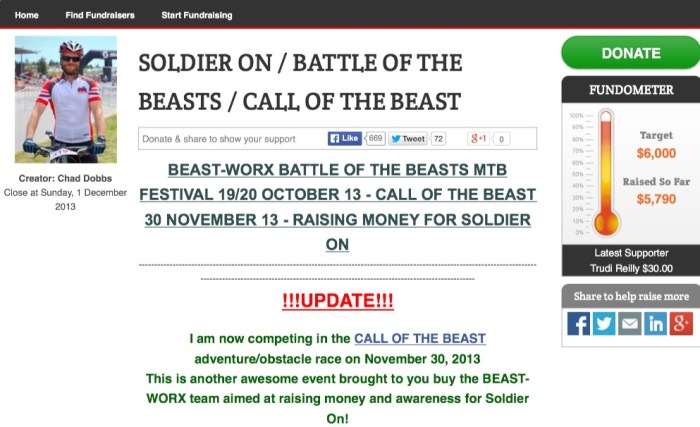
At the end of two big events I had raised $5’790 for Soldier On.  Thank you to everyone that donated and supported me through-out these past several months.

BOTB 13 117

Why I Ride For Soldier On

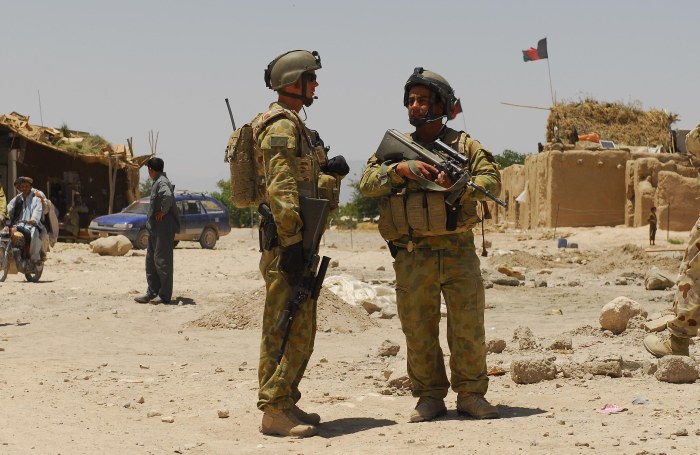
During my time in the Australian Army I served in both Iraq and Afghanistan. In 2009 after returning from 9 1/2 months in Afghanistan I knew something wasn’t right. I was aggressive to most people, wary of crowds, couldn’t sleep, had sleeping issues and started drinking heavily. Like most Soldiers, I didn’t want to talk about my issues in case I was seen as being weak and God knows there were others that were worse off than me. So I kept quiet and not surprisingly, things got worse. I didn’t want to spend time with other people and I started thinking this world would be better off without me.

After several days of no sleep, heavy drinking and almost wrapping my car around a pole on purpose, I approached and asked the Senior Soldier at my unit for assistance. Instead of the words of encouragement and avenues of support I expected from a person of that rank, I was met with “harden the f*** up and get over it”. In that one moment I felt defeated, I was dismissed by the one person who is solely responsible for the welfare of the Soldiers subordinate to them. If this person wouldn’t help me and I could no longer help myself then what was next?

Luckily for me I posted into a new unit and found the support I so desperately needed from my new workmates. After a while I finally found the courage to tell my family I needed help. Road blocks were set up by another Senior Soldier and my desperation grew greater until I hit rock bottom; I attempted to end my own life. It was only when my life was at its darkest did professional help eventually appear; it was provided by a civilian agency and organised by a very kind Navy doctor.

With only the bare-minimum of support coming from within the ADF I relied heavily on my family and friends for the ongoing support I needed. After having all support services cut off after I left the Army and the near-impossibility to secure an appointment to see a DVA accredited councillor; I started talking about my issues with others and realised that many other Soldiers had been experiencing the same obstacles; especially those that had separated from the ADF.

This is the reason I am so passionate about the provision of mental health care for returned veterans. The system is not yet good enough and so we rely on each other to be open and honest for ongoing support.

Soldier On helps by providing something other support services do not. They provide hope, confidence and a hand up – not a hand out.

Riding For Soldier On – Australian Army News

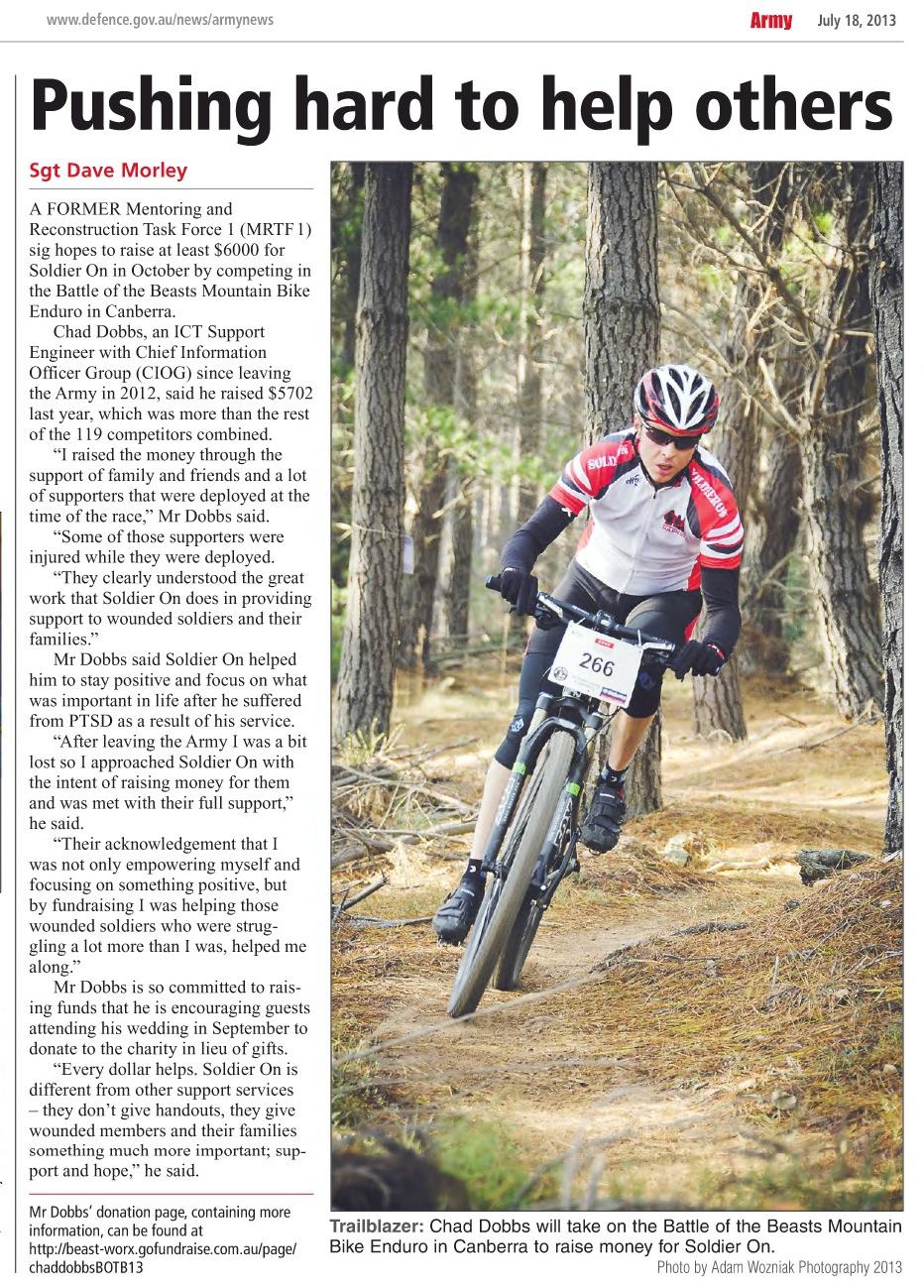
A short article about my fundraising for Soldier On for this year’s upcoming Battle Of The Beasts Mountain Bike Enduro has been published in the 18 July 2013 issue of the Australian Army News.

Army News Jpeg

Army News Article PDF Version

18 July 2013 Army News Edition 1309 PDF Version

Standing In The Shadow Of The Green Giant

As more and more returned veterans put their hands up and ask for help the processes for support services are steadily improving.  Thanks to people like MAJGEN John Cantwell the stigma that is attached to persons with PTSD is slowly disappearing.  It takes a lot of courage to speak openly and honestly about an issue that often results in self-harm, substance abuse and even suicide.  For a high-ranking, high-profile ADF member to stand up and acknowledge that his service to his country has caused a mental illness is incredibly brave.  By shedding his uniform, rank, and medals; John Cantwell has empowered other returned veterans to admit that they too need assistance.

Recognising that there is an issue is the first of many steps towards recovery and rehabilitation.  The second step is often the most difficult and at times the point where a person in uniform will retreat and hide; raising your hand and asking for help.

The Australian Defence Force and Australian Army in particular are constantly in the media tackling varies issues such as sexual misconduct and gender equality.  While both are extremely important in their own regard, the spotlight rarely shines on another equally important issue; the culture towards members with PTSD and depression.

I’m not going to pretend I know about every single ADF member’s details about living with mental illness.  I know about my own experience and also others that were brave enough to share their stories with me.  I struggled for months before I put my hand up and asked for help.  As I’ve stated before I was rebuffed by the one person at my unit whose primary duty it is to look after Soldier’s welfare.  Being told to “Harden the fuck up” struck a huge blow to my confidence and I started to withdraw from those around me.

Others have related the same kind of experiences to me with regards to their first encounters within the chain-of-command.  Some superiors ridiculed and some provided that much needed assistance.  It took several months for me to ask for assistance again.  Many around me were extremely supportive; there were a small group of supporters from the Army that fought tooth and nail to get me the help I desperately needed.  But there were others that seemed determined to prove that what I was living with was my fault and I should get over it. 

There were words spoken to me in private while I was at my lowest point which were delivered with such venom a day rarely goes by that I don’t hear his words in my head.  “You are a fucking lying soft cunt”.  These words were delivered at me as I lay in a hospital bed awaiting the arrival of my parents from interstate.  I had suffered an anxiety episode so severe I admitted myself to an Army hospital.  This would also be the moment where others further up in my chain-of-command became aware of what was happening and after almost 12 months of living with PTSD, anxiety and depression I was finally able to acknowledge I couldn’t continue without help.

While my story is not uncommon it is certainly not the norm.  Many ADF members ask for help and are looked after very well with counselling, rehabilitation services and flexible working arrangements.  One of the first things that occur once an ADF member seeks professional help for depression, anxiety or PTSD is the implementation of restrictions on their terms of service.  You are no longer allowed to do certain tasks that are deemed to be dangerous to yourself or others and your career and posting options are effectively stalled.  While many of these restrictions are incredibly important and beneficial, such as no access to weapons or limited field time, others such as removal from your normal job into an administrative role often causes more undue stress.

I had several restrictions placed upon me when I was posted to Brisbane.  No access to weapons, security clearance review, no promotion courses, regular drug testing, six month alcohol ban, weekly performance reviews, fortnightly counselling sessions and no field exercises among others.  At the time of my new posting I was incredibly fatigued, I was 10kg under my ‘ideal’ weight, insomnia plagued me, anxiety attacks were the norm and of course I was acutely depressed.  My new unit; in particular my Troop Commander and Troop Sergeant were incredibly supportive; and as I got to know the rest of the Squadron members I was able to continue my rehabilitation with very few interruptions.

My life was well and truly back on track and my symptoms had abated.  I had met and started a relationship with my future wife and I was enjoying the availability of time to spend with my family; in particular my Twin nieces.  But as with all things in the Army, resources were stretched thin and when my restrictions of service expired I was called upon to step up and take on extra responsibility.  I relished the opportunity to prove my worth and performed some very big tasks with very limited resources and manning.

When the time for the new posting cycle to be reviewed came about I was bounced back and forth between a heavily constrained Career Management cell and a senior Soldier that should never have been allowed to look after Soldier’s welfare and career issues.  In the end my career plan was completely discarded and the aspirations of another Soldier were forwarded to my Career Manager instead.  During this incredibly stressful period I spent the majority of April to August on exercise in Northern Queensland with very little consultation on my next posting.  By the time I was actually consulted about what locality I may have wanted I was given one option; Kapooka, home of the Army Recruit Training Centre.  It was decided that I was to become a Recruit Instructor.

During this time I was having depressive episodes and anxiety attacks.  However instead of shying away from the issues that were causing this; I tackled them head on.  I solicited the advise of family, friends and colleagues on the pros and cons of taking this unwanted posting or leaving the Army; my only two options.  Just as many people advised I accept the posting as those they suggested I discharge and find a new job.

Finally I gained employment outside of the Army and started my separation process.  This is usually a long and drawn out process, however as it was nearing the end of the year and I had to move interstate; my paperwork was rushed through the system.  My unit was incredibly helpful during this stage with many of my in-trade superiors expressing that I had made the right decision and that “The Army had changed”.  It was true; I no longer felt like an individual Soldier, instead I felt like a number that was being shuffled around a giant spreadsheet.

I left the Army without a farewell, without a discharge certificate being presented and without any ongoing assistance for my depression and anxiety.  Months later, after I was settled into my new home and job, did I start realising I was relapsing; I was missing my friends and previous life.

Without the support of the ADF I relied heavily on my family and friends for the ongoing support I needed.  I did reach out to the Department of Veterans Affairs after the death of my Grandfather and was placed on a six-week waiting list to see a councillor.  Two days before my appointment I was advised it had been cancelled and my rescheduled date was another four weeks away; I never turned up to it.  Instead I started talking about my issues with others and realised that many other Soldiers had been experiencing the same obstacles as me especially those that had separated from the ADF.

This is the reason I’m so passionate about the mental health of returned veterans.  The system is not yet good enough and so we rely on each other to be open and honest for ongoing support.  The Australian Army was built on courage and mateship.  Those that speak up about their battles with mental health issues and the lack of ongoing and adequate support services are continuing that tradition even if they no longer wear the uniform.