After a couple of weeks riding in the new Soldier On jersey and knicks combo around Canberra it was good to finally get them out to masses during the 2014 Capital Punishment on 15 March.
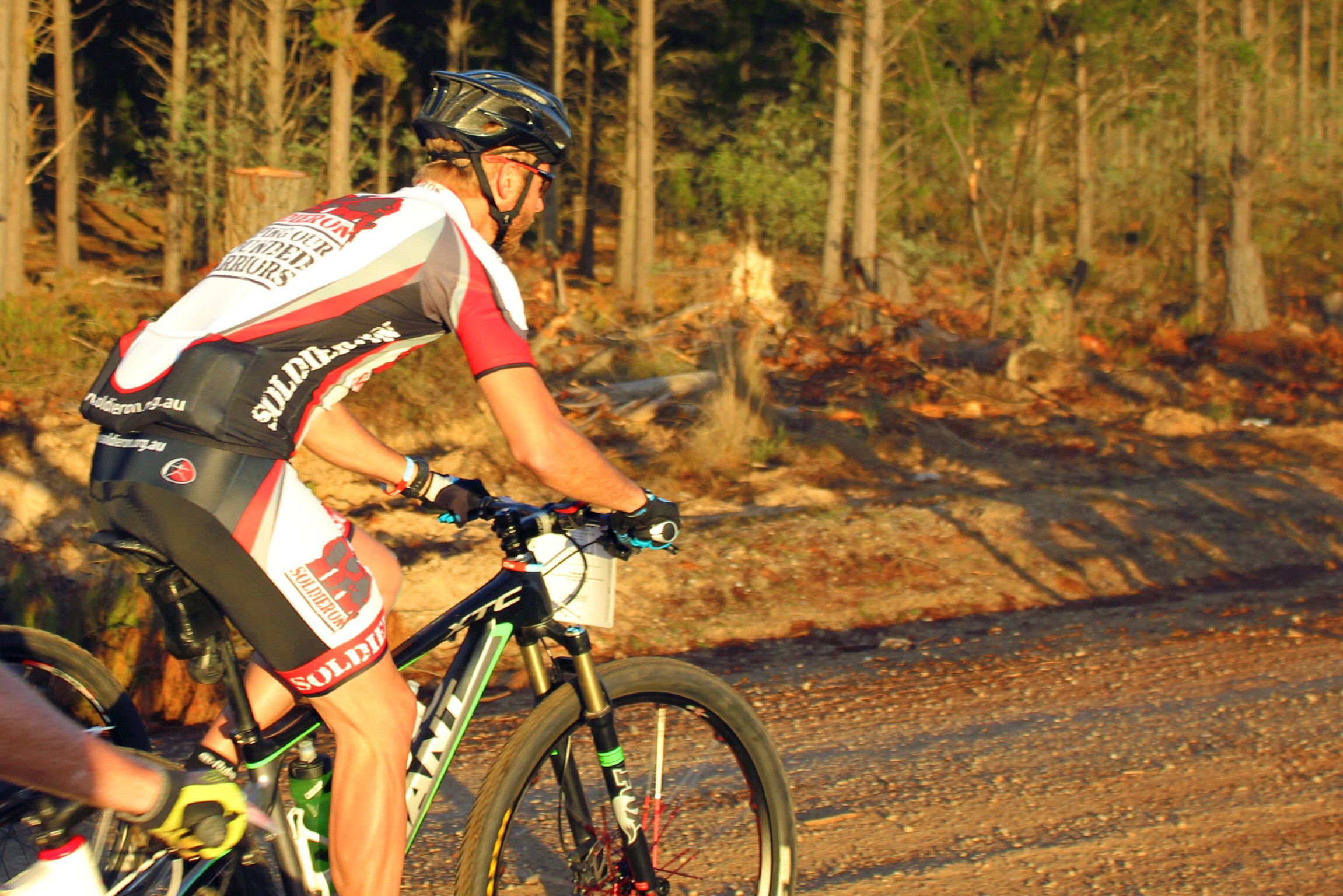 .:Starting the race:.
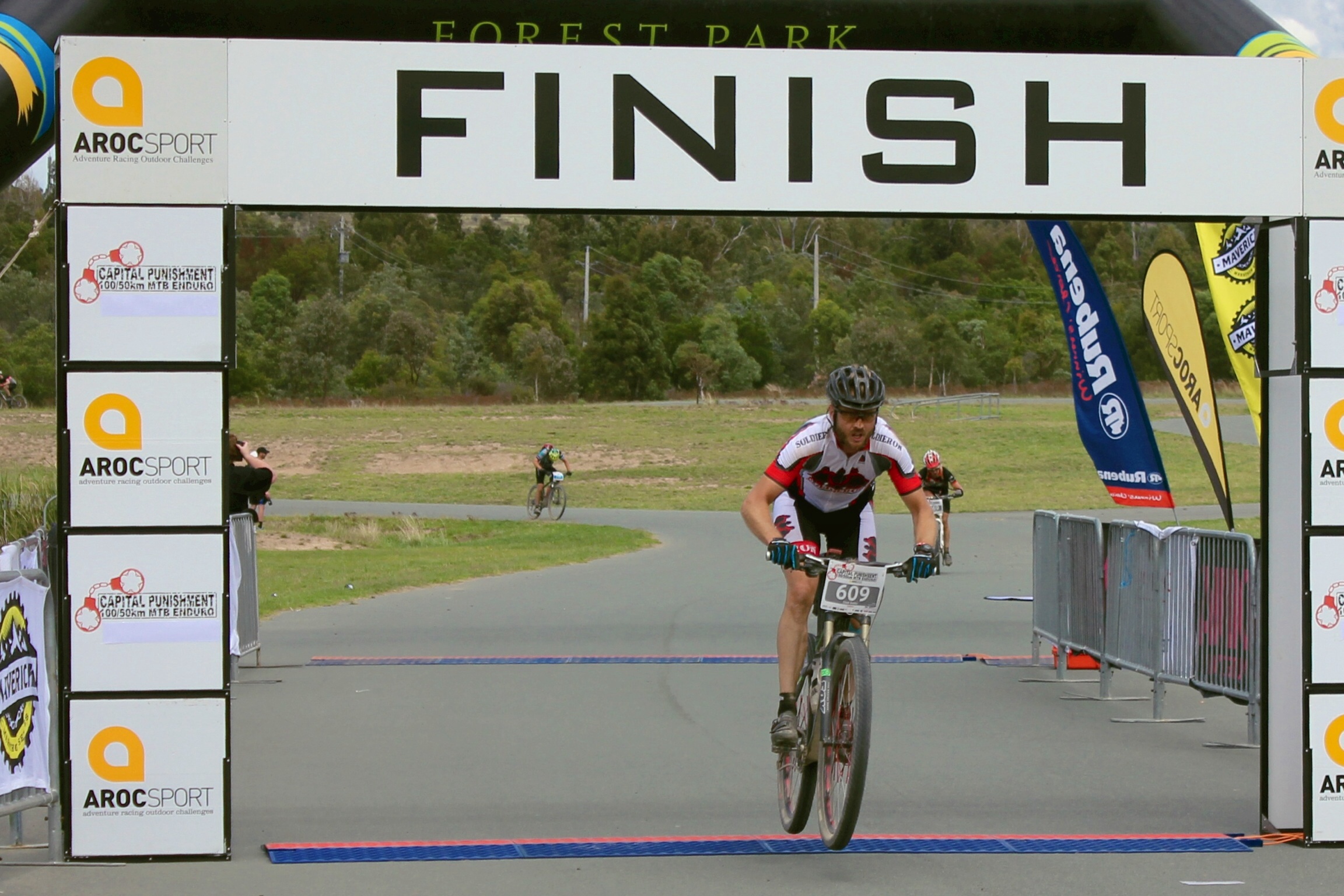
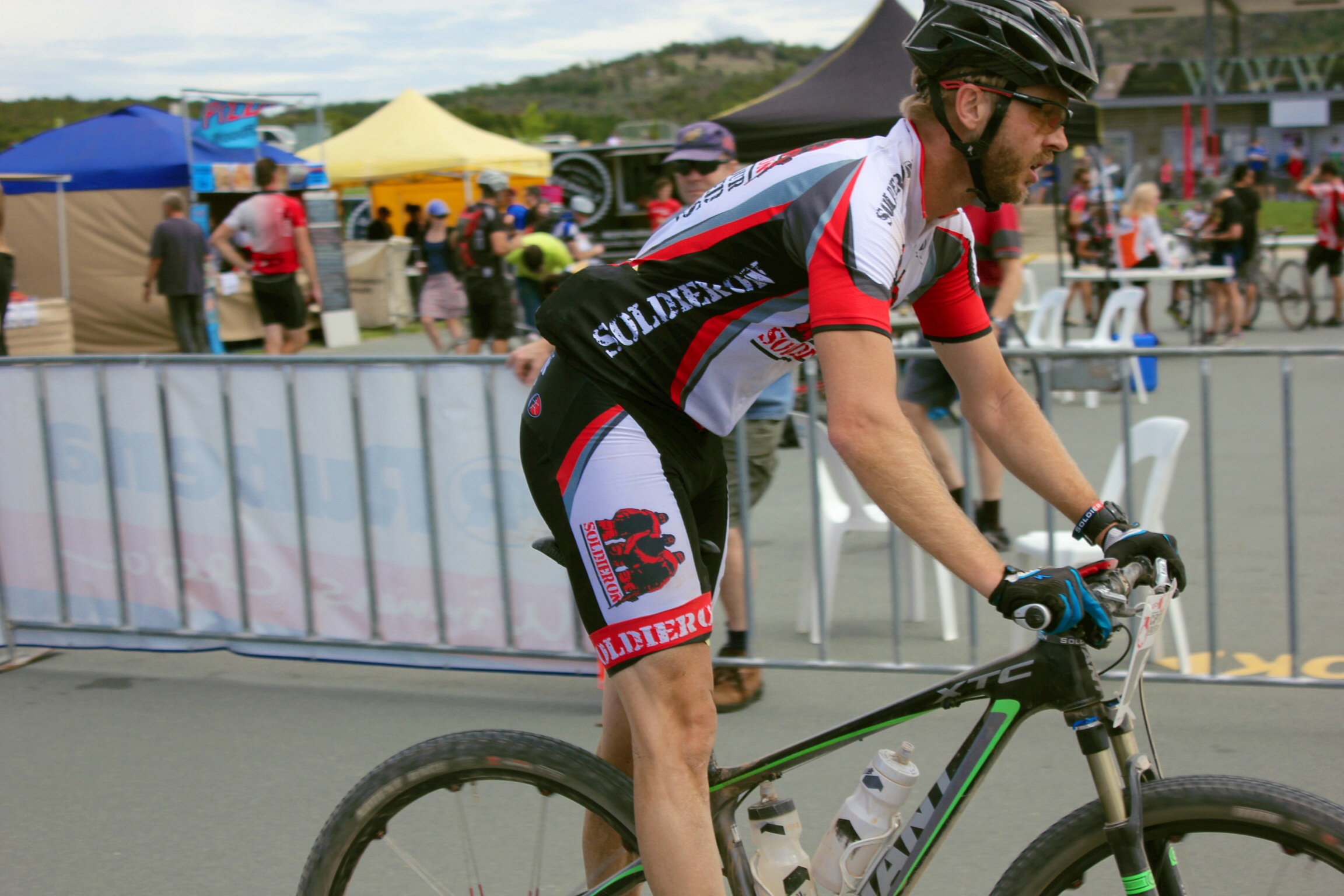 .:Crossing the finish line:.
A whimsical look at my life in words & photos – The world according to Chad

After a couple of weeks riding in the new Soldier On jersey and knicks combo around Canberra it was good to finally get them out to masses during the 2014 Capital Punishment on 15 March.
.:Starting the race:.
.:Crossing the finish line:.

ABC’s Big Ideas has released the Boys Don’t Cry program online for viewing.
The televised version is shorter by about 20 minutes and doesn’t include my speech at the end of the forum. The online long version does. I invite you to watch is however please be aware that some of the program is fairly confronting including what I have to say at the end.
Long version of the Boys Don’t Cry segment
Big Ideas Boys Don’t Cry segment
On Wednesday evening, 20 November 2013, I attended a panel discussion at the Australian War Memorial on Post Traumatic Stress Disorder. The event was hosted by journalist/writer Paul Barclay on behalf of ABC TV and Radio National.
On the panel were former Chief of Army LTGEN Peter Leahy; author and Beyond Blue ambassador Allan Sparkes; Beyond Blue board member Professor Brett McDermott; and the wife of a former British Royal Marine, Emily.
I was asked about attending the panel a few days earlier by my friend Jason. Originally I didn’t want to attend as I honestly thought it may be a trigger for an anxiety episode; so I declined. It wasn’t until the night before that I decided to go along and hopefully have a chance to speak to whoever was on the panel. I had no idea who was participating in the discussion other than LTGEN Peter Leahy and hadn’t really thought about what was going to be discussed.
In the afternoon prior to the start of the forum, I rode from work up to the Australian War Memorial. As is the norm, I was wearing my Soldier On jersey and happened upon new Soldier On team member Tony; who many moons ago was my Troop Commander when I served in Iraq. Jason arrived next and soon we were joined by Anna, Meredith and Dion from Soldier On. After I got changed into something more appropriate than skin tight lycra, we went into the BAE Systems Theatre.
After the introductions Paul started the discussion with some questions about PTSD in the military for LTGEN Leahy. The conversation and questions started to flow freely within the panel with some very emotional stories being shared by Emily and Allan. Prof McDermott gave some very interesting insights on PTSD for not only military personnel; but also for emergency service persons and of course their families.
I wasn’t the only veteran in the crowd; but I was the youngest. There were a few Vietnam Veterans present, family members of veterans with PTSD and a few senior Defence officers that were skulking around the back pews in civilian attire.
As the discussion progressed LTGEN Leahy was asked some questions about support services available to veterans. I have a lot of respect for this man; he was an exceptional Chief of Army and has done a lot to help veterans with his current position as Chairman for Soldier On. But there is a distinct level of detachment from what a high ranking officer is told and what happens on the ground.
Some of his responses started to irk not only me, but a lot of the crowd listening to him. There were more than a few audible scoffs at some comments about the Department of Veterans affairs doing their best to help all veterans. One comment in particular drew a very audible “get fucked” from me. The former Chief of Army said that when a Soldier asks for help, he or she will always receive it. Paul mentioned the story of MAJGEN John Cantwell and LTGEN Leahy was in agreement. Whilst MAJGEN Cantwell has done a lot to help break the stigma of PTSD in the ADF; it is also true that a very senior Officer is never going to be turned away when they ask for assistance.
Allan Sparkes shared his story of PTSD and depression from when he was a Police officer; and the ostracising that he experienced as a result. His story was a very raw, no punches pulled recount of his darkest days and his termination from his employment without his knowledge. His story was very reminiscent of many veterans from the Vietnam War up until today’s conflicts.
Emily’s story was one of amazing courage from both her and her husband Adrian. She spoke of her time in the United Kingdom when Adrian returned from deployment in Afghanistan a changed man. He had experienced traumatic events and as a result developed PTSD. His struggles with mental health affected his wife and two daughters as they watched as their husband and father dealt with his issues now that he was back at home. His eventual discharge from the Royal Marines was a result of a physical injury and just like the majority of occupationally injured Australian servicepersons; Adrian was soon pushed out the door with very little support and preparedness for his transition to civilian life.
As the forum was drawing to a close Paul invited Dr Brendan Nelson, director of the Australian War Memorial to speak and field some questions from the panel. He spoke about the AWM’s role with supporting veterans of recent conflicts by having interactive exhibits and involving them with other projects the AWM is conducting. As a former Minister for Defence he expressed his desire to see more support forthcoming as the Afghanistan War draws to a close.
As 7pm was quickly approaching a few of us in the audience were wondering if we would get a chance to ask questions of the panel. Adrian was next to take the stage and he recounted some of his experiences post deployment and how support for veterans is extremely slow from the government in Britain. He spoke of having his claim for assistance being rejected on the first submission; a trend very similar to that in Australia carried out by DVA.
Adrian expressed his concern for veterans being forgotten after the withdrawal from the Middle East and a strong desire for them to be able to access the support they deserve and not repeat the mistakes of the past. He likened the struggles of today’s returned servicepersons to that of the Vietnam War era in the way that the fight for support continues even after the war on foreign soil has ended.
Adrian’s address to the panel and audience had clearly reached out to everyone with many of the Vietnam Veterans visibly moved by his honesty. As he sat down Paul checked his watch and asked us sitting in the audience if anyone had anything questions or comments. I had been sitting and fidgeting for the past 10 minutes waiting for this moment. Several different introductions and talking points had gone through my head and all disappeared in the instant I raised my hand and Paul motioned for me to stand up.
I was shaking before I even started speaking; this was always going to be an emotionally charged interaction from me and I started by introducing myself.
“Hi I’m Chad, I separated from the Army early last year and have deployed to both Iraq and Afghanistan. I have been diagnosed with PTSD, depression and anxiety and I want to know why not enough is being done to help Australian veterans.”
I addressed LTGEN Leahy first and exclaimed to him that history was indeed repeating itself.
“I am a third generation Soldier, my Grandfather served in World War 2, my Father served in Vietnam and I have served in the Middle East. I watch as my Father and his mates still struggle with PTSD with many Vietnam Veterans taking their own lives since the war ended. I watch as my generation struggles with the same issues and now my mates, people I served with, are killing themselves because of PTSD and depression; and nothing is being done to stop this. There are more people in the ground because of PTSD and depression than there are that are on the wall outside who were killed on operations.”
I spoke of my efforts to get help when the weight was becoming too much for me to bear and that the first two times I asked for assistance I was rebuffed by my unit RSM’s; a statement that clearly shocked LTGEN Leahy. I was asked questions from both Allan Sparkes and Prof McDermott about my interactions with DVA and I recounted how I was told that my claim was going to be slow as my PTSD and depression ‘wasn’t that bad’. I explained to them that is was at this point that I withdrew my claim and stopped interacting with DVA as I felt I was being accused of chasing money and that by not receiving financial assistance my criticism of their practices would hold more weight in a public forum.
I described my battles with depression and that very few people understood; and the simple act of asking for help effectively stalled my career in the Australian Army for a number of years. The feeling of being ostracised and singled out was always present and that few people would support me when I asked for further help. I explained that while MAGJEN Cantwell’s story is not an isolated one, the level of support and assistance he received was. The average Digger in a unit has to contend with the ever present stigma of mental health issues and ignorance present within their chain of command and the probable persecution for not being able to fulfil their duties without restrictions.
I expressed astonishment that the very organisation founded to protect the rights of and provide assistance to veterans was failing in its primary role. I emphatically asked how in the forty years since the end of the Vietnam War servicepersons are still not being afforded the support we fought for. How it was possible that DVA can state they are still learning and getting better with a straight face as veterans from multiple deployments and generations kill themselves while waiting to access support services.
By this stage the room was silent and I had been speaking for around 20 minutes. The panel while sometimes asking me questions and making statements had clearly been unprepared for such a raw and uncompromising speech from someone. I had brought up some points with personal accounts of systematic failures from within the Australian Army, Australian Defence Force and the Department of Veterans Affairs.
There were some topics that I shared with a public forum that had only been discussed with medical professionals and not even shared with my wife and family. As my speech drew to a close I expressed the hope that one day veterans would receive the appropriate support from the Government but that it was very unlikely to occur in my lifetime and that my children probably wouldn’t see it happen either.
As I finished speaking I apologised for hijacking the Q&A session; Paul started wrapping up the forum and I sat down nervously. Jason patted me on the shoulder and most of the audience was either nodding in agreement or wiping away tears. I sat shaking and started to feel quiet anxious from speaking to a mostly unknown audience about issues so personal and distressing that I had spent the last few years repressing and ignoring them.
The rest of the evening was spent talking with members of the audience and panel. I received a great number of business cards and offers of assistance and opportunities to speak to other veterans and people with PTSD and depression. I found the response surprising and was shocked when LTGEN Leahy approached me as he was leaving. He handed me his business card and told me to email him. He offered to take me to see the Minister of Veterans Affairs to discuss the issues I had brought up.
He told me that the Service Chiefs would be made aware of what I had spoken about and that I should continue speaking up. Both he and Dr Nelson expressed the need for younger veterans to be the public faces and voices of our generation and that I should be one of them. I was very humbled by this statement and thought a lot about it over the following days.
At the conclusion of a big night, I farewelled Jason and the Soldier On crew, thanked the others and started riding my bike back home. The next 45 minutes were some of the most contemplative times of my life as I thought about what I had said and the inevitable shock-waves that they would create for my family and I when the ABC airs Boys Don’t Cry on Big Ideas in late 2013/early 2014.

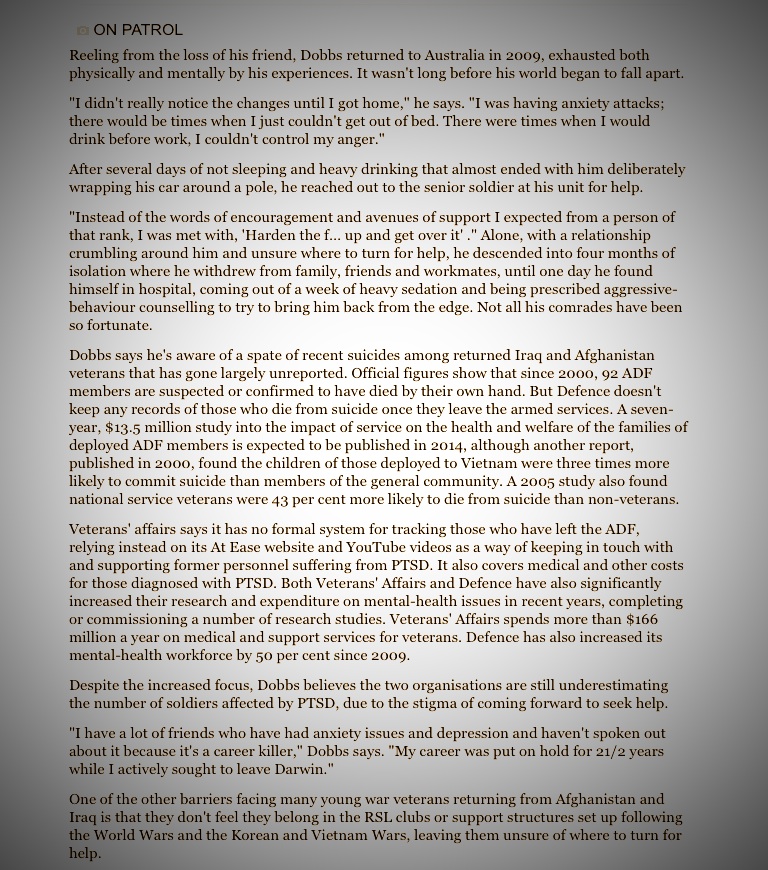
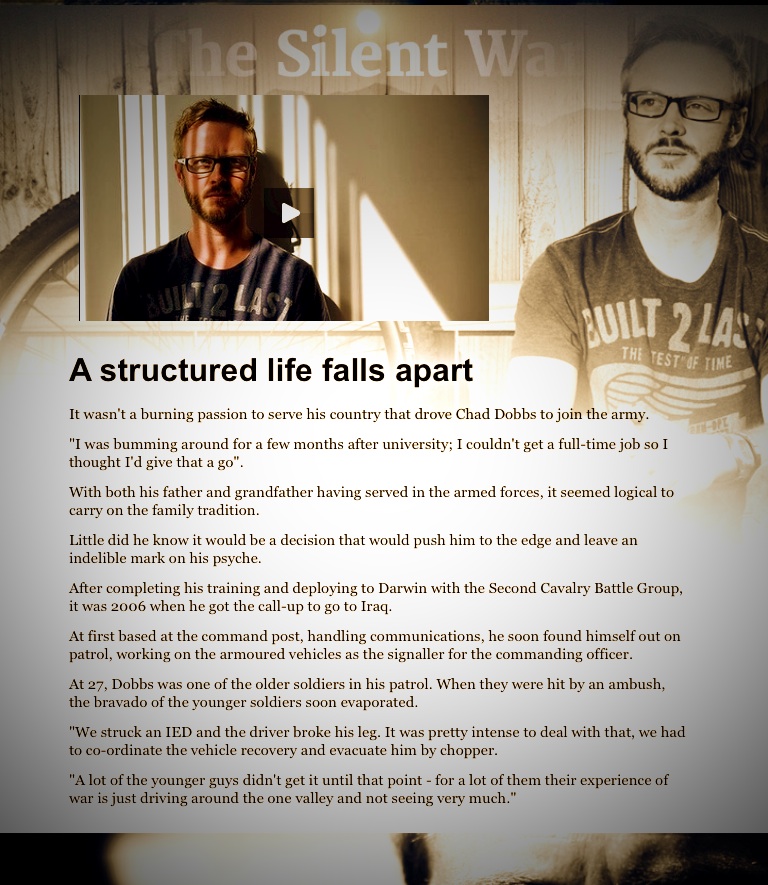
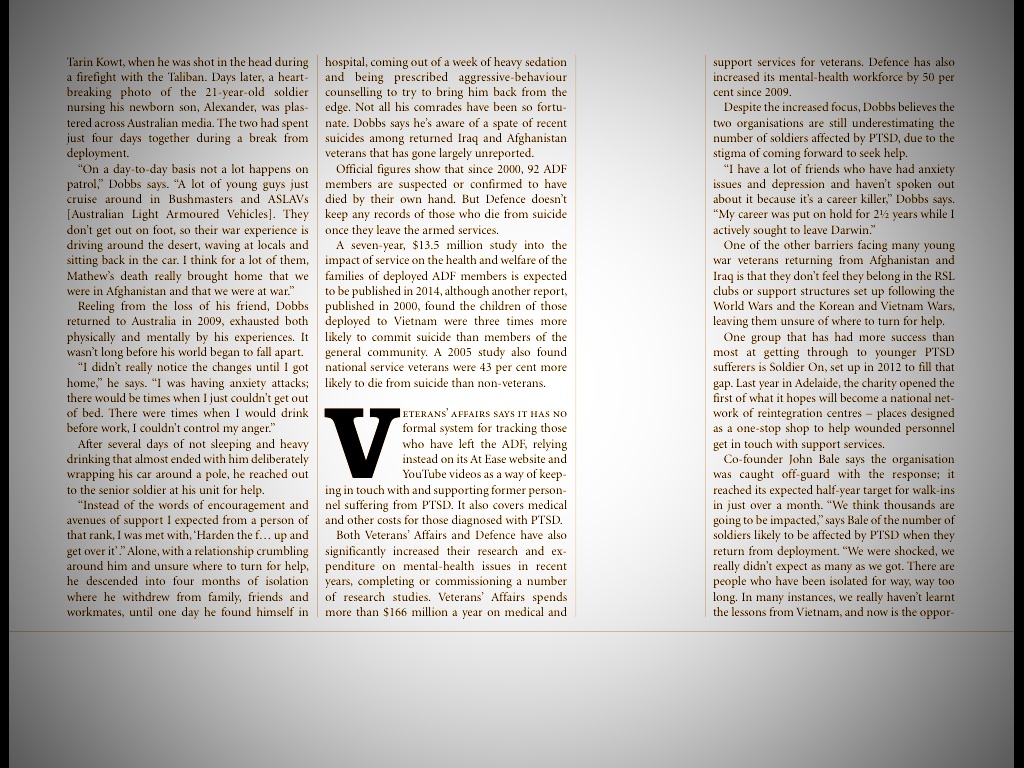
Last year on Sunday 29 September, I sat down with Canberra Times Sunday Editor Scott Hannaford and photographer Melissa Adams to share my story about life with PTSD, depression and life after I hung up my uniform and packed away my boots.
Scott had seen this blog and contacted me via Twitter and asked if I wanted to take part in a story he was putting together on Veteran’s experiences with post traumatic stress disorder and life after deployment.
For a few hours we sat down and talked about my time in Iraq and Afghanistan and my fundraising/awareness raising for Soldier On. On Sunday 13 October 2013, Scott published a story in the Canberra Times about my fundraising campaign leading up to the 2013 Battle Of The Beasts.
 .:Click here to read the original story at the Canberra Times:.
After months of hard work Scott’s story was published in all major Fairfax newspapers and online with a suite of interactive media including our interviews and photos from overseas.
Below is my interview from the Canberra Times website and video interview with Scott and Mel.
.:Click here to view my video interview:.
.:Click here to go the interactive website:.





There comes a time in every cyclist’s life where a crash will abruptly end ones race. The AMB 100 was the race that ended with me separated from Kate, beloved Giant XTC, laying in a heap on the jagged rocks of Mt Stromlo’s Slick Rock trail.
To fully explain what this race meant to me I have to write about some events via a short linear narrative.
In the weeks leading up to this race I was undecided which distance I wanted to ride. On offer were 33km, 66km, 100km and 100miles (160km). I knew I wasn’t going to settle at 33km as that distance and most of the race track was my favourite training loop of Mt Stromlo, put simply; why pay to race a loop I already ride quite comfortably? There was simply no challenge in riding it, combine this with 200+ other riders and I would be slower than when I ride solo at a controlled pace.
Ultimately I chose to race in the 66km category. My decision was based on my training program for the upcoming National MTB Easter 24 Hour Solo. It just wasn’t conducive for my end goal to smash a 100km or 160km ride out in the early stages of a program that was designed to build my endurance for a ride that would see me clock up anywhere between 350-400km in a 24 hour period. Combine this with the difficulty of Mt Stromlo’s trails and the usual February heatwave that hits Canberra; racing the longer distances would require a 3-4 day recovery period that would impede my training.
Luckily for me a few issues arose prior to this race including a bite from a Red Belly Black Snake and a persistent knee injury flare-up that cemented my choice of racing 66km was the best option. So in the days leading up to the race I monitored the weather with keen interest. Temperatures were expected in the high 30’s and a severe fire danger was expected to be announced on the Saturday. (Un)luckily for us riders, Mt Stromlo, doesn’t close when the fire danger reaches severe, it has to tick over to extreme; which is what riding in these projected temperatures was going to be – EXTREME!
I have a lot of faith in the race organisers Martin and Juliane Wistana from Rocky Trail Entertainment. While they are running a business, they have shown before that competitor safety and wellbeing is the most important concern for them on race days. So on Saturday evening an email was sent out telling us the next days race was going ahead as planned; albeit with an earlier start time and slightly shorter distance.
I prepared my bike and packed my car the night before as usual, went to bed early and headed out to Mt Stromlo before the sun had risen. I made it out there just as the first 100 mile riders were transitioning for their second lap of the course. Ed McDonald was the first rider to come down the mountain in the early morning light and regaled his story of cleaning up a kangaroo before heading off to ride up the mountain again. Bermers Jamie Ingram and Adam ‘Rocket’ Rolls soon followed and quickly ditched their lights, loaded up on food and fresh bidons and promptly left to tackle their second laps.
Soon after I registered for my race and changed into my riding kit. I was fairly confident before this race as I intended to just go out and enjoy the first lap and once the field spread out attack my first lap split time on the second. For me there was no other rider I was racing against; my only competitor was first lap Chad who I wanted to beat by at least 10 minutes.
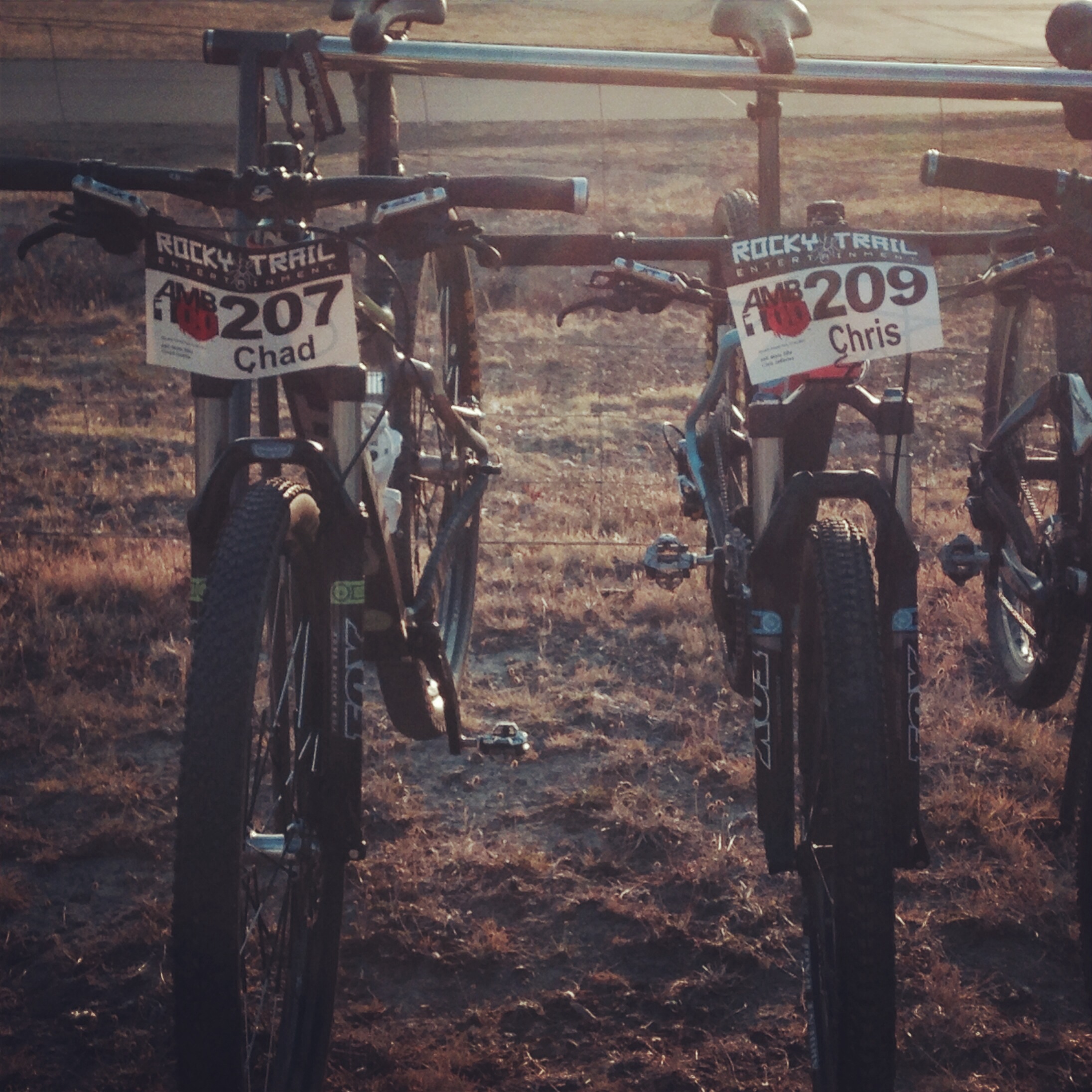 .:Ready to roll:.
We lined up for the mass start at 08:00 and headed down the tarmac and onto Fenceline for the first bit of singletrack. As expected the 200+ strong field bottlenecked almost instantly and a snails pace followed for the next 2-3km. A lesson learned for the organisers before next years race maybe? I hope so because riders promptly started having very low speed wash-outs and cleaning each other up. I witnessed two such crashes in front of me caused by an impatient younger rider who felt he needed to pass the conga line at the worst possible moment.
As I crested the top of the mountain and headed towards the start of Western Wedgetail I glanced down at my Garmin GPS and saw that my racing time was almost 12 minutes slower than my usual training loop on the same tracks; that is how congested the rider traffic had become. I sped down Wedgetail narrowly missing another rider running up the wrong directing looking for a pair of glasses and onto the Pork Barrel. In the first few metres of one of Mt Stomlo’s more technical trails I was dodging unbalanced riders who were unprepared for the rock gardens and drop offs that they were about to tackle.
Pork Barrel felt good under my tyres, I wasn’t fighting my bike and more often than not, I was taking the more technical A-line to pass the slower riders. For the first time in the race I was starting to feel my Flow. As I turned into Slick Rock a few riders had lost their nerve at the drop offs and sharp rocks that followed and were quickly pulling off to the side of the track to let a few of us pass unobstructed.
As I dropped of the back of my saddle and positioned myself for a rather large rock ledge to ride off I caught movement out of the corner of my right eye. The junior rider who had been so overconfident on the climbs had appeared from off the regular trail and was attempting to cut me off in what was to become and incredibly dangerous moment of stupidity.
He baulked at the drop and washed out onto the flat rocks below. Not wanting to crash into a barely 13 year old kid, I locked up my brakes and attempted to avoid him by hopping my bike to the right and off the track into the bushes. This did not work as I was still behind my saddle and hit a tree at full speed with my hip at the same time my front end lurched over the drop off and sent my bike tumbling forward. The sudden change of direction sent me over my bars and onto the rocks in front of the kid.
My elbow met the rocks with my entire body weight behind it. I rolled a small distance before the track levelled out and I was able to scramble onto my feet and recover my bike from the middle of the track. I crawled over to a piece of real estate that wasn’t an A, B or impromptu C-line and tried to work out if the immense pain shooting up my arm was due to a fracture in one of the bones. The kid got to his feet and continued riding while I gave his Father some advice on course etiquette and made him aware of his legal obligations as the guardian of a junior rider regarding any costs involved in repairing my body and/or bike.
It was at this point with a gaping hole in my elbow, a painful yet somehow numb arm that my race was over. I limped across to race director Martin and Bermer Andy S and made my way to the medic station a few hundred metres away. A quick review, patch up and arm sling later I was driven back to the event centre and called my wife on her birthday to come and take me to the hospital.
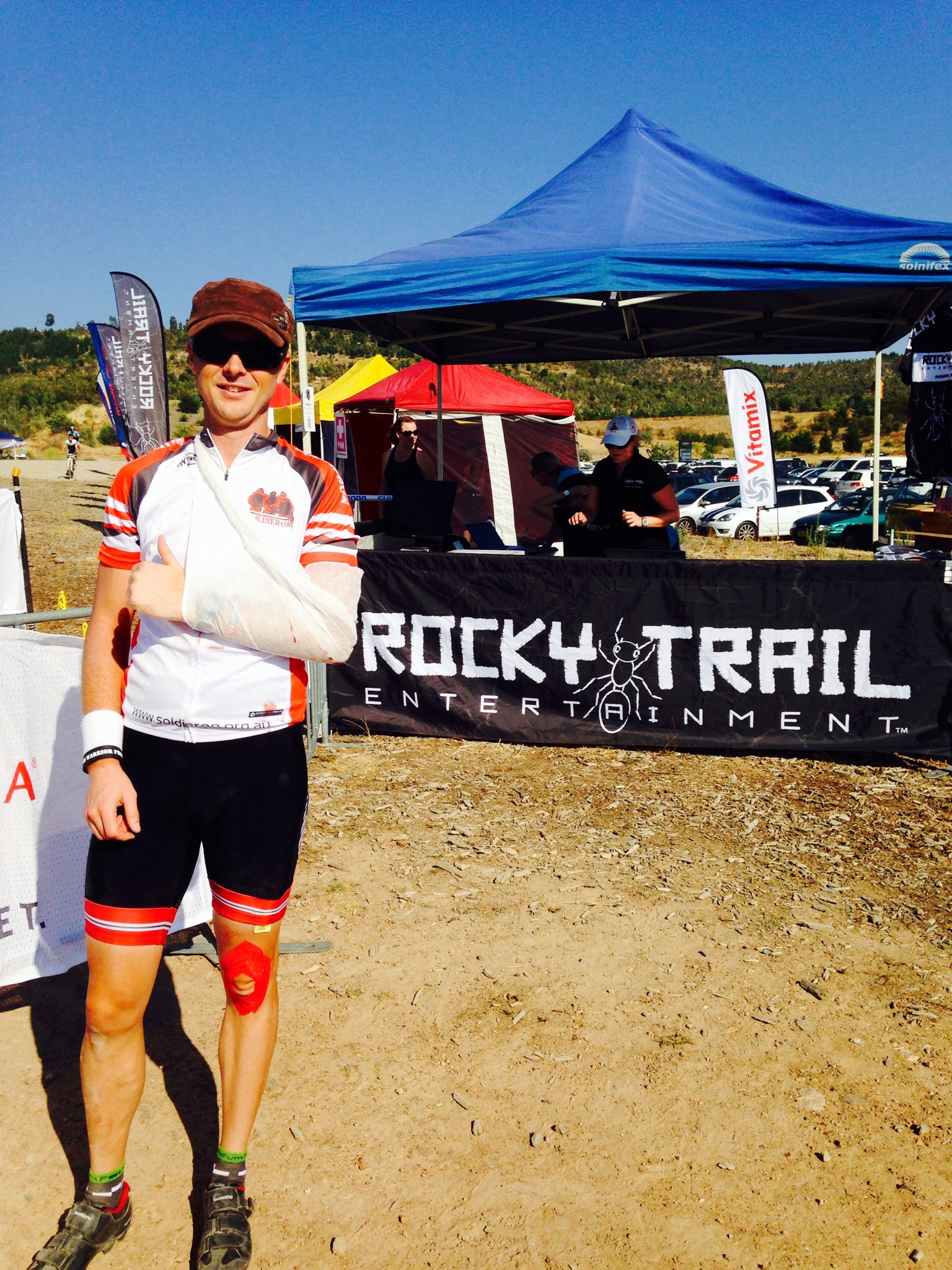 .:Post crash:.
Before she arrived I packed my car with the help of Ben ‘Hollywood’ Hudson, handed over my car keys and soon departed for the Calvary Hospital Emergency Department; the second time in a month. It took a little over two hours to get seen by the medical staff and a fracture was quickly ruled out. With the aid of some local anaesthetic my elbow hole was scrubbed free of debris stitched up and I was sent home. A bruised bone, six stitches, a numb arm and a left hand unable to grasp properly is what I am left with 24 hours later. A reminder that even when my riding feels spot on someone else’s inattention/stupidity can quickly turn a good day into a very bad day.
 .:Waiting to get sewn up:.
To the little fella that caused me to crash I sincerely hope you have learnt a lesson, if not I hope that the only injuries you inflict in the future are to yourself you selfish little turd!
Thank you to the Rocky Trail team, especially Juliane and Martin for a great event and for helping me post-crash. Di and Ben for helping me out and driving my car home. Jason, Bel, Sarah and Kirsty for supporting me after the race and my Wife Carly – I’m sorry for ruining your birthday by riding, crashing and spending a few hours back in the ED!
Another Blog series about training! Gah! Why!?
Well its all part of the training that’s why! Motivation is one of the key components to sticking with a training program; especially one in its infancy.
I find it easier to continue with a training program if I can share the highs and lows with others. But this time around I won’t be subjecting the masses to weekly updates (to be honest I struggled writing a new piece each week last time) instead I’ll be doing semi regular updates detailing key milestones, mishaps and interesting things.
So welcome to my new series on my lead up training to my next big event…
The OnyaBike 2014 Australian Solo 24 Hour MTB Championships held over the Easter weekend.
Don’t let the Championship part fool you, there will be no riding for a fairytale podium finish; focus more on the Solo 24 Hour part!
Yes that’s right, I am aiming to ride in my first 24 hour solo race, so naturally I have to do some serious training for this upcoming pain train.
Training – Week 1 – The Long Journey Begins
After a fairly relaxed Christmas break in Brisbane riding in the stifling heat (by Canberra standards anyway) and climbing up the never ending series of steep hills I was in pretty good shape fitness wise to tackle my first week of training for the Easter solos.
With a few days left before I had to go back to work for 2014, I decided I wanted to put some extra kilometres under the tyres and set a big total for the week. What I didn’t expect to do was ride more in the first week of my training than I have ever before.
Monday saw 87.3km on Kate the XTC during a ride to and from Mt Stromlo. It was a hot day and I didn’t drink enough fluids.
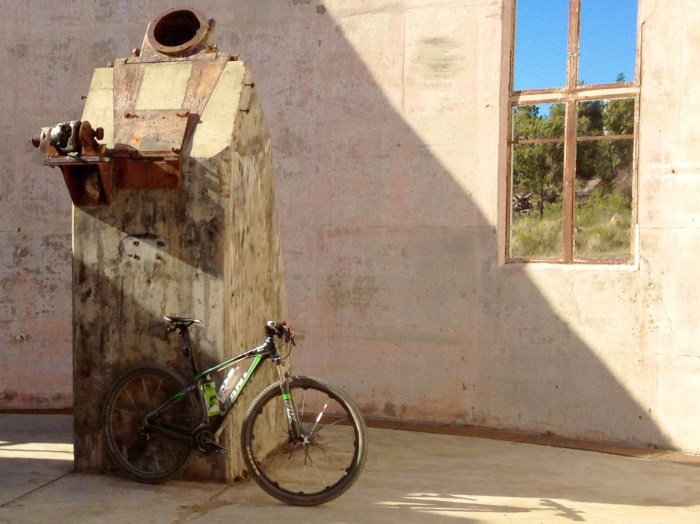
 .:Kate posing at Mt Stromlo:.
However I backed it up on Sara the Defy with a 100.3km ride around Canberra on Tuesday.
 .:Sara chilling by the lake:.
Wednesday was a New Years Day ride at Mt Stromlo with some of the more dedicated The Berm crew (well those that didn’t race at the Wicked Wombat in Jindabyne the day before). I rode 27.2km of sweet Stromlo singletrack to ring in the 2014!
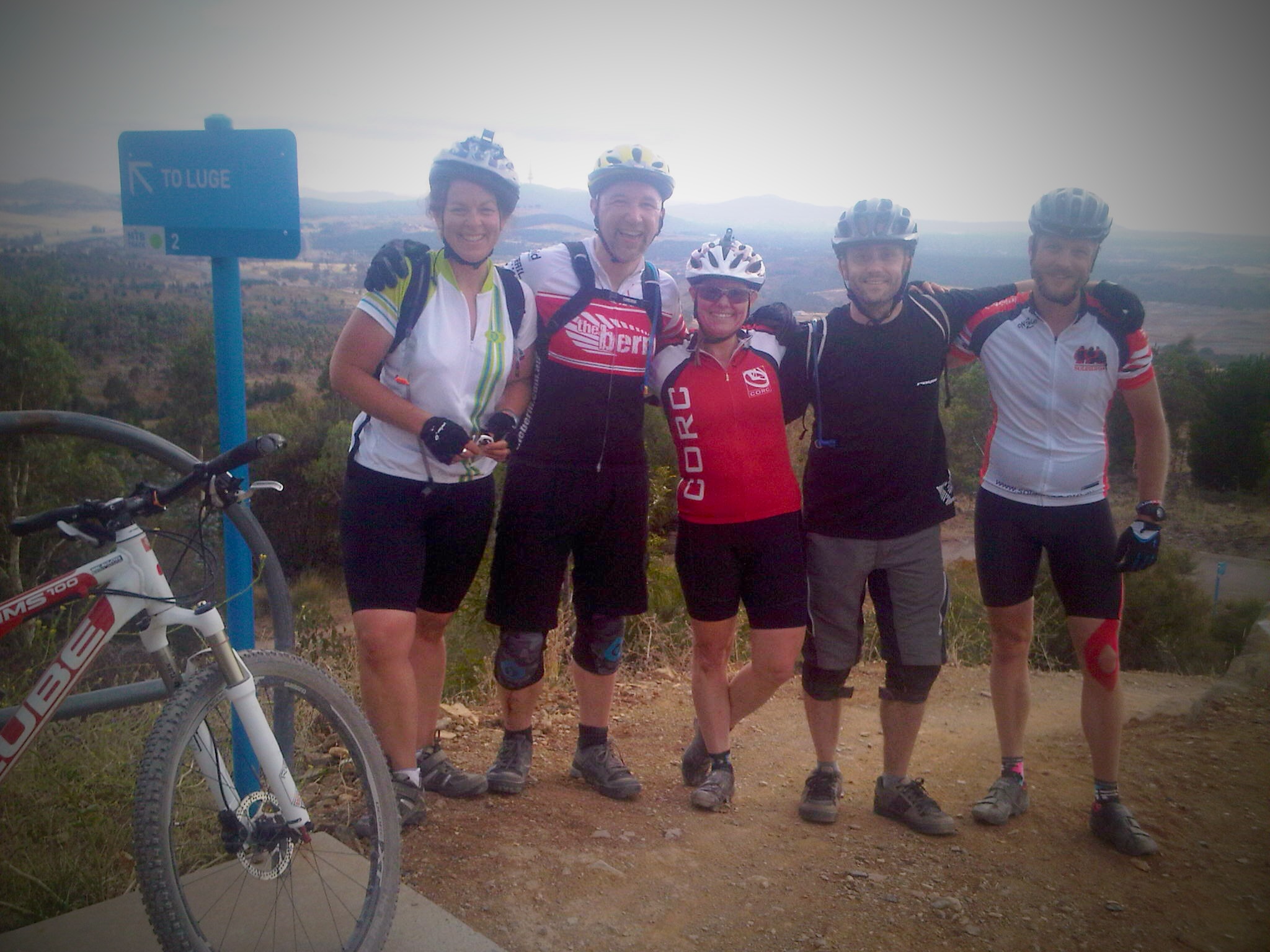 .:A fine looking bunch of sober cyclists:.
Thursday and Friday saw the return to work for the new year and joining the Canberra cycling commuting community once again. In two days I added another 97.2km to the weeks total, just 2.8km short of what I was aiming for.
 .:Somewhat hot on Friday afternoon:.
Saturday saw a new bike join the stable and some short rides around Mulligans Flat dialling it in and trying to set some new Strava PR’s!
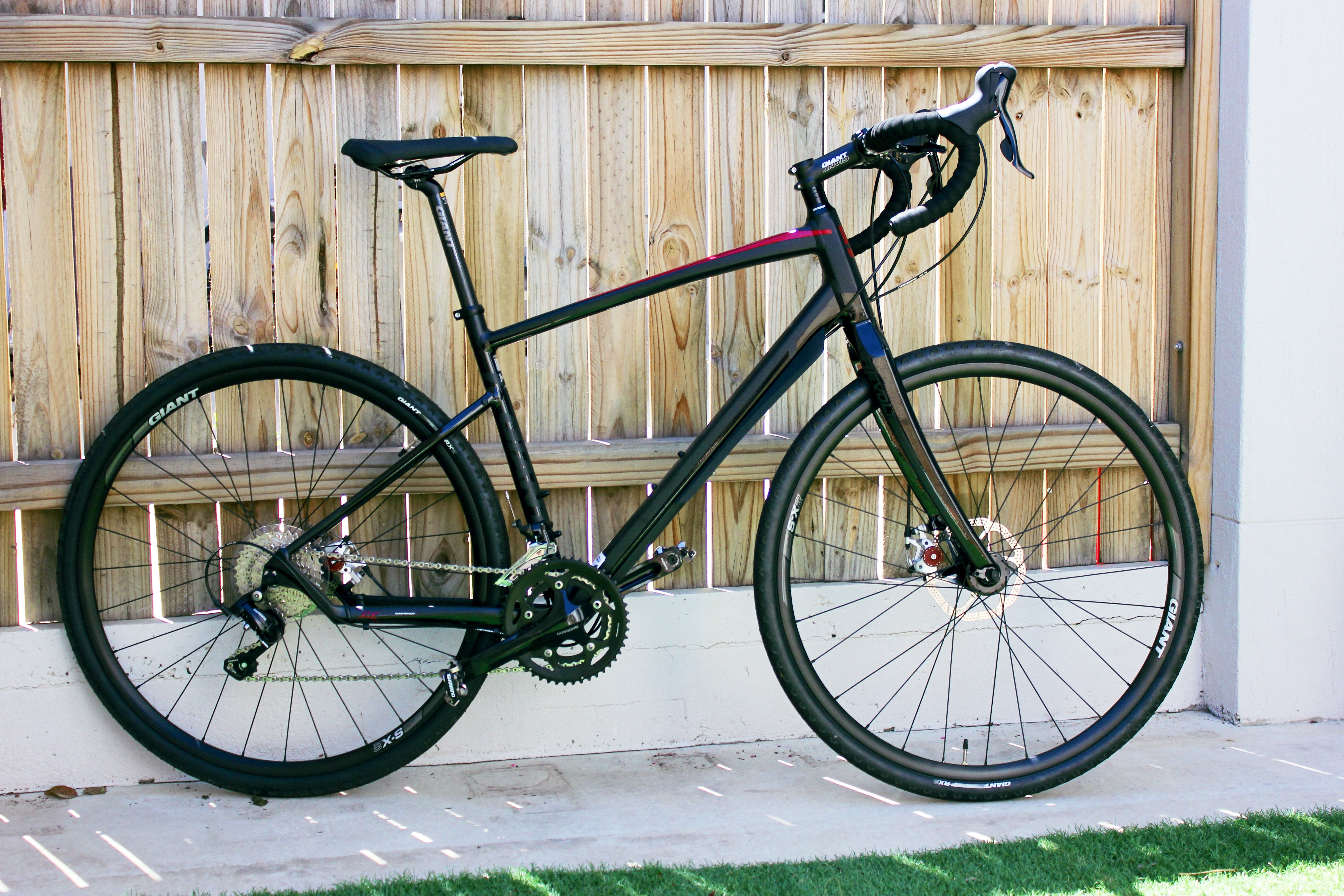 .:Introducing Emma!:.
As usual Sunday morning comprised of my regular Sunday Morning Social and Breakfast ride with The Berm crew. A relaxed 56.3km in the morning followed up with a brisk 8.9km in the afternoon on the brand new Emma.
At the end of my first week actively training with a semi-set program and a clear end goal to achieve, I rode 406.9km.
2013 was the year I decided I wanted to become a cyclist. Sure anyone can ride a bike; but I wanted to fully immerse myself in the technology, the science and the lifestyle.
My year started off with the simple aim of riding more. Commuting to work most days of the week and slowly building my fitness was the foundation for what would become a central part of my life in 2013.
I was extremely lucky to have the support of my Wife who allowed me time away from home and to buy new bikes; and to be surrounded by the fantastic bunch of people who comprise The Berm. At least once a week I would join other Bermers on a social ride at one of Canberra’s world-class mountain biking areas. Riding with others, most of whom are a lot more confident and capable on a bike enabled me to improve gradually throughout the year.
2013 – BY THE NUMBERS
.:1:.
One major crash during the year
During the final round of the 2012/2013 CORC XC Series at Mt Stromlo I had a heavy crash while attempting a jump near the end of the race. End result: A torn left pectoral muscle that would haunt me throughout the year.

.:2:.
The number of new bikes I bought during 2013
My first purchase of the year was Sara the Giant Defy road bike in January followed by Kate the Giant XTC in June.
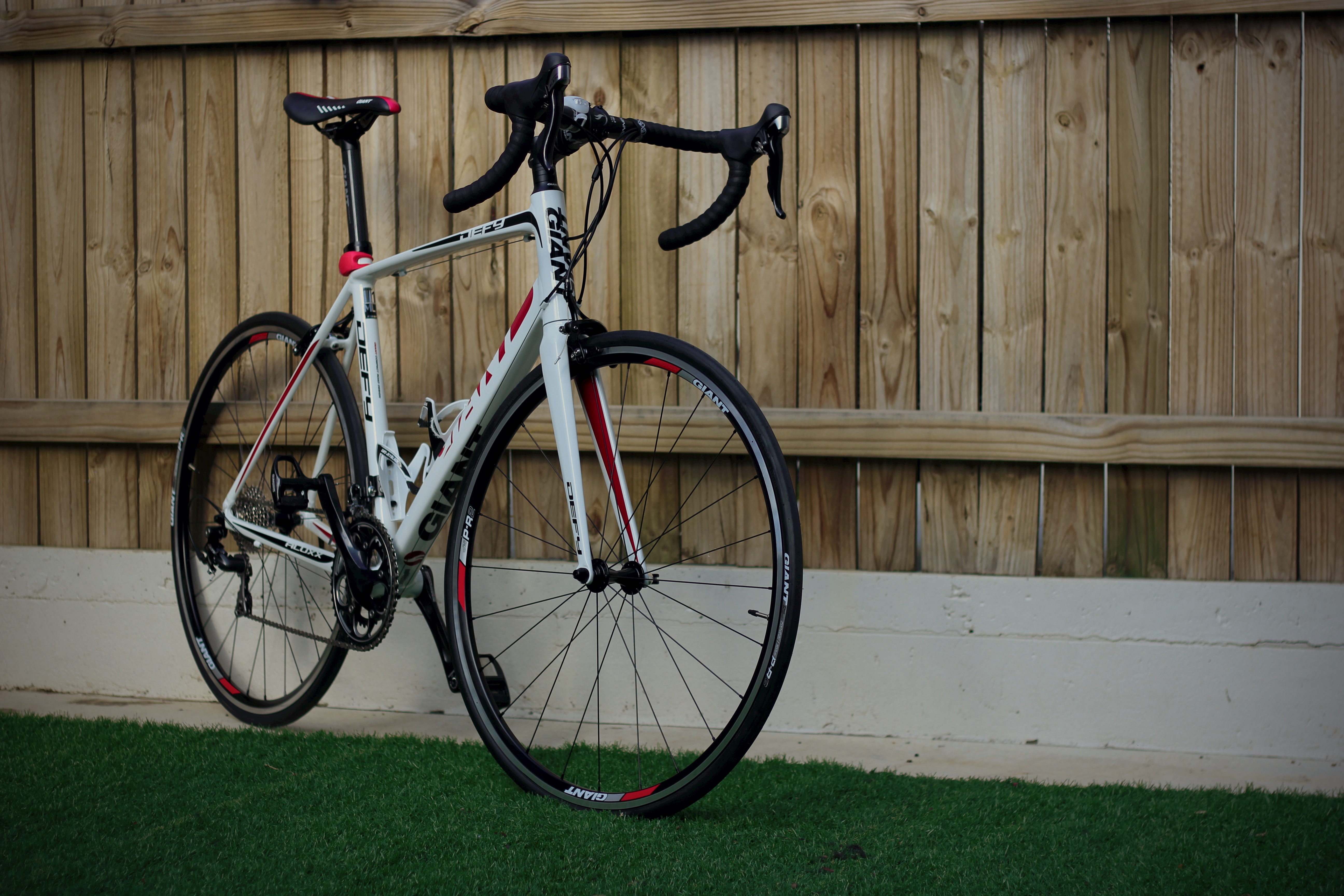
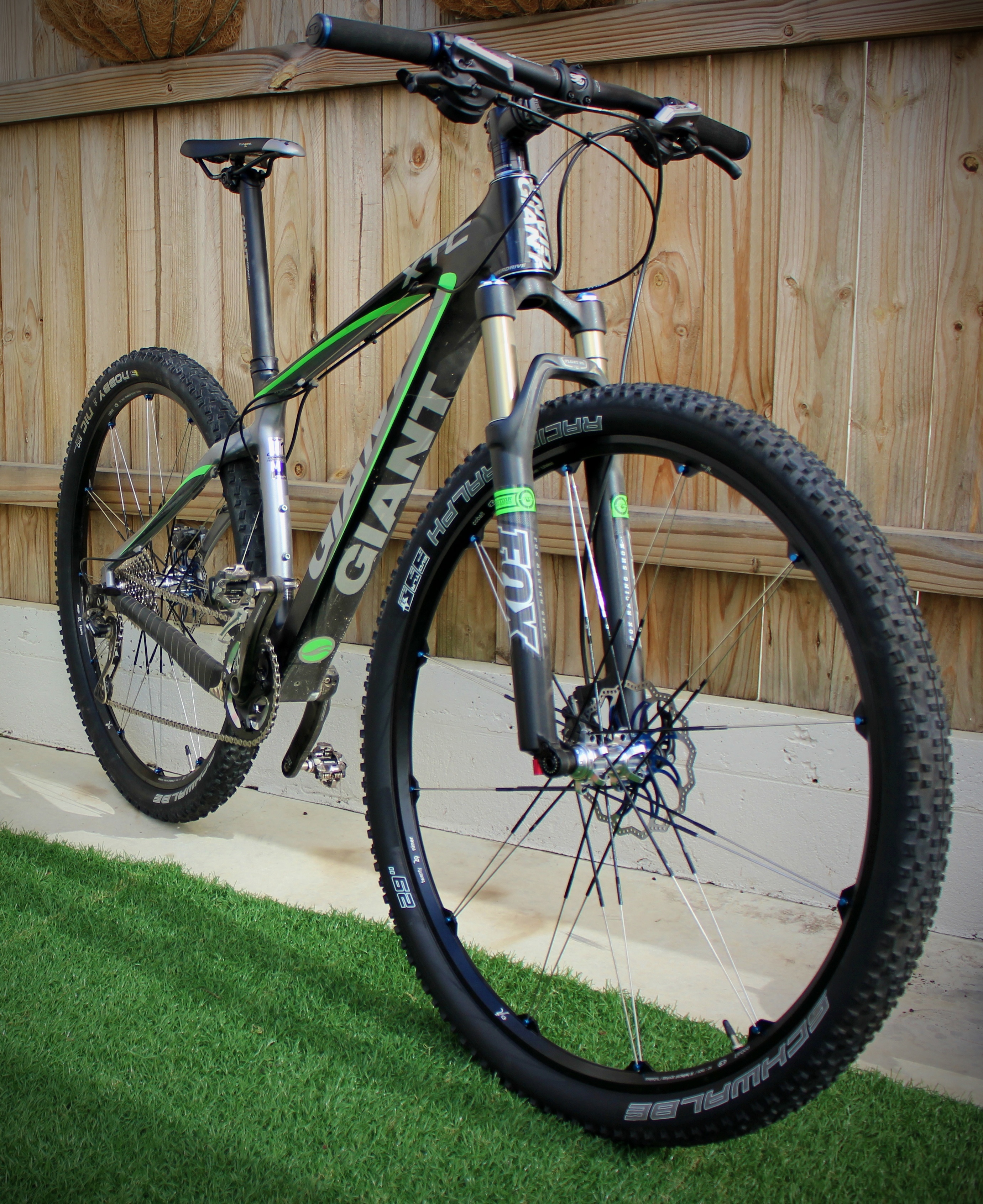
.:7:.
The number of major events that I raced in during 2013
Sure there were no podium finishes but that 5th on the Flowing Beast felt pretty sweet!

.:62:.
The amount on vertical kilometres I climbed in 2013
.:108:.
In kilometres, my longest single ride of 2013
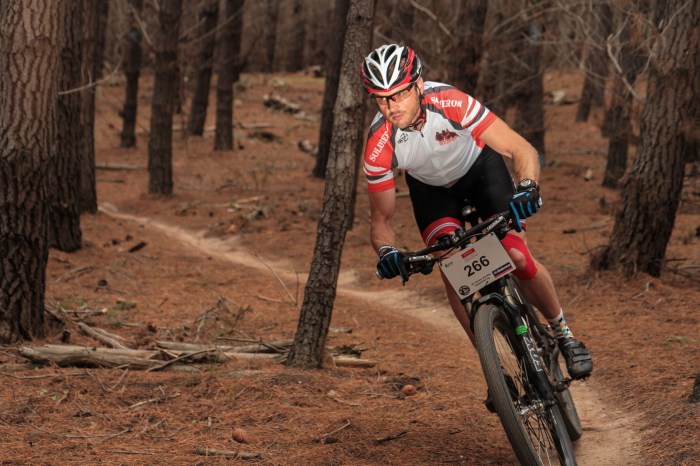
.:266:.
My CORC XC race plate number
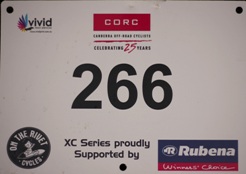

.:280:.
How many times I rode my bike(s) in 2013
.:309:.
The amount of hours I spent riding in 2013
.:5’790:.
In dollars, the amount raised for Soldier On in 2013

.:6’773:.
In kilometres, the total distance I rode in 2013
Wishing everyone a safe 2014!
.:Chad:.
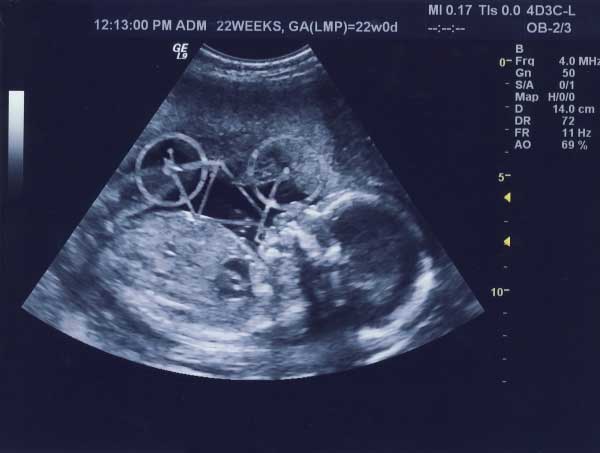



After 7 long months of fundraising and raising awareness for Soldier On, my fundraising page has closed and it’s time to just enjoy riding and enjoy some time with my Wife, family and friends during the Holiday season.
Just because I don’t have an active fundraising campaign running anymore doesn’t mean I won’t be raising awareness for Soldier On. I still have a 3 hour cross-country race in 2013 and have already committed to several big races in early 2014 including the 100km Capital Punishment and The Mont 24 Hour.
At the end of the day, after the countless hours riding, training, fundraising, and banging the proverbial drum I am confident that I have helped raise the profile for Soldier On and the battle that young veterans like myself fight on a daily basis.
It is no secret that I ride to deal with PTSD and depression; but by being an ambassador for Soldier On, I have also developed more confidence in myself and found a voice that will speak on behalf of Australia’s young Veterans. Hopefully by putting myself out there I am encouraging other young Veterans to speak up and ask for help

Although Riding For Soldier On was a mostly solo effort on the bike there were a lot of people who helped me throughout the year
Thank you to the following:
SOLDIER ON for their support throughout this year especially John, Anna, Meredith, Dion and Tony for their amazing support & patience.
Luke & Dan from BEAST-WORX for running such amazing events and allowing me to be a big part of it.
My amazingly supportive mountain biking group THE BERM. Special thanks to Nathaniel, Jason, Nigel & Chris, Ben, Roger, Steve K, Alyssa, Melissa C, Brett, Matt & Sam, Kris, Tony H, Sonja, Andy & Adam.
My family & friends especially my Wife for putting up with my many hours away from home & allowing me to spend obscene amounts of money on bikes!
And last but not least… The people who supported me & donated money to SOLDIER ON so that wounded veterans can get the support they so desperately need & deserve.

The Call of the Beast was my final Soldier On fundraising event for the year. After 7 months of intense fundraising and raising awareness for Soldier On it was a relief to just be able to go into an event without any pressure.
Each time I got on a bike wearing my Soldier On jersey it was an opportunity for me to help raise the profile of Soldier On in the ACT, NSW, QLD and VIC. As of 1 December 2013 I have ridden 5’169km while wearing my jersey and look forward to many more kilometres training in racing in it and the new design jersey and knicks combo that will be available very soon.
I was “asked” if I wanted to enter the Call of the Beast just prior to my Wedding in September. Dan and Luke from Beast-Worx were keen to get me out for their new obstacle course race and I was extremely happy to take up their offer.
I will be quite upfront and state that apart from my normal riding routine I did absolutely no training for this event. It’s no secret that due to long-term injuries I don’t run. It’s not that I don’t like running it’s just that a combination of torn muscles, torn tendons and ligaments, dislocations, fractures and osteoarthritis means my dream (not entirely accurate) of running a marathon will never be realised.
So I kept riding and figured I would just cuff it on the day. My preparation was quite similar to that of a mountain bike race. Clothes for the event, hydration and nutrition organised, GPS and heart-rate monitor ready and clean clothes for after the race. Once this was all packed in the back of the car I headed out to Caloola Farm to look at the course that had been set up for the 1200-odd participants.
When I arrived at the event centre I registered, donned my participant wrist band and headed off to watch the Last Beast Standing racers attacking the course. Round 1 of the elite race was drawing to a close and these athletes had 4 more rounds ahead of them. Watching these men and women smash down food and water before heading back out again was awe inspiring and made me quite content with the knowledge that I was doing the Fun Beast.
I set up my little spot near the Soldier On stand and chatted with Tony, Anna and Dion for most of the morning. Volunteer Andy K seemed to be very excited about carrying a loudspeaker and I was dreading having to run up to his checkpoint later in my race.
As the start time for the first wave of the Fun Beast was getting closer, I got changed into my running gear: shorts, Skins shirt, Soldier On shirt, 2XU calf compression socks, water-suitable hiking shoes and my Garmin Forerunner. I looked the part and headed down to the start line. I watched as Beast-Worx Dan let the first wave go and then headed down to say hello before lining up with the the second wave.
Adam ‘Rocket’ Rolls, my Scott 25 Hour team-mate, was running in a team and as usual he was focused and ready to run. The wave started and I slowly jogged off towards the first few obstacles. I wasn’t taking this event seriously but can honestly say, even with my injury-induced limitations I was making pretty good time through the first part of the course.
The obstacles weren’t very difficult and I was able to scale, crawl through, jump over, roll under, climb up, balance on and run over everything without any assistance. It was however extremely simple to spot the people with military experience. Firstly there was the obvious technique in getting through the obstacles and secondly we were the few that stayed on top off walls lifting people up, pulled cargo nets tight, gave boosts, steadied people’s balance and more often than not gave advice on how to do things safely.
 .:Waiting to scale the first wall (Photo by Canberra Times):.
The obstacles were spread out with a fair bit of running in between. This was always advertised as an adventure race and not designed as a Tough Mudder knock-off like many of the new obstacle races. Like the Battle of the Beasts this event’s main aim was to raise money for Soldier On; and with only two permanent staff and an army of volunteers it is commendable that a first time event was so amazing, challenging and fun.
By the time the 11km Fun Beast was over I had run 12.9km in 2hours 22mins. Not the fastest time but a very fun event that I would definitely do again.
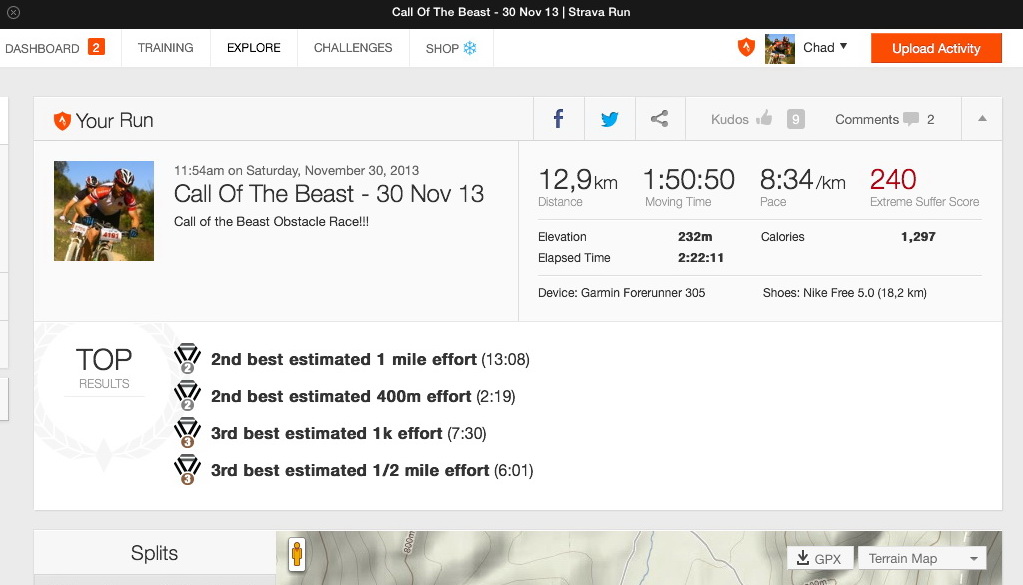
 .:Strava!:.
 .:Just a tad dirty:.
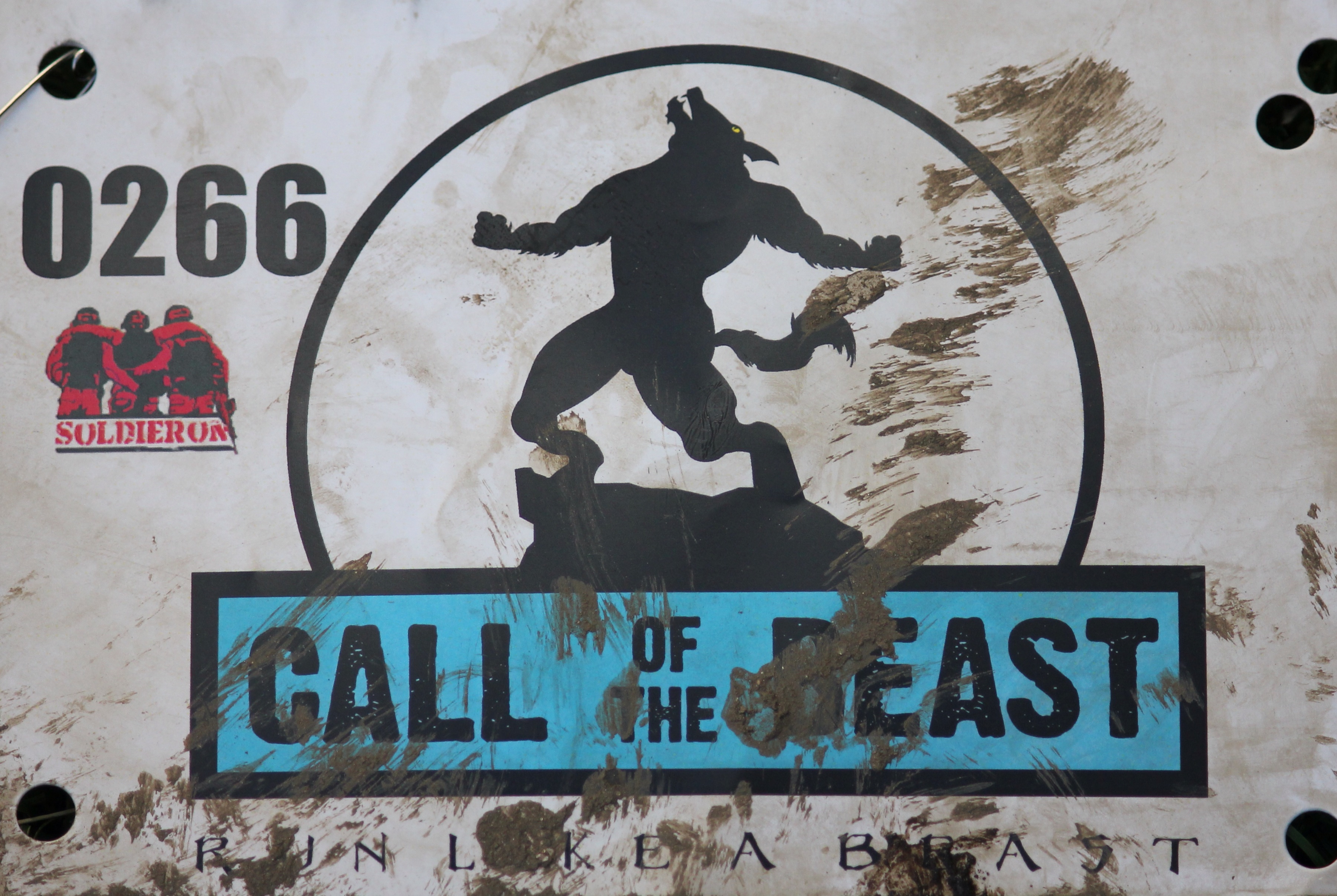 .:As usual I kept my race plate (a sly reference to my Army days with the number):.
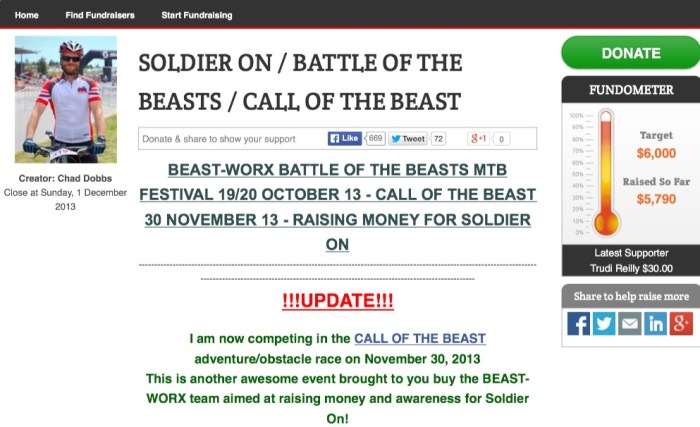
At the end of two big events I had raised $5’790 for Soldier On. Thank you to everyone that donated and supported me through-out these past several months.
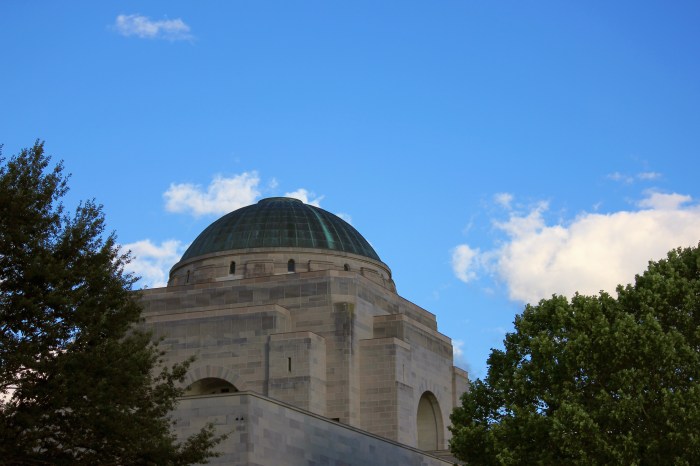
On Wednesday evening, 20 November 2013, I attended a panel discussion at the Australian War Memorial on Post Traumatic Stress Disorder. The event was hosted by journalist/writer Paul Barclay on behalf of ABC TV and Radio National.
On the panel were former Chief of Army LTGEN Peter Leahy; author and Beyond Blue ambassador Allan Sparkes; Beyond Blue board member Professor Brett McDermott; and the wife of a former British Royal Marine, Emily.
I was asked about attending the panel a few days earlier by my friend Jason. Originally I didn’t want to attend as I honestly thought it may be a trigger for an anxiety episode; so I declined. It wasn’t until the night before that I decided to go along and hopefully have a chance to speak to whoever was on the panel. I had no idea who was participating in the discussion other than LTGEN Peter Leahy and hadn’t really thought about what was going to be discussed.
In the afternoon prior to the start of the forum, I rode from work up to the Australian War Memorial. As is the norm, I was wearing my Soldier On jersey and happened upon new Soldier On team member Tony; who many moons ago was my Troop Commander when I served in Iraq. Jason arrived next and soon we were joined by Anna, Meredith and Dion from Soldier On. After I got changed into something more appropriate than skin tight lycra, we went into the BAE Systems Theatre.
After the introductions Paul started the discussion with some questions about PTSD in the military for LTGEN Leahy. The conversation and questions started to flow freely within the panel with some very emotional stories being shared by Emily and Allan. Prof McDermott gave some very interesting insights on PTSD for not only military personnel; but also for emergency service persons and of course their families.
I wasn’t the only veteran in the crowd; but I was the youngest. There were a few Vietnam Veterans present, family members of veterans with PTSD and a few senior Defence officers that were skulking around the back pews in civilian attire.
As the discussion progressed LTGEN Leahy was asked some questions about support services available to veterans. I have a lot of respect for this man; he was an exceptional Chief of Army and has done a lot to help veterans with his current position as Chairman for Soldier On. But there is a distinct level of detachment from what a high ranking officer is told and what happens on the ground.
Some of his responses started to irk not only me, but a lot of the crowd listening to him. There were more than a few audible scoffs at some comments about the Department of Veterans affairs doing their best to help all veterans. One comment in particular drew a very audible “get fucked” from me. The former Chief of Army said that when a Soldier asks for help, he or she will always receive it. Paul mentioned the story of MAJGEN John Cantwell and LTGEN Leahy was in agreement. Whilst MAJGEN Cantwell has done a lot to help break the stigma of PTSD in the ADF; it is also true that a very senior Officer is never going to be turned away when they ask for assistance.
Allan Sparkes shared his story of PTSD and depression from when he was a Police officer; and the ostracising that he experienced as a result. His story was a very raw, no punches pulled recount of his darkest days and his termination from his employment without his knowledge. His story was very reminiscent of many veterans from the Vietnam War up until today’s conflicts.
Emily’s story was one of amazing courage from both her and her husband Adrian. She spoke of her time in the United Kingdom when Adrian returned from deployment in Afghanistan a changed man. He had experienced traumatic events and as a result developed PTSD. His struggles with mental health affected his wife and two daughters as they watched as their husband and father dealt with his issues now that he was back at home. His eventual discharge from the Royal Marines was a result of a physical injury and just like the majority of occupationally injured Australian servicepersons; Adrian was soon pushed out the door with very little support and preparedness for his transition to civilian life.
As the forum was drawing to a close Paul invited Dr Brendan Nelson, director of the Australian War Memorial to speak and field some questions from the panel. He spoke about the AWM’s role with supporting veterans of recent conflicts by having interactive exhibits and involving them with other projects the AWM is conducting. As a former Minister for Defence he expressed his desire to see more support forthcoming as the Afghanistan War draws to a close.
As 7pm was quickly approaching a few of us in the audience were wondering if we would get a chance to ask questions of the panel. Adrian was next to take the stage and he recounted some of his experiences post deployment and how support for veterans is extremely slow from the government in Britain. He spoke of having his claim for assistance being rejected on the first submission; a trend very similar to that in Australia carried out by DVA.
Adrian expressed his concern for veterans being forgotten after the withdrawal from the Middle East and a strong desire for them to be able to access the support they deserve and not repeat the mistakes of the past. He likened the struggles of today’s returned servicepersons to that of the Vietnam War era in the way that the fight for support continues even after the war on foreign soil has ended.
Adrian’s address to the panel and audience had clearly reached out to everyone with many of the Vietnam Veterans visibly moved by his honesty. As he sat down Paul checked his watch and asked us sitting in the audience if anyone had anything questions or comments. I had been sitting and fidgeting for the past 10 minutes waiting for this moment. Several different introductions and talking points had gone through my head and all disappeared in the instant I raised my hand and Paul motioned for me to stand up.
I was shaking before I even started speaking; this was always going to be an emotionally charged interaction from me and I started by introducing myself.
“Hi I’m Chad, I separated from the Army early last year and have deployed to both Iraq and Afghanistan. I have been diagnosed with PTSD, depression and anxiety and I want to know why not enough is being done to help Australian veterans.”
I addressed LTGEN Leahy first and exclaimed to him that history was indeed repeating itself.
“I am a third generation Soldier, my Grandfather served in World War 2, my Father served in Vietnam and I have served in the Middle East. I watch as my Father and his mates still struggle with PTSD with many Vietnam Veterans taking their own lives since the war ended. I watch as my generation struggles with the same issues and now my mates, people I served with, are killing themselves because of PTSD and depression; and nothing is being done to stop this. There are more people in the ground because of PTSD and depression than there are that are on the wall outside who were killed on operations.”
I spoke of my efforts to get help when the weight was becoming too much for me to bear and that the first two times I asked for assistance I was rebuffed by my unit RSM’s; a statement that clearly shocked LTGEN Leahy. I was asked questions from both Allan Sparkes and Prof McDermott about my interactions with DVA and I recounted how I was told that my claim was going to be slow as my PTSD and depression ‘wasn’t that bad’. I explained to them that is was at this point that I withdrew my claim and stopped interacting with DVA as I felt I was being accused of chasing money and that by not receiving financial assistance my criticism of their practices would hold more weight in a public forum.
I described my battles with depression and that very few people understood; and the simple act of asking for help effectively stalled my career in the Australian Army for a number of years. The feeling of being ostracised and singled out was always present and that few people would support me when I asked for further help. I explained that while MAGJEN Cantwell’s story is not an isolated one, the level of support and assistance he received was. The average Digger in a unit has to contend with the ever present stigma of mental health issues and ignorance present within their chain of command and the probable persecution for not being able to fulfil their duties without restrictions.
I expressed astonishment that the very organisation founded to protect the rights of and provide assistance to veterans was failing in its primary role. I emphatically asked how in the forty years since the end of the Vietnam War servicepersons are still not being afforded the support we fought for. How it was possible that DVA can state they are still learning and getting better with a straight face as veterans from multiple deployments and generations kill themselves while waiting to access support services.
By this stage the room was silent and I had been speaking for around 20 minutes. The panel while sometimes asking me questions and making statements had clearly been unprepared for such a raw and uncompromising speech from someone. I had brought up some points with personal accounts of systematic failures from within the Australian Army, Australian Defence Force and the Department of Veterans Affairs.
There were some topics that I shared with a public forum that had only been discussed with medical professionals and not even shared with my wife and family. As my speech drew to a close I expressed the hope that one day veterans would receive the appropriate support from the Government but that it was very unlikely to occur in my lifetime and that my children probably wouldn’t see it happen either.
As I finished speaking I apologised for hijacking the Q&A session; Paul started wrapping up the forum and I sat down nervously. Jason patted me on the shoulder and most of the audience was either nodding in agreement or wiping away tears. I sat shaking and started to feel quiet anxious from speaking to a mostly unknown audience about issues so personal and distressing that I had spent the last few years repressing and ignoring them.
The rest of the evening was spent talking with members of the audience and panel. I received a great number of business cards and offers of assistance and opportunities to speak to other veterans and people with PTSD and depression. I found the response surprising and was shocked when LTGEN Leahy approached me as he was leaving. He handed me his business card and told me to email him. He offered to take me to see the Minister of Veterans Affairs to discuss the issues I had brought up.
He told me that the Service Chiefs would be made aware of what I had spoken about and that I should continue speaking up. Both he and Dr Nelson expressed the need for younger veterans to be the public faces and voices of our generation and that I should be one of them. I was very humbled by this statement and thought a lot about it over the following days.
At the conclusion of a big night, I farewelled Jason and the Soldier On crew, thanked the others and started riding my bike back home. The next 45 minutes were some of the most contemplative times of my life as I thought about what I had said and the inevitable shock-waves that they would create for my family and I when the ABC airs Boys Don’t Cry on Big Ideas in late 2013/early 2014.
 Blogged Down By Life