The Silent War

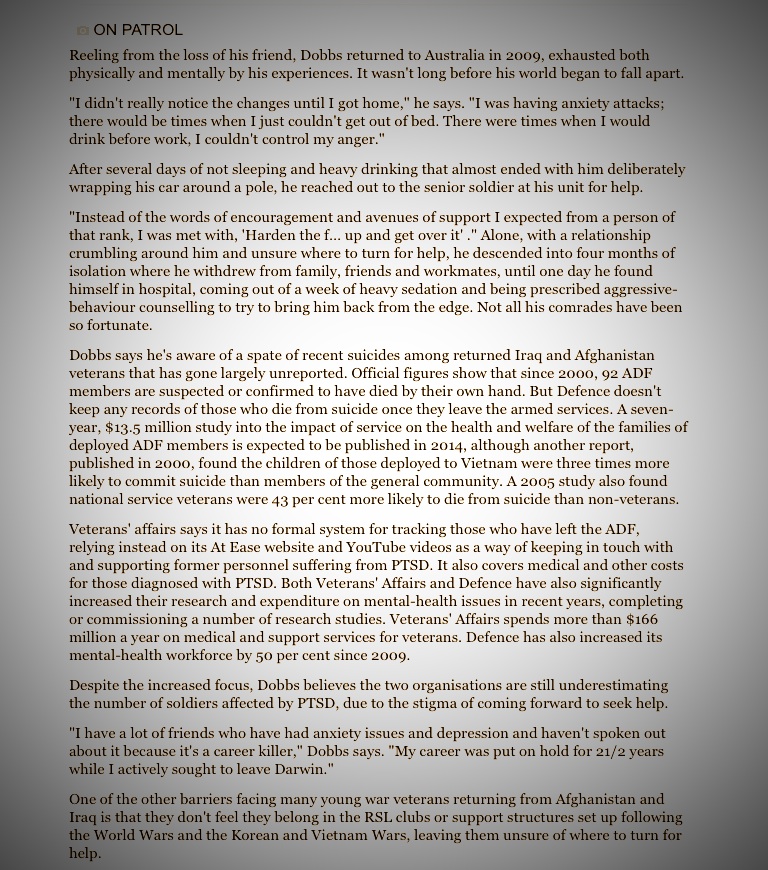
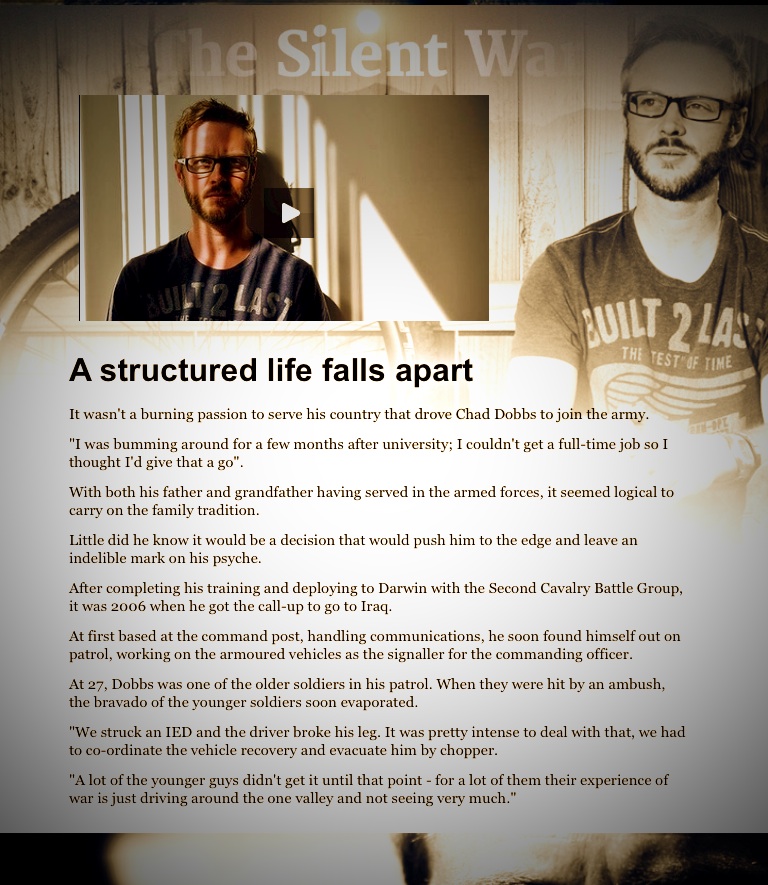
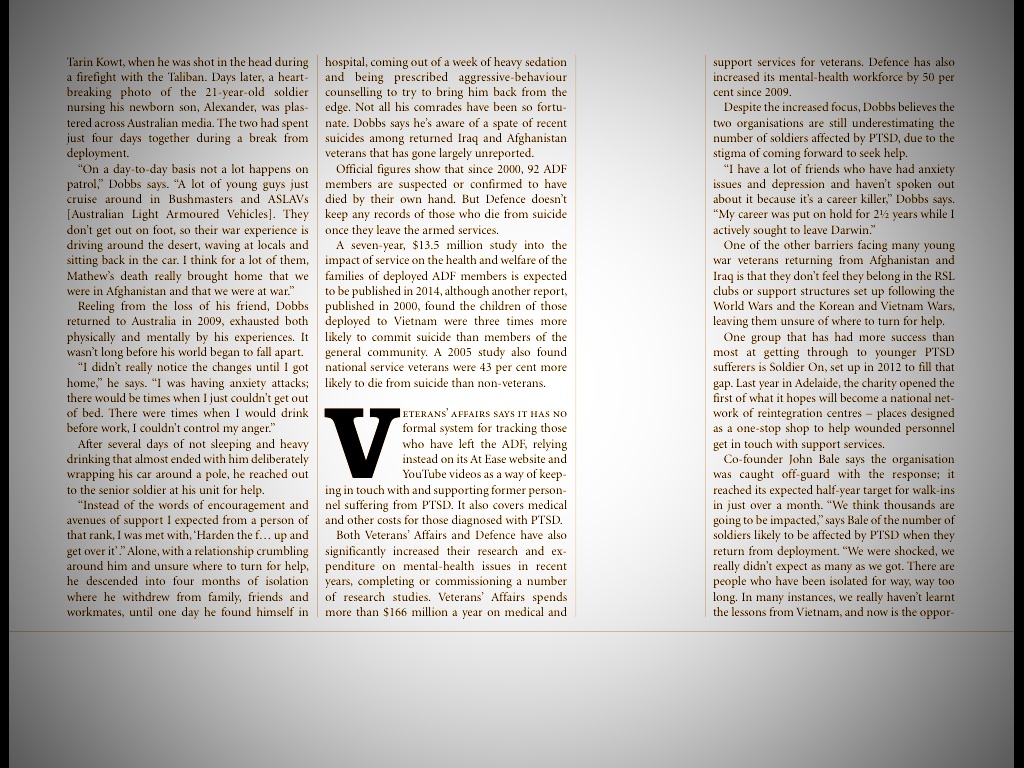
Last year on Sunday 29 September, I sat down with Canberra Times Sunday Editor Scott Hannaford and photographer Melissa Adams to share my story about life with PTSD, depression and life after I hung up my uniform and packed away my boots.

Scott had seen this blog and contacted me via Twitter and asked if I wanted to take part in a story he was putting together on Veteran’s experiences with post traumatic stress disorder and life after deployment.

For a few hours we sat down and talked about my time in Iraq and Afghanistan and my fundraising/awareness raising for Soldier On.  On Sunday 13 October 2013, Scott published a story in the Canberra Times about my fundraising campaign leading up to the 2013 Battle Of The Beasts.

CanberraTimes Article.:Click here to read the original story at the Canberra Times:.

After months of hard work Scott’s story was published in all major Fairfax newspapers and online with a suite of interactive media including our interviews and photos from overseas.

Below is my interview from the Canberra Times website and video interview with Scott and Mel.

.:Click here to view my video interview:.

.:Click here to go the interactive website:.

IW 002 IW 003 IW 004 IW 005 IW 006 IW 007 IW 008 IW 009 IW 010

2013 In Review – Cycling

2013 was the year I decided I wanted to become a cyclist.  Sure anyone can ride a bike; but I wanted to fully immerse myself in the technology, the science and the lifestyle.

My year started off with the simple aim of riding more.  Commuting to work most days of the week and slowly building my fitness was the foundation for what would become a central part of my life in 2013.

I was extremely lucky to have the support of my Wife who allowed me time away from home and to buy new bikes; and to be surrounded by the fantastic bunch of people who comprise The Berm.  At least once a week I would join other Bermers on a social ride at one of Canberra’s world-class mountain biking areas.  Riding with others, most of whom are a lot more confident and capable on a bike enabled me to improve gradually throughout the year.

2013 – BY THE NUMBERS

.:1:.
One major crash during the year
During the final round of the 2012/2013 CORC XC Series at Mt Stromlo I had a heavy crash while attempting a jump near the end of the race.  End result: A torn left pectoral muscle that would haunt me throughout the year.
IMG_2841

.:2:.
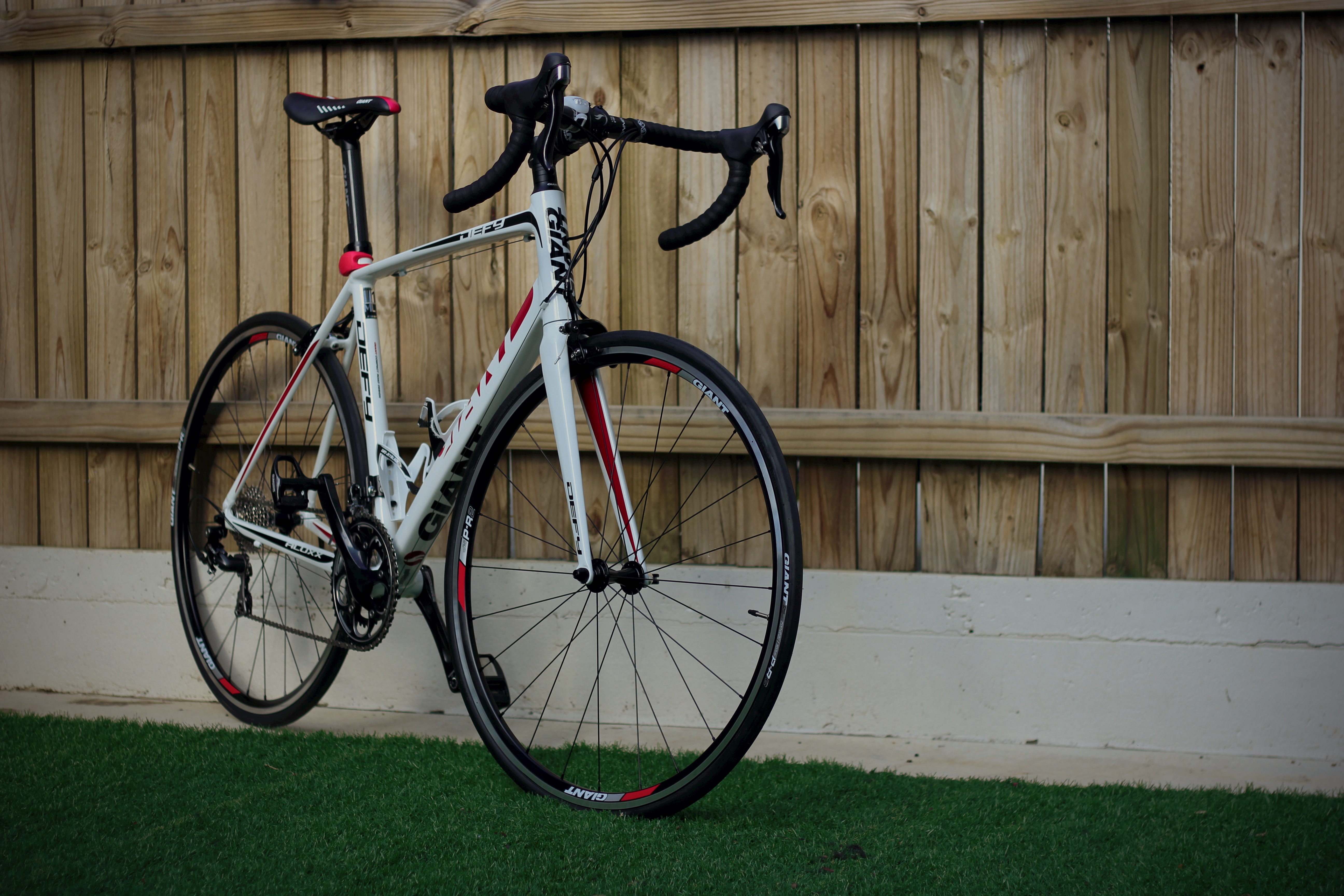
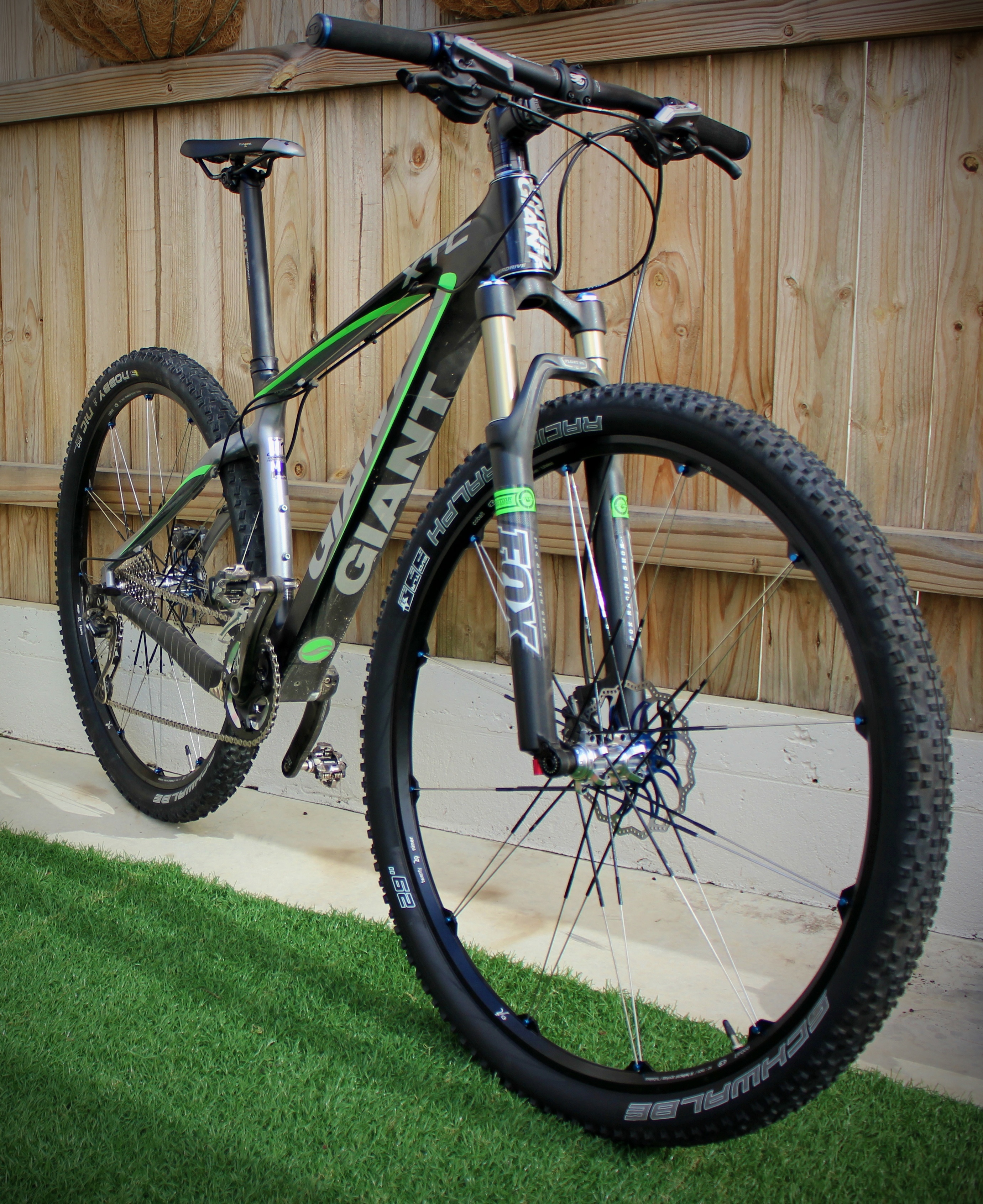
The number of new bikes I bought during 2013
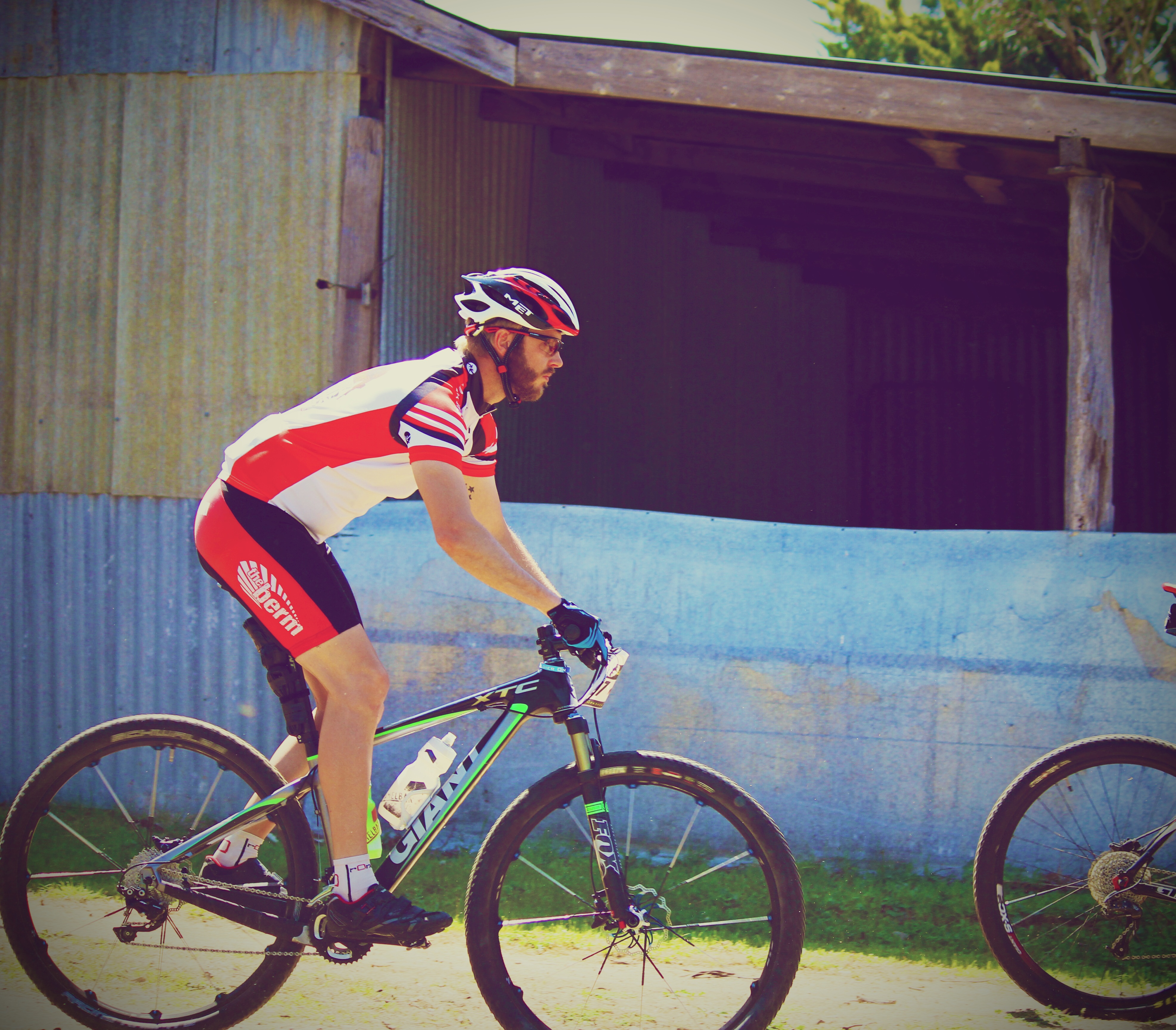
My first purchase of the year was Sara the Giant Defy road bike in January followed by Kate the Giant XTC in June.
BIKES 051Kate 04

.:7:.
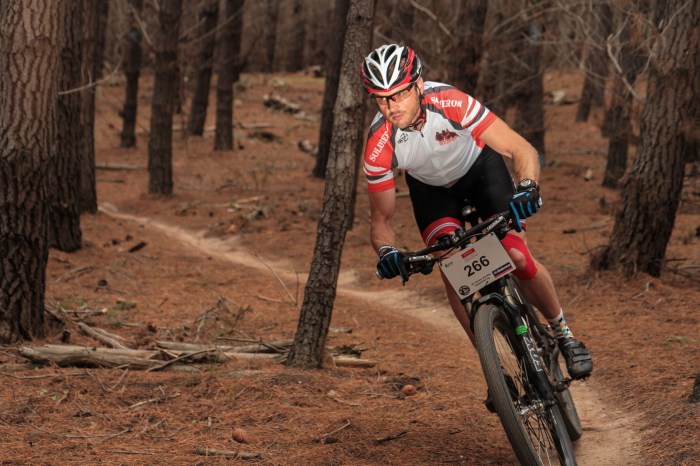
The number of major events that I raced in during 2013
Sure there were no podium finishes but that 5th on the Flowing Beast felt pretty sweet!
BOTB 13 057

.:62:.
The amount on vertical kilometres I climbed in 2013

.:108:.
In kilometres, my longest single ride of 2013

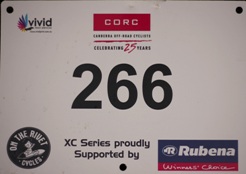
.:266:.
My CORC XC race plate number
Race Plate 06
BIKES 112

.:280:.
How many times I rode my bike(s) in 2013

.:309:.
The amount of hours I spent riding in 2013

.:5’790:.
In dollars, the amount raised for Soldier On in 2013
BOTB 13 117
.:6’773:.
In kilometres, the total distance I rode in 2013

Wishing everyone a safe 2014!
.:Chad:.

Random 031

The Central Point Of Failure – The Department Of Veterans Affairs

I wasn’t sure if I should write this post.  My last opinion piece about the Department of Veterans Affairs was received quite well by the veterans community and prompted DVA to contact me to discuss my and many other young veteran’s issues.  What has prompted this follow-up piece tentatively titled “You Ignorant Fucking Bureaucrats!”?…

On the evening of 11 November 2013, undoubtedly scheduled to coincide with Remembrance Day, Channel 7’s Today Tonight aired a story about young veterans and the ongoing struggle for support with PTSD and mental illness entitled Fighting A Mental War.

The story began as a fairly straight forward account detailing the struggles of those who have had the unfortunate distinction of dealing with the Department of Veterans Affairs.  Frustration, anger and depression are some of the emotions one can feel when dealing with a Government Department seemingly intent on ignoring your calls for help and ensuring you don’t get access to quality support services and ultimately rejecting financial assistance for your national service at war.

This may seem like an extreme statement but when the person asking for support is a young service-person trying to access help for depression and/or assistance after experiencing a highly traumatic incident(s); being rebuffed by the very organization founded to help you only causes more stress and compounds an already volatile situation.  It is a fact that more young servicemen and servicewomen have taken their own lives post-deployment than have been killed in action in Iraq and Afghanistan.

Ordinarily I would take a story broadcast on Today Tonight with a few dozen grains of salt.  But after watching Keith Payne VC fire up (a man I have had the pleasure of spending time with in both Afghanistan and Australia) and the pitiful response from DVA Mental Health Advisor Dr Stephanie Hodson I was poised to hurl my remote control at my TV in disgust.  I sat staring in disbelief, I wanted to break something, I could feel my pulse rising and my face getting hotter as my skin became flushed with rage.

Ultimately I calmed down but not before I fired off a steam of questions and statements to DVA via Twitter, Facebook and email.  Minister for Veterans Affairs Senator the Honourable Michael Ronaldson was also in my sights and received a highly sanitized and more eloquent email demanding answers about his representative’s insulting statements.

What did Dr Hodson say?  Below is the transcript from Today Tonight’s segment.

“Any suicide is tragic, and the department actively monitors suicide in veteran community,” Dr Hodson said.
“We actually do need to work on getting our staff more trained, but also about getting through these claims more quickly.”

Dr Hodson denies the department’s failure to plan ahead is resulting in long delays, leaving claims and lives in limbo.

“The department is processing claims as quickly as possible, but we acknowledge that some claims can take longer than we want,” she said.

Dr Hodson claims part of the problem lies with the veterans themselves.

“The problem is that it’s not until someone is in crisis that they will actually start to look for the services,” Dr Hodson said. “The treatment is there for veterans; we just need them to come and put up their hand and get it.” 

The full video can be found here:
http://au.news.yahoo.com/today-tonight/lifestyle/article/-/19777434/veterans-with-post-traumatic-stress-disorder/
Dr Hodson’s comments on behalf of DVA start at approximately the 8 minute 15 second mark.

I want to stress I am not launching a personal attack on Dr Hodson; she is clearly a very competent and qualified medical professional.  She previously served 22 years in the ADF as a psychologist and has been with DVA for the past decade.  This is a woman who has dedicated the majority of her career helping service-persons with mental health issues.

I am however attacking the Department of Veterans Affairs for the systematic failure of the past 40 years.  I’ve watched as my Father’s generation has been let down by DVA and his mates have been driven to suicide.  Decades later the same thing is happening to my generation.

By Dr Hodson’s own account, DVA needs to do more work; but also claims that the Department’s failure to plan ahead is not to blame.  So to Dr Stephanie Hodson and Minister for Veteran’s Affairs Sen the Hon Michael Ronaldson I put this to you:

The last Australians withdrew from Vietnam on Anzac Day 1975.  That was 38 years, 6 months and 18 days ago; and yet Australian Servicemen and Servicewomen are still not getting the support that we deserve and have fought for.

To have not learnt from the past and continuing to ignore the Department’s ongoing mistakes is akin to giving a Soldier with PTSD a noose and pointing him or her in the direction of the closet tree with a strong branch.

Battle Of The Beasts 2013 – Wrap Up Video

A brief video of my journey through the Battle of the Beasts so far.

Battle Of The Beasts 2013 Wrap Up

The lead up to this years Battle of the Beasts was an enormous challenge for me.  My primary aim was about raising awareness and fundraising for Soldier On; of which I increased my efforts ten-fold from last year.  I spent a good 6 months fundraising and helping to raise the profile of Soldier On before I even thought about how I was going to tackle a huge weekend of riding.

The Fundraising
I’ve written at length about why I ride for Soldier On, so I’ll skip that part.  In early April this year I approached Soldier On about producing a cycling jersey that I could wear while commuting, training and racing.
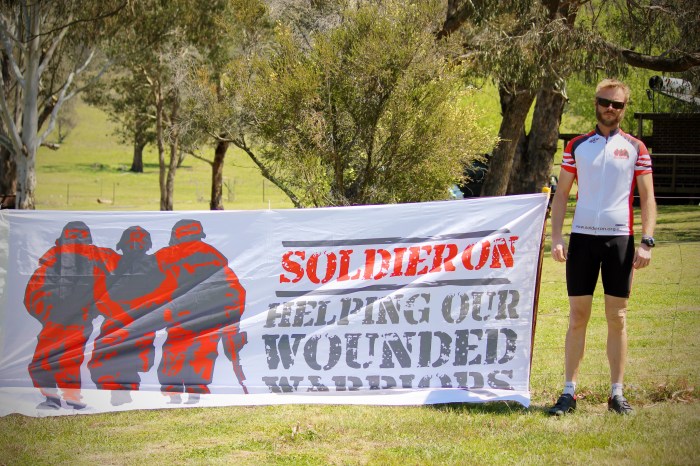
BOTB 13 035.:Soldier On at the Battle of the Beasts 2013:.

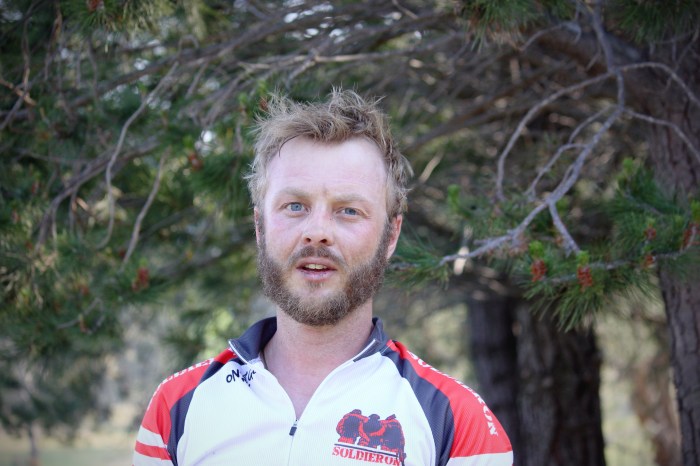
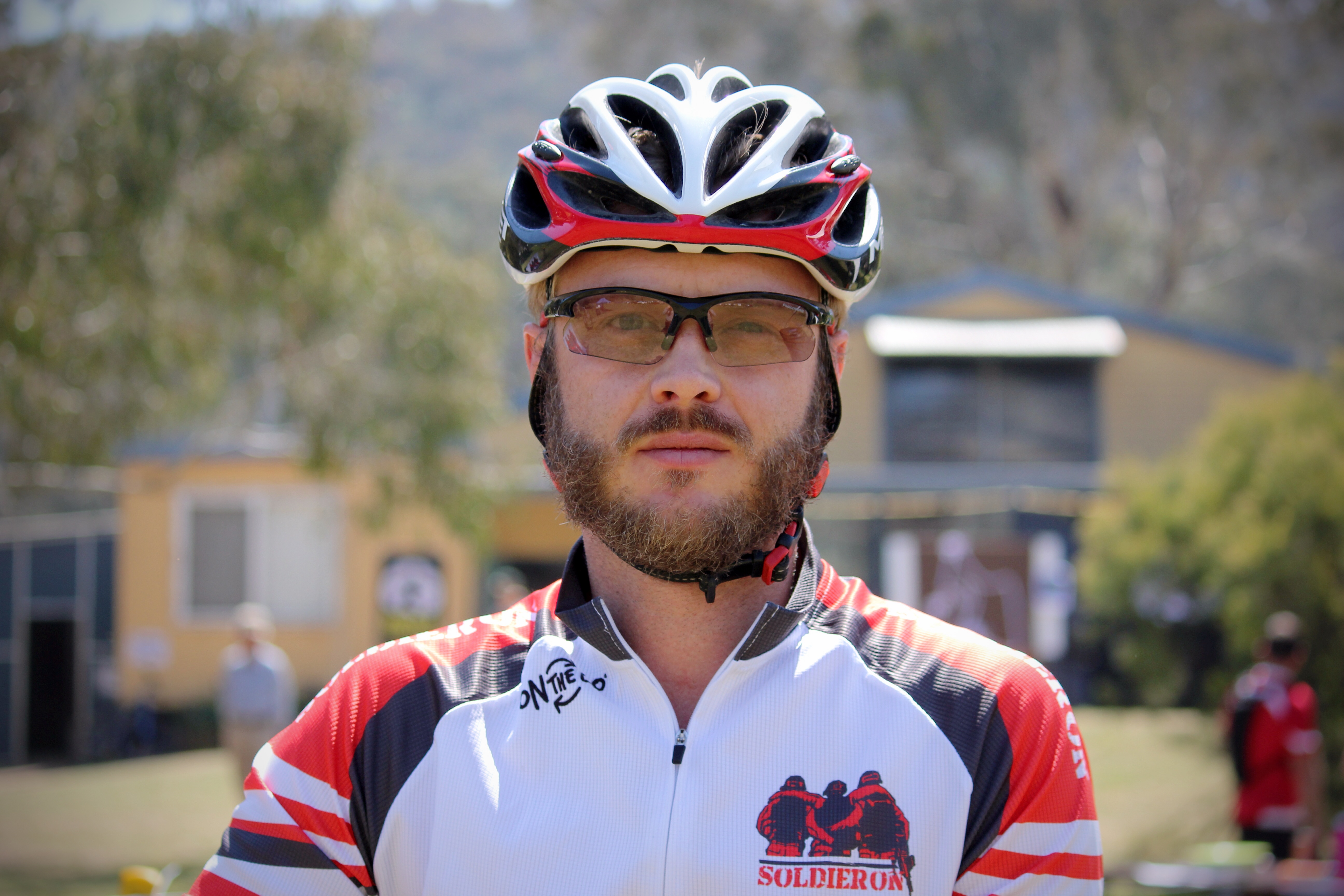
While Soldier On had a fairly comprehensive list of merchandise the one thing they didn’t have was a cycling jersey; and I figured the running shirt I wore last year wasn’t going to cut it for comfort and practicality.  So with the help of Meredith and John from Soldier On we came up with a design and had a set of jerseys made by On The Go Sports.

SG020.:Soldier On Jersey at the Scott 25hr:.

In just a few weeks of wearing the jersey in Canberra I had drummed up enough interest about my riding and Soldier On that it was time to start a Facebook page to get the word out to a wider audience.  So suddenly I was a mediocre mountain biker representing a charity whose mission it is to better the lives of wounded servicemen, servicewomen and their families.

It took me quite a while to realise that I was in fact one of these Soldiers that Soldier On aims to help.  And each and every-time I put on the jersey I was showing the public and other veterans that you can empower yourself with something as simple as riding a bike.

When it came time to register for the Battle of the Beasts, I signed up for both days of riding; the 42km Flowing Beast and the 72km The Beast.  The decision to ride both races was an easy one; I rode one race last year, so this year it was only natural that I would ride two races.  With the ongoing support from Luke and Dan from Beast-Worx, and John, Meredith and Anna from Soldier On; I started my 2013 fundraising campaign.

Regular updates on this Blog, Facebook, my fundraising page and Twitter became the norm.  Soon I was attracting “likes” and “followers” from as far away as the USA and slowly the donations started to trickle in.

I wanted to branch out more this year so I contacted a number of Defence-aligned companies and local Canberra businesses.  Out of the 27 companies/businesses I contacted only stepped up and helped out.  Pushys Bike Warehouse at Fyshwick supported me by providing awesome deals on products in store that kept my bike rolling.

Of the other companies/businesses only 6 replied; with 2 of the replies bordering on offensive to not only my request for support but to all Veterans of Australia.

The Lead Up Training
From the moment I decided to ride The Beast again I knew I would have to actually train for this years race.  Last year I lost almost 7kg through sweating, vomiting and post race bleeding from the kidneys (clearly my hydration/nutrition plan was a failure).

BOTB 048.:Post Beast 2012:.

Despite riding to work and racing quite regularly I knew I would have to put more kilometres of dirt under the tyres with more emphasis on climbing.  So I started a 4 month training regime; and posted my weekly training updates on this blog.  As the weeks turned to days and then to hours before the first race of the Battle of the Beasts weekend; I knew I was fitter and more mentally prepared for this years event.

The Preparation
My prep was simple; working bike, working body and enough fuel to keep that body going.  I had spent a lot of time working out what was the best way for me to keep hydrated and fuelled through a lot of trial and error.  I sat down the day before the Flowing Beast and mapped out a plan for both days of riding; and I’m very happy to say I stuck to the plan for The Beast.

The Flowing Beast on the other hand…well I’ll get to that soon.

The Flowing Beast – Saturday 19 October 2013
First of all I didn’t intend to actually race the 42km course.  With the Beast the next day and being fairly warm and sunny; I thought it best if I just pedalled around the course for two laps and saved my legs for the next day.
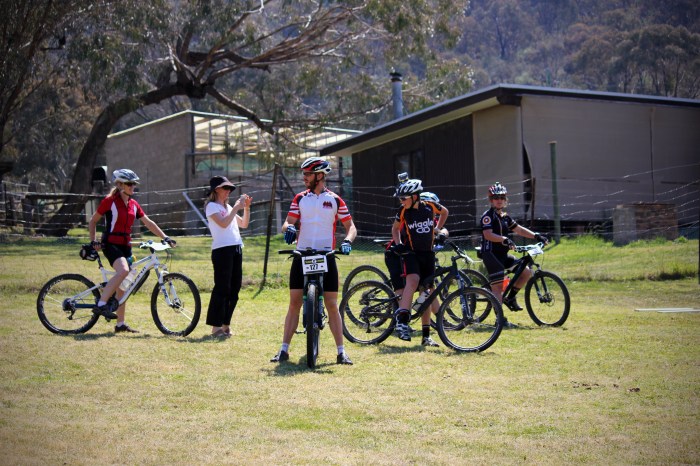
BOTB 13 047.:Drumming on the bars waiting for the race start:.
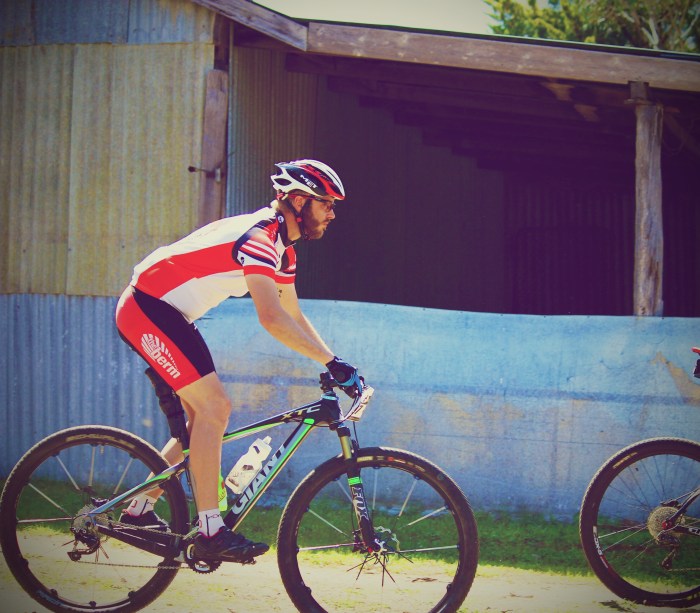
BOTB 13 052.:And we’re off for the Flowing Beast:.

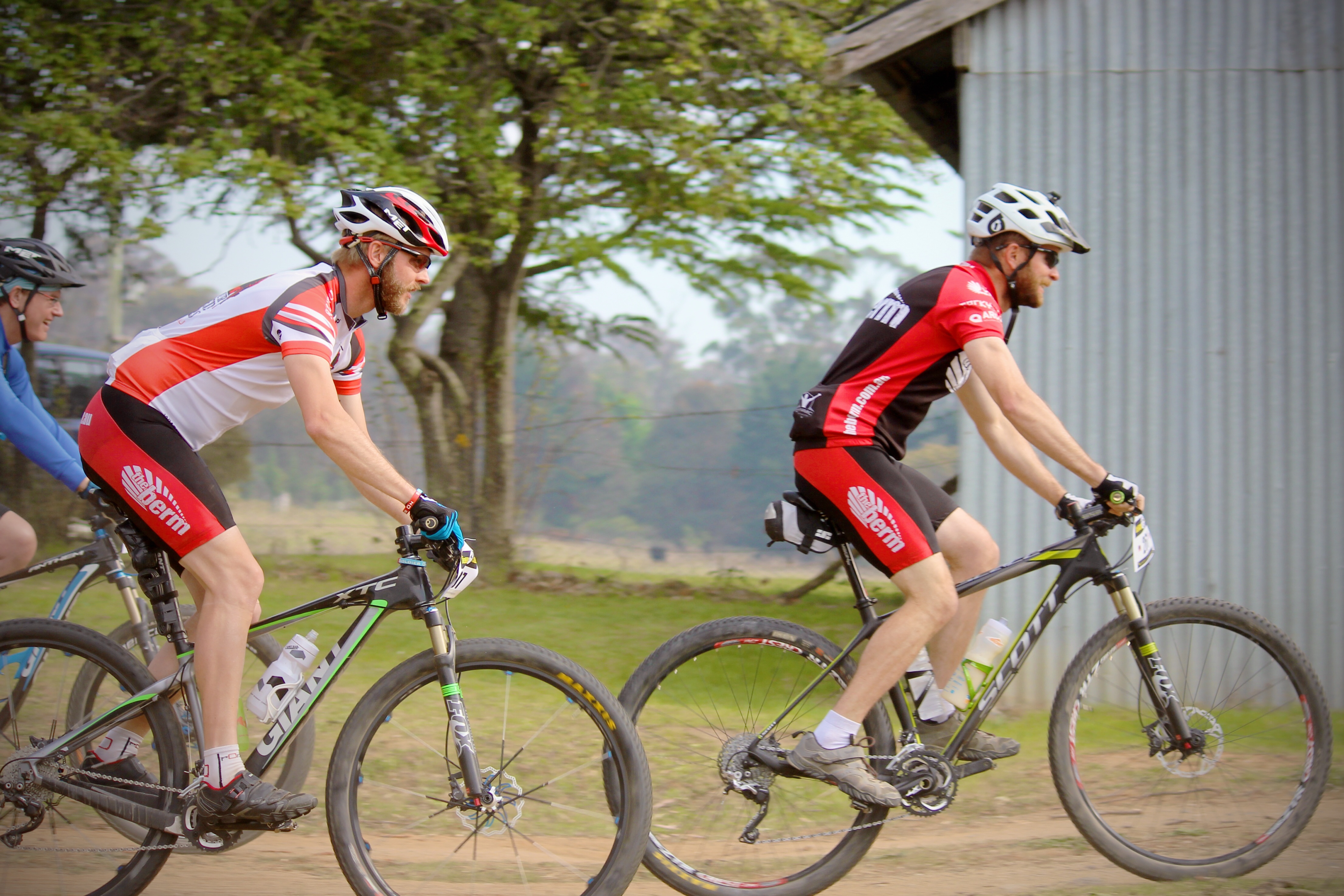
Well the original plan went out the window as soon as I found myself passing the majority of the field on the first fire-road climb.  Somehow I was in the lead pack just behind the Dynamic Motivation crew.   As we entered the first lot of singletrack I back off a bit and let a few riders pass; but I soon chased them back down as we entered the second half of the 21km course.
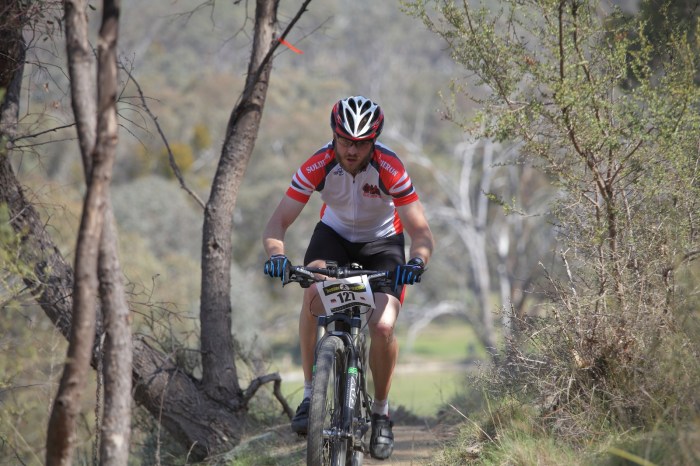
BOTB 13 057.:Brettski was out taking photos on the course… Pushing up the hill lap 1:.

As I headed through transition and swapped out bottles I found myself alone as I started the climbs of the first half of the course.  I kept looking behind me and anticipated the inevitable call of “track” signalling a faster rider was bearing down on me.  For the first time in a race ever, this didn’t happen.  In fact I started passing more and more riders as the end of the race drew closer.
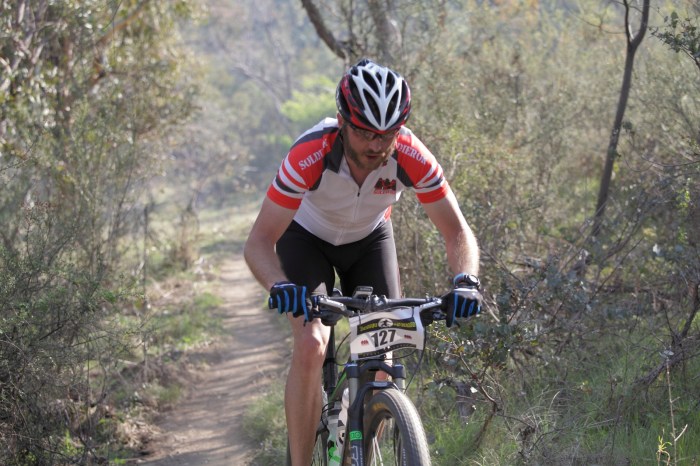
BOTB 13 065.:Brettski was out taking photos on the course… A little more pain this time on lap 2:.

I knew I wasn’t going to catch the elite riders but I also knew I was going to post a good time so I pushed on and ended up catching the race sweep before changing to the big ring and powering up the final climb and towards the finish line.
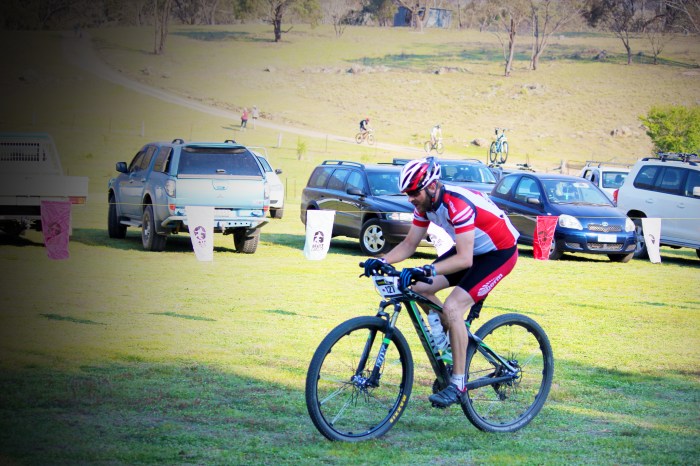
BOTB 13 060 BOTB 13 062.Crossing the finish line:.

By the end of the race I had ridden 44.2km in 2hr39min.  An effort I was very happy with; but something I would undoubtedly regret the next day when my legs would start screaming at me.

Something I’ve been doing lately is taking before and after race photos.  Below is my before and afters of the Flowing Beast; I lost 2.7kg during the days riding.

BOTB 13 045.:Before the race:.

BOTB 13 063.:After the race:.

The Beast – Sunday 20 October 2013
Fizz from The Berm said of last years race: “there are those that have done the Beast event, and those that have not“.  To be honest he is right.

Many riders complained before last years race that 72km on a fire-road was too easy.  Well considering the number of DNF’s for the race was in double figures I wasn’t surprised to hear the same people complain that it was too hard by the end of race day.

I wasn’t physically or mentally prepared for last years race but I finished and that was something I was incredibly proud of.  Along with finishing the race I raised $5’702 for Soldier On; which made the blood, sweat and tears worth it.  As I detailed in my 2012 wrap up it was the hardest thing I had done physically outside of the Army.

The day started with the long drive out to Caloola Farm and re-registration.  I had left my race plate on my bike from the previous day and considering it was attached to the roof of my car; it didn’t survive the drive home.

I attached the new race plate to Kate and set out to mingle with some of the other riders and the Soldier On crew.

With the bike ready, knicks and jersey on it was time for the pre-race brief from Beast-Worx Luke.  Along with the obligatory course info and safety brief; Luke called me out in front of the other riders and explained about Soldier On and introduced me and spoke briefly about my fundraising efforts.
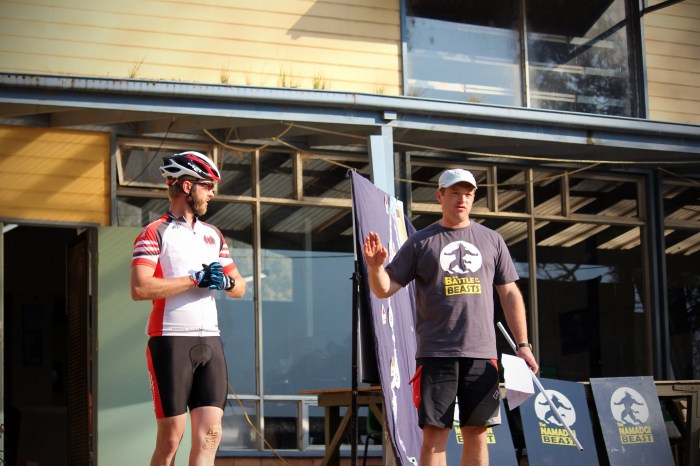
BOTB 13 072.:Out the front with Luke:.

Minutes later we were lined up near the start point.  Last years Beast’s Jeremy Ross and Anne Broadbent soon headed off with the elite pack chasing a few minutes later.
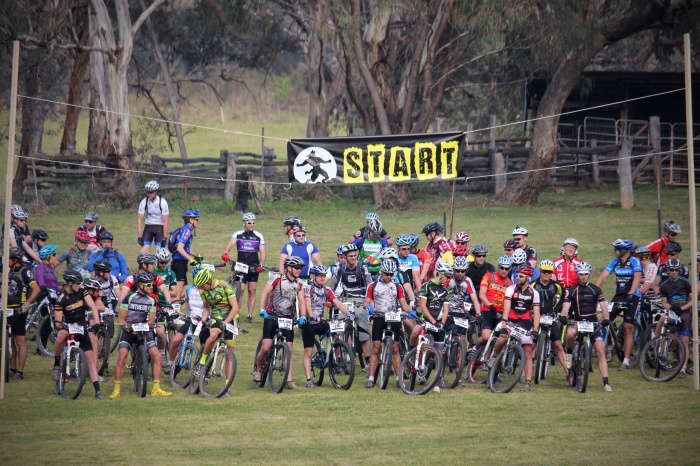
BOTB 13 077.:The start line:.

After the elites had crossed the first creek the rest of the pack headed off.  I had a plan committed to memory; I had broken the course down to 15km sections with an average speed and time-frame to achieve.
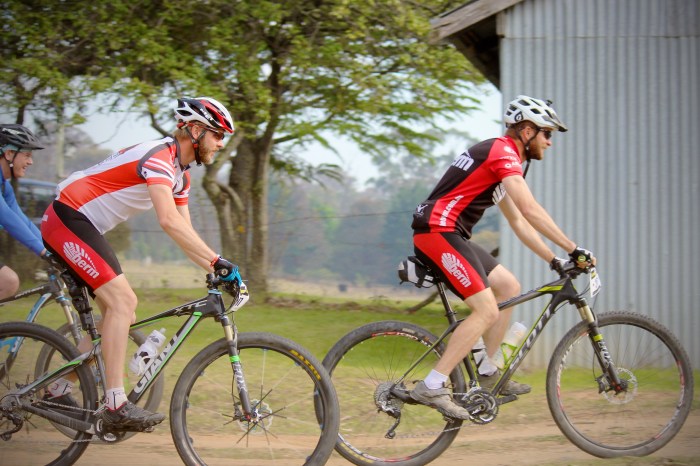
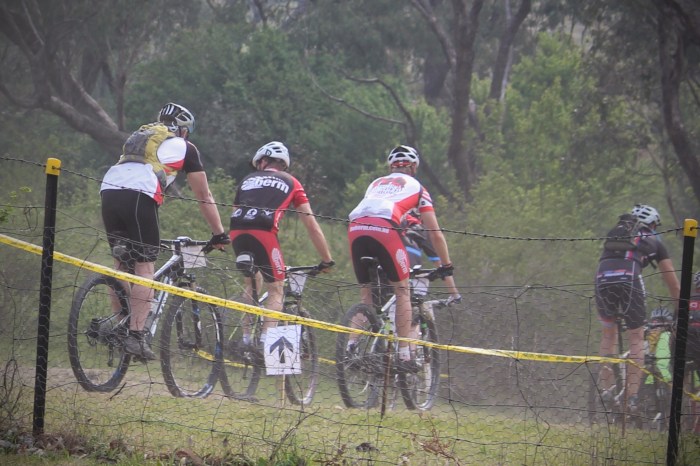
BOTB 13 084 BOTB 13 085.:I started with Adam “Rocket” Rolls before he powered off into the distance:.

Even after riding the Flowing Beast the day before I felt somewhat fresh and watched as the kilometres started increasing on my GPS.  With a different bike, sans Camelback and with a lower temperature and cloud cover this year; I was soon reaching checkpoint after checkpoint and riding up climbs I walked the year before.  On the steep climbs I did walk; I only dismounted when my speed dropped lower than I could walk pushing the bike.

With just two bottles on board I monitored my fluid intake carefully.  Despite the lower temperatures I kept to my plan and consumed food and water to plan and stopped at each checkpoint to refill my water.  While riding with last years riding-buddy Argo; I was making good time and resisted the temptation to push out.

Last year Argo took the lead and I followed him; without his encouragement I doubt I would have finished.  But this year I had to tackle this course on my own; I needed to tame The Beast solo and soon I found myself climbing the steep inclines and braving the steep declines by myself.

I was methodical in sticking with my riding plan and didn’t alter from it until the final 8km of the course.  After getting up Mt Soldier On by jogging to each water bar, resting for a count of ten and then repeating.  I was soon on the way to the finish line.  I had a moment of pure elation when I rode on the track named after me, “Dobbsie’s Run”, and screamed out a “F**k yeah!” for all the valley to hear.

I sped down the hill to the final checkpoint and refilled both of my bottles with the intention of throwing my riding plan to the wayside.  I had a time-frame I wanted to finish in and I was nearing the start of that bracket.  So I zipped up my jersey, changed into the big ring and started pushing to the end.

For the next 7km I didn’t see or hear another rider.  I ignored my GPS and pushed past my intended speed and soon I could see the main fire-road that would take me back to the event centre and the finish line.  Soon the last few kilometres disappeared, I hit the grass and rode under the finish line banner to end The Battle Of The Beasts for 2013.

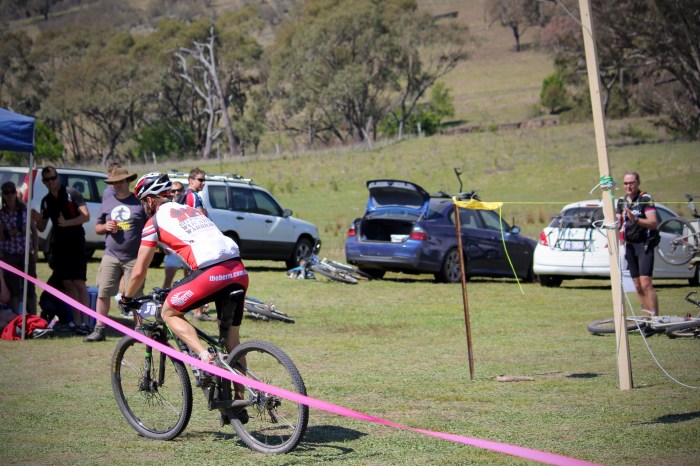
BOTB 13 088 BOTB 13 089 BOTB 13 090.:And just like that, it was over:.

It was a good feeling to finish and an even better feeling to know I wasn’t completely spent and had shaved off over an hour off of my time from the previous year.
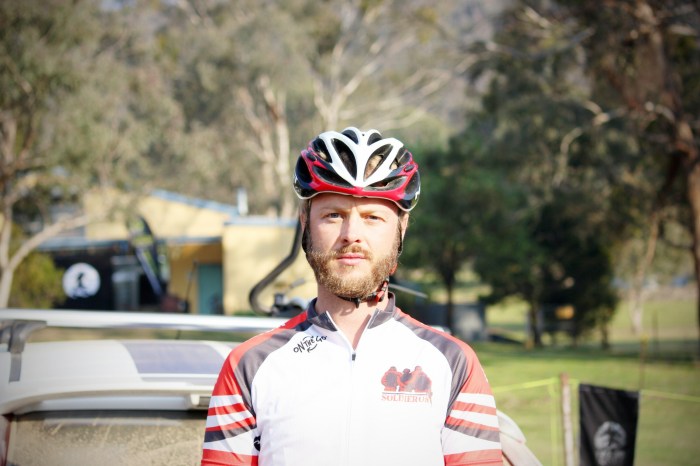
image.:Before the Beast:.

image.:After the Beast:.

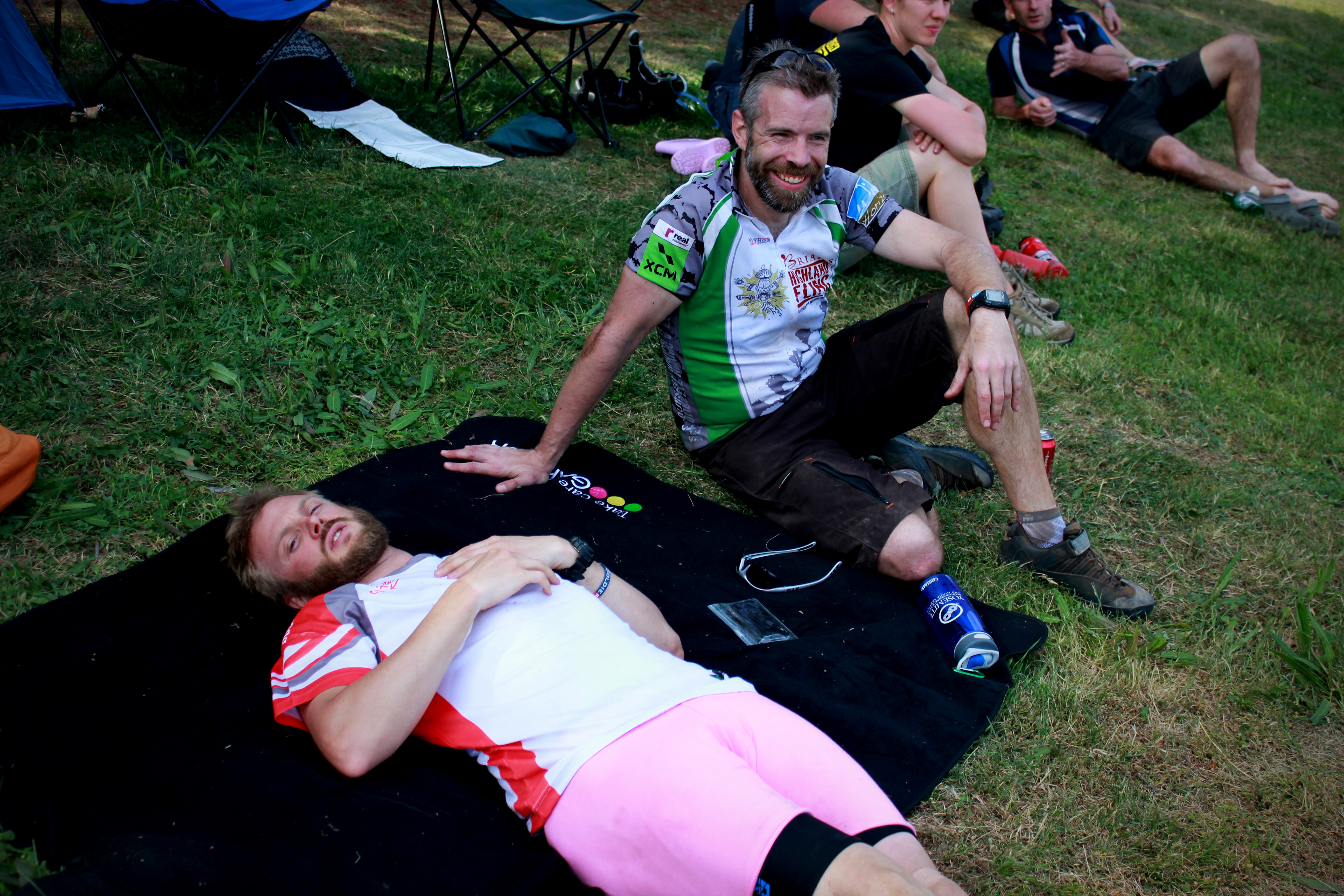
image.:After the first bit of real feed post race:.

The Wrap Up
I’ve read a few race reviews and wrap ups from other riders since the race finished. While most riders get the point of the race some others don’t seem to. It is not designed to be a test of endurance to rival the harsh conditions that servicemen and servicewomen face on deployment. If that was the case there would be the ever present risk of improvised explosive devices, indirect fire, small arms fire and multitude of other dangers that are thrown at our men and women in uniform. And believe me; no one that has ever experienced this would like to see others subjected to it.

The is a race designed to test you both physically and mentally by giving you an opportunity to tackle an incredibly difficult ride and raise much needed funds for Solider On. By completing The Beast you achieve what many others won’t attempt; you tame Your Beast. This race is designed to try and break you mentally, this race wants you to fail, and this race puts climbs in front of you that many people wouldn’t even consider riding. But by crossing that finish line you achieve what the Beast-Worx team wanted you to experience; you found that little something deep within that you rarely let out; you pushed through the pain and emotion and achieved your goal.

This is why we choose to ride The Beast; not because it is easy; but because it is difficult and because we need to test ourselves to be better.

Training Week In Review – Week 6

Week 6 of my training regime was almost the week I went back to recovery mode.  The plan was simple; I go away for a week at the snow and last year’s snowboarding lessons and practice runs would instantly comeback to me.  But in reality I was barely able to get upright on the board 12 months after my first attempt.

Snow 005

After a couple of lessons and some really good weather at Perisher I was finally enjoying my time on the board.  Some aches and pains started creeping up on me and by midweek I had an inflamed elbow, sore hip flexors and was starting to feel that familiar pain in my shoulder and left pec.

OLYMPUS DIGITAL CAMERA

By Friday I was well and truly feeling some acute pain in my shoulder from my body meeting snow at high speed.  This was confirmed on Saturday morning when I was unable to raise my left arm past horizontal; but I was quick to the chemist for painkillers and anti-inflammatories.  When the girly and I got back home we unpacked, put a load of washing on and went to our first Wedding dance lesson.

I woke up early Sunday morning with the intention of attending my usual Sunday Morning Social & Breakfast with The Berm; but alas my shoulder was still tender so I set to housework instead.  I did however get a quick ride in during the afternoon to stretch out my legs and test my sore shoulder.

A brief 25.8km on the bike, a wash and quick service for Kate was all the cycling action I got in this week.

BIKES 087

Why I Ride For Soldier On

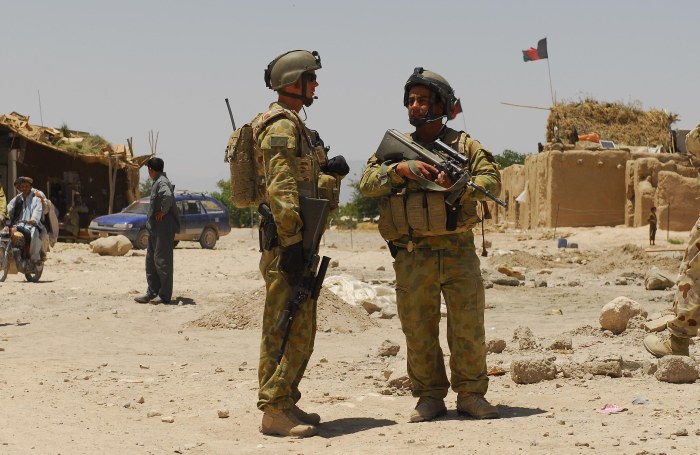
During my time in the Australian Army I served in both Iraq and Afghanistan. In 2009 after returning from 9 1/2 months in Afghanistan I knew something wasn’t right. I was aggressive to most people, wary of crowds, couldn’t sleep, had sleeping issues and started drinking heavily. Like most Soldiers, I didn’t want to talk about my issues in case I was seen as being weak and God knows there were others that were worse off than me. So I kept quiet and not surprisingly, things got worse. I didn’t want to spend time with other people and I started thinking this world would be better off without me.

After several days of no sleep, heavy drinking and almost wrapping my car around a pole on purpose, I approached and asked the Senior Soldier at my unit for assistance. Instead of the words of encouragement and avenues of support I expected from a person of that rank, I was met with “harden the f*** up and get over it”. In that one moment I felt defeated, I was dismissed by the one person who is solely responsible for the welfare of the Soldiers subordinate to them. If this person wouldn’t help me and I could no longer help myself then what was next?

Luckily for me I posted into a new unit and found the support I so desperately needed from my new workmates. After a while I finally found the courage to tell my family I needed help. Road blocks were set up by another Senior Soldier and my desperation grew greater until I hit rock bottom; I attempted to end my own life. It was only when my life was at its darkest did professional help eventually appear; it was provided by a civilian agency and organised by a very kind Navy doctor.

With only the bare-minimum of support coming from within the ADF I relied heavily on my family and friends for the ongoing support I needed. After having all support services cut off after I left the Army and the near-impossibility to secure an appointment to see a DVA accredited councillor; I started talking about my issues with others and realised that many other Soldiers had been experiencing the same obstacles; especially those that had separated from the ADF.

This is the reason I am so passionate about the provision of mental health care for returned veterans. The system is not yet good enough and so we rely on each other to be open and honest for ongoing support.

Soldier On helps by providing something other support services do not. They provide hope, confidence and a hand up – not a hand out.

Battle Of The Beasts – Update #3

Well it’s been a big week for my fundraising. After a disappointing few weeks with trying to get more exposure for the upcoming ride I had some promising leads with securing some local media interviews for radio (thank you Jeff C!) and a couple of Canberra’s newspapers.

The donations have been steady, but the Facebook ‘sharing’ and Twitter ‘retweets’ have been very active; which helps raise awareness for Soldier On. I even managed to set up a Facebook Page: Riding For Soldier On – Doing My Part For Australia’s Wounded Warriors to help keep my Facebook friends and Twitter followers up to date.

From a training perspective I’ve spent a fair bit of time on the bike and should top 200km by the end of the week. I’m not quite 100% with my pec and shoulder but from a fitness and endurance perspective I am pretty close to being at my pre-injury standard. And most importantly, after a taking a pretty big confidence hit courtesy of an overzealous Government Department; I’m feeling better and determined to work just as hard and keep rocking the apple cart.

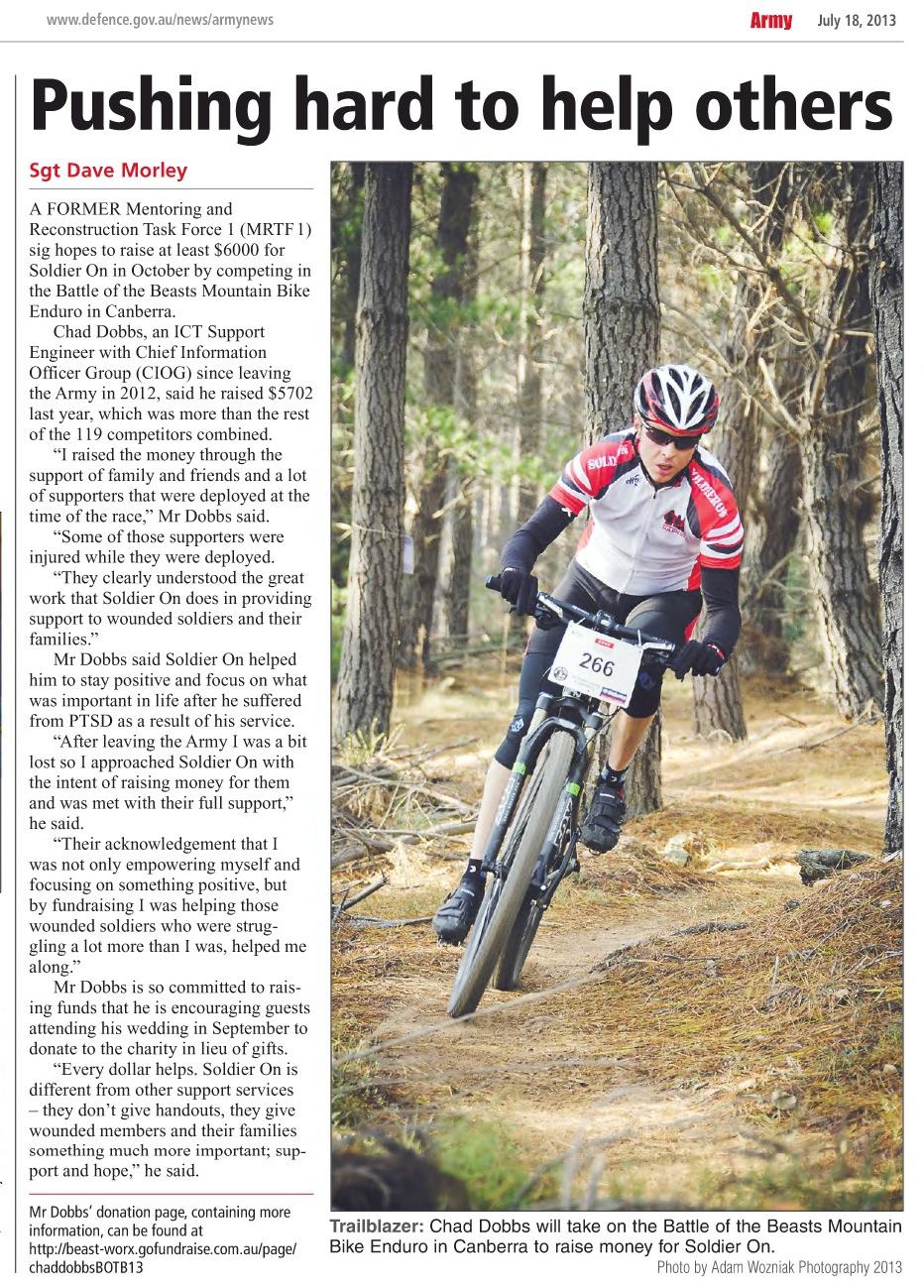
During the week I had an article about my fundraising published in the Australian Army News. This is great for exposure within the ADF and Australian Army in particular and will hopefully be noticed by some of the Senior Ranks. Maybe they will start to realise that a handful of dedicated individuals (mostly ex-Soldiers living with PTSD) do more work for Veterans Support Services and PTSD education than they do sitting in their ivory towers dismissing mental health issues among the ‘enlisted men’ </END RANT>.

Army News Jpeg
$1’815 has been raised so far and with three months to go there is plenty of time to better last years amount.

PLEASE GO HERE TO DONATE: http://beast-worx.gofundraise.com.au/page/chaddobbsBOTB13

Riding For Soldier On – Australian Army News

A short article about my fundraising for Soldier On for this year’s upcoming Battle Of The Beasts Mountain Bike Enduro has been published in the 18 July 2013 issue of the Australian Army News.

Army News Jpeg

Army News Article PDF Version

18 July 2013 Army News Edition 1309 PDF Version

Standing In The Shadow Of The Green Giant

As more and more returned veterans put their hands up and ask for help the processes for support services are steadily improving.  Thanks to people like MAJGEN John Cantwell the stigma that is attached to persons with PTSD is slowly disappearing.  It takes a lot of courage to speak openly and honestly about an issue that often results in self-harm, substance abuse and even suicide.  For a high-ranking, high-profile ADF member to stand up and acknowledge that his service to his country has caused a mental illness is incredibly brave.  By shedding his uniform, rank, and medals; John Cantwell has empowered other returned veterans to admit that they too need assistance.

Recognising that there is an issue is the first of many steps towards recovery and rehabilitation.  The second step is often the most difficult and at times the point where a person in uniform will retreat and hide; raising your hand and asking for help.

The Australian Defence Force and Australian Army in particular are constantly in the media tackling varies issues such as sexual misconduct and gender equality.  While both are extremely important in their own regard, the spotlight rarely shines on another equally important issue; the culture towards members with PTSD and depression.

I’m not going to pretend I know about every single ADF member’s details about living with mental illness.  I know about my own experience and also others that were brave enough to share their stories with me.  I struggled for months before I put my hand up and asked for help.  As I’ve stated before I was rebuffed by the one person at my unit whose primary duty it is to look after Soldier’s welfare.  Being told to “Harden the fuck up” struck a huge blow to my confidence and I started to withdraw from those around me.

Others have related the same kind of experiences to me with regards to their first encounters within the chain-of-command.  Some superiors ridiculed and some provided that much needed assistance.  It took several months for me to ask for assistance again.  Many around me were extremely supportive; there were a small group of supporters from the Army that fought tooth and nail to get me the help I desperately needed.  But there were others that seemed determined to prove that what I was living with was my fault and I should get over it. 

There were words spoken to me in private while I was at my lowest point which were delivered with such venom a day rarely goes by that I don’t hear his words in my head.  “You are a fucking lying soft cunt”.  These words were delivered at me as I lay in a hospital bed awaiting the arrival of my parents from interstate.  I had suffered an anxiety episode so severe I admitted myself to an Army hospital.  This would also be the moment where others further up in my chain-of-command became aware of what was happening and after almost 12 months of living with PTSD, anxiety and depression I was finally able to acknowledge I couldn’t continue without help.

While my story is not uncommon it is certainly not the norm.  Many ADF members ask for help and are looked after very well with counselling, rehabilitation services and flexible working arrangements.  One of the first things that occur once an ADF member seeks professional help for depression, anxiety or PTSD is the implementation of restrictions on their terms of service.  You are no longer allowed to do certain tasks that are deemed to be dangerous to yourself or others and your career and posting options are effectively stalled.  While many of these restrictions are incredibly important and beneficial, such as no access to weapons or limited field time, others such as removal from your normal job into an administrative role often causes more undue stress.

I had several restrictions placed upon me when I was posted to Brisbane.  No access to weapons, security clearance review, no promotion courses, regular drug testing, six month alcohol ban, weekly performance reviews, fortnightly counselling sessions and no field exercises among others.  At the time of my new posting I was incredibly fatigued, I was 10kg under my ‘ideal’ weight, insomnia plagued me, anxiety attacks were the norm and of course I was acutely depressed.  My new unit; in particular my Troop Commander and Troop Sergeant were incredibly supportive; and as I got to know the rest of the Squadron members I was able to continue my rehabilitation with very few interruptions.

My life was well and truly back on track and my symptoms had abated.  I had met and started a relationship with my future wife and I was enjoying the availability of time to spend with my family; in particular my Twin nieces.  But as with all things in the Army, resources were stretched thin and when my restrictions of service expired I was called upon to step up and take on extra responsibility.  I relished the opportunity to prove my worth and performed some very big tasks with very limited resources and manning.

When the time for the new posting cycle to be reviewed came about I was bounced back and forth between a heavily constrained Career Management cell and a senior Soldier that should never have been allowed to look after Soldier’s welfare and career issues.  In the end my career plan was completely discarded and the aspirations of another Soldier were forwarded to my Career Manager instead.  During this incredibly stressful period I spent the majority of April to August on exercise in Northern Queensland with very little consultation on my next posting.  By the time I was actually consulted about what locality I may have wanted I was given one option; Kapooka, home of the Army Recruit Training Centre.  It was decided that I was to become a Recruit Instructor.

During this time I was having depressive episodes and anxiety attacks.  However instead of shying away from the issues that were causing this; I tackled them head on.  I solicited the advise of family, friends and colleagues on the pros and cons of taking this unwanted posting or leaving the Army; my only two options.  Just as many people advised I accept the posting as those they suggested I discharge and find a new job.

Finally I gained employment outside of the Army and started my separation process.  This is usually a long and drawn out process, however as it was nearing the end of the year and I had to move interstate; my paperwork was rushed through the system.  My unit was incredibly helpful during this stage with many of my in-trade superiors expressing that I had made the right decision and that “The Army had changed”.  It was true; I no longer felt like an individual Soldier, instead I felt like a number that was being shuffled around a giant spreadsheet.

I left the Army without a farewell, without a discharge certificate being presented and without any ongoing assistance for my depression and anxiety.  Months later, after I was settled into my new home and job, did I start realising I was relapsing; I was missing my friends and previous life.

Without the support of the ADF I relied heavily on my family and friends for the ongoing support I needed.  I did reach out to the Department of Veterans Affairs after the death of my Grandfather and was placed on a six-week waiting list to see a councillor.  Two days before my appointment I was advised it had been cancelled and my rescheduled date was another four weeks away; I never turned up to it.  Instead I started talking about my issues with others and realised that many other Soldiers had been experiencing the same obstacles as me especially those that had separated from the ADF.

This is the reason I’m so passionate about the mental health of returned veterans.  The system is not yet good enough and so we rely on each other to be open and honest for ongoing support.  The Australian Army was built on courage and mateship.  Those that speak up about their battles with mental health issues and the lack of ongoing and adequate support services are continuing that tradition even if they no longer wear the uniform.