Remembrance Ride 2014 – Part 3

DAY 2 – Wednesday 23 April 2014 (Mittagong To Collector)

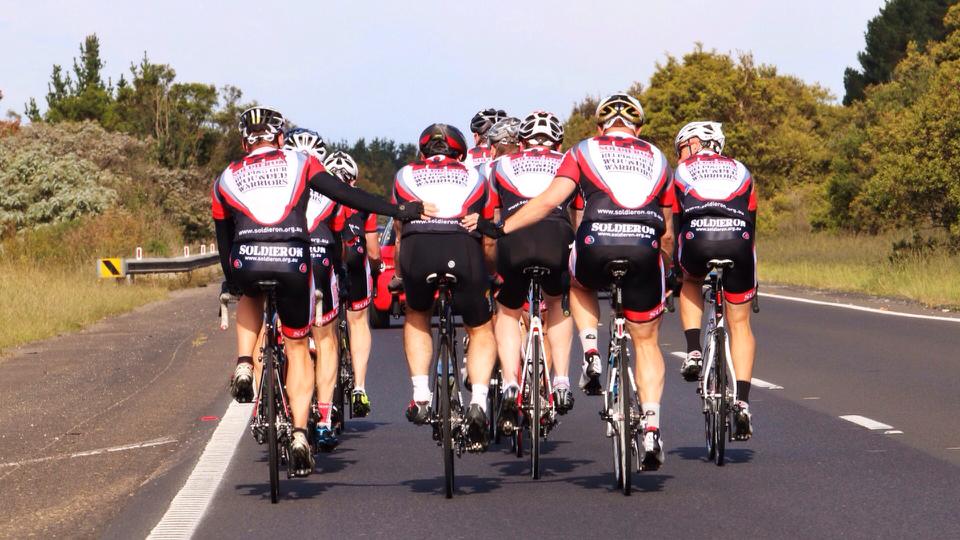
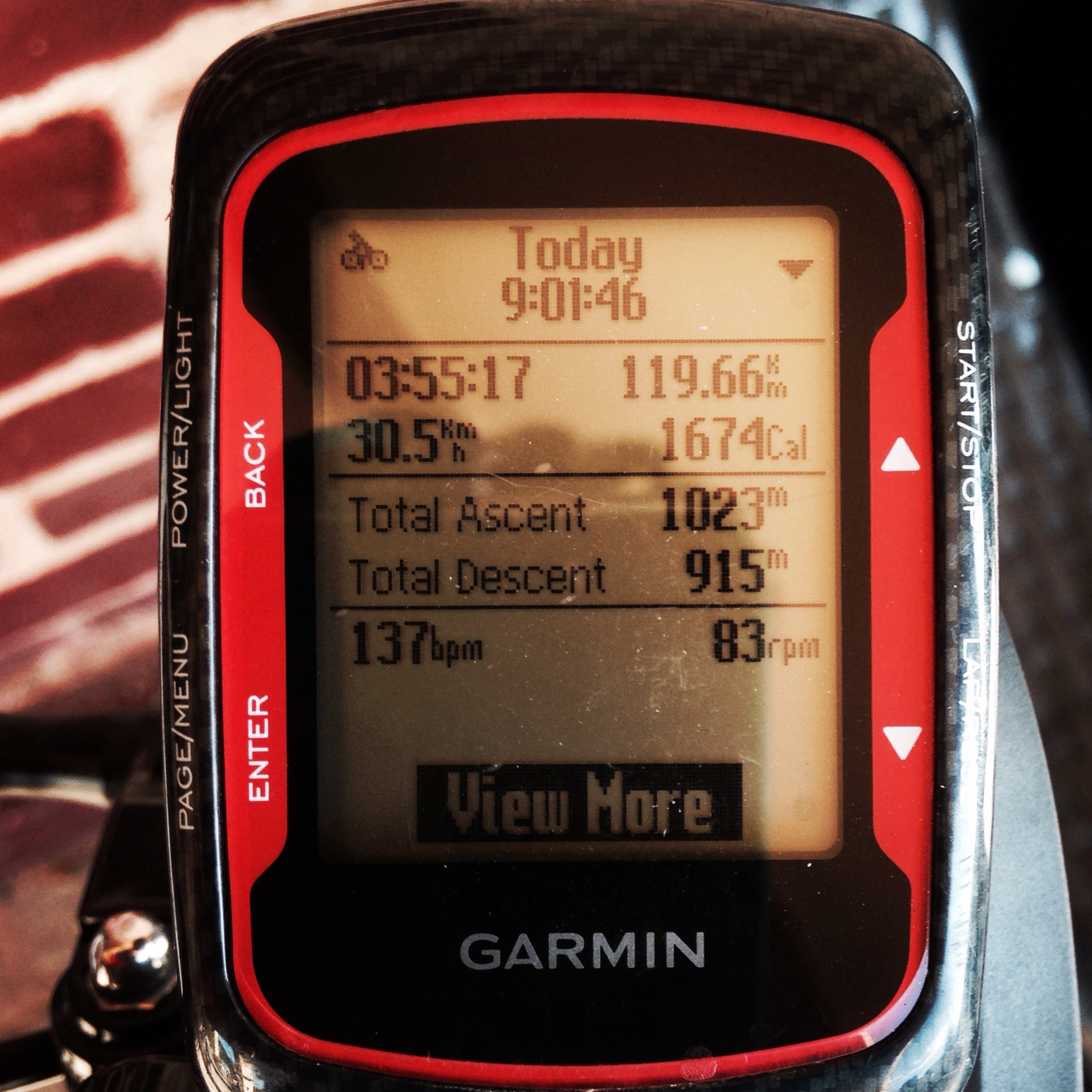
The second day of our ride along the Remembrance Driveway would see us ride 120km along the Hume/Federal Highway into Collector.

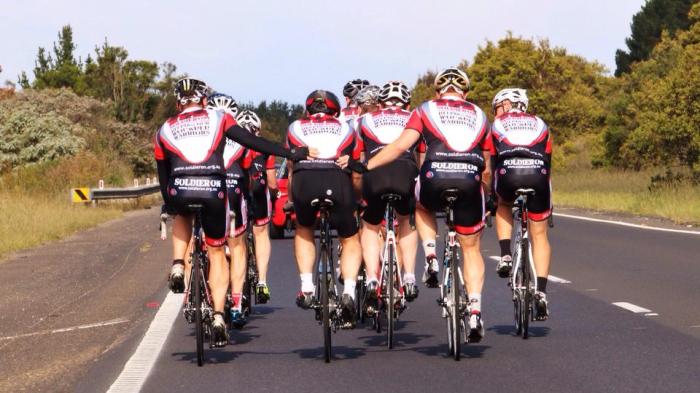
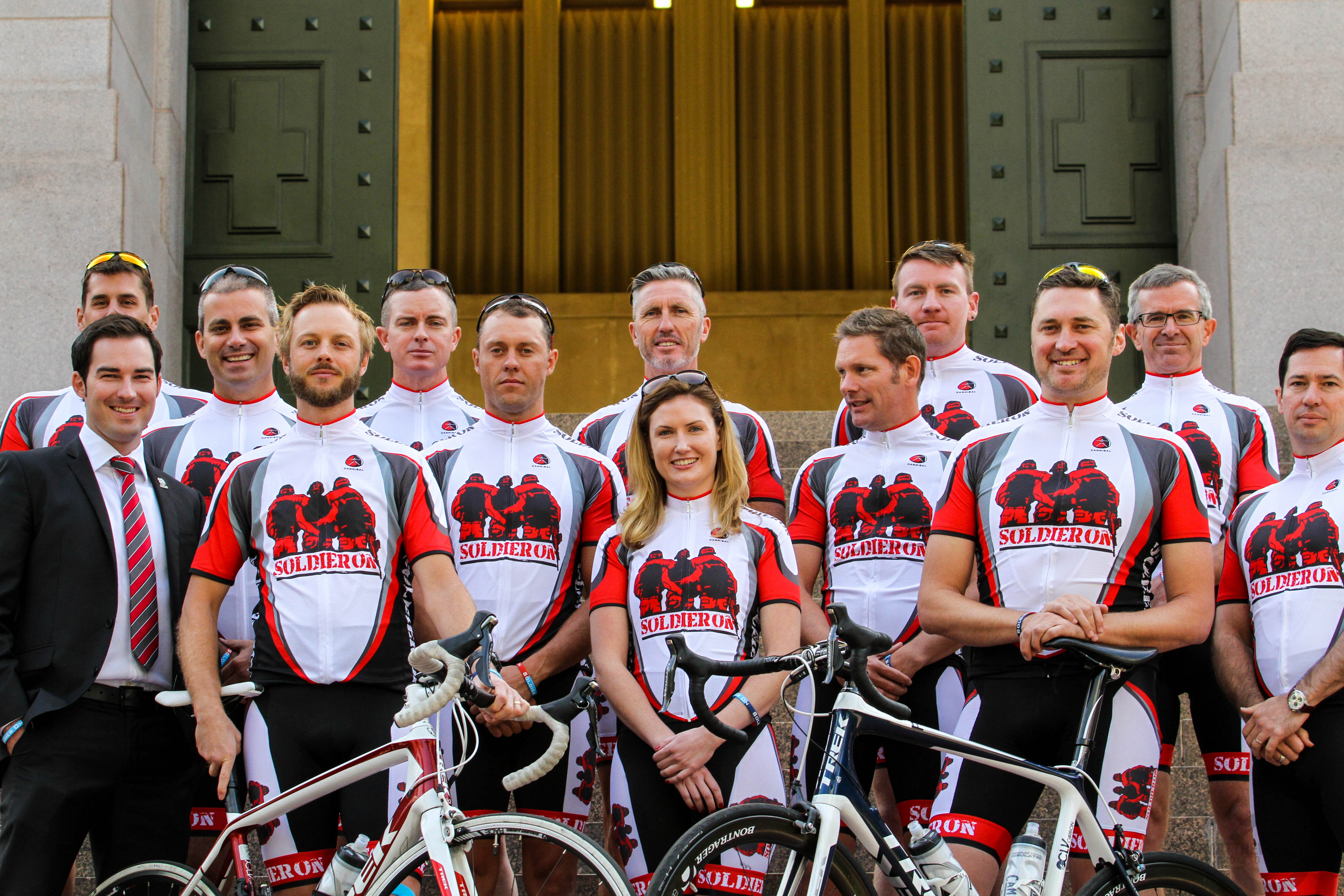
We pushed off at 09:00 after breakfast and coffee with the Soldier On Team in front of the Citadel Group riders.  Scott wanted us to start riding together and getting used to being side-by-side and wheel-to-wheel.  It wasn’t long before we were finding our rhythm and we were cruising down the Hume Highway at speed.

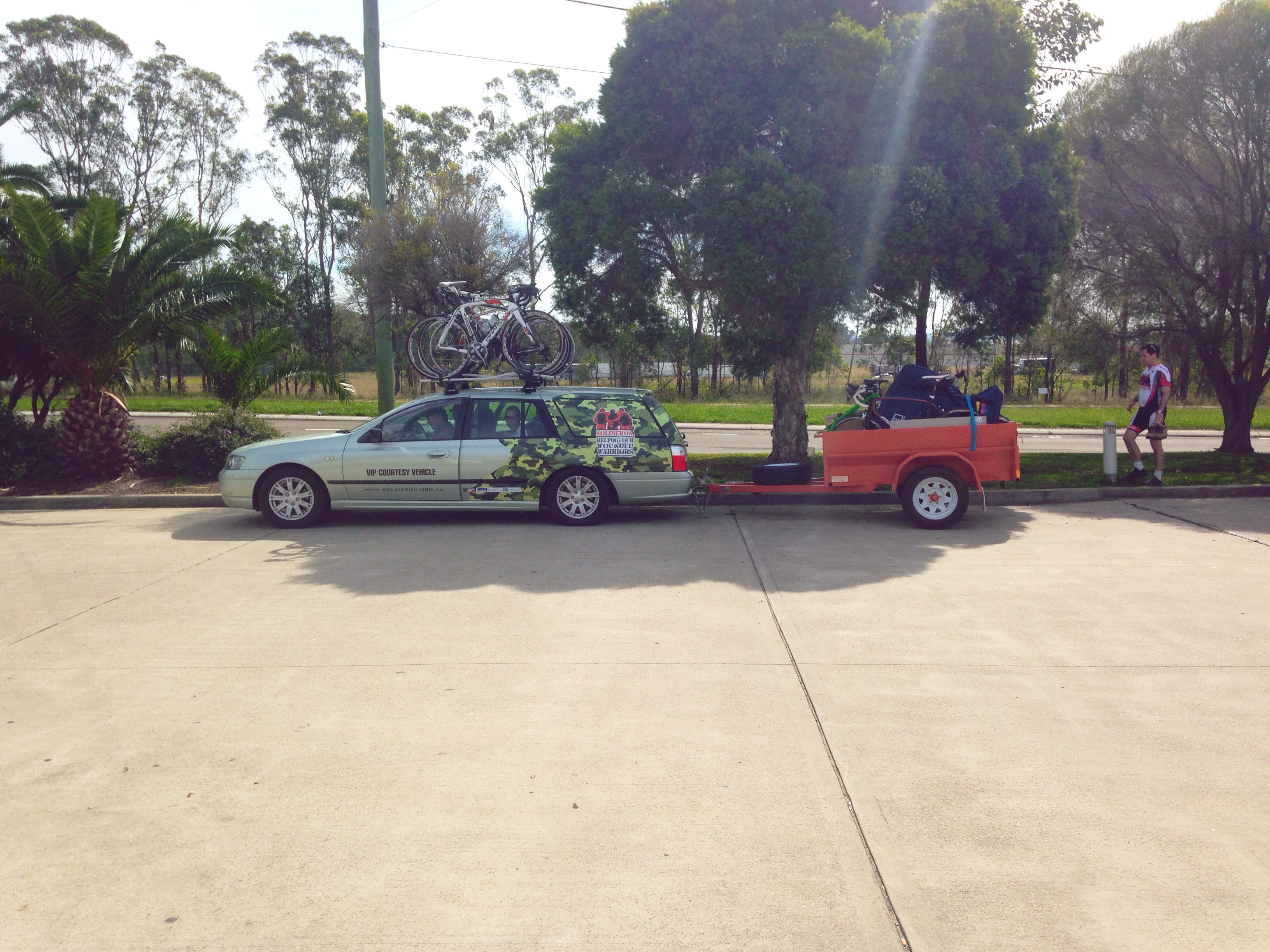
Our first stop was at the 32km mark with a couple of the sponsor riders opting to hop into to the support vehicles and rejoin us at the end of the day (to be honest this was the smart thing to do considering the climbing and fast pace that would soon be occurring).

Our second/lunch stop was at the 74km mark with a decision being made by both Scott and Soldier On event organiser TC that the slower riders would ride in the support vehicles until the 105km mark for safety reasons.  We were unable to average a safe speed, particularly on the long climbs, and it was becoming increasingly more dangerous with large trucks not being able to see us as they crested the hills.  This would definitely explain the burnt rubber we were smelling shortly before this stop.  While it wasn’t the most popular decision, it was the right one.

Our next 30km was an ad-hoc training session from the one and only Scott Sunderland.  It was fast bunch riding; something I am not very experienced with.  It certainly got the heart rate up and I was somewhat relieved when we eased up on the pace and the slower riders rejoined us for the roll into Collector.

RR2014 019
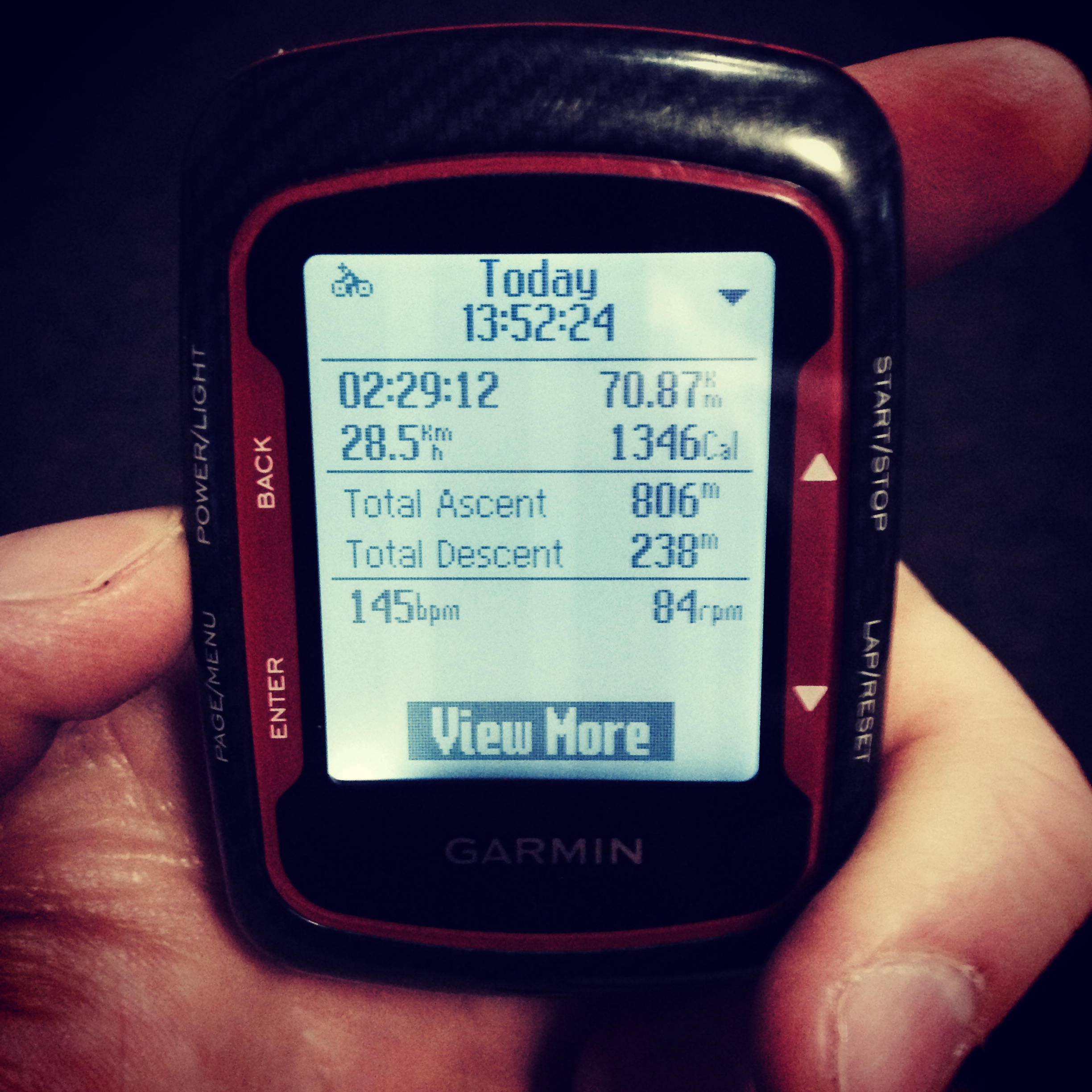
.:The end of Day 2 – Mittagong to Collector:. http://app.strava.com/activities/133569372
RR2014 021
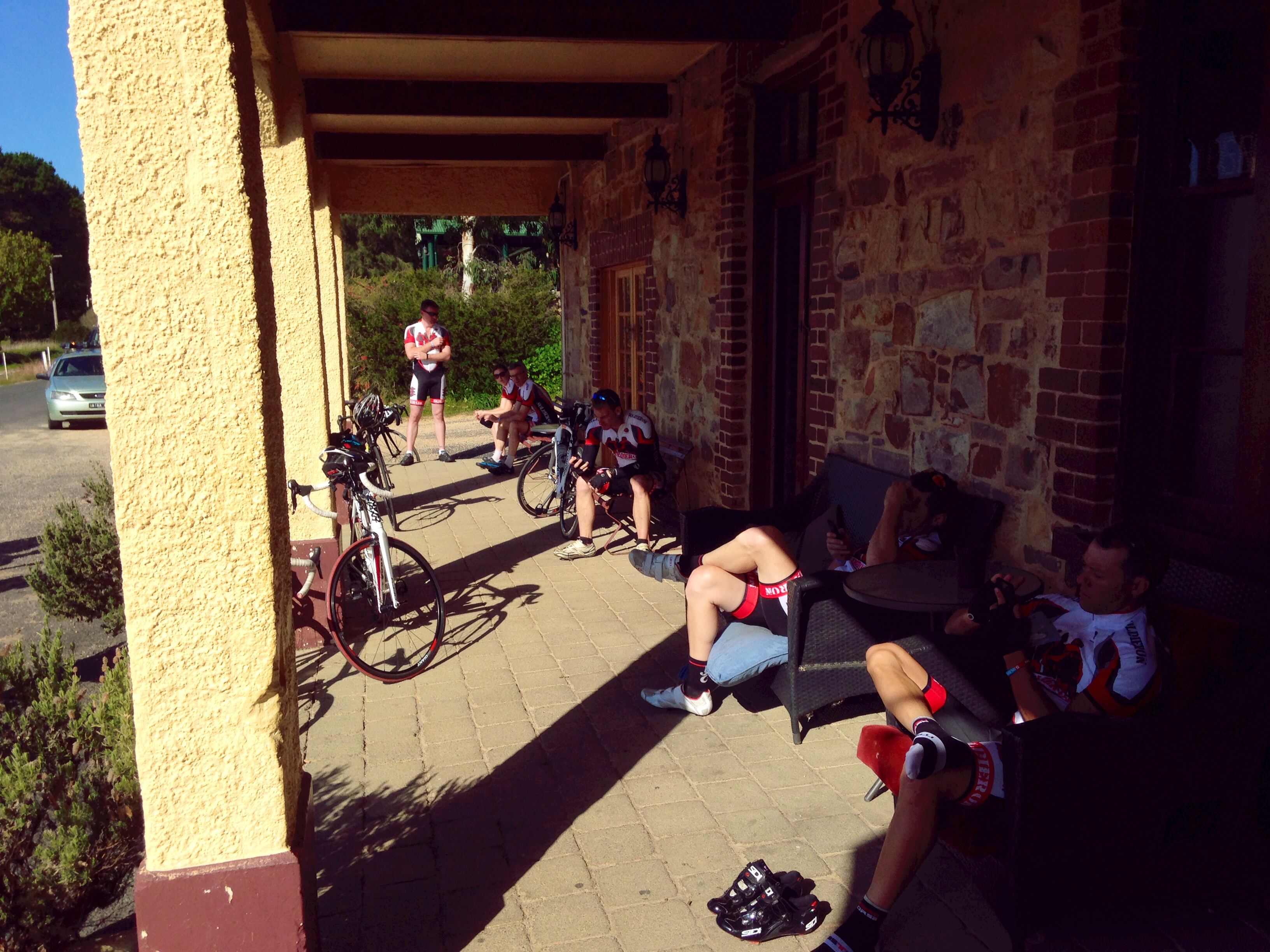
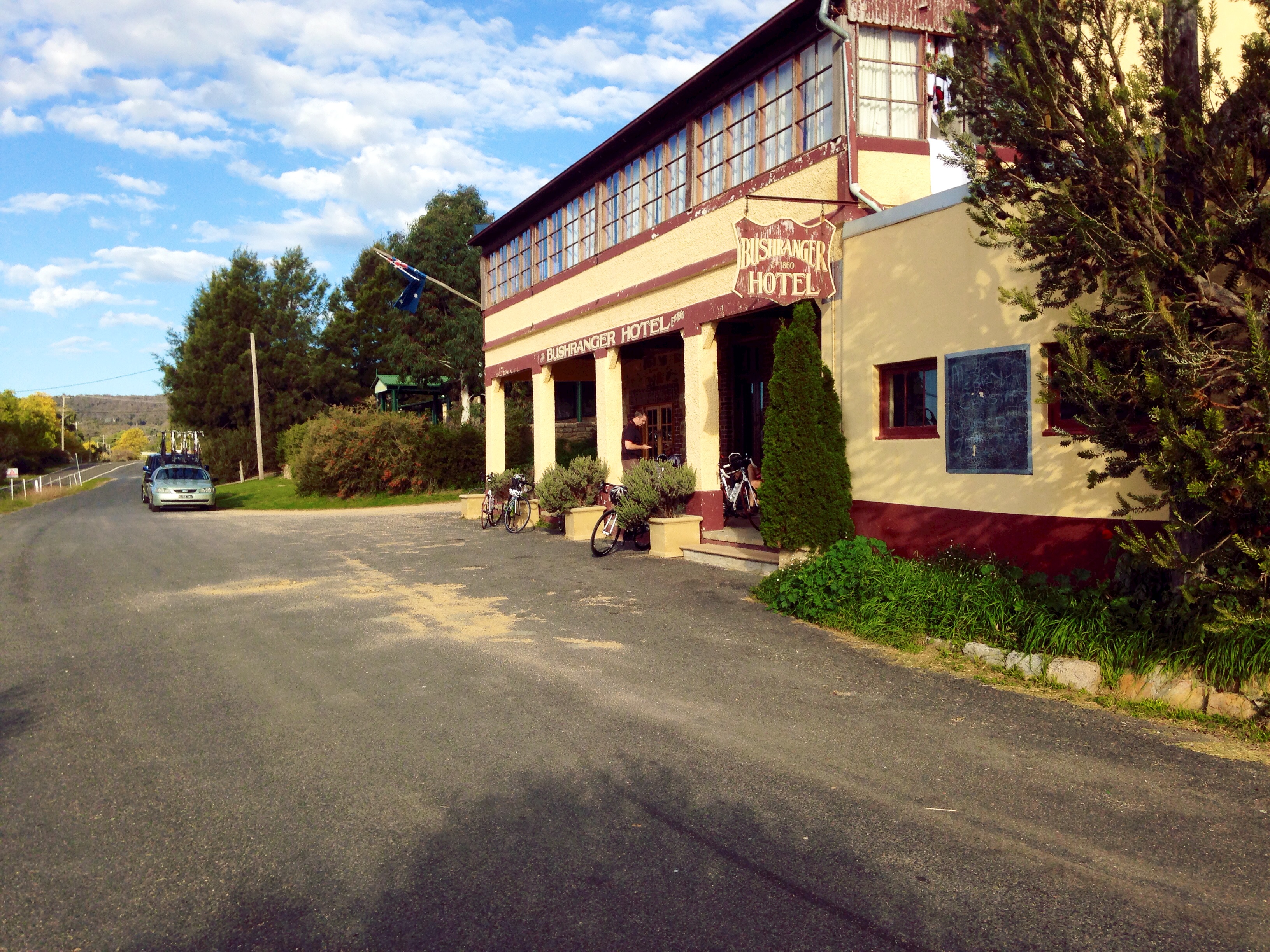
.:We arrived at the Bushranger Hotel In Collector:.
RR2014 023
.:The Bushranger Hotel:.
RR2014 024
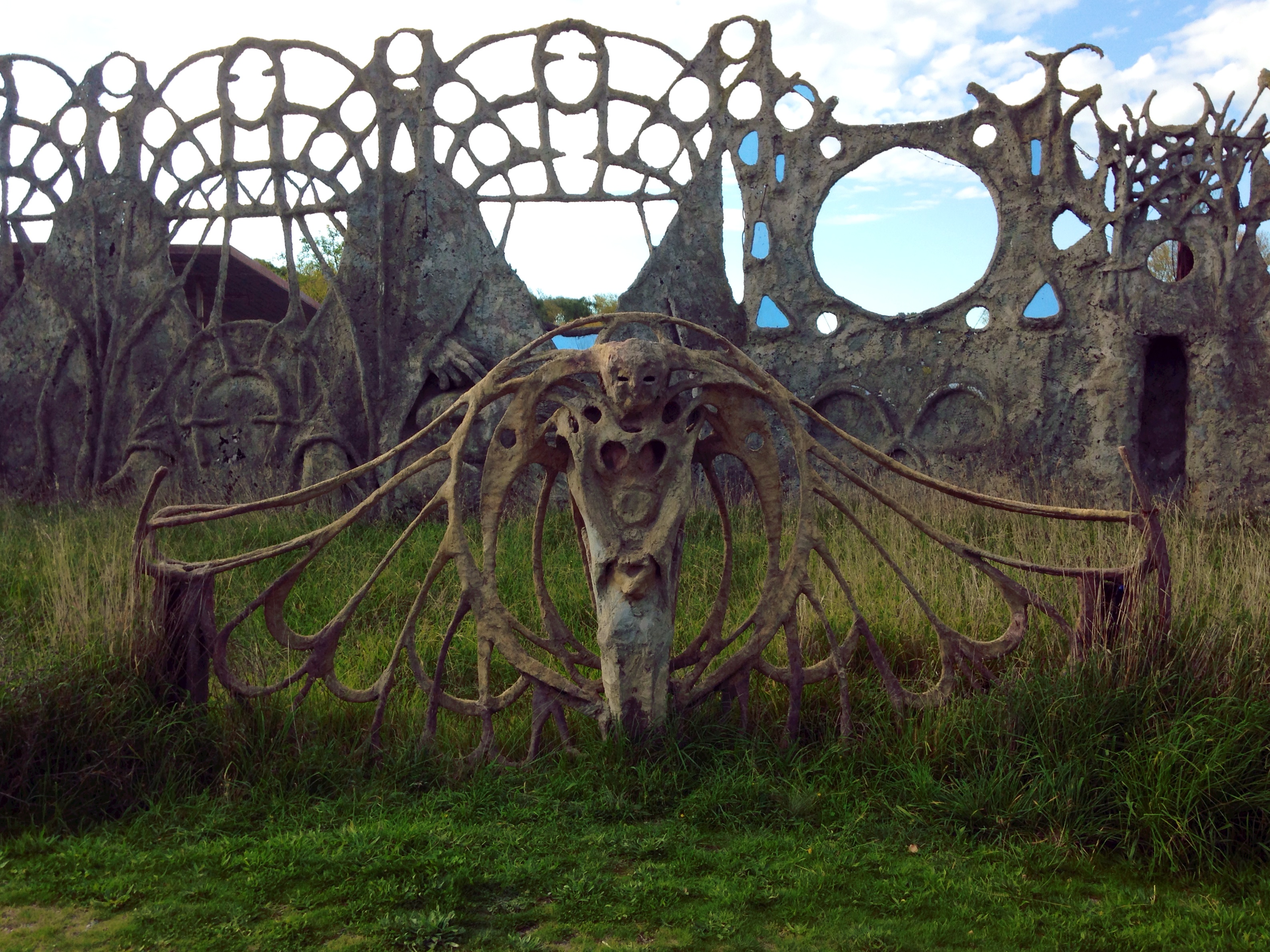
.:The thing that knocks on your bedroom window at night:.
RR2014 028
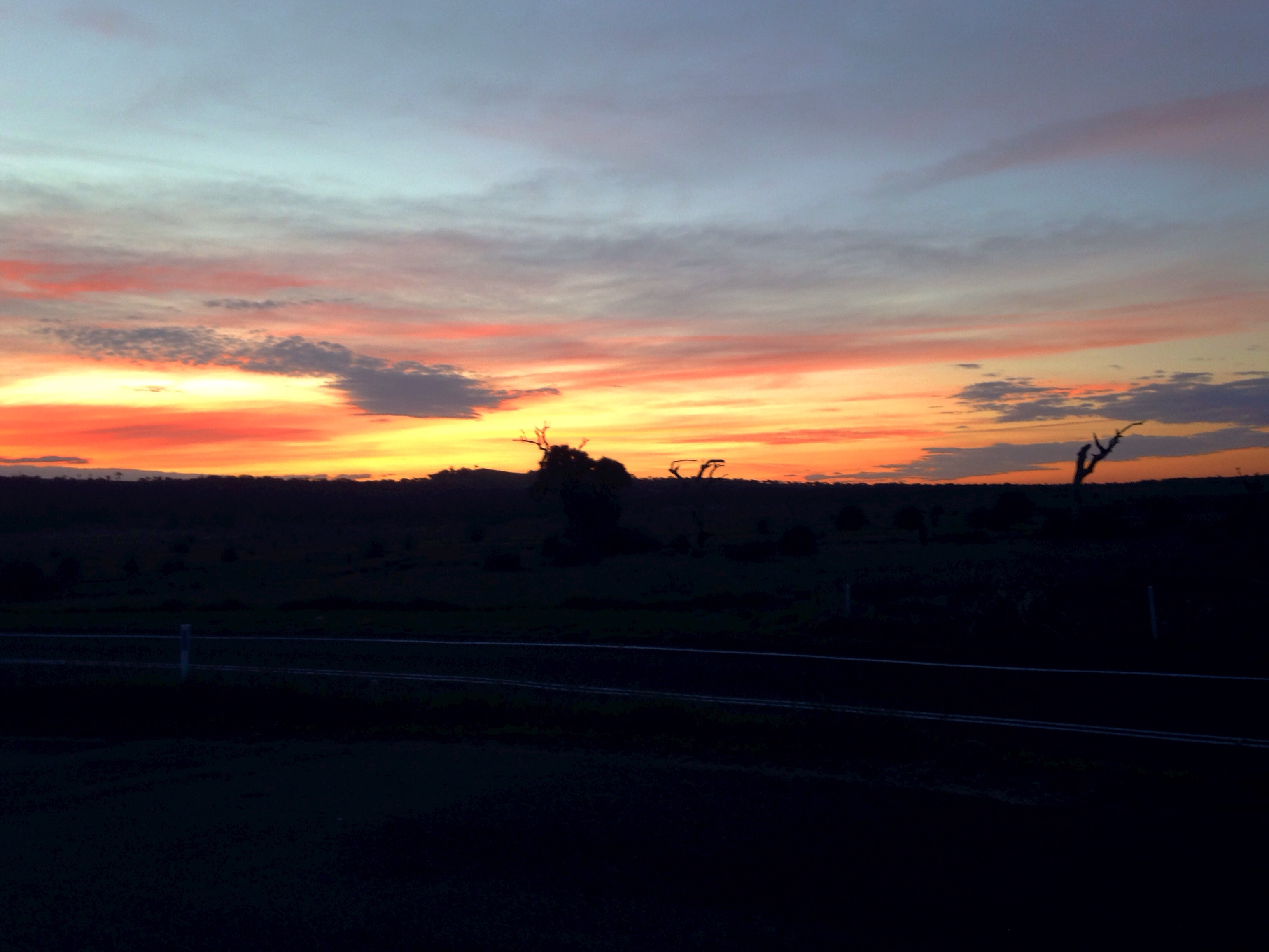
.:Sunset at Collector:.


DAY 3 – Thursday 24 April 2014 (Collector To Canberra – The First Bit)

Our final day of riding started early; before dawn.  I was up, packed and ready for the ride to the Lake George lookout where we would meet Prime Minister Tony Abbott for the final leg into the Australian War Memorial.

RR2014 029
.:The other Chad playing barista:.While the others were waiting

While the others were waiting patiently to start the final day’s riding, I was on the phone to Mix 106.3’s Kristen & Rod.

CLICK HERE to listen to my interview on MIX 106.3 Interview With Rod

Our ride to Lake George was extremely quick and I soon regretted my decision to wear my wind-stopper jacket.  Scott was pushing us along the Federal Highway at over 40km/hr for the 30km leg.

We reached the top of the Weereewa Lookout and patiently waited the arrival of the Prime Minister.

MCP 016
.:Group shot with Prime Minister Tony Abbott:. http://www.facebook.com/matthewconnorsphotography


.:CLICK HERE TO GO TO PART 4:.

Remembrance Ride 2014 – Part 2

DAY 1 – Tuesday 22 April 2014 (Sydney To Mittagong)

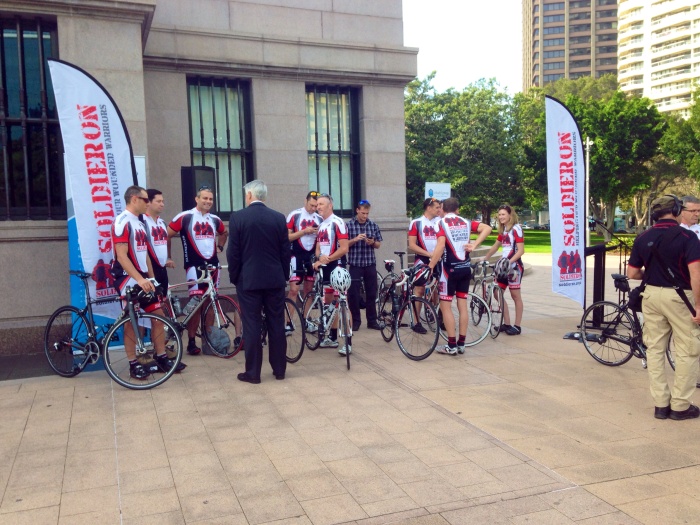
There was a lot of nervous energy amongst all the riders, in particular myself and Robbie.  We had spent a lot of the morning in front of the media and both of  us just wanted to get on our bikes.

RR2014 010
.:Almost time to start riding;.

At a little before 14:00 we finally rolled off onto the Hume Highway for the start of our three-day journey to Canberra.  The first day’s ride was scheduled to end at Mittagong, a relatively short 70km away.  The riding was slow and steady at first but we soon picked up the pace under the mentoring of Scott Sunderland.

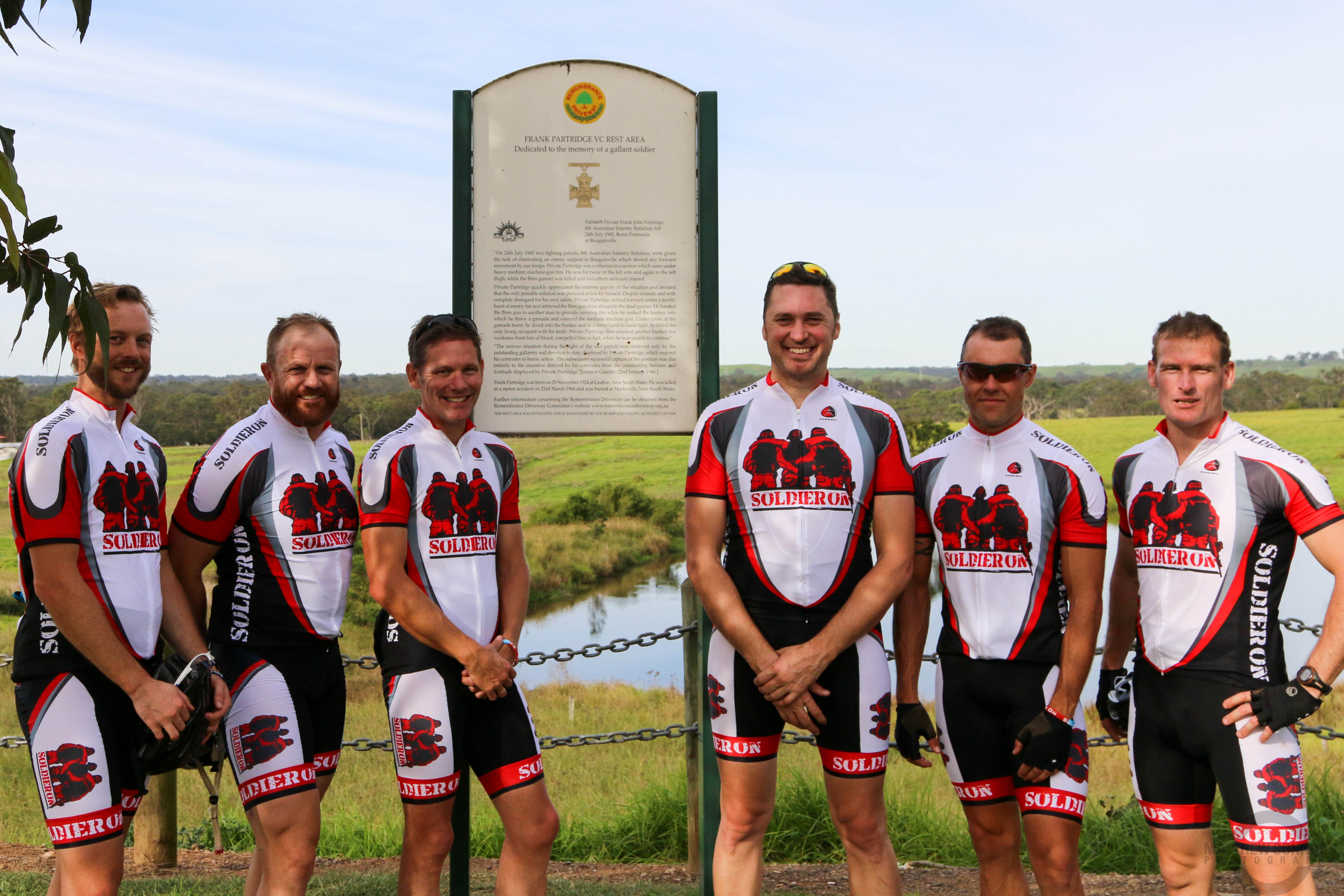
After only an hour or so of riding, including a few small but taxing climbs, we stopped at the Frank Partridge VC Rest Area, for a quick rest stop.  By now some of the sponsor riders were feeling the effects of the climbs and little to no lead up training; but still they persevered.

RR2014 013
.:Quick stop at the Frank Partridge VC Rest Stop:.
MCP 014
.:Photo op at the Frank Partridge VC Rest Area:. http://www.facebook.com/matthewconnorsphotography

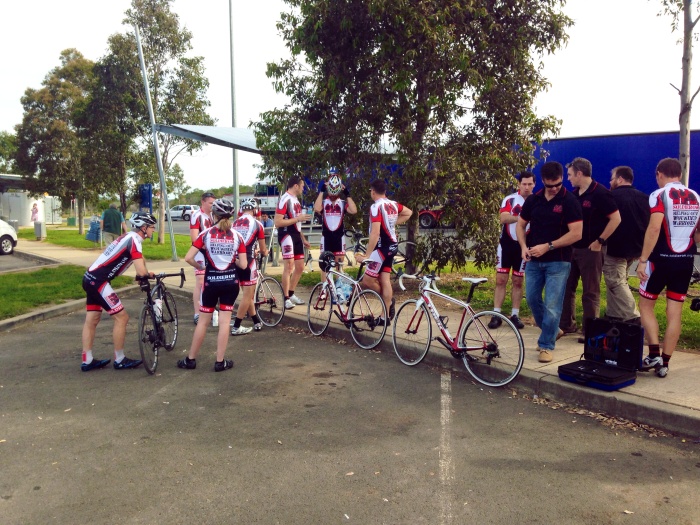
There was a little bit of bush mechanic work on a stubborn seat post clamp before the group headed off towards Mittagong once again.

As before the pace began to slow and our group was banding together to keep the others on pace and more importantly on their bikes.

MCPFB 007
.:Matt’s photo that sums up the entire ride:. http://www.facebook.com/matthewconnorsphotography

A quick re-org of the riding order saw a few of the slower riders moved up front to set the group pace and stop the rubber-band effect that was tiring those that were at the back.

MCP 015
.:Hello says Chad to Matt in the support vehicle:. http://www.facebook.com/matthewconnorsphotography

As the afternoon got a little colder and the shadows longer; concentration started to lapse among some riders.  A few instances of half-wheeling began to occur when suddenly two riders hit the road at around 30km/hr.  I was in the right lane and broke formation to avoid the carnage and quickly pulled over to the side of the road.  Amazingly there were no serious injuries to downed rider (carbon bikes don’t like such spills!).

After some first aid work on the downed riders they were ushered into the support vehicles, the bikes strapped to the wagon’s roof and we resumed riding our final leg into Mittagong.  We arrived a little after 17:00 and were greeted at the Mittagong RSL by the sub-branch representatives.

We checked into our rooms (apparently it’s funny to put two Chad’s in one room), showered and made our way over to the bar for some light refreshments and dinner at the bistro.  We were joined by the Australian War Memorial’s Director, Dr Brendan Nelson, for dinner and after a quick recap of the days activities and a run down of timings for the next day, it was time for some bike prep and then bed.

RR2014 016
.:The end of Day 1 – Sydney to Mittagong;. http://app.strava.com/activities/133569377


.:CLICK HERE TO GO TO PART 3:.

Remembrance Ride 2014 – Part 1

THE PREP

The 2014 Soldier On Remembrance Ride was a feat only achievable by a great deal of hard work, volunteers and good luck.  With only a couple of months to get the wheels rolling, Soldier On had their work cut out for them to get things ready in time; and being privy to the process some things came down to the wire.

I was asked to participate in the ride very early on and I jumped at the opportunity.  Three days of riding from Sydney to Canberra with a group of Australian Veterans and some members from our corporate sponsor; The Citadel Group.  Also along for the ride was pro-cyclist turned coach/mentor Scott Sunderland.

Before the drive up to Sydney even happened we were locked into a steady routine of media commitments and admin duties at Soldier On HQ.

RR2014 002
.:Packed and ready to roll:.

The drive up to Sydney was an uneventful affair with a couple of bikes strapped to the back of the Soldier On Audi and four of us squeezed inside with our gear and luggage (the car is really spacious, we just crammed a lot into it).  After unloading the car and checking into our hotel opposite Hyde Park, we quickly went through the next days timetable and retired for the night.

RR2014 003
.:Soldier On Audi:.

DAY 1 – Tuesday 22 April 2014 (The Event Launch)

The morning of the ride was a whirlwind of interviews, photos and a lot of standing around waiting.  Soldier On CEO John Bale presented the team to the waiting media and soon we were being told to pose and look at this camera, move, look at that camera and of course speak to the media.  Ordinarily I’m not a huge fan of interacting with the media; but sometimes anxiety and nervousness must be set aside for the greater good.   I conducted three TV interviews at Hyde Park with SBS, ABC Sydney and SBS Cycling.

CLICK HERE to visit the SBS Australia Online Article

CLICK HERE to visit the SBS News Online Article

CLICK HERE to visit the SBS Cycling Central Video

After our event launch it was time to pack the cars and go for the short drive to our start point (due to Sydney’s stupidly unsafe roads we couldn’t ride out of the CBD).

RR2014 009
.:At Hyde Park with LTGEN Ken Gillespie:.
MCP 001
.:A ball of nervous energy before the launch:. http://www.facebook.com/matthewconnorsphotography
MCP 002
.:Robbie & I trying our best not to make Johanna Hatcher laugh:. http://www.facebook.com/matthewconnorsphotography
MCP 003
.:Marvelling at our great beards:. http://www.facebook.com/matthewconnorsphotography
MCP 005
.:Listening to John Bale’s launch speech:. http://www.facebook.com/matthewconnorsphotography
MCP 006
.:John addressing the waiting media:. http://www.facebook.com/matthewconnorsphotography
MCP 008
.:Being interviewed by Rena Sarumpaet from SBS News:. http://www.facebook.com/matthewconnorsphotography
MCP 009
.:Posing with Scott Sunderland post launch:. http://www.facebook.com/matthewconnorsphotography
MCP 012
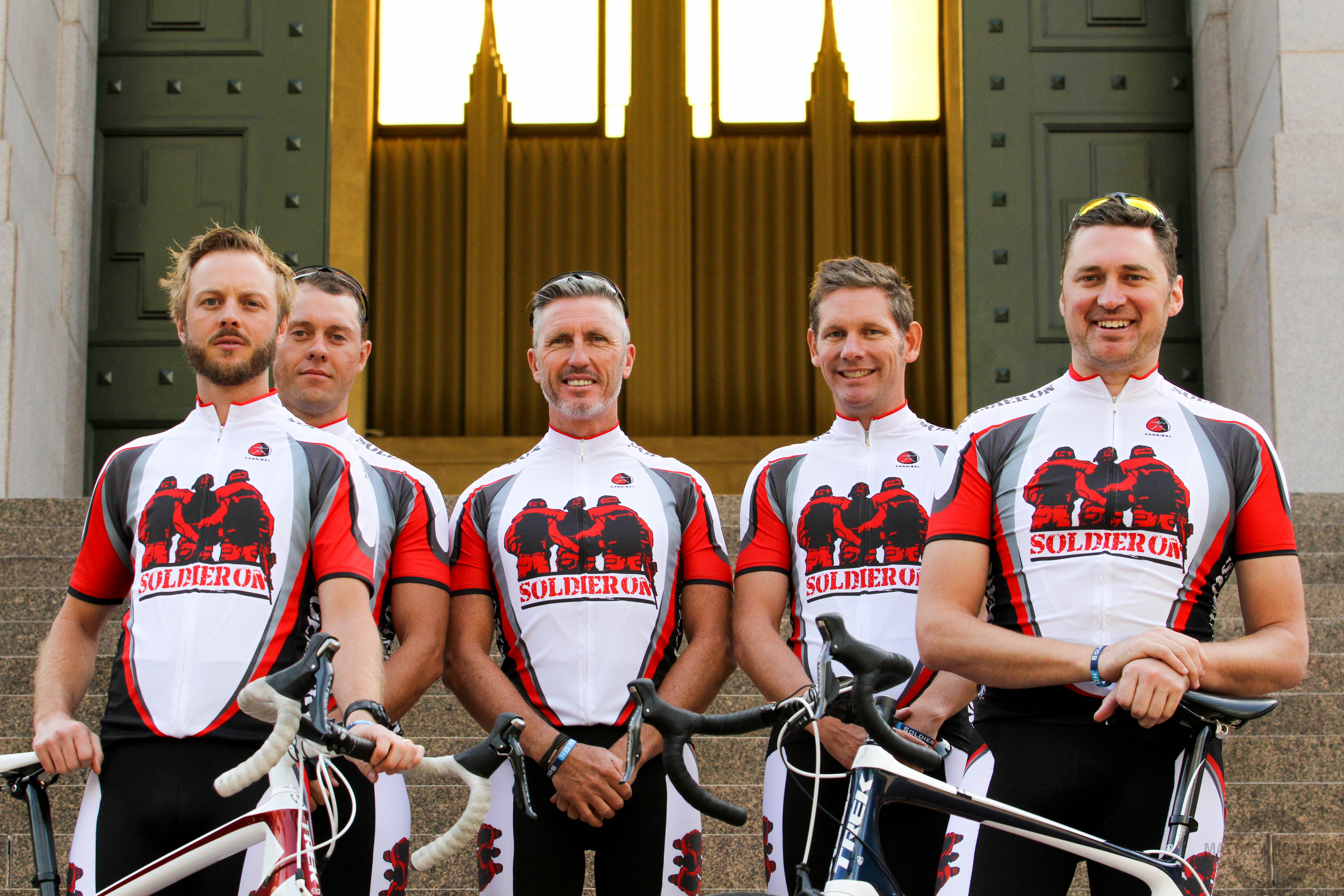
.:All of the riders and Soldier On CEO John Bale:. http://www.facebook.com/matthewconnorsphotography
MCP 013
.:Adam and I having some time out before heading off to the start point:. http://www.facebook.com/matthewconnorsphotography


.:CLICK HERE TO GO TO PART 2:.


An Evening At The Australian War Memorial – Updated

ABC’s Big Ideas has released the Boys Don’t Cry program online for viewing.
The televised version is shorter by about 20 minutes and doesn’t include my speech at the end of the forum.  The online long version does.  I invite you to watch is however please be aware that some of the program is fairly confronting including what I have to say at the end.

Long version of the Boys Don’t Cry segment

Big Ideas Boys Don’t Cry segment

On Wednesday evening, 20 November 2013, I attended a panel discussion at the Australian War Memorial on Post Traumatic Stress Disorder.  The event was hosted by journalist/writer Paul Barclay on behalf of ABC TV and Radio National.

On the panel were former Chief of Army LTGEN Peter Leahy; author and Beyond Blue ambassador Allan Sparkes; Beyond Blue board member Professor Brett McDermott; and the wife of a former British Royal Marine, Emily.

I was asked about attending the panel a few days earlier by my friend Jason.  Originally I didn’t want to attend as I honestly thought it may be a trigger for an anxiety episode; so I declined.  It wasn’t until the night before that I decided to go along and hopefully have a chance to speak to whoever was on the panel.  I had no idea who was participating in the discussion other than LTGEN Peter Leahy and hadn’t really thought about what was going to be discussed.

In the afternoon prior to the start of the forum, I rode from work up to the Australian War Memorial.  As is the norm, I was wearing my Soldier On jersey and happened upon new Soldier On team member Tony; who many moons ago was my Troop Commander when I served in Iraq.  Jason arrived next and soon we were joined by Anna, Meredith and Dion from Soldier On.  After I got changed into something more appropriate than skin tight lycra, we went into the BAE Systems Theatre.

After the introductions Paul started the discussion with some questions about PTSD in the military for LTGEN Leahy.  The conversation and questions started to flow freely within the panel with some very emotional stories being shared by Emily and Allan.  Prof McDermott gave some very interesting insights on PTSD for not only military personnel; but also for emergency service persons and of course their families.

I wasn’t the only veteran in the crowd; but I was the youngest.  There were a few Vietnam Veterans present, family members of veterans with PTSD and a few senior Defence officers that were skulking around the back pews in civilian attire.

As the discussion progressed LTGEN Leahy was asked some questions about support services available to veterans.  I have a lot of respect for this man; he was an exceptional Chief of Army and has done a lot to help veterans with his current position as Chairman for Soldier On.  But there is a distinct level of detachment from what a high ranking officer is told and what happens on the ground.

Some of his responses started to irk not only me, but a lot of the crowd listening to him.  There were more than a few audible scoffs at some comments about the Department of Veterans affairs doing their best to help all veterans.  One comment in particular drew a very audible “get fucked” from me.  The former Chief of Army said that when a Soldier asks for help, he or she will always receive it.  Paul mentioned the story of MAJGEN John Cantwell and LTGEN Leahy was in agreement.  Whilst MAJGEN Cantwell has done a lot to help break the stigma of PTSD in the ADF; it is also true that a very senior Officer is never going to be turned away when they ask for assistance.

Allan Sparkes shared his story of PTSD and depression from when he was a Police officer; and the ostracising that he experienced as a result.  His story was a very raw, no punches pulled recount of his darkest days and his termination from his employment without his knowledge.  His story was very reminiscent of many veterans from the Vietnam War up until today’s conflicts.

Emily’s story was one of amazing courage from both her and her husband Adrian.  She spoke of her time in the United Kingdom when Adrian returned from deployment in Afghanistan a changed man.  He had experienced traumatic events and as a result developed PTSD.  His struggles with mental health affected his wife and two daughters as they watched as their husband and father dealt with his issues now that he was back at home.  His eventual discharge from the Royal Marines was a result of a physical injury and just like the majority of occupationally injured Australian servicepersons; Adrian was soon pushed out the door with very little support and preparedness for his transition to civilian life.

As the forum was drawing to a close Paul invited Dr Brendan Nelson, director of the Australian War Memorial to speak and field some questions from the panel.  He spoke about the AWM’s role with supporting veterans of recent conflicts by having interactive exhibits and involving them with other projects the AWM is conducting.  As a former Minister for Defence he expressed his desire to see more support forthcoming as the Afghanistan War draws to a close.

As 7pm was quickly approaching a few of us in the audience were wondering if we would get a chance to ask questions of the panel.  Adrian was next to take the stage and he recounted some of his experiences post deployment and how support for veterans is extremely slow from the government in Britain.  He spoke of having his claim for assistance being rejected on the first submission; a trend very similar to that in Australia carried out by DVA.

Adrian expressed his concern for veterans being forgotten after the withdrawal from the Middle East and a strong desire for them to be able to access the support they deserve and not repeat the mistakes of the past.  He likened the struggles of today’s returned servicepersons to that of the Vietnam War era in the way that the fight for support continues even after the war on foreign soil has ended.

Adrian’s address to the panel and audience had clearly reached out to everyone with many of the Vietnam Veterans visibly moved by his honesty.  As he sat down Paul checked his watch and asked us sitting in the audience if anyone had anything questions or comments.  I had been sitting and fidgeting for the past 10 minutes waiting for this moment.  Several different introductions and talking points had gone through my head and all disappeared in the instant I raised my hand and Paul motioned for me to stand up.

I was shaking before I even started speaking; this was always going to be an emotionally charged interaction from me and I started by introducing myself.

“Hi I’m Chad, I separated from the Army early last year and have deployed to both Iraq and Afghanistan.  I have been diagnosed with PTSD, depression and anxiety and I want to know why not enough is being done to help Australian veterans.”

I addressed LTGEN Leahy first and exclaimed to him that history was indeed repeating itself.

“I am a third generation Soldier, my Grandfather served in World War 2, my Father served in Vietnam and I have served in the Middle East.  I watch as my Father and his mates still struggle with PTSD with many Vietnam Veterans taking their own lives since the war ended.  I watch as my generation struggles with the same issues and now my mates, people I served with, are killing themselves because of PTSD and depression; and nothing is being done to stop this.  There are more people in the ground because of PTSD and depression than there are that are on the wall outside who were killed on operations.”

I spoke of my efforts to get help when the weight was becoming too much for me to bear and that the first two times I asked for assistance I was rebuffed by my unit RSM’s; a statement that clearly shocked LTGEN Leahy.  I was asked questions from both Allan Sparkes and Prof McDermott about my interactions with DVA and I recounted how I was told that my claim was going to be slow as my PTSD and depression ‘wasn’t that bad’.  I explained to them that is was at this point that I withdrew my claim and stopped interacting with DVA as I felt I was being accused of chasing money and that by not receiving financial assistance my criticism of their practices would hold more weight in a public forum.

I described my battles with depression and that very few people understood; and the simple act of asking for help effectively stalled my career in the Australian Army for a number of years.  The feeling of being ostracised and singled out was always present and that few people would support me when I asked for further help.  I explained that while MAGJEN Cantwell’s story is not an isolated one, the level of support and assistance he received was.  The average Digger in a unit has to contend with the ever present stigma of mental health issues and ignorance present within their chain of command and the probable persecution for not being able to fulfil their duties without restrictions.

I expressed astonishment that the very organisation founded to protect the rights of and provide assistance to veterans was failing in its primary role.  I emphatically asked how in the forty years since the end of the Vietnam War servicepersons are still not being afforded the support we fought for.  How it was possible that DVA can state they are still learning and getting better with a straight face as veterans from multiple deployments and generations kill themselves while waiting to access support services.

By this stage the room was silent and I had been speaking for around 20 minutes.  The panel while sometimes asking me questions and making statements had clearly been unprepared for such a raw and uncompromising speech from someone.  I had brought up some points with personal accounts of systematic failures from within the Australian Army, Australian Defence Force and the Department of Veterans Affairs.

There were some topics that I shared with a public forum that had only been discussed with medical professionals and not even shared with my wife and family.  As my speech drew to a close I expressed the hope that one day veterans would receive the appropriate support from the Government but that it was very unlikely to occur in my lifetime and that my children probably wouldn’t see it happen either.

As I finished speaking I apologised for hijacking the Q&A session; Paul started wrapping up the forum and I sat down nervously.  Jason patted me on the shoulder and most of the audience was either nodding in agreement or wiping away tears.  I sat shaking and started to feel quiet anxious from speaking to a mostly unknown audience about issues so personal and distressing that I had spent the last few years repressing and ignoring them.

The rest of the evening was spent talking with members of the audience and panel.  I received a great number of business cards and offers of assistance and opportunities to speak to other veterans and people with PTSD and depression.  I found the response surprising and was shocked when LTGEN Leahy approached me as he was leaving.  He handed me his business card and told me to email him.  He offered to take me to see the Minister of Veterans Affairs to discuss the issues I had brought up.

He told me that the Service Chiefs would be made aware of what I had spoken about and that I should continue speaking up.  Both he and Dr Nelson expressed the need for younger veterans to be the public faces and voices of our generation and that I should be one of them.  I was very humbled by this statement and thought a lot about it over the following days.

At the conclusion of a big night, I farewelled Jason and the Soldier On crew, thanked the others and started riding my bike back home.  The next 45 minutes were some of the most contemplative times of my life as I thought about what I had said and the inevitable shock-waves that they would create for my family and I when the ABC airs Boys Don’t Cry on Big Ideas in late 2013/early 2014.

An Open Letter To The Minister For Veterans’ Affairs

An Open Letter to Senator the Honourable Michael Ronaldson, Minister for Veterans’ Affairs

Dear Senator Ronaldson,

On 12 November 2013 I sent both an email and a letter to you via your gazetted Ministerial Office contact details.  To date I have not received a reply nor have I received any acknowledgement that my correspondence was received by your office.  Although traditional mail does occasionally fail to arrive at its intended destination, an email with the correct recipient address does not.

My original letter to you was in regards to the comments made by your Department’s Mental Health Adviser, Doctor Stephanie Hodson, which were aired during a segment on Channel 7’s Today Tonight entitled Fighting A Mental War.  Dr Hodson’s comments were not only highly controversial, but also quite insulting to Australia’s Veterans.  To claim that a major part of the Department of Veterans’ Affairs inability to provide timely support to Veterans with mental health issues was in part the fault of the Veterans themselves is nothing short of victim blaming.

Did I, like many others ask to be haunted and troubled by the traumatic experiences from our deployments?
No, we did not.

Did I ask for help from within the Australian Army?
Yes I did and on numerous occasions I was told to “harden the fuck up”.

Did I ask your Department for assistance?
Yes I did, but instead of the support that I was entitled to, I was forced to jump through hoops and make my way through a maze of red tape.

Like many Veterans, I found the system that is supposed to provide us assistance and avenues of support was, in reality, creating more roadblocks on the long journey to recovery.  Roadblocks that ultimately resulted in me turning my back on DVA and finding the help I so desperately required from my family and friends.  To be honest I couldn’t help but assume this was a deliberate ploy by DVA; make it as difficult as possible for Veterans to access support services and they will eventually give up; saving the Department a large sum of money.

Unfortunately many Veterans do not have the type of support from family and friends that I do, and when the world is at its darkest, some will take their own lives.  This year alone more than twenty returned servicepersons have committed suicide.  I must stress that this number reflects only those that are clear cut cases of suicide and not single-vehicle accidents and incidences of drowning while intoxicated.

I was extremely fortunate to attend Paul Barclay’s Boys Don’t Cry forum at the Australian War Memorial on the evening of Thursday 21 November 2013.  During this forum members of the panel discussed various issues regarding PTSD and depression with a focus on the Australian Defence Force and withdraw from Afghanistan.  It would have been highly beneficial for a member of your Department or staff to have attended in an official capacity in order to answer some questions regarding the level of support offered by DVA.

LTGEN Peter Leahy was a member of the panel and spoke about returned servicepersons accessing support from within the ADF and DVA.  While I wholeheartedly agree that the ADF is getting better and that the stigma associated with PTSD and depression is slowly dissipating.  I found LTGEN Leahy’s claims that the Department of Veterans’ Affairs is learning from the mistakes of the past a complete and utter fallacy.

This was an opinion that I shared with the panel and audience during the question time at the completion of the forum.  For almost 25 minutes I spoke about my struggles with PTSD, the systematic failures of the ADF and DVA when I was trying to access support services and my fears for Australian Veterans in the future.

The Department of Veterans Affairs exists for the sole purpose to provide assistance to Australian Veterans, whether they have experienced overseas service or not.  This is a role that DVA seems to fail at more often than not.

Senator Ronaldson you are quoted on the ABC’s World of Today webpage from a report by Lexi Metherell from Tuesday 10 December 2013 as saying:

MICHAEL RONALDSON: We cannot repeat the mistakes of post-Vietnam, where this country let down those men who were doing no more and no less than serving the nation at the nation’s request.

Senator Ronaldson I implore you to open your eyes to the facts.  The mistakes of “post-Vietnam” were the mistakes from post-World War 2 which was the legacy from the mistakes made post-World War 1.

I am a third generation Soldier; my Grandfather served in World War 2 and was stalwart for Veteran’s advocacy his entire life, my Father served in Vietnam and dedicated 42 years as a fulltime Soldier; and I have served in both Iraq and Afghanistan.  These mistakes you speak of, the mistakes of the past are in fact the Ghosts of the Past that continue to haunt us to this very day.

I watched as my Grandfather’s legacy and honour left with him as he passed away in a geriatrics ward; a man of such strong resolution, he dedicated the entirety of his post-war life to the Returned and Services League and spent a record 35 years as the President of the Corrimal RSL Sub-Branch.  The Department of Veterans’ Affairs bureaucracy come to forefront when matters concerning his palliative health care and DVA Gold Card became an issue in his final days.

I have witnessed my Father’s transition to civilian and retired life; not an easy feat after spending almost half a century serving this great Nation.  I watched as a child, my Father’s struggles with his past service in Vietnam and later as his friends died prematurely from illness brought on by exposure to hazardous materials and suicide brought on by depression and PTSD; long ignored and compounded by DVA’s ineptness and unwillingness to support struggling Vietnam Veterans.

To listen to spokespersons from the Government, Department of Veterans’ Affairs and even yourself; the Minister for Veterans’ Affairs, speak of not having history repeat itself is insulting.

I have several friends with their names on the Roll of Honour at the Australian War Memorial; these are men now forever young that I mourn the loss of everyday.  A heavy weight that I and many others carry on our shoulders as we will not let their sacrifice for the people of Australia and Afghanistan be in vain.  Every loss is felt deeply within the Australian Defence community even if it becomes a just a distant memory for most.

I fear with the withdrawal from Afghanistan and the Middle East almost complete, the spotlight will dim and the ongoing fight for support and assistance we have earned will not be forthcoming.  Many Veterans spend months waiting to see specialists and have claims processed.  Coupled with PTSD, depression, anxiety and the blasé attitude of some DVA staff this is a catalyst for self destructive and suicidal behaviour.

The number of Veterans who have taken their own lives now surpasses the brave 42 whose names are on display in our Nation’s capital.

Many of these Veterans have continued to fight long after their war in the Middle East ended.  Like a battle with the enemy this too is a fight for survival; and without DVA accepting responsibility and acting on its mistakes this too will cost the lives of Australians that once donned the uniform of a Soldier, Sailor or Airman.

I care not for excuses and the ongoing blame game of previous Governments.  I care only for you the current Minister for Veterans’ Affairs to stand up, acknowledge the mistakes of the past and find a way to move forward for the better.  I ask you Senator Ronaldson, to engage with us, those Soldiers, Sailors and Airmen that have fought against the bureaucracy of a Government Department that has learnt nothing over the past 100 years.

As we prepare to remember and mark the 100th Anniversary of the Gallipoli Campaign; can you honestly say that today’s Veterans are receiving the appropriate level of support and assistance that our forefathers never got to experience; or like them will this fight become the legacy of my children when I am long gone from this world?

Respectfully yours,

Chad Dobbs
17 December 2013

This letter has been forwarded to Senator Ronaldson’s contact email address: officeoftheminister@dva.gov.au;
Tweeted to Senator Ronaldson’s Twitter page: @SenRonno;
Tweeted to DVA’s Twitter page: @DVAAus.

Call Of The Beast 2013 Wrap Up

The Call of the Beast was my final Soldier On fundraising event for the year.  After 7 months of intense fundraising and raising awareness for Soldier On it was a relief to just be able to go into an event without any pressure.

Each time I got on a bike wearing my Soldier On jersey it was an opportunity for me to help raise the profile of Soldier On in the ACT, NSW, QLD and VIC.  As of 1 December 2013 I have ridden 5’169km while wearing my jersey and look forward to many more kilometres training in racing in it and the new design jersey and knicks combo that will be available very soon.

I was “asked” if I wanted to enter the Call of the Beast just prior to my Wedding in September.  Dan and Luke from Beast-Worx were keen to get me out for their new obstacle course race and I was extremely happy to take up their offer.

I will be quite upfront and state that apart from my normal riding routine I did absolutely no training for this event.  It’s no secret that due to long-term injuries I don’t run.  It’s not that I don’t like running it’s just that a combination of torn muscles, torn tendons and ligaments, dislocations, fractures and osteoarthritis means my dream (not entirely accurate) of running a marathon will never be realised.

So I kept riding and figured I would just cuff it on the day.  My preparation was quite similar to that of a mountain bike race.  Clothes for the event, hydration and nutrition organised, GPS and heart-rate monitor ready and clean clothes for after the race.  Once this was all packed in the back of the car I headed out to Caloola Farm to look at the course that had been set up for the 1200-odd participants.

When I arrived at the event centre I registered, donned my participant wrist band and headed off to watch the Last Beast Standing racers attacking the course.  Round 1 of the elite race was drawing to a close and these athletes had 4 more rounds ahead of them.  Watching these men and women smash down food and water before heading back out again was awe inspiring and made me quite content with the knowledge that I was doing the Fun Beast.

I set up my little spot near the Soldier On stand and chatted with Tony, Anna and Dion for most of the morning.  Volunteer Andy K seemed to be very excited about carrying a loudspeaker and I was dreading having to run up to his checkpoint later in my race.

As the start time for the first wave of the Fun Beast was getting closer, I got changed into my running gear: shorts, Skins shirt, Soldier On shirt, 2XU calf compression socks, water-suitable hiking shoes and my Garmin Forerunner.  I looked the part and headed down to the start line.  I watched as Beast-Worx Dan let the first wave go and then headed down to say hello before lining up with the the second wave.

Adam ‘Rocket’ Rolls, my Scott 25 Hour team-mate, was running in a team and as usual he was focused and ready to run.  The wave started and I slowly jogged off towards the first few obstacles.  I wasn’t taking this event seriously but can honestly say, even with my injury-induced limitations I was making pretty good time through the first part of the course.

The obstacles weren’t very difficult and I was able to scale, crawl through, jump over, roll under, climb up, balance on and run over everything without any assistance.  It was however extremely simple to spot the people with military experience.  Firstly there was the obvious technique in getting through the obstacles and secondly we were the few that stayed on top off walls lifting people up, pulled cargo nets tight, gave boosts, steadied people’s balance and more often than not gave advice on how to do things safely.

BOTB 13 114.:Waiting to scale the first wall (Photo by Canberra Times):.

The obstacles were spread out with a fair bit of running in between.  This was always advertised as an adventure race and not designed as a Tough Mudder knock-off like many of the new obstacle races.  Like the Battle of the Beasts this event’s main aim was to raise money for Soldier On; and with only two permanent staff and an army of volunteers it is commendable that a first time event was so amazing, challenging and fun.

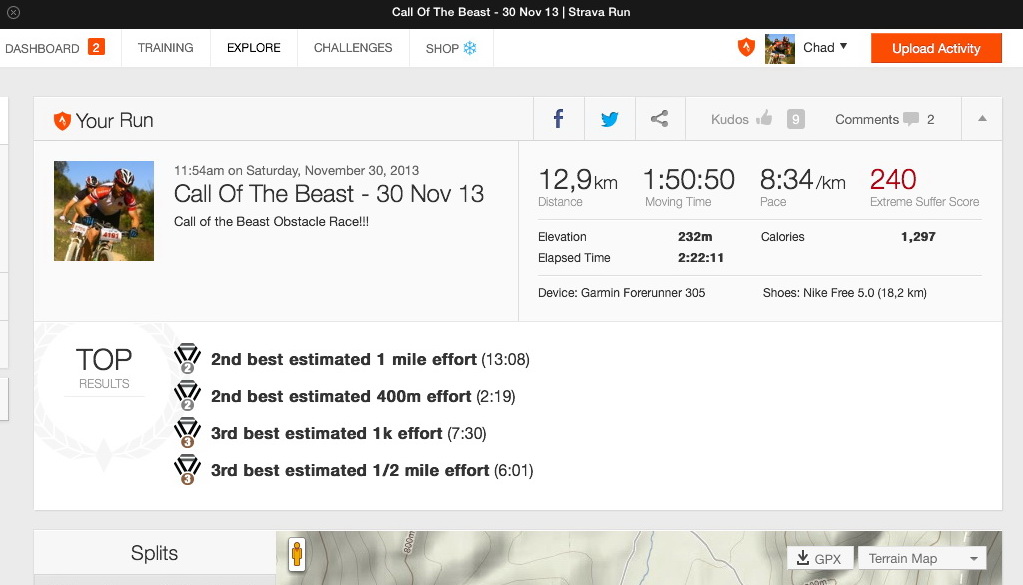
By the time the 11km Fun Beast was over I had run 12.9km in 2hours 22mins.  Not the fastest time but a very fun event that I would definitely do again.

BOTB 13 116
BOTB 13 115.:Strava!:.

BOTB 13 112.:Just a tad dirty:.

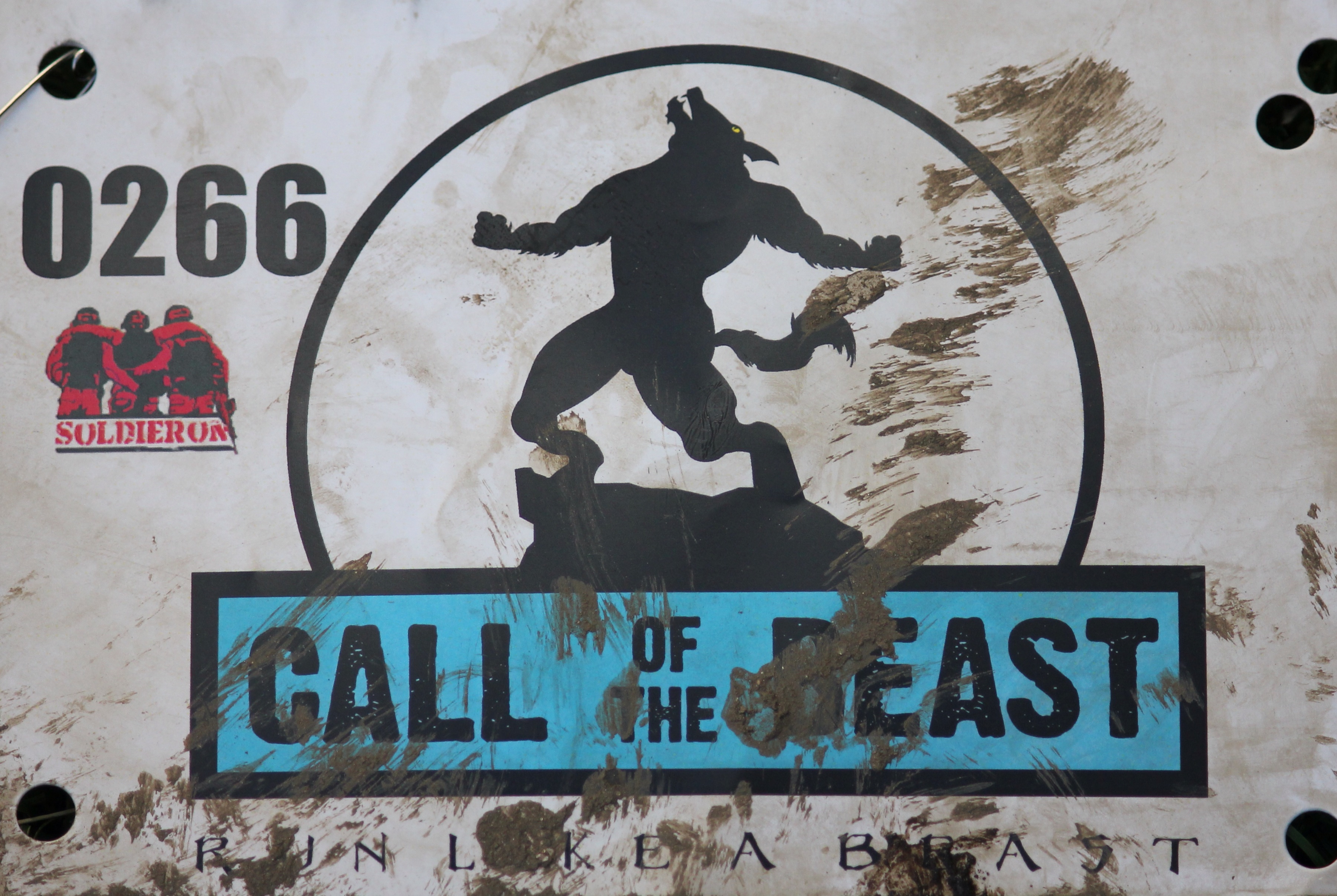
BOTB 13 113.:As usual I kept my race plate (a sly reference to my Army days with the number):.

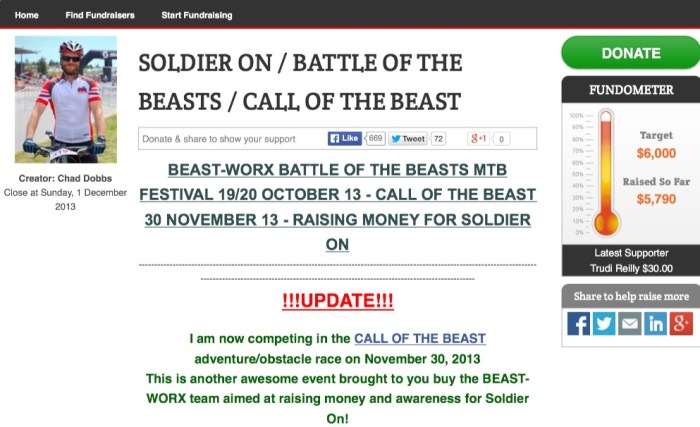
At the end of two big events I had raised $5’790 for Soldier On.  Thank you to everyone that donated and supported me through-out these past several months.

BOTB 13 117

An Evening At The Australian War Memorial

On Wednesday evening, 20 November 2013, I attended a panel discussion at the Australian War Memorial on Post Traumatic Stress Disorder.  The event was hosted by journalist/writer Paul Barclay on behalf of ABC TV and Radio National.

On the panel were former Chief of Army LTGEN Peter Leahy; author and Beyond Blue ambassador Allan Sparkes; Beyond Blue board member Professor Brett McDermott; and the wife of a former British Royal Marine, Emily.

I was asked about attending the panel a few days earlier by my friend Jason.  Originally I didn’t want to attend as I honestly thought it may be a trigger for an anxiety episode; so I declined.  It wasn’t until the night before that I decided to go along and hopefully have a chance to speak to whoever was on the panel.  I had no idea who was participating in the discussion other than LTGEN Peter Leahy and hadn’t really thought about what was going to be discussed.

In the afternoon prior to the start of the forum, I rode from work up to the Australian War Memorial.  As is the norm, I was wearing my Soldier On jersey and happened upon new Soldier On team member Tony; who many moons ago was my Troop Commander when I served in Iraq.  Jason arrived next and soon we were joined by Anna, Meredith and Dion from Soldier On.  After I got changed into something more appropriate than skin tight lycra, we went into the BAE Systems Theatre.

After the introductions Paul started the discussion with some questions about PTSD in the military for LTGEN Leahy.  The conversation and questions started to flow freely within the panel with some very emotional stories being shared by Emily and Allan.  Prof McDermott gave some very interesting insights on PTSD for not only military personnel; but also for emergency service persons and of course their families.

I wasn’t the only veteran in the crowd; but I was the youngest.  There were a few Vietnam Veterans present, family members of veterans with PTSD and a few senior Defence officers that were skulking around the back pews in civilian attire.

As the discussion progressed LTGEN Leahy was asked some questions about support services available to veterans.  I have a lot of respect for this man; he was an exceptional Chief of Army and has done a lot to help veterans with his current position as Chairman for Soldier On.  But there is a distinct level of detachment from what a high ranking officer is told and what happens on the ground.

Some of his responses started to irk not only me, but a lot of the crowd listening to him.  There were more than a few audible scoffs at some comments about the Department of Veterans affairs doing their best to help all veterans.  One comment in particular drew a very audible “get fucked” from me.  The former Chief of Army said that when a Soldier asks for help, he or she will always receive it.  Paul mentioned the story of MAJGEN John Cantwell and LTGEN Leahy was in agreement.  Whilst MAJGEN Cantwell has done a lot to help break the stigma of PTSD in the ADF; it is also true that a very senior Officer is never going to be turned away when they ask for assistance.

Allan Sparkes shared his story of PTSD and depression from when he was a Police officer; and the ostracising that he experienced as a result.  His story was a very raw, no punches pulled recount of his darkest days and his termination from his employment without his knowledge.  His story was very reminiscent of many veterans from the Vietnam War up until today’s conflicts.

Emily’s story was one of amazing courage from both her and her husband Adrian.  She spoke of her time in the United Kingdom when Adrian returned from deployment in Afghanistan a changed man.  He had experienced traumatic events and as a result developed PTSD.  His struggles with mental health affected his wife and two daughters as they watched as their husband and father dealt with his issues now that he was back at home.  His eventual discharge from the Royal Marines was a result of a physical injury and just like the majority of occupationally injured Australian servicepersons; Adrian was soon pushed out the door with very little support and preparedness for his transition to civilian life.

As the forum was drawing to a close Paul invited Dr Brendan Nelson, director of the Australian War Memorial to speak and field some questions from the panel.  He spoke about the AWM’s role with supporting veterans of recent conflicts by having interactive exhibits and involving them with other projects the AWM is conducting.  As a former Minister for Defence he expressed his desire to see more support forthcoming as the Afghanistan War draws to a close.

As 7pm was quickly approaching a few of us in the audience were wondering if we would get a chance to ask questions of the panel.  Adrian was next to take the stage and he recounted some of his experiences post deployment and how support for veterans is extremely slow from the government in Britain.  He spoke of having his claim for assistance being rejected on the first submission; a trend very similar to that in Australia carried out by DVA.

Adrian expressed his concern for veterans being forgotten after the withdrawal from the Middle East and a strong desire for them to be able to access the support they deserve and not repeat the mistakes of the past.  He likened the struggles of today’s returned servicepersons to that of the Vietnam War era in the way that the fight for support continues even after the war on foreign soil has ended.

Adrian’s address to the panel and audience had clearly reached out to everyone with many of the Vietnam Veterans visibly moved by his honesty.  As he sat down Paul checked his watch and asked us sitting in the audience if anyone had anything questions or comments.  I had been sitting and fidgeting for the past 10 minutes waiting for this moment.  Several different introductions and talking points had gone through my head and all disappeared in the instant I raised my hand and Paul motioned for me to stand up.

I was shaking before I even started speaking; this was always going to be an emotionally charged interaction from me and I started by introducing myself.

“Hi I’m Chad, I separated from the Army early last year and have deployed to both Iraq and Afghanistan.  I have been diagnosed with PTSD, depression and anxiety and I want to know why not enough is being done to help Australian veterans.”

I addressed LTGEN Leahy first and exclaimed to him that history was indeed repeating itself.

“I am a third generation Soldier, my Grandfather served in World War 2, my Father served in Vietnam and I have served in the Middle East.  I watch as my Father and his mates still struggle with PTSD with many Vietnam Veterans taking their own lives since the war ended.  I watch as my generation struggles with the same issues and now my mates, people I served with, are killing themselves because of PTSD and depression; and nothing is being done to stop this.  There are more people in the ground because of PTSD and depression than there are that are on the wall outside who were killed on operations.”

I spoke of my efforts to get help when the weight was becoming too much for me to bear and that the first two times I asked for assistance I was rebuffed by my unit RSM’s; a statement that clearly shocked LTGEN Leahy.  I was asked questions from both Allan Sparkes and Prof McDermott about my interactions with DVA and I recounted how I was told that my claim was going to be slow as my PTSD and depression ‘wasn’t that bad’.  I explained to them that is was at this point that I withdrew my claim and stopped interacting with DVA as I felt I was being accused of chasing money and that by not receiving financial assistance my criticism of their practices would hold more weight in a public forum.

I described my battles with depression and that very few people understood; and the simple act of asking for help effectively stalled my career in the Australian Army for a number of years.  The feeling of being ostracised and singled out was always present and that few people would support me when I asked for further help.  I explained that while MAGJEN Cantwell’s story is not an isolated one, the level of support and assistance he received was.  The average Digger in a unit has to contend with the ever present stigma of mental health issues and ignorance present within their chain of command and the probable persecution for not being able to fulfil their duties without restrictions.

I expressed astonishment that the very organisation founded to protect the rights of and provide assistance to veterans was failing in its primary role.  I emphatically asked how in the forty years since the end of the Vietnam War servicepersons are still not being afforded the support we fought for.  How it was possible that DVA can state they are still learning and getting better with a straight face as veterans from multiple deployments and generations kill themselves while waiting to access support services.

By this stage the room was silent and I had been speaking for around 20 minutes.  The panel while sometimes asking me questions and making statements had clearly been unprepared for such a raw and uncompromising speech from someone.  I had brought up some points with personal accounts of systematic failures from within the Australian Army, Australian Defence Force and the Department of Veterans Affairs.

There were some topics that I shared with a public forum that had only been discussed with medical professionals and not even shared with my wife and family.  As my speech drew to a close I expressed the hope that one day veterans would receive the appropriate support from the Government but that it was very unlikely to occur in my lifetime and that my children probably wouldn’t see it happen either.

As I finished speaking I apologised for hijacking the Q&A session; Paul started wrapping up the forum and I sat down nervously.  Jason patted me on the shoulder and most of the audience was either nodding in agreement or wiping away tears.  I sat shaking and started to feel quiet anxious from speaking to a mostly unknown audience about issues so personal and distressing that I had spent the last few years repressing and ignoring them.

The rest of the evening was spent talking with members of the audience and panel.  I received a great number of business cards and offers of assistance and opportunities to speak to other veterans and people with PTSD and depression.  I found the response surprising and was shocked when LTGEN Leahy approached me as he was leaving.  He handed me his business card and told me to email him.  He offered to take me to see the Minister of Veterans Affairs to discuss the issues I had brought up.

He told me that the Service Chiefs would be made aware of what I had spoken about and that I should continue speaking up.  Both he and Dr Nelson expressed the need for younger veterans to be the public faces and voices of our generation and that I should be one of them.  I was very humbled by this statement and thought a lot about it over the following days.

At the conclusion of a big night, I farewelled Jason and the Soldier On crew, thanked the others and started riding my bike back home.  The next 45 minutes were some of the most contemplative times of my life as I thought about what I had said and the inevitable shock-waves that they would create for my family and I when the ABC airs Boys Don’t Cry on Big Ideas in late 2013/early 2014.
The Central Point Of Failure – The Department Of Veterans Affairs

I wasn’t sure if I should write this post.  My last opinion piece about the Department of Veterans Affairs was received quite well by the veterans community and prompted DVA to contact me to discuss my and many other young veteran’s issues.  What has prompted this follow-up piece tentatively titled “You Ignorant Fucking Bureaucrats!”?…

On the evening of 11 November 2013, undoubtedly scheduled to coincide with Remembrance Day, Channel 7’s Today Tonight aired a story about young veterans and the ongoing struggle for support with PTSD and mental illness entitled Fighting A Mental War.

The story began as a fairly straight forward account detailing the struggles of those who have had the unfortunate distinction of dealing with the Department of Veterans Affairs.  Frustration, anger and depression are some of the emotions one can feel when dealing with a Government Department seemingly intent on ignoring your calls for help and ensuring you don’t get access to quality support services and ultimately rejecting financial assistance for your national service at war.

This may seem like an extreme statement but when the person asking for support is a young service-person trying to access help for depression and/or assistance after experiencing a highly traumatic incident(s); being rebuffed by the very organization founded to help you only causes more stress and compounds an already volatile situation.  It is a fact that more young servicemen and servicewomen have taken their own lives post-deployment than have been killed in action in Iraq and Afghanistan.

Ordinarily I would take a story broadcast on Today Tonight with a few dozen grains of salt.  But after watching Keith Payne VC fire up (a man I have had the pleasure of spending time with in both Afghanistan and Australia) and the pitiful response from DVA Mental Health Advisor Dr Stephanie Hodson I was poised to hurl my remote control at my TV in disgust.  I sat staring in disbelief, I wanted to break something, I could feel my pulse rising and my face getting hotter as my skin became flushed with rage.

Ultimately I calmed down but not before I fired off a steam of questions and statements to DVA via Twitter, Facebook and email.  Minister for Veterans Affairs Senator the Honourable Michael Ronaldson was also in my sights and received a highly sanitized and more eloquent email demanding answers about his representative’s insulting statements.

What did Dr Hodson say?  Below is the transcript from Today Tonight’s segment.

“Any suicide is tragic, and the department actively monitors suicide in veteran community,” Dr Hodson said.
“We actually do need to work on getting our staff more trained, but also about getting through these claims more quickly.”

Dr Hodson denies the department’s failure to plan ahead is resulting in long delays, leaving claims and lives in limbo.

“The department is processing claims as quickly as possible, but we acknowledge that some claims can take longer than we want,” she said.

Dr Hodson claims part of the problem lies with the veterans themselves.

“The problem is that it’s not until someone is in crisis that they will actually start to look for the services,” Dr Hodson said. “The treatment is there for veterans; we just need them to come and put up their hand and get it.” 

The full video can be found here:
http://au.news.yahoo.com/today-tonight/lifestyle/article/-/19777434/veterans-with-post-traumatic-stress-disorder/
Dr Hodson’s comments on behalf of DVA start at approximately the 8 minute 15 second mark.

I want to stress I am not launching a personal attack on Dr Hodson; she is clearly a very competent and qualified medical professional.  She previously served 22 years in the ADF as a psychologist and has been with DVA for the past decade.  This is a woman who has dedicated the majority of her career helping service-persons with mental health issues.

I am however attacking the Department of Veterans Affairs for the systematic failure of the past 40 years.  I’ve watched as my Father’s generation has been let down by DVA and his mates have been driven to suicide.  Decades later the same thing is happening to my generation.

By Dr Hodson’s own account, DVA needs to do more work; but also claims that the Department’s failure to plan ahead is not to blame.  So to Dr Stephanie Hodson and Minister for Veteran’s Affairs Sen the Hon Michael Ronaldson I put this to you:

The last Australians withdrew from Vietnam on Anzac Day 1975.  That was 38 years, 6 months and 18 days ago; and yet Australian Servicemen and Servicewomen are still not getting the support that we deserve and have fought for.

To have not learnt from the past and continuing to ignore the Department’s ongoing mistakes is akin to giving a Soldier with PTSD a noose and pointing him or her in the direction of the closet tree with a strong branch.

Battle Of The Beasts – Update #7

Last weekend the Canberra Times ran a story about my fundraising and motivation for riding cycling. I was somewhat apprehensive about sharing my story to a targeted audience. Blogging is a platform that I regard as a broadcasting medium…I type and post things and push it out to the internet for interested parties to stumble upon and look at. To have a quite personal story printed in the Canberra Times was a decision I made based solely on the positives I hoped would come of it.

Many returned veterans don’t speak out about their issues; especially those living with PTSD, depression and anxiety. Everyone has different reasons for wanting or not wanting to speak out. The fact of the matter is that I was not looked after by the Australian Army when I asked for help. That help eventually came from the Army; but only after a Navy doctor stepped in.  This lead to me closing up and not talking about the underlining issues for my depressive episodes.

I was embarrassed about my behaviour and the stress it placed upon my family and friends; and only after a couple of years did I realise I wasn’t alone in my experiences.

Hopefully by me speaking out about my experiences living with (I hate the terms suffering and battling) PTSD and depression it will empower others to put their hands up and ask for help and hopefully one day share their experiences with the wider world and inspire others to do the same.

Thank you very much to Canberra Times Sunday Editor Scott Hannaford and Photographer Mellissa Adams for spending a quiet Sunday afternoon at my house and listening to my story.

…Link to the original story…

CanberraTimes Article

…Click on the image to enlarge and read the article…

Why I Ride For Soldier On

During my time in the Australian Army I served in both Iraq and Afghanistan. In 2009 after returning from 9 1/2 months in Afghanistan I knew something wasn’t right. I was aggressive to most people, wary of crowds, couldn’t sleep, had sleeping issues and started drinking heavily. Like most Soldiers, I didn’t want to talk about my issues in case I was seen as being weak and God knows there were others that were worse off than me. So I kept quiet and not surprisingly, things got worse. I didn’t want to spend time with other people and I started thinking this world would be better off without me.

After several days of no sleep, heavy drinking and almost wrapping my car around a pole on purpose, I approached and asked the Senior Soldier at my unit for assistance. Instead of the words of encouragement and avenues of support I expected from a person of that rank, I was met with “harden the f*** up and get over it”. In that one moment I felt defeated, I was dismissed by the one person who is solely responsible for the welfare of the Soldiers subordinate to them. If this person wouldn’t help me and I could no longer help myself then what was next?

Luckily for me I posted into a new unit and found the support I so desperately needed from my new workmates. After a while I finally found the courage to tell my family I needed help. Road blocks were set up by another Senior Soldier and my desperation grew greater until I hit rock bottom; I attempted to end my own life. It was only when my life was at its darkest did professional help eventually appear; it was provided by a civilian agency and organised by a very kind Navy doctor.

With only the bare-minimum of support coming from within the ADF I relied heavily on my family and friends for the ongoing support I needed. After having all support services cut off after I left the Army and the near-impossibility to secure an appointment to see a DVA accredited councillor; I started talking about my issues with others and realised that many other Soldiers had been experiencing the same obstacles; especially those that had separated from the ADF.

This is the reason I am so passionate about the provision of mental health care for returned veterans. The system is not yet good enough and so we rely on each other to be open and honest for ongoing support.

Soldier On helps by providing something other support services do not. They provide hope, confidence and a hand up – not a hand out.