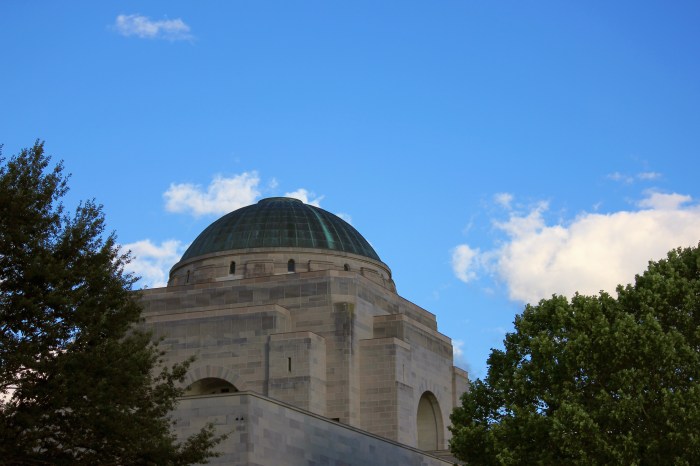
An Evening At The Australian War Memorial

On Wednesday evening, 20 November 2013, I attended a panel discussion at the Australian War Memorial on Post Traumatic Stress Disorder.  The event was hosted by journalist/writer Paul Barclay on behalf of ABC TV and Radio National.

On the panel were former Chief of Army LTGEN Peter Leahy; author and Beyond Blue ambassador Allan Sparkes; Beyond Blue board member Professor Brett McDermott; and the wife of a former British Royal Marine, Emily.

I was asked about attending the panel a few days earlier by my friend Jason.  Originally I didn’t want to attend as I honestly thought it may be a trigger for an anxiety episode; so I declined.  It wasn’t until the night before that I decided to go along and hopefully have a chance to speak to whoever was on the panel.  I had no idea who was participating in the discussion other than LTGEN Peter Leahy and hadn’t really thought about what was going to be discussed.

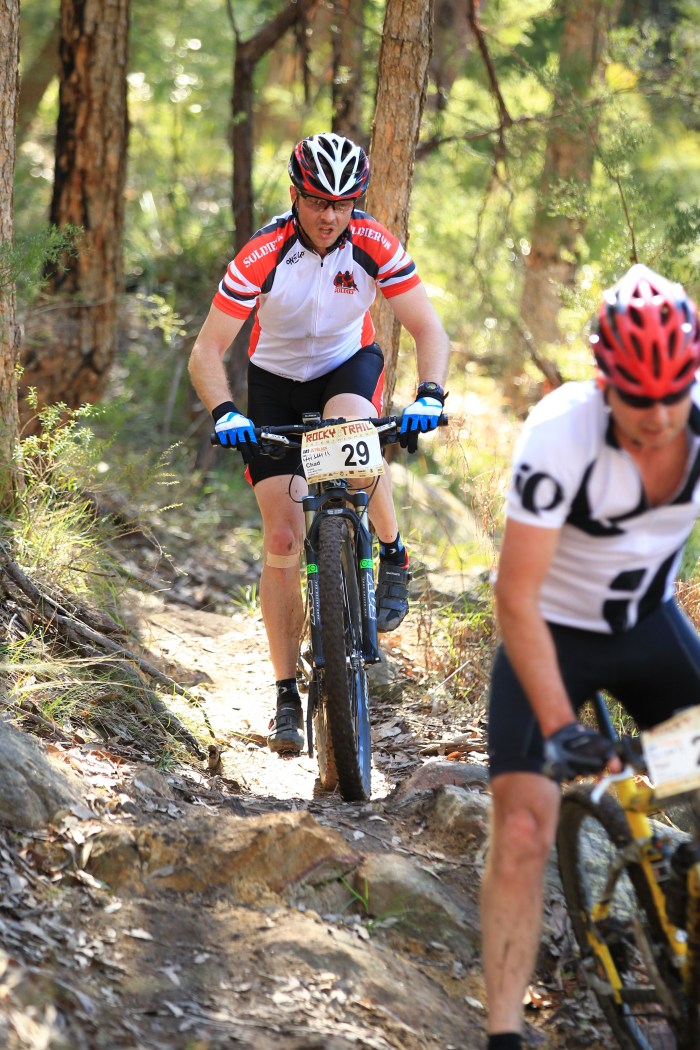
In the afternoon prior to the start of the forum, I rode from work up to the Australian War Memorial.  As is the norm, I was wearing my Soldier On jersey and happened upon new Soldier On team member Tony; who many moons ago was my Troop Commander when I served in Iraq.  Jason arrived next and soon we were joined by Anna, Meredith and Dion from Soldier On.  After I got changed into something more appropriate than skin tight lycra, we went into the BAE Systems Theatre.

After the introductions Paul started the discussion with some questions about PTSD in the military for LTGEN Leahy.  The conversation and questions started to flow freely within the panel with some very emotional stories being shared by Emily and Allan.  Prof McDermott gave some very interesting insights on PTSD for not only military personnel; but also for emergency service persons and of course their families.

I wasn’t the only veteran in the crowd; but I was the youngest.  There were a few Vietnam Veterans present, family members of veterans with PTSD and a few senior Defence officers that were skulking around the back pews in civilian attire.

As the discussion progressed LTGEN Leahy was asked some questions about support services available to veterans.  I have a lot of respect for this man; he was an exceptional Chief of Army and has done a lot to help veterans with his current position as Chairman for Soldier On.  But there is a distinct level of detachment from what a high ranking officer is told and what happens on the ground.

Some of his responses started to irk not only me, but a lot of the crowd listening to him.  There were more than a few audible scoffs at some comments about the Department of Veterans affairs doing their best to help all veterans.  One comment in particular drew a very audible “get fucked” from me.  The former Chief of Army said that when a Soldier asks for help, he or she will always receive it.  Paul mentioned the story of MAJGEN John Cantwell and LTGEN Leahy was in agreement.  Whilst MAJGEN Cantwell has done a lot to help break the stigma of PTSD in the ADF; it is also true that a very senior Officer is never going to be turned away when they ask for assistance.

Allan Sparkes shared his story of PTSD and depression from when he was a Police officer; and the ostracising that he experienced as a result.  His story was a very raw, no punches pulled recount of his darkest days and his termination from his employment without his knowledge.  His story was very reminiscent of many veterans from the Vietnam War up until today’s conflicts.

Emily’s story was one of amazing courage from both her and her husband Adrian.  She spoke of her time in the United Kingdom when Adrian returned from deployment in Afghanistan a changed man.  He had experienced traumatic events and as a result developed PTSD.  His struggles with mental health affected his wife and two daughters as they watched as their husband and father dealt with his issues now that he was back at home.  His eventual discharge from the Royal Marines was a result of a physical injury and just like the majority of occupationally injured Australian servicepersons; Adrian was soon pushed out the door with very little support and preparedness for his transition to civilian life.

As the forum was drawing to a close Paul invited Dr Brendan Nelson, director of the Australian War Memorial to speak and field some questions from the panel.  He spoke about the AWM’s role with supporting veterans of recent conflicts by having interactive exhibits and involving them with other projects the AWM is conducting.  As a former Minister for Defence he expressed his desire to see more support forthcoming as the Afghanistan War draws to a close.

As 7pm was quickly approaching a few of us in the audience were wondering if we would get a chance to ask questions of the panel.  Adrian was next to take the stage and he recounted some of his experiences post deployment and how support for veterans is extremely slow from the government in Britain.  He spoke of having his claim for assistance being rejected on the first submission; a trend very similar to that in Australia carried out by DVA.

Adrian expressed his concern for veterans being forgotten after the withdrawal from the Middle East and a strong desire for them to be able to access the support they deserve and not repeat the mistakes of the past.  He likened the struggles of today’s returned servicepersons to that of the Vietnam War era in the way that the fight for support continues even after the war on foreign soil has ended.

Adrian’s address to the panel and audience had clearly reached out to everyone with many of the Vietnam Veterans visibly moved by his honesty.  As he sat down Paul checked his watch and asked us sitting in the audience if anyone had anything questions or comments.  I had been sitting and fidgeting for the past 10 minutes waiting for this moment.  Several different introductions and talking points had gone through my head and all disappeared in the instant I raised my hand and Paul motioned for me to stand up.

I was shaking before I even started speaking; this was always going to be an emotionally charged interaction from me and I started by introducing myself.

“Hi I’m Chad, I separated from the Army early last year and have deployed to both Iraq and Afghanistan.  I have been diagnosed with PTSD, depression and anxiety and I want to know why not enough is being done to help Australian veterans.”

I addressed LTGEN Leahy first and exclaimed to him that history was indeed repeating itself.

“I am a third generation Soldier, my Grandfather served in World War 2, my Father served in Vietnam and I have served in the Middle East.  I watch as my Father and his mates still struggle with PTSD with many Vietnam Veterans taking their own lives since the war ended.  I watch as my generation struggles with the same issues and now my mates, people I served with, are killing themselves because of PTSD and depression; and nothing is being done to stop this.  There are more people in the ground because of PTSD and depression than there are that are on the wall outside who were killed on operations.”

I spoke of my efforts to get help when the weight was becoming too much for me to bear and that the first two times I asked for assistance I was rebuffed by my unit RSM’s; a statement that clearly shocked LTGEN Leahy.  I was asked questions from both Allan Sparkes and Prof McDermott about my interactions with DVA and I recounted how I was told that my claim was going to be slow as my PTSD and depression ‘wasn’t that bad’.  I explained to them that is was at this point that I withdrew my claim and stopped interacting with DVA as I felt I was being accused of chasing money and that by not receiving financial assistance my criticism of their practices would hold more weight in a public forum.

I described my battles with depression and that very few people understood; and the simple act of asking for help effectively stalled my career in the Australian Army for a number of years.  The feeling of being ostracised and singled out was always present and that few people would support me when I asked for further help.  I explained that while MAGJEN Cantwell’s story is not an isolated one, the level of support and assistance he received was.  The average Digger in a unit has to contend with the ever present stigma of mental health issues and ignorance present within their chain of command and the probable persecution for not being able to fulfil their duties without restrictions.

I expressed astonishment that the very organisation founded to protect the rights of and provide assistance to veterans was failing in its primary role.  I emphatically asked how in the forty years since the end of the Vietnam War servicepersons are still not being afforded the support we fought for.  How it was possible that DVA can state they are still learning and getting better with a straight face as veterans from multiple deployments and generations kill themselves while waiting to access support services.

By this stage the room was silent and I had been speaking for around 20 minutes.  The panel while sometimes asking me questions and making statements had clearly been unprepared for such a raw and uncompromising speech from someone.  I had brought up some points with personal accounts of systematic failures from within the Australian Army, Australian Defence Force and the Department of Veterans Affairs.

There were some topics that I shared with a public forum that had only been discussed with medical professionals and not even shared with my wife and family.  As my speech drew to a close I expressed the hope that one day veterans would receive the appropriate support from the Government but that it was very unlikely to occur in my lifetime and that my children probably wouldn’t see it happen either.

As I finished speaking I apologised for hijacking the Q&A session; Paul started wrapping up the forum and I sat down nervously.  Jason patted me on the shoulder and most of the audience was either nodding in agreement or wiping away tears.  I sat shaking and started to feel quiet anxious from speaking to a mostly unknown audience about issues so personal and distressing that I had spent the last few years repressing and ignoring them.

The rest of the evening was spent talking with members of the audience and panel.  I received a great number of business cards and offers of assistance and opportunities to speak to other veterans and people with PTSD and depression.  I found the response surprising and was shocked when LTGEN Leahy approached me as he was leaving.  He handed me his business card and told me to email him.  He offered to take me to see the Minister of Veterans Affairs to discuss the issues I had brought up.

He told me that the Service Chiefs would be made aware of what I had spoken about and that I should continue speaking up.  Both he and Dr Nelson expressed the need for younger veterans to be the public faces and voices of our generation and that I should be one of them.  I was very humbled by this statement and thought a lot about it over the following days.

At the conclusion of a big night, I farewelled Jason and the Soldier On crew, thanked the others and started riding my bike back home.  The next 45 minutes were some of the most contemplative times of my life as I thought about what I had said and the inevitable shock-waves that they would create for my family and I when the ABC airs Boys Don’t Cry on Big Ideas in late 2013/early 2014.
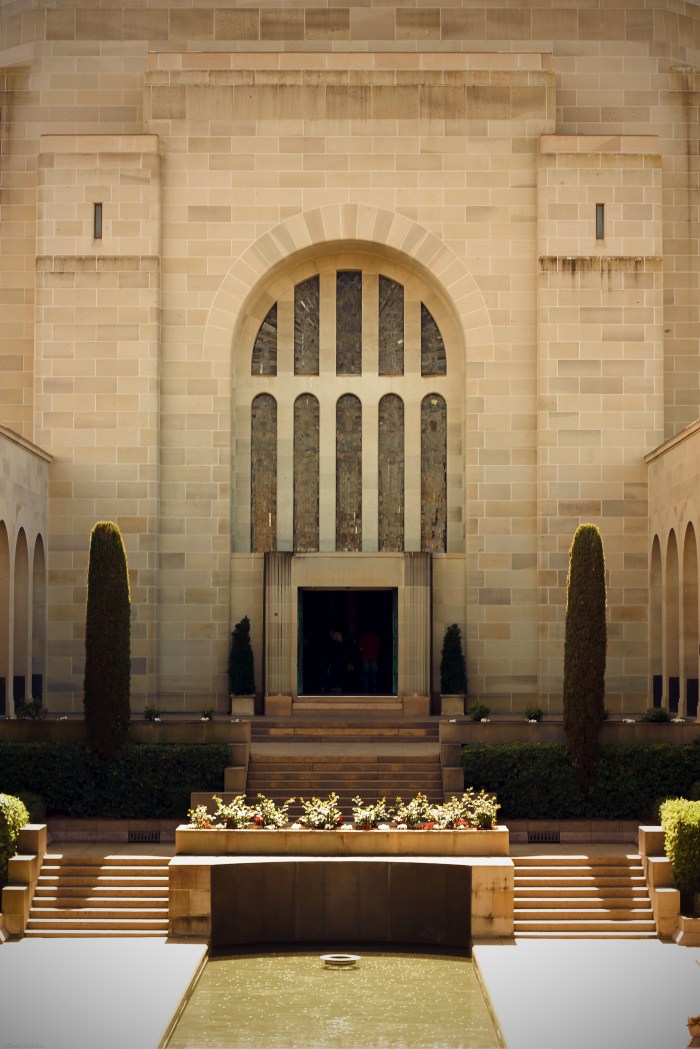
The Central Point Of Failure – The Department Of Veterans Affairs

I wasn’t sure if I should write this post.  My last opinion piece about the Department of Veterans Affairs was received quite well by the veterans community and prompted DVA to contact me to discuss my and many other young veteran’s issues.  What has prompted this follow-up piece tentatively titled “You Ignorant Fucking Bureaucrats!”?…

On the evening of 11 November 2013, undoubtedly scheduled to coincide with Remembrance Day, Channel 7’s Today Tonight aired a story about young veterans and the ongoing struggle for support with PTSD and mental illness entitled Fighting A Mental War.

The story began as a fairly straight forward account detailing the struggles of those who have had the unfortunate distinction of dealing with the Department of Veterans Affairs.  Frustration, anger and depression are some of the emotions one can feel when dealing with a Government Department seemingly intent on ignoring your calls for help and ensuring you don’t get access to quality support services and ultimately rejecting financial assistance for your national service at war.

This may seem like an extreme statement but when the person asking for support is a young service-person trying to access help for depression and/or assistance after experiencing a highly traumatic incident(s); being rebuffed by the very organization founded to help you only causes more stress and compounds an already volatile situation.  It is a fact that more young servicemen and servicewomen have taken their own lives post-deployment than have been killed in action in Iraq and Afghanistan.

Ordinarily I would take a story broadcast on Today Tonight with a few dozen grains of salt.  But after watching Keith Payne VC fire up (a man I have had the pleasure of spending time with in both Afghanistan and Australia) and the pitiful response from DVA Mental Health Advisor Dr Stephanie Hodson I was poised to hurl my remote control at my TV in disgust.  I sat staring in disbelief, I wanted to break something, I could feel my pulse rising and my face getting hotter as my skin became flushed with rage.

Ultimately I calmed down but not before I fired off a steam of questions and statements to DVA via Twitter, Facebook and email.  Minister for Veterans Affairs Senator the Honourable Michael Ronaldson was also in my sights and received a highly sanitized and more eloquent email demanding answers about his representative’s insulting statements.

What did Dr Hodson say?  Below is the transcript from Today Tonight’s segment.

“Any suicide is tragic, and the department actively monitors suicide in veteran community,” Dr Hodson said.
“We actually do need to work on getting our staff more trained, but also about getting through these claims more quickly.”

Dr Hodson denies the department’s failure to plan ahead is resulting in long delays, leaving claims and lives in limbo.

“The department is processing claims as quickly as possible, but we acknowledge that some claims can take longer than we want,” she said.

Dr Hodson claims part of the problem lies with the veterans themselves.

“The problem is that it’s not until someone is in crisis that they will actually start to look for the services,” Dr Hodson said. “The treatment is there for veterans; we just need them to come and put up their hand and get it.” 

The full video can be found here:
http://au.news.yahoo.com/today-tonight/lifestyle/article/-/19777434/veterans-with-post-traumatic-stress-disorder/
Dr Hodson’s comments on behalf of DVA start at approximately the 8 minute 15 second mark.

I want to stress I am not launching a personal attack on Dr Hodson; she is clearly a very competent and qualified medical professional.  She previously served 22 years in the ADF as a psychologist and has been with DVA for the past decade.  This is a woman who has dedicated the majority of her career helping service-persons with mental health issues.

I am however attacking the Department of Veterans Affairs for the systematic failure of the past 40 years.  I’ve watched as my Father’s generation has been let down by DVA and his mates have been driven to suicide.  Decades later the same thing is happening to my generation.

By Dr Hodson’s own account, DVA needs to do more work; but also claims that the Department’s failure to plan ahead is not to blame.  So to Dr Stephanie Hodson and Minister for Veteran’s Affairs Sen the Hon Michael Ronaldson I put this to you:

The last Australians withdrew from Vietnam on Anzac Day 1975.  That was 38 years, 6 months and 18 days ago; and yet Australian Servicemen and Servicewomen are still not getting the support that we deserve and have fought for.

To have not learnt from the past and continuing to ignore the Department’s ongoing mistakes is akin to giving a Soldier with PTSD a noose and pointing him or her in the direction of the closet tree with a strong branch.

Battle Of The Beasts – Update #8

The time for the Battle Of The Beasts is almost here!
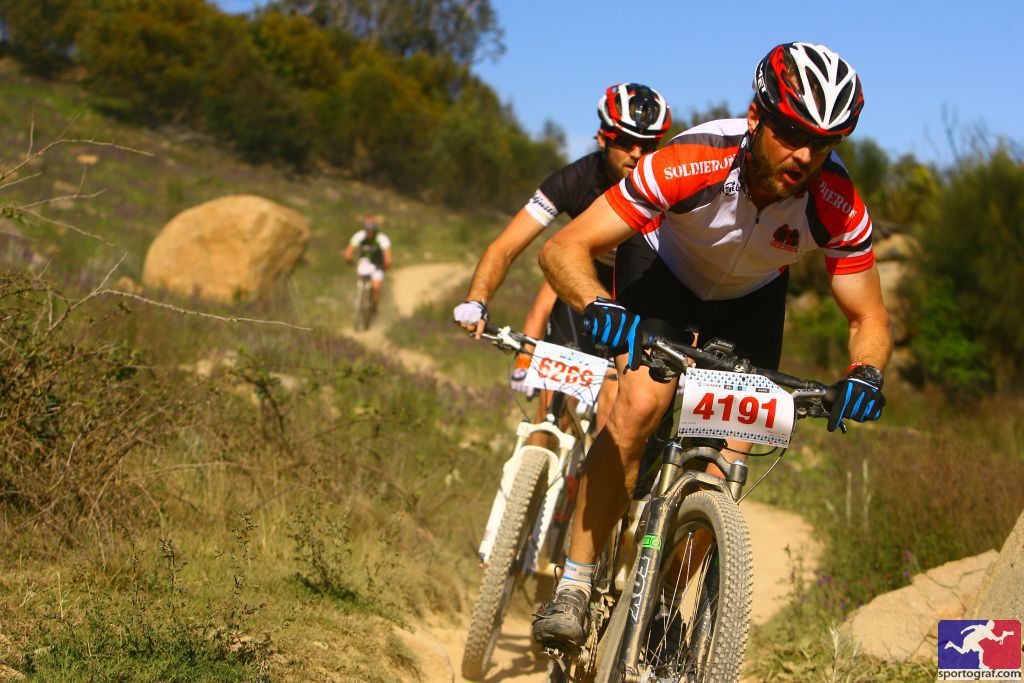
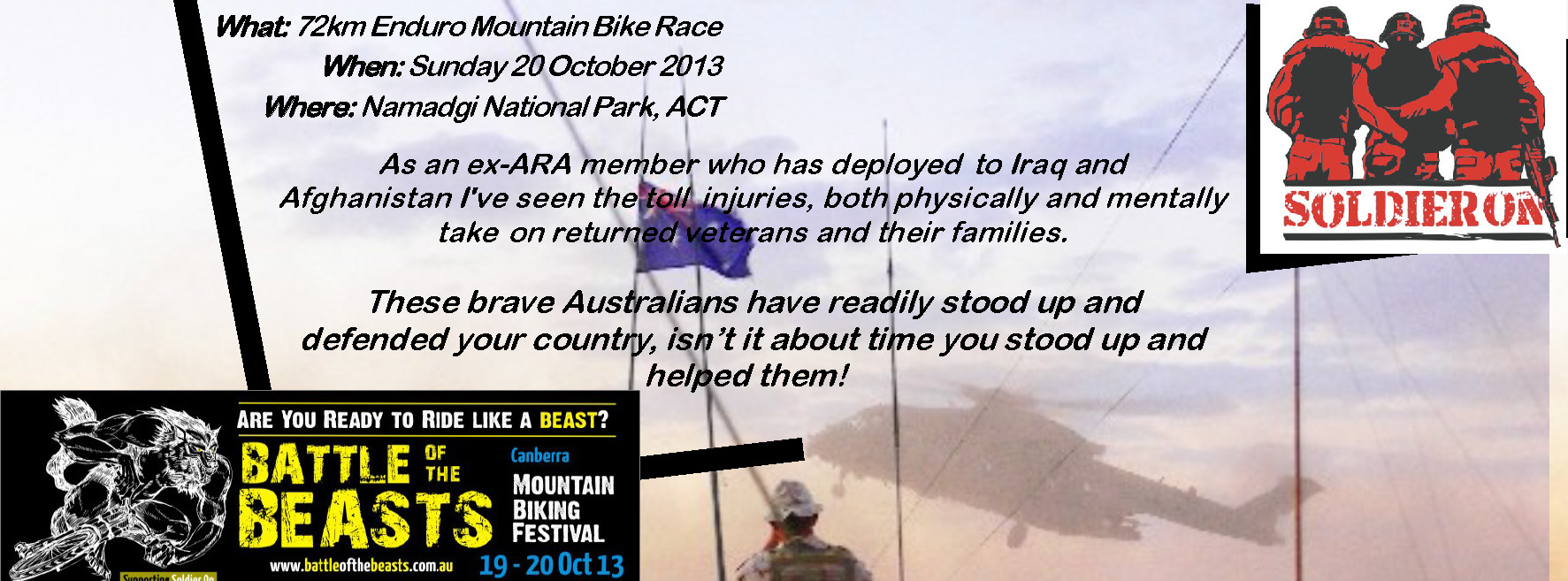
In just a few days I’ll be donning the lycra and Soldier On jersey and heading out to Caloola Farm for the 45km Flowing Beast on Saturday and the 72km Beast on the Sunday.

It’s been a hectic few weeks since my last update with a flurry of activity on the fundraising and raising awareness front with a couple of races thrown into the mix.  As the weekend draws closer I find myself getting a little nervous and anxious about what the two rides will have in store for me.  Last year’s Beast was an incredibly difficult ride for me both physically and mentally; and even though I’ve been training a hell of a lot more to be fit enough for this year I still wonder if I’ll have what it takes to cross the finish line.

I’ve learnt a lot since last year and have ridden over 5000km since then as well.  I had only been riding a mountain bike off-road for about 3 months when I rode last years Beast and it was by far the hardest thing I had done physically that didn’t involve me in an Army uniform patrolling in the Middle East with 50kg of gear strapped to me.

So what has changed this year?  Well, I’m fitter (by a lot), I know what this course has waiting for me (more mentally prepared) and I have a new lighter (better climbing) bike for this years race(s).  I have nil intention to flat out race during the Flowing Beast on Saturday; this is more of a meet and greet with the organisers/Soldier On crew and others that are like minded about improving Veterans support services.  The big test is the Beast on Sunday. I have been looking at last year’s times including my own fairly ordinary effort.
It took me a total of 7 hours and 14 minutes to cross the finish line with only 4 hours and 43 minutes of that spent on the bike. I spent 2 and a half hours not riding my bike last year; that was time spent catching my breath, resting at checkpoints and pushing my bike up hills so slowly my GPS stopped recording my movement.

I have a goal I want to attain this year; both for time and overall placing; but that is for me and me alone.  Ultimately what this comes down to is me pushing myself to my limits knowing that many, many people have supported me in my endeavour to raise money and awareness for Soldier On.

With $4’500 raised so far and $5’702 raised from last year it is incredibly humbling to know that so many people share the same mindset about veterans support as I do. To know that I have raised over $10’000 in just under 12 months for Soldier On is what will get me over the line when my leg muscles cramp and my body starts to ache.

PLEASE SUPPORT THOSE THAT SUPPORT YOU

.:MY DONATION PAGE:.


BOTB 001.jpgsportograf-44002166_lowres

Battle Of The Beasts – Update #4

It’s been a fairly hectic month since my last Battle Of The Beasts update.  I have spent plenty of time in the saddle training, managed a short trip to the snow at Perisher and managed to squeeze in a few cross-country races in and out of Canberra.

CORC XC Rd 4 02
.:CORC XC Round 4 at Mt Stromlo (if you look closely you can see my mullet):.

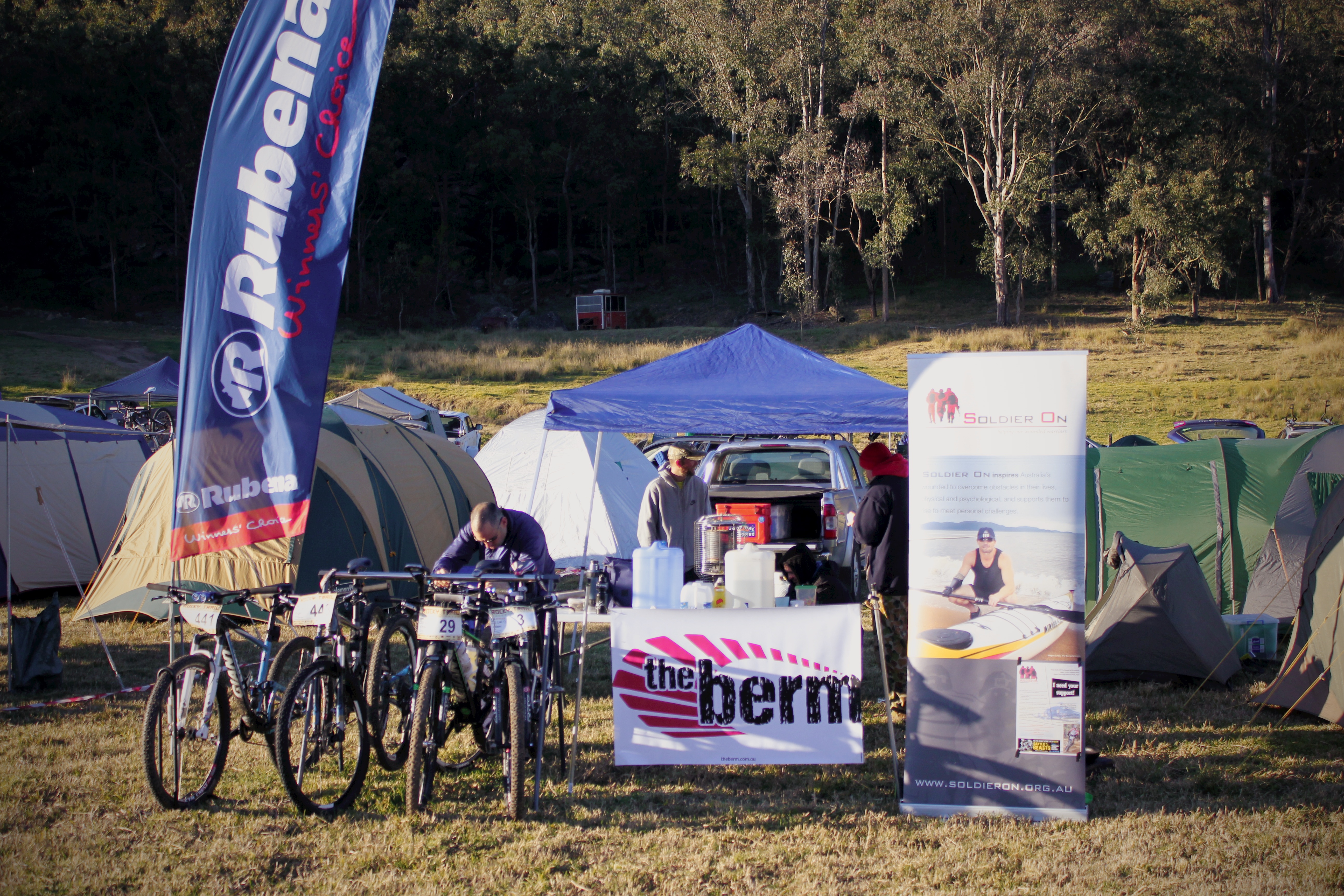
The highlight for this past month has been the opportunity to travel to Dargle Farm for the JetBlack WSMTB 12 Hour with some of The Berm riders and Pedal4Pierce co-founder Nigel Jeffreys.

Dargle Farm 2013 012.:Soldier On at the JetBlack WSMTB Dargle Farm 12 Hour:.

Even though I DNF’d during my first 12 hour mountain bike race due to illness, I had the honour of representing Soldier On at a huge mountain biking event.  There were a lot of questions from other riders, the event organisers and the Flow Magazine guys about Soldier On and why I ride for and fund-raise for them.

I’m also very excited to announce that the guys from Beast-Worx, the organisers of the Battle Of The Beasts; have invited me to compete in their next venture: The Call Of The Beast.  The Call Of The Beast is Canberra’s/ACT’s first adventure obstacle race.  I’m very excited to be a part of this and incredibly grateful that they are willing to support me in my fundraising for Soldier On.  The Beast-Worx crew are staunch supporters of all Australian Veterans and Soldier On.

My training for the Battle Of The Beasts has been going well despite a bout of illness and a week of nil motivation to train.  In the lead up to my Wedding I’ve decreased the amount of riding I have been doing but will increase the tempo dramatically in the weeks after and leading up to The Beast.

PLEASE SUPPORT THOSE THAT SUPPORT YOU
.:MY DONATION PAGE:.

The Call Of The Beast

I’m very excited to announce that the crew from BEAST-WORX, the organisers of the Battle Of The Beasts, have invited me to compete in their next venture: THE CALL OF THE BEAST.

BEAST-WORX are unbelievable supporters of SOLDIER ON & all Australian veterans, which is why they run their adventure races.  They have partnered with SOLDIER ON to bring you the best mountain biking/obstacle course/adventure races in Australia to raise money and awareness for SOLDIER ON.

The CALL OF THE BEAST is an obstacle course like no other.  It is not for shirtless posers taking selfies covered in mud at the end of leisurely stroll with 4’000 other wannabes!  This is an event that will test you physically, mentally and make you earn crossing that finish line!!

I’m extremely proud to announce that not only am I competing in the Battle Of The Beasts mountain bike festival in October I will be competing in the Call Of The Beast on November 30; racing for and raising money for SOLDIER ON!

Dargle Farm 2013 004

PLEASE SUPPORT THOSE THAT SUPPORT YOU

.:MY DONATION PAGE:.

Life Is Flow And Cycling Is Life

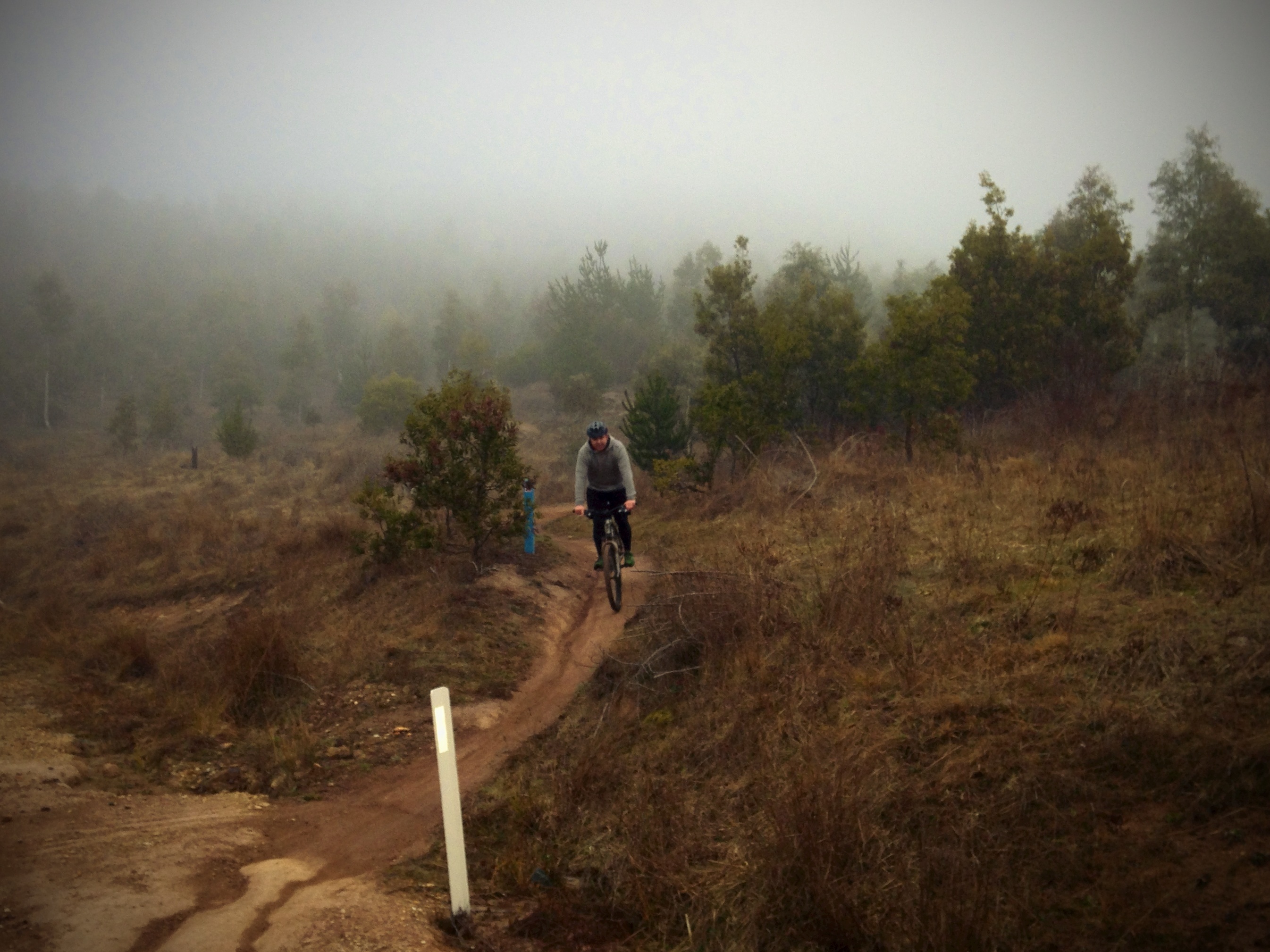
Earlier in the week I published a post focusing on my lack of motivation to ride and inability to  find my Flow.  After some words of advice from a few Bermers I decided to head out a little earlier for my regular Sunday Morning Social and Breakfast ride at Bruce Ridge.  With a half an hour before the others were due to arrive I headed out for a quick dawn lap of the winding singletrack.

Up until this ride I had ridden a total of 37km for the week; a far cry from the 253.6km I had I ridden the week leading up to Sunday a fortnight before.  My escape from the world, my outlet; the thing I use to control my anxiety and depression was no longer working for me.  Missing your Flow is like losing your mojo, your zen, your happy place.  I don’t ride for the hell of it; I ride because I enjoy it and I find it challenging.  Mountain biking is a sport you can constantly improve at; you will never reach your peak in any form of cycling as long as you adapt and change.

I had reached a plateau at the start of the year with my training and racing.  I needed new challenges.  Enter longer endurance races such as the 100km Capital Punishment and Mont 24 Hour; and short course cross country racing in the CORC XC Series.  I pushed myself further and got fitter and more confident because of it.  I ended up injuring myself during one of the CORC XC races and was suddenly off the bike for several weeks.  However I didn’t let this stop me; from the moment I was healthy enough to ride again I started a recovery training regime that got me back riding confidently again and improved my fitness.

Sensing that I was beginning to reach my fitness and riding plateau once again I took the huge step of reinventing my riding style.  As I was about to embark on a fitness training regime for preparation for this years Battle Of The Beasts I knew if I didn’t change something big I would lose fitness and motivation.  Something as simple as buying a new mountain bike was enough to help me break through the mental and physical barriers I was starting to build into my riding.

After riding over 1’700km on my trusty Giant Anthem X 29er Zooey I bought a new Giant XTC Composite 29er that I named Kate.  The simple act of paying a lot of money for a carbon hardtail was enough to motivate me to increase my riding time and as result better my race and training results.

Which brings me to my missing Flow.  After bonking massively due to illness at the JetBlack WSMTB 12hr and recording a DNF I couldn’t find the motivation to get back on the bike.  Partly due to still feeling sick, but mostly feeling like a failure; I struggled to find that balance between riding and enjoyment.

When you are off you can come off.  It’s as simple as that.  You don’t corner as cleanly, you don’t commit to obstacles with confidence and most importantly you don’t enjoy the time you spend in the saddle.

So this morning I headed off for a quick solo lap of Bruce Ridge and felt something I hadn’t felt during this week; I was enjoying riding.  I hadn’t yet clicked into that Zen mentality but I was close.  My lines were better, my cornering cleaner and I was enjoying tackling the obstacles on the singletrack.

As a group we did a short 10km loop of Bruce Ridge and I relished the opportunity to stay with the faster riders and push out a little bit more than I usually would for a Sunday morning social ride.  I even did something I very rarely do; I did a few jumps.  I’m a fan of sensible riding after, well lets be honest.. eating shit at Mt Stromlo showing off and not sticking a jump and tearing my pectoral muscle.  I had finally let go of trying to find my riding mojo.  As the very wise Argo said during the week you don’t find the flow…the flow finds you“.

The Flow hadn’t yet found me; but it was stalking me from behind on the singletrack ready to pounce onto my bike.

After our regular after ride breakfast at Edgar’s Inn, I headed out for Mt Stromlo for a quick ride.  When I was getting ready in the carpark I had a quick chat with one of my favourite Bermers, Kris.  For a downhill convert she seemed very happy to be going for a cross country ride and considering the sunny day, the smiling riders coming down the mountain and the fact Mt Stromlo is one of the best mountain biking Mecca’s in the world; I too was happy even before I got in the saddle.

I headed off for a warm up loop before tackling the climbs up the mountain.  At the beginning of my warm up I ran into good friend John and went for a relaxed spin with him as he cooled down after already conquering the switchbacks, climbs and rewarding downhill.  Soon I headed out for my main ride and quickly found I was going fast without really trying.

The switchbacks up the mountain felt easy, free flowing and I was passing some riders as I powered up the climbs.  By the time I reached the end of Echidna Gap and was about to embark down Western Wedgetail I knew my Flow had finally caught up with me.  I took off down Wedgetail, entered Skyline, Luge and finished at the bottom of Old Duffy’s Decent.  The downhill ride felt so good I even took the A-line on Duffy’s and launched my XTC off the rocky drop to finish the first part of my ride.

Still feeling good I headed off to the western side of Mt Stromlo for some more riding.  Each track felt good and I felt more confident with each pedal stroke.  By the time I reached the carpark I had ridden 24.6km and although I was fairly exhausted I wanted more!  Alas I packed the bike into my car and headed home.  After a quick refurb of my gear and bike for the start of the week I sat down and reflected on my week of riding.

What started off as a week of feeling unmotivated and disillusioned after a bad result in my first 12hr race; ended up with my Flow finding me.  All I had to do was stop trying to find it and relax.  Just as life has it’s ups and downs, so does cycling.

Life is Flow and cycling is life.

Where Is My Flow?

Firstly, let me get something out-of-the-way.  I like the Pixies… a lot.  I’ve seen the band live once and Black Francis as a solo act twice.  There is nothing quite like watching a fat, sweaty, old, white man screaming out the lyrics to Debaser in Spanish!  Surfer Rosa and Doolittle are unbelievable albums and are my go to albums when I feel like zoning out and just ignoring the outside world.

So anyway, after last week’s disappointing result at the JetBlack 12 Hour at Dargle Farm I have only ridden three times this week.  Wednesday was my first day back on the bike and was a short test ride of my new tubeless tyre set-up at Bruce Ridge.  I didn’t do anything special and didn’t push too hard.  When healthy and motivated I regularly ride between 250-350km a week including at least 100km on the dirt.  But after my DNF at Dargle Farm I’ve been feeling flat and unmotivated.

A lot of people are telling me a DNF is better than a DNS and at least I gave it a go.  I’m not the sort of person that generally gives up; although I am prone to being half-assed.  So after “giving up” last weekend I am now stuck in a rut of “half-ass”.  I didn’t go into the event over-confident; I was still sick but had been riding strong – maybe I set my expectations too high.

This morning I drove out to Mt Stromlo for some dawn riding with good friend and MTB newbie John.  We did the entire of Loop 2 in just over an hour which isn’t a bad effort for someone who can count the amount of times they have ridden on singletrack on one hand.  Although it was freezing cold, foggy and wet I enjoyed the ride and John definitely did judging by his big smile coming down Luge.

John On Luge.:John coming down Luge:.

Even though I powered up the switchback climbs and rolled down Luge and scored a new PR on Strava; I never felt that moment where I ‘clicked’ with my bike and the trails.  I was close but there was no ‘Flow’.

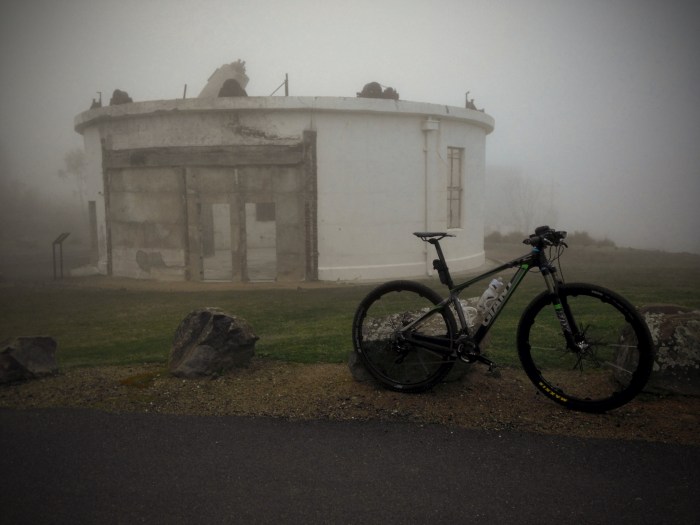
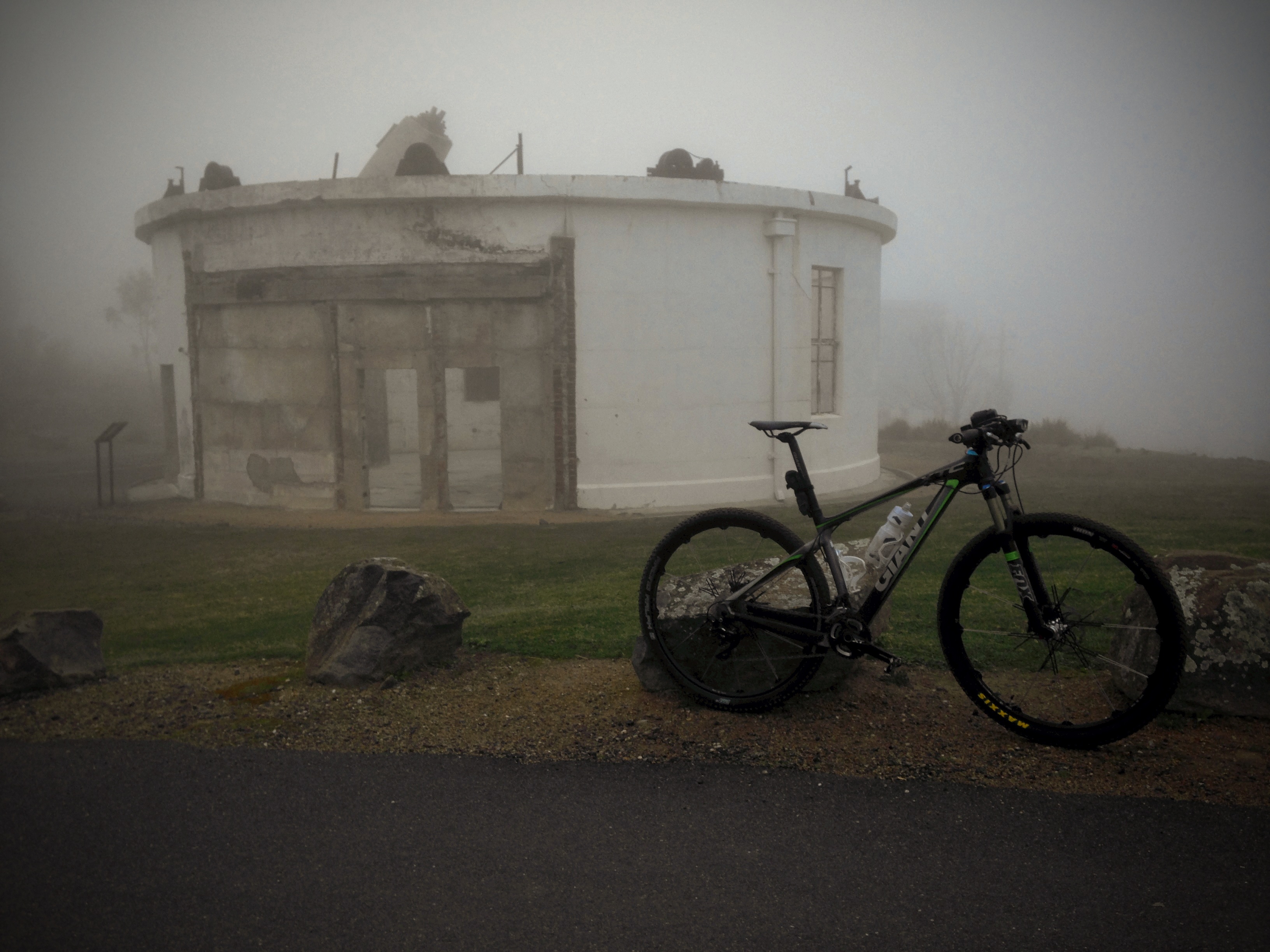
Kate At Stromlo.:Just a little foggy on top of Mt Stromlo:.

After lunch I headed off to Bruce Ridge for some afternoon riding.  Once again I wasn’t feeling very motivated but I geared up and got ready to ride.  I don’t usually ride with my headphones on; but knowing there wasn’t going to be too many people out riding I selected my Pixies playlist and headed off onto the trails.

While Black Francis was screaming at me and Kim Deal rocked out Gigantic I started feeling I was close to ‘clicking’ this ride.  I did some reversals of the normal trails and rode some of the more difficult segments.  But alas I wasn’t quite getting there.  I chose some ordinary lines that caused my back wheel to slip out on several occasions, over cornered some of the switchbacks and managed to head-butt a low branch on Pub Run.

Slowly I rode back to my car when Where Is My Mind? started playing.  I really like this song and can play along to it on both bass guitar and drums.  So when Black Francis sang about his encounter with a particularly bitey fish while snorkelling in the Caribbean I equated the bridge and chorus with my inability to ‘click’ while riding…
“With your feet on the air and your head on the ground
Try this trick and spin it, yeah
Your head will collapse
If there’s nothing in it
And you’ll ask yourself
Where Is My Mind Flow?

New Posters For My Fundraising!

BOTB Poster Cover PhotoV2 BOTB PosterV2 BOTB PosterV3

Riding For Soldier On – Doing My Part For Australia’s Wounded Warriors

Riding For Soldier On
Doing My Part For Australia’s Wounded Warriors

cropped-so-header1.jpg

To increase my social media profile I made a Facebook Page for my fundraising for Soldier On

Why I Ride For Soldier On

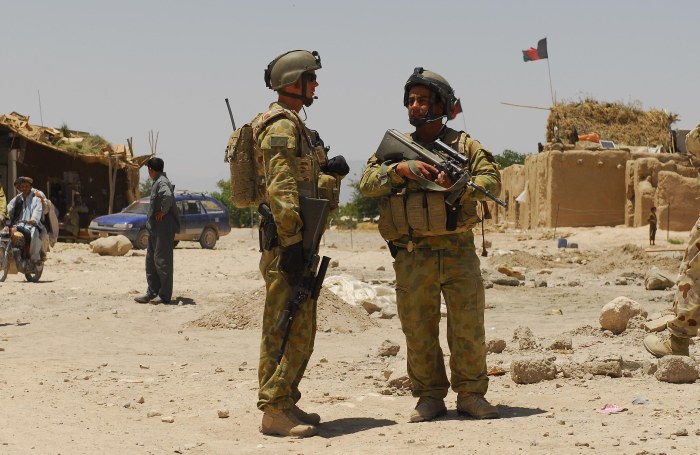
During my time in the Australian Army I served in both Iraq and Afghanistan. In 2009 after returning from 9 1/2 months in Afghanistan I knew something wasn’t right. I was aggressive to most people, wary of crowds, couldn’t sleep, had sleeping issues and started drinking heavily. Like most Soldiers, I didn’t want to talk about my issues in case I was seen as being weak and God knows there were others that were worse off than me. So I kept quiet and not surprisingly, things got worse. I didn’t want to spend time with other people and I started thinking this world would be better off without me.

After several days of no sleep, heavy drinking and almost wrapping my car around a pole on purpose, I approached and asked the Senior Soldier at my unit for assistance. Instead of the words of encouragement and avenues of support I expected from a person of that rank, I was met with “harden the f*** up and get over it”. In that one moment I felt defeated, I was dismissed by the one person who is solely responsible for the welfare of the Soldiers subordinate to them. If this person wouldn’t help me and I could no longer help myself then what was next?

Luckily for me I posted into a new unit and found the support I so desperately needed from my new workmates. After a while I finally found the courage to tell my family I needed help. Road blocks were set up by another Senior Soldier and my desperation grew greater until I hit rock bottom; I attempted to end my own life. It was only when my life was at its darkest did professional help eventually appear; it was provided by a civilian agency and organised by a very kind Navy doctor.

With only the bare-minimum of support coming from within the ADF I relied heavily on my family and friends for the ongoing support I needed. After having all support services cut off after I left the Army and the near-impossibility to secure an appointment to see a DVA accredited councillor; I started talking about my issues with others and realised that many other Soldiers had been experiencing the same obstacles; especially those that had separated from the ADF.

This is the reason I am so passionate about the provision of mental health care for returned veterans. The system is not yet good enough and so we rely on each other to be open and honest for ongoing support.

Soldier On helps by providing something other support services do not. They provide hope, confidence and a hand up – not a hand out.